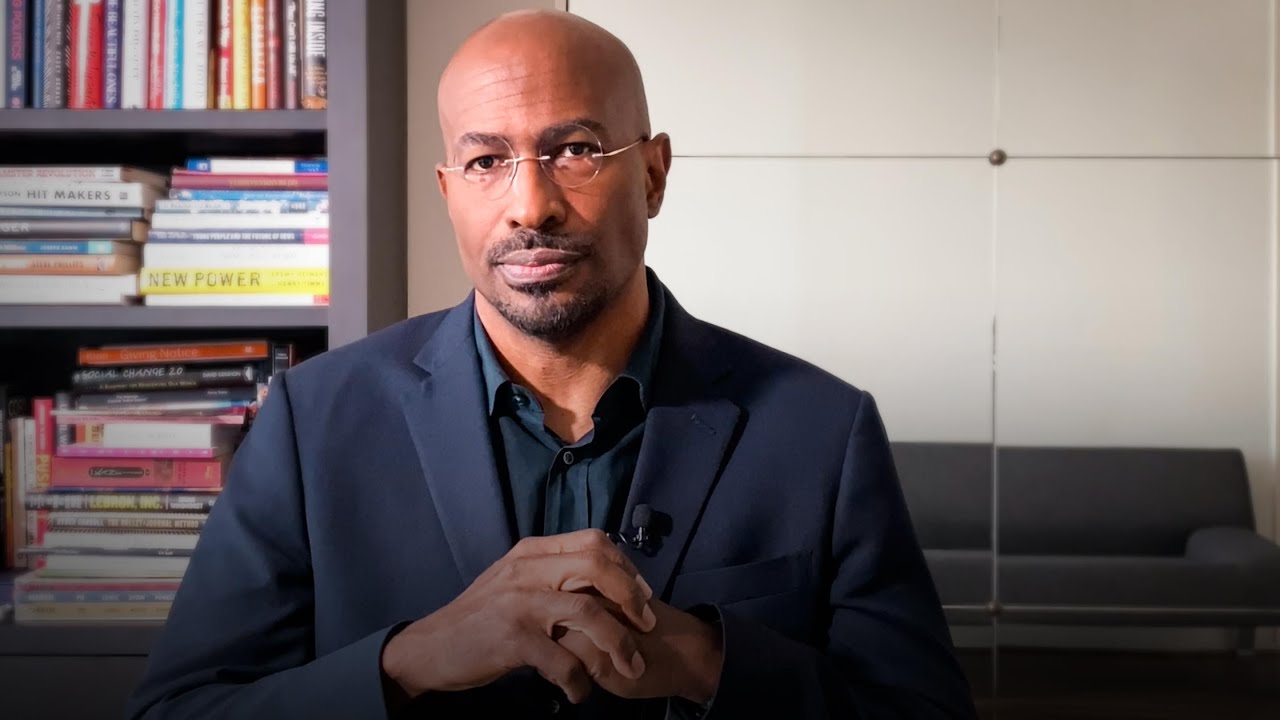
TED Talks Daily Book Club: Talk to Me | Rich Benjamin | TED
43:24

TED Talks Daily Book Club: Talk to Me | Rich Benjamin | TED

TED 06.07.2025 18 900 просмотров 228 лайков обн. 18.02.2026
Поделиться Telegram VK Бот
Транскрипт Скачать .md
Анализ с AI
Описание видео
Rich Benjamin is a cultural critic, anthropologist and author of the new memoir "Talk to Me: Lessons from a Family Forged by History." In this interview with "TED Talks Daily" podcast host Elise Hu, Benjamin discusses the power of history in shaping generations — and how the intimate search for answers in his own family’s past helped him tell the story of two nations. (This interview is part of the TED Talks Daily Book Club series, recorded live for the TED Membership program. TED Members are invited to attend live recordings and participate in Q&As with authors. To join in on the fun, sign up at go.ted.com/membership.) (March 7, 2025) If you love watching TED Talks like this one, become a TED Member to support our mission of spreading ideas: https://ted.com/membership Follow TED! X: https://www.twitter.com/TEDTalks Instagram: https://www.instagram.com/ted Facebook: https://facebook.com/TED LinkedIn: https://www.linkedin.com/company/ted-conferences TikTok: https://www.tiktok.com/@tedtoks The TED Talks channel features talks, performances and original series from the world's leading thinkers and doers. Subscribe to our channel for videos on Technology, Entertainment and Design — plus science, business, global issues, the arts and more. Visit https://TED.com to get our entire library of TED Talks, transcripts, translations, personalized talk recommendations and more. Watch more: https://go.ted.com/richbenjamin https://youtu.be/MeWAG1QH5sg TED's videos may be used for non-commercial purposes under a Creative Commons License, Attribution–Non Commercial–No Derivatives (or the CC BY – NC – ND 4.0 International) and in accordance with our TED Talks Usage Policy: https://www.ted.com/about/our-organization/our-policies-terms/ted-talks-usage-policy. For more information on using TED for commercial purposes (e.g. employee learning, in a film or online course), please submit a Media Request at https://media-requests.ted.com #TED #TEDTalks #Politcs

Оглавление (22 сегментов)

  1. 0:00 Introduction 488 сл.
  2. 3:00 Why did you choose to feature this story in your prologue 291 сл.
  3. 4:45 How much did you know before starting this book 196 сл.
  4. 6:00 How did you piece all of this together 312 сл.
  5. 8:00 How did you tell the past 461 сл.
  6. 11:00 How do you view forgiveness 621 сл.
  7. 15:00 Why the US didnt like your grandfather 249 сл.
  8. 17:00 A trip to Haiti 250 сл.
  9. 18:40 Declassifying US documents 151 сл.
  10. 19:45 The power of the US 269 сл.
  11. 21:40 Being a progressive commentator 285 сл.
  12. 23:40 Education isnt meant to be safe 245 сл.
  13. 25:30 Immigration is a hot debate 279 сл.
  14. 27:50 A more affirmative vision 157 сл.
  15. 29:00 The US political landscape 207 сл.
  16. 30:40 Colonialism 372 сл.
  17. 33:20 Favorite part of the book 293 сл.
  18. 35:20 Historical Narratives 172 сл.
  19. 36:40 Role of Storytelling 371 сл.
  20. 39:40 Migration 165 сл.
  21. 41:05 Honoring Your Story 187 сл.
  22. 42:20 The Last Two Sentences 149 сл.
0:00

Introduction

Hello and welcome TED members. I am Elise Hugh, the host of TED Talks Daily and I'm so glad to be with you today for the latest edition of the TED Talks Daily Book Club. Along with this live event, this is a special series on the TED Talks Daily podcast, a show where we deliver ideas that inspire daily. Lastly, we want to note that there will be mentions of violence and sexual assault in this conversation, so feel free to mute or leave the conversation when you need to. On June 14th, 1957, only 19 days after he was appointed president of Haiti, Daniel Fininole and his wife were kidnapped by Haitian soldiers and smuggled out of the country, all as part of a coup that had the full support of the US Eisenhower administration. Their seven children were taken from their home and held captive in the famed Deselene barracks in Porta Prince. The children were eventually smuggled out by their aunt who with the help of Catholic nuns managed to get them to the Dominican Republic and then onto a plane to reunite with their parents in Crown Heights, Brooklyn. The immense trauma and violence that the fenoles experienced and that followed them to the US scarred the family for life. Today's guest, Rich Benjamin, is an American cultural critic, anthropologist, and author. In 2015, he gave a popular TED talk about the time he embedded himself in some of the whitest communities in America for his book, Searching for Whittopia: An Improbable Journey to the Heart of White America. Rich is also Danielle Fininole's son, Daniel's grandson, and grew up in the shadow of this family history while knowing almost nothing about it. It was only after a fateful trip to Haiti in 2010 that Rich decided it was time to explore the history that helped shape him and uncover the stories his mother never felt able to share with him. His new memoir, Talk to Me: Lessons from a Family Forged by History, is the culmination of a 12-year deep dive into the family past, telling the stories of Haiti, the US, and what it was like to grow up as a black gay immigrant in this country, all while living under the shadow of this incredible history. Rich Benjamin, welcome. Thank you so much for opening your heart and sharing the story and for being with us today. Good to see you, Elise. TED community. We're happy you are here. So, let's just jump in and begin where the book starts. In your prologue, you share a story from about 15 years ago or more. You and your boyfriend at the time were in a taxi in Manhattan. You know this scene. The driver hears that you have an accent of some kind, and he wonders if you are also of Haitian descent like him. He keeps asking you where you're
3:00

Why did you choose to feature this story in your prologue

from, and you keep saying New York. So, why didn't you tell him that you were Haitian? And why did you choose to feature this particular story so early on? Well, Elise, in that moment, I was having one of these bougie Manhattan nights. We just been to the Philarmonic. We hop in a taxi and the dark-kinned driver says, "Uh, do you have a Haitian accent? " And then, "Where are you from? " "I'm from New York. " "Really? Where were you born? " "New York. Where did you originate from? New York. And so I didn't want to tell him I was I had Haitian blood because I was so far from Haiti in that moment. And Haiti has this really bad caricature in this country, one that I grew up with. Haiti is dysfunctional. Haiti is riddled with AIDS. Haitians are all boat people. All these negative stereotypes. And the punchline of that scene, and I won't reveal too much, is when my the guy I was seeing at the time says, "Oh, I had a Haitian nanny, but I can't even remember her name. " So, there were all these stereotypes that Haitians are on the one hand resilient, but also unsavable. reading your book, I really related to that overall idea of discovering your own family's incredible history in just bits and pieces just all the way into adulthood because our elders often don't like talking about it, right? Um they say something so unexpected about the past at the dinner table and you're like what? Um and it's common knowledge to them but you can't believe you went your whole life not knowing about it. So, how much did you know before you started
4:45

How much did you know before starting this book

this book? And why, looking back, do you feel like your mother couldn't share this with you? Uh, well, first of all, Elise, I relate to that because I have friends of all kinds of background. They can have um a Chinese background, they can have a Jamaican Jewish background, uh they can have a Congalles background, and their parents just don't talk about the past, right? So, I hope people read this book and identify with that aspect of family members just not wanting to talk about the past. But in my case, uh my mother was just silent about it. And in fairness to her, I also didn't ask because of the negative caricatures of Haiti I had internalized in my head. So, no one's talking about it. She's not telling me and I'm not asking until of course the Haitian earthquake in 2010 made asking made not asking impossible. And you also tell the stories of people in this book so intimately, you know, as we're reading this and it really often feels like you're painting these scenes where we feel like we're in the room while we're reading. So, how did you
6:00

How did you piece all of this together

piece all of this together starting from very little knowledge to just deep intimate scenes? Um, thank you for saying that, Elise. I appreciate that. So, there's this big record for me in order to paint these intimate scenes. And that record includes uh letters from family members. It includes what I would find are news reports. It includes CIA records. And that was part of my journey of discovery was to find out that there's this big archive of records where the CIA operatives in Porter Prince were spying on my grandfather. So I'm able to construct the pass by that. And also I'm a bit of a packrat. If you've ever written me in my life, I've kept that letter that you've written me. So I have a lifetime of letters that I can draw on that uh were written to me. So all of these uh help construct the past, but it's also a matter of soothing. Uh one of the records that I got my hands on that really spoke to me and that I would never expect to find was this letter where my grandfather wrote the chief of police in Porter Prince begging for better protection for his family. And in order to beg for that better protection, he described the violence that they were living under. And it's just this graphic letter of empty kel chasings in his living room. It's this graphic letter of broken windows and how his children had to learn to hit the floor in seconds in order to not get hit. So, it's all these personal and public records that I'm able to draw on to just paint these intimate lives. And let's dive in a little bit more to your grandfather because publicly he became a deeply beloved hero in Haiti uh known for fighting relentlessly for the betterment
8:00

How did you tell the past

of Haitians really until the day he died. But privately, a different picture emerges. He was a distant father and husband. He became more and more abusive to his children and wife throughout his life. uh before fully abandoning his family years later in Brooklyn to live with a much younger woman. So, I'm curious, Rich, how did you navigate these very different sides, public and private, of your grandfather? And that's incredible. It's kind of speaks to your last question, Elise, is how do you tell the past? So I can tell the past of his public life, you know, through all these public documents and then interviewing people who knew him. But his private life, that's one of the layers of secrets I was not aware of that in public he was this beloved figure who did all these measurable good things for children across Haiti and then he practically abandoned the ch. He not practically, he actually abandoned the children under his roof. And I could get a paint a picture of how he was as a human being in private behind closed doors. And so Elise, there's this beautiful phrase where a journalist in Haiti during his lifetime, they called him the Moses of Porta Prince. He had done so well, but then he was kind of a monster in his own home. How did you reconcile that? It's difficult to reconcile. It's difficult to reconcile except to say that he grew up under such and I'm not excusing it by any means, but he grew up under such hardship and violence. People don't realize that, and this is another really tactile portrait I like to print, is what was it like to grow up as a young black boy under the colonial power of America? Most people don't realize that America colonized through gunboats Haiti from 1915 to 1934. And what was that like? Not abstractly, not historically, but daytoday. What was that like to grow up under colonialism the way that my grandfather did? So, in reconciling the public Moses of Porter Prince with a private monster at home, I have to really put him in his context and try and walk in his shoes. Yeah. Let's talk to your or let's turn to your mother because when your mother was held captive after her father, your grandfather was removed from office, she Haitian soldiers raped her and it was a horrible and violent event that really shaped the entire trajectory of her life and yours too. Even if you write that you didn't always know that. She said she told her father what the soldiers did when they were captured and that he didn't believe her. She said she could never forgive him for
11:00

How do you view forgiveness

this and it's one of the reasons she ended cutting ended up cutting him out of her life altogether. A generation removed now. How do you view this idea of forgiveness in theory and in practice? Right. It's for me and again I have to go on interviews with people who know my mother well. I have to go on letters she's written me. I have to go on my experience with her and I would assume at first that she would not forgive her father for the fact that he left the family for a younger woman but the book argues she doesn't forgive her for that deeper reason because at least as children we expect our parents to protect us like deep down at our core we expect our parents protect her to protect us and he failed to protect her and I doubt she ever forgave him for that. And that that's part of the layers of secrets. And the final thing I'll say on that matter is what I didn't know is why my mother chose the career she chose. So here I am boopping around my life and my mother is she's working abroad. She's working for UNICEF. She's working on behalf of young girls. Yeah. and she's literally working against the sexual assault and violence faced by young girls around the world. And in my research, I recover this beautiful article of an interview she gave to Self magazine in 1997, and she's talking about her work on behalf of young girls, but she never mentions that incident. So that's another revelation of secrets is part of her chosen career to protect young girls is because of this unknown violent occurrence that happened to her as a young girl. So it's woven into the layers of discovery in the book. Do you think that she might have been more effective or even more effective in her work had she brought her own story um of sexual assault to the kind of communities that she was trying to connect with? Uh I don't think so. I think that's our generation as Americans at least to kind of say because I've been through this I know better this level of empathy which is a good thing. But I think for her generation, it was more important just to be an expert and to be effective and it didn't matter so much whether she connected with people personally. Yeah, that totally makes sense. You say that this book is a love letter of sorts to your mom. What does that mean to you? And now that the book is done, has your relationship with your mother changed? one really goes on this discovery at one something that I hope is a political pot boiler. This happens, this happens, this secrets revealed, this secret's revealed. I I want the book to read quickly and beautifully and then at the end you realize, oh, it's about layers of family forgiveness and it's a form of love letters. Yeah, you look at the history of books, there are different forms of love letters in literature. And so this is kind of a social political one of discovery. Okay, let's get back to the politics and talk about Papa Doc or Francois Devalier uh who was later known as Papa Doc, the brutal dictator who ruled Haiti from 1957 until he died in 1971. He was behind the coup that ousted your grandfather from the presidency. And ironically, at one time he was your grandfather's friend and even your mother's godfather. Um, but obviously they turned from friends to foes. And based on your research, it seems clear that President Dwight Eisenhower's
15:00

Why the US didnt like your grandfather

administration supported Dvalier's uh coup. So, can you speak to this takeover and why the US didn't like your grandfather? So before being president of Haiti, my grandfather was a labor leader in that country. And we have to imagine people are working their butts off to callull the sugar cane, to cut work in shoe factories. They're doing all this difficult work, but they have no representation to these big American corporations. And so my grandfather is their representative as a powerful union broker and he's able to get garner them better wages. He's better he's able to get them better working conditions. And so the corporate heavies across the world do not like him. And so the very day after he's inaugurated the Eisenhower administration is meeting. Dwight Eisenhower is presiding over the meeting. and you have the CIA director, you have the defense uh secretary, you have the secretary of state, and they decide not to recognize my grandfather's administration. And in the subsequent four days, they're fielding all these angry phone calls from US executives. And one of the most chilling phrases I remember is one of these executives telling the Eisenhower administration that Finle is quote our number one enemy and he should not be allowed to uh stay in office. And so lo and behold, just 19 days after his inauguration, he's ousted in a coup at the behest of the US government and the private sector. It sounds like corporations. Yeah, exactly.
17:00

A trip to Haiti

I'd love to talk about your trip to Haiti in 2010, the first time you ever traveled to Haiti, and you went right after the devastating earthquake which killed more than 200,000 people, destroyed much of Porta Prince and the surrounding area. Can you talk with us a little bit just about the connection between that trip and then your desire to write this book? So I, as I said, I had grown up very indifferent to Haiti. My mother's not talking about the Haitian past, but I had just finished my first book, Searching for White Topia. And then I was leaving my office in Manhattan at the time and that's when these images struck the flat screen TV in the lobby and an earthquake, devastating earthquake that destroyed 80% of a of porter prince had just happened. And you see these Haitian faces pleading. You see these devastated Asian faces, but you also see the presidential palace crumpled, the balres, the columns, the crown of the building just crumpled into dust. And at that point, ignoring Haiti, ignoring the Haitian blood coursing through my veins, it just became untenable. I had to know, who is this man who once occupied this building? And so I packed my bags and set off for Haiti. In or among all of that rubble are some of the Haitian archives that you hope to find on your trip. You mentioned you had to turn to the US archives for some information to
18:40

Declassifying US documents

piece together about the past. And it took years to declassify US state documents. You even had to sue the US government in order to access a lot of the files that you were looking for. So yes, where my mother wouldn't speak, where there was no information in some of the Haitian archives, I decided to turn to our archives and I hit what every writer wants, which is this gold mine of information. And those are the CIA records spying on my grandfather. And four of those documents is were still redacted. They were just blacked out by Sharpie. So, I had to sue uh the State Department and uh for four I had to appeal their refusal to release the information and then I had to appeal three more times in federal district court to get that information revealed and so most of it has been revealed. So
19:45

The power of the US

today, given the climate that we're in, how are you grappling with your own relationship with the US and the power of the US as a state? Yeah. Boy, what a great question. I never imagined when I began this book in 2010 really. Yeah. That all of its messages spoken and unspoken would really resonate with me now. And by that I mean the way that history can kind of break and open lives. And that's what I hope readers take from this book. I hope one of the messages beside the messages about families, about mothers, about love. I hope readers take from this book what happens when history arrives and kind of just yanks the sidewalk from underneath your feet. So, I hope readers are paying attention. And Elise, I really like the subtitle of this book, which I didn't come up with. I can't take credit for it, but lessons from a family forged by history. As I speak to you, history is forging us. Yeah. And we have the ability to forge history. You know, with all the horror that's going on in the world, I don't want readers to be these passive victims and say, "Oh, well, that's the way things are. " No, we are active agents in history. We can forge history in the same way that history is forging us. And please, in this moment, as I speak, that we do not become passive sleepwalkers in history. Yeah. such a vital message based on your work, including your first book, Searching for Whtopia. You like to put yourself in situations
21:40

Being a progressive commentator

where people don't necessarily agree with you. You were on Fox News as a progressive commentator, something you chose to do for years. Uh can you speak briefly about why you felt it's important to do this to go into these spaces and to work in an environment where you know that people don't generally agree with your positions. Yes. It's one of the through lines from me to my grandfather and I don't want to self arrandise. He obviously did more for more people. He was obviously in more violent situations, but the through line is to put yourself out of a comfort zone, to not believe in safe spaces, and to do better in that lack of comfort. And so yes, for some years, I would say beginning around 2020 2007, I used to go on Fox News as a regular progressive commentator because the calculation was there was a sliver of reasonable, rational Fox News viewers who you could persuade about crucial issues like regulating Wall Street, like police brutality, like raising the minimum wage. So that's why I decided to go on Fox News. But I could tell I gave a good interview with Bill O'Reilly and some of these prime time hosts. Yeah. When afterward my inbox would just blow up and I knew that I had gotten under their skin and I was being persuasive. So yeah, I used to do that. I would never go on Fox News now because now everybody on that network is lying and they're not operating in good faith. Yeah. There's no pretense of trying to have a discourse in the same way that existed in 2007. It is a obviously a very
23:40

Education isnt meant to be safe

different environment that we are in today. And knowing all of this reminds me of something your mother taught you, which is this notion that education is not meant to be safe. Yeah. Can you speak a little bit more to this and how she viewed it and how it kind of continues on in your work? So my grandfather was also a professor in addition to a labor leader. And as a professor, he would criticize the despotic regime at the time. And for that criticism, he would be tossed into prison. His home would be teargassed and sometimes worse. And so as a professor, his life was un was often in danger. But I like to think more spiritually and more in terms of books is he liked dangerous ideas. So, not only was he reading Shakespeare and Dro and the big philosophers of the enlightenment, he was reading pro black Haitian literature which was considered to be dangerous in that moment. So I think that lesson seeped down to my mother is that even if education isn't literally dangerous as was the case with my grandfather, it's meant to be spiritually, intellectually, and politically dangerous. Okay. In your TED talk, you talk about your research for Wtopia and how you learned firsthand about how emotionally charged the topic of immigration is and what a hot debate it would become. That was back in 2015. Um, now in 2025, that statement about immigration
25:30

Immigration is a hot debate

being a hot debate is obviously still incredibly true. So can you expand on what you meant in your talk and how your notion of immigration and the heat on this topic has changed for you through the writing of talk to me given the political landscape as of 2006 really I began a 27,000mi 2-year journey to the fastest growing and widest places in America and I packed my bags. There was a lot of recreational activity, golf, fishing, poker, and that bowling, uh that kind of thing. But one thing that caught me off guard in this journey beginning back as of 2007 is the deep antipathy in the actual country to immigration that wasn't registering in Washington. So for me, the most powerful of many examples of this was when I was in onetopia called St. George, Utah, and there was a citizens council against illegal immigration. That's their words. And these members would meet every week describing their stances against immigration. And there were lies spread about Ecuadorians and El Salvadorian gangs. And it was always this nostalgic idea that the California I grew up in, the Seattle San Antonio I grew up in is gone and now I have to be in a wider place. And so immigration was a hot issue. And I noticed this real divide between people's actual not people's actual thoughts on immigration and what was happening in Washington. And the final thing I'll say about this is even back then I could tell the Democrats had a tin ear on this issue and they had no humane effective narrative about immigration let alone a solution. What would be a
27:50

A more affirmative vision

more affirmative vision or affirmative path forward um on this topic that you feel like maybe both parties are not quite grasping? At the time I said Democrats, you have to do two things. You have to have a realistic humane solution that is fair to immigrants but realizes that people who are actually dealing with immigration are having two different experiences. Right? In other words, they're are Democratic politicians. They've never been to a DMV. They're not sending their kids to public school. They're not using public parks. And so they don't understand these gripes, real and unreal, that are being made up about immigration. And so searching for whiteia way back in the day said that Democrats should stop waiting, should stop hemming and hawing, and they should thread that needle. But now 2025, we know what the result is. What are the big ways that you feel like the US political landscape has changed
29:00

The US political landscape

since you wrote um in your research or your the time that you wrote uh Whittopia? And is there any way back to nuance and um a humane path forward? Elise, not only would I like nuance, I would like basic safety. When I went to Cordelane, Idaho, for example, I crashed a retreat of white separatists and supremacists. I would never do that now. So, one of the ways life has changes is not only the lack of lu nuance, but the lack of basic safety. I would never go into the heart of Magaland now in 2025 in the way that I was perfectly comfortable to do so in 2006. And so just the violence, the rhetoric, the lies, the stupidity, frankly, that's the huge change. I I you know, I have a dear older twin sister you'll trust with anything. And there was one time in two years I felt even remotely out of danger. And I said to her, "If you don't hear from me by this hour, just text me. But now I don't think what I did would be say would be particularly safe for me now. " Oh my gosh. We touched on colonialism earlier in this conversation and imperialism.
30:40

Colonialism

And throughout your book, you explore the really deep roots of that colonialism and imperialism have in current affairs both in the US and globally. Um, there's so few of us who haven't been touched by it one way or the other. So, can you see how it takes form in the racist and xenophobic attitudes and stereotypes against groups like Haitians? Really attitudes that played a role in the 2024 election, which we didn't even really talk about yet. um and that continue to shape public policy today. I really feel like this book is a testament to the truth um and reality of intersectionality and how maybe everything is really more connected than it seems and that we don't all exist in vacuums and on islands. So reflecting on the past, what do you feel like you've learned that feels relevant to this current moment? Um and then maybe you can weave in what you want people to take from this book given what you've learned. Thank you for pointing that out. The way that in your words, we're all touched by colonialism because I think many people don't realize that. And that is really an undercurrent in this book is how we are all touched by colonialism. Even if our grandfathers were never president of a colonial country, we are all touched by colonialism. And for me, the horrifying resonance of that today is when Trump starts spewing his nonsense about Haitian immigrants eating pets. that we have the right to retake the Panama Canal, when Trump starts spewing his nonsense about Greenland, it's based in a colonial expansionist mentality, and the fancy word for that is American exceptionalism, where this country is so exceptional and so good that we have the right to behave any dastardly way we please. that might makes right. And so in all our domestic lies and in the foreign policy that we're facing today, colonialism is rearing its head in an ugly way again. And it's all of our problem as you point out. Yeah. Rich, one last question from me before we move on to questions from the audience. Is there a particular part of the book that you enjoyed writing the
33:20

Favorite part of the book

most? Um or a quick, you know, line or two that you want to share with us. We want to leave enough time for uh for audience questions. Of course, the most difficult part of the books to write had to do with my mother because it's parts of it are wonderful and triumphant and she's resilient. But to answer your question, the part I loved writing the most is, and this has to do with sleuth work, right? My grandfather's life, moving through the world as a young man, professor, falling in love with my grandmother. For me, those were the best, funnest parts to write. Very cool. Okay, we have so many member questions already queued up for you. So, are you ready to dive in? I'm ready. Okay. From Benji W. How has your experience as a black American of Haitian descent started to change since finishing and publishing this book? What would the epilogue be if you wrote one? It it's changed to more pride. And one incident for me that really captured that is I was signing books at the New York Public Library and a woman who appeared to be in about her 60s Yeah. said, "Hello, my name is Danielle. " And the reason my name is Danielle is uh I my mother was pregnant as your grandfather was running for president in 1957. And my mother was such a fan of him that she named me after him. And to see the that woman all these years later in New York City at a book signing, that's how my attitude has changed. It was a really special kind of shocking moment. Yeah. So touching from Victoria K. In your research, did you come across historical
35:20

Historical Narratives

narratives that were distorted or left out entirely? And how can we ensure a fuller more inclusive telling of history? Yes. Yes. You know mainstream often white historians will say, "Oh, the Kako rebellion ended in 1920. " But if you ask a actual Haitians, they say the rebellion went on well into the 1920s. So that's a concrete example of two differences of history and how mainstream establishment historians will write history one way but the people who actually lived it have a better more nuance version of history. And so the book has to reconcile their version also. And how do we ensure a more fuller or a more full and um inclusive account? We have to write our own books. Yeah. I believe that honestly. I'm not trying to be glib. Is that if there is a story that hasn't been written, a through line, a history, a narrative that hasn't been written, we must be the ones to write it. Okay. From uh Tor R. As a cultural
36:40

Role of Storytelling

critic, what role do you think storytelling plays in addressing societal divisions? Indispensable. I think the role of storytelling is indispensable. Stories are memorable. Stories are healing. Stories are powerful. And stories speak to each other. You know, statistics don't relate us. But I hope when people buy this book, the stories, even if you have no Haitian blood, if you've ne never been anywhere New York City, if you've been anywhere near the Western Hemisphere, I still hope the stories speak to you. So stories are indispensable. Yeah, that's a great message to our very global TED audience. As you know, we are quite global. Um, next question is from Ketakandriana R. She says, "Where do you get your inspiration from, Rich? Do you think AI will break humanity's ability to write stories? And if that's possible, what can we do to avoid that? " Yeah. So, I get my inspiration from other art and from other artists in my community. And in these digital technology days, I recommend that people have a real life close creative community. And more specifically, you know, I have a sculptor in my community. I have other writers musicians and painters. And their creativity kind of shakes my head loose. uh provokes new ideas, provokes new ways of thinking of something. So if I hear a beautiful tune, it helps me to think about words better. If I see a beautiful sculpture, it helps me to think about words better. So that's what works for me personally. That's what inspires me is the creativity and the successes of others. And AI in my belief is horribly detrimental to this. And I'm not one of these anti- AI lites, but for me, the problem with AI is that it's so passive. And for me to have a creative life, a creative mind is I have to be very proactive in seeking the friendships and the community that really get my brain synapses sparking. Yeah, that's such a reminder, powerful reminder to really nurture our creative communities. No matter what kind of work you're making, what would you say to people who are leaving their countries and cultures behind? There continues to be so much migration
39:40

Migration

across the world. Yeah, it's it's a fascinating issue. uh you know the migration into Europe, the migration into the Middle East, from Asia, the migration into America, from Central America. You know for me it means if you intend to stay in the country deeply learning the language deeply learning the culture deeply understanding the culture while never ever again being bullied into dismissing or looking down upon the culture that you left which has been the case for most of our history in America. Yeah. A demand for assimilation. But not only a demand for assimilation, but this hierarchy as to who's better, who's not, between Americans and immigrants and even among immigrants. And that's been the whole history of Haiti, you know, oh, Haiti is a sight of the AIDS epidemic. Oh, Haiti is boat people. Oh, Haiti is violent. Oh, Haitians are into Haitian is a superstitious voodoo culture strictly on and on. So that's my advice. Ariana asks, "How do
41:05

Honoring Your Story

you honor your story when it's been really painful and you might want to change your reality? " I don't know if Ariana literally means my story, but if she does, it's the same answer I would have for her story is I don't think of this as a trauma narrative as at all. I mean, they're funny scenes and what I land on without giving away the conclusion or anything is this is a book about survivors. It's a book about people who are resilient who thrown into this context really make a way out of now way. And for me an example of that is my mother's choice of profession is that she had this experience and then she professionally she became this type of human being. So, it's to acknowledge to look for the examples of survival and resilience and joy that exist in all of our stories. That's lovely. All right, before we wrap, Rich Benjamin, I wonder if we could end with you reading a short passage that you wrote at the end of your first chapter. So, the Do you mind
42:20

The Last Two Sentences

opening up to the first chapter and reading the last two sentences? Okay, I could read those. Great. Talk to me. Lessons from a family forged by history. As my mother ages, I worry I am squandering a vanishing chance to really know her, our history. My family's existence in Haiti, those disremembered years, dwell like a curora in our minds. Lost stanzas in an epic poem. If ever I am to understand my mother, I must speak to that void. Beautiful passage and I really feel like your book has spoken to that void in a beautiful and powerful way, Rich. Thank you so much for writing it and for being with us today. Thank you, Elise. Thank you, everybody. Thank you for uh taking your time. I know there's a million things you could have been doing today, so I'm really grateful that you're here with us.

Ещё от TED

Ctrl+V

Экстракт Знаний в Telegram

Транскрипты, идеи, методички — всё самое полезное из лучших YouTube-каналов.

Подписаться