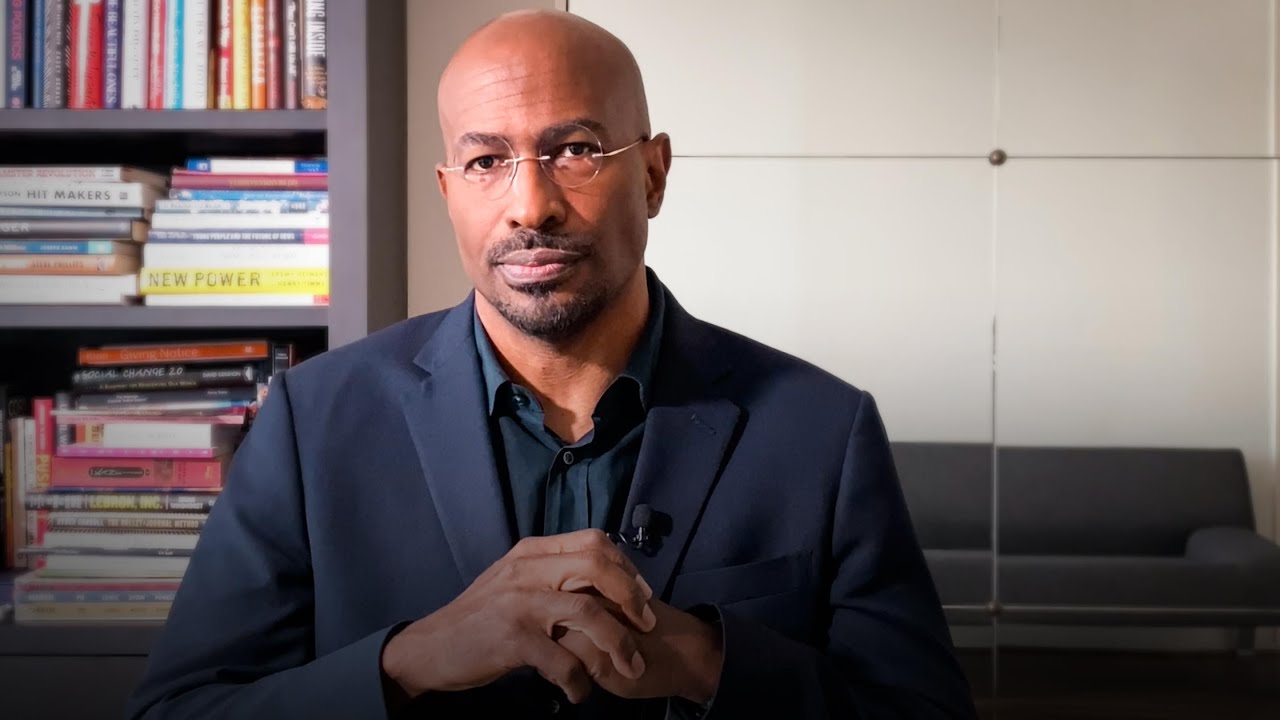
How to Design a Creative Life (w/ Debbie Millman) | How to Be a Better Human | TED
33:04

How to Design a Creative Life (w/ Debbie Millman) | How to Be a Better Human | TED

TED 25.06.2025 23 388 просмотров 510 лайков обн. 18.02.2026
Поделиться Telegram VK Бот
Транскрипт Скачать .md
Анализ с AI
Описание видео
Debbie and Chris discuss Debbie's work across mediums, the difference between what she does and art, how we can take traumatic moments in our lives and make something good from them. This is an episode of TED's How to Be a Better Human podcast. Listen on your favorite podcast app: https://tedtalks.social/4gmAZt3 For the full text transcript, visit go.ted.com/BHTranscripts Join us in person at a TED conference: https://tedtalks.social/events Become a TED Member to support our mission: https://ted.com/membership Subscribe to a TED newsletter: https://ted.com/newsletters Follow TED! X: https://www.twitter.com/TEDTalks Instagram: https://www.instagram.com/ted Facebook: https://facebook.com/TED LinkedIn: https://www.linkedin.com/company/ted-conferences TikTok: https://www.tiktok.com/@tedtoks The TED Talks channel features talks, performances and original series from the world's leading thinkers and doers. Subscribe to our channel for videos on Technology, Entertainment and Design — plus science, business, global issues, the arts and more. Visit https://TED.com to get our entire library of TED Talks, transcripts, translations, personalized talk recommendations and more. Watch more: https://go.ted.com/BHTranscripts https://youtu.be/Aa7tNxxZuu0 TED's videos may be used for non-commercial purposes under a Creative Commons License, Attribution–Non Commercial–No Derivatives (or the CC BY – NC – ND 4.0 International) and in accordance with our TED Talks Usage Policy: https://www.ted.com/about/our-organization/our-policies-terms/ted-talks-usage-policy. For more information on using TED for commercial purposes (e.g. employee learning, in a film or online course), please submit a Media Request at https://media-requests.ted.com #TED #HowToBeABetterHuman #podcast
Оглавление (7 сегментов)

  1. 0:00 Segment 1 (00:00 - 05:00) 821 сл.
  2. 5:00 Segment 2 (05:00 - 10:00) 847 сл.
  3. 10:00 Segment 3 (10:00 - 15:00) 740 сл.
  4. 15:00 Segment 4 (15:00 - 20:00) 773 сл.
  5. 20:00 Segment 5 (20:00 - 25:00) 824 сл.
  6. 25:00 Segment 6 (25:00 - 30:00) 846 сл.
  7. 30:00 Segment 7 (30:00 - 33:00) 468 сл.
0:00

Segment 1 (00:00 - 05:00)

You're watching How to Be a Better Human. I'm your host, Chris Duffy, and today we're talking about what it takes to design the arc of a creative life. How do you figure out how to balance creativity and identity and meaning and purpose? And today on the show, our guest is the podcaster, the author, the artist, the so many things, Debbie Milman. for more than 20 years on her show Design Matters. She has interviewed some of the most creative people around the world trying to figure out how they think about their life, their art, and creativity. And today in the show, we're going to be asking Debbie about those exact same things. What has she learned? How does she think about her own work? And how can the rest of us learn from that? Here's Debbie Milman. Hi, I'm Debbie Milman. I'm a designer. I'm an author of eight books. My new book, Love Letter to a Garden, will be out shortly. I am the chair of the Masters in Branding Program at the School of Visual Arts in New York City, the editorial director of print. com, and the host of the longunning podcast, Design Matters. So, Debbie, I once took a workshop from you that was about how to have a great interview. And one of the secrets that you taught all of us was to make sure that your first question revealed deep research about the person, that it was surprising and not something that they get asked often, and that it made them laugh. So my first question to you is, does having taken your class and remembering your lessons count as a good first question? It's a great first question. It's actually awesome because I don't even know if I remember teaching the class. It was so helpful. Genuinely, it was so fantastic. and uh you know you're so wonderful at interviewing which I think is actually quite unusual for someone who has a really illustrious and big accomplished career of their own that they're also really interested in other people's careers and accomplishments. Oh well, thank you for saying that. Um I would like to think that I've improved over the years. I have been doing this now for 20 years and I feel that it is an acquired skill. The more you do it, the more you begin to understand how people respond to different kinds of questions, how humor is so helpful in creating rapport, and how showing deep respect with deep research is so appreciated and then in many ways rewarded because people become so engaged in sharing such meaningful conversations. And it's not opportunistic at all. It's really genuine. I am genuinely curious about people and I'm endlessly fascinated by how they've become who they are. I think that something that I've learned from you in listening to your podcast and in reading your books and hearing you talk is how everything is design, right? Like everything has a design to it. And I think it's fascinating to think about how there's the visual design, there's branding, there's all of that, but there's also the design of an interaction, right? Like a lot of what you've just described is putting thought into how can I design an interview or a conversation so that it goes better and these are often places where we don't think about design at all. Do you think you landed on that naturally or is that an outgrowth of your professional work? I've discovered over the decades now that it's not really random in as much as it's been serend serendipitous how I've gotten to certain things. But I do think that the common denominator in everything that I do is a search for identity. In the branding work that I do, it's about the identity of a product or an organization or an institution or a movement. In my writing, it's trying to understand human behavior and motivation. And same with my illustration work. And in the podcast, it's a search for a person's identity through their origin story and their beliefs and the work that they make and create. That idea of finding the throughine in your own work, I think that's something that people really struggle with, especially young people starting out in their careers. What advice do you give people when they're trying to figure out what their thing is, what their brand or their self is? Okay. Well, that's going in a very different direction because I don't believe that people should be working on their personal brand. I actually find that to be somewhat reprehensible and really um the opposite of what I'm talking about. I'm talking about discovering soul. And brands by their very nature are created by humans. Brands are not self-directed. We as humans have to direct them and they don't have a soul
5:00

Segment 2 (05:00 - 10:00)

and they don't bleed and breathe and have a heartbeat. Whatever we project onto them is our own construct. And when I when people ask me about personal branding because I do so much work in branding, that's inevitably a question. And I've thought about it long and hard. And brands are manufactured. It's meaning manufactured. Humans are living, breathing entities. We're a species and we're messy and we change and evolve or at least one would hope that we do. We grow. And what I suggest that humans work on is building their character and building their reputation and building their body of work. And doing those three things will help create or communicate really your persona and your intentions and who you are. But once we start to position ourselves as a brand, then we begin to lose all the wonderful things that make us human. Now we can own brands, we can direct brands, we can manage brands, we can design brands, but the minute we begin to see ourselves as brands, we become a commodity. And I find that really unfortunate and a little bit sad. I love that distinction. And I've actually I've never heard anyone else make it and I've also never thought about it that way, but it really rings so true. Yeah. I mean, if I thought of myself as a brand, I would and as a brand consultant, I would say to myself, uh, well, doing so many different things actually dilutes your brand because it's going to take a lot longer to master those different things and to create a reputation and a body of work. But that's my passion is doing different things. I also would tell my podcast director Mwa that having the name Design Matters after 20 years is probably a bit of a misnomer because you're doing a lot more than talking to people about design given my expertise. I've sort of re-engineered the meaning to be more about how the world's most creative people design the arc of their lives. But if I was starting out now knowing what I'm doing and the kinds of interviews that I undertake, I would never have used that name. But I also know as a branding person that there's a lot of equity in it. And so I'm just hoping my audience goes along for the ride. I want to go deeper on the three things that you talked about. How can someone build their character in your mind? by working really hard to be as transparent about who they are as possible, by telling the truth, by showing up, by living up to your word. I think that those are very personal inner directives that shouldn't be done either opportunistically or for any other reason than just being, no pun intended here, a better human. Uhhuh. And then what about reputation? I think that's also such an important piece of this too. See, a lot of these things are about consistency, about doing things in the way that you feel is true to what you believe in consistently. And if you do that over time, then the reputation building and the character building happens organically. It's not something that's positioned or done for a specific reaction or for a specific reward. It's just who you are and standing up for those beliefs, whether or not they're popular. Sometimes they are, sometimes they aren't. But if you start to shift in the wind with popularity contests, then that's the opposite of building a character or a reputation. Now, all of this takes time. I would tell young people to have some patience. To have some patience on building their reputation and their character because if they work too hard at coming out of the gate all fully formed, they're not going to have the opportunity to evolve. I tell my students, don't get so caught up in what your portfolio looks like now. Because there is absolutely no question in my mind that if you are a good designer in five or 10 years, you're going to look back on that portfolio with horror and nostalgia and somewhat amusement. Um because it's you want to be growing. better than you were 10 years ago. And to be able to see the growth is actually a great thing. It's a great accomplishment. It feels like that also ties into this the third piece that you mentioned which is having a body of work. It's really easy to not build a body of work or to not put work out there or create it because you're so worried about it being perfect or it being good enough that in 10 years it will stand up. Whereas I think everyone who I really respect as a creative person or an artist in any way, they get better by making things. They're not worried about each thing being perfect. It it's the iterative process. It's not like the one golden statue that they've created. Another thing my students often
10:00

Segment 3 (10:00 - 15:00)

say is, "Well, I'll do this when I have more confidence. " And I'm like, "Well, when do you think that's going to happen? " if you never actually try because the only way to get confidence is to do it successfully repetitively and if you don't start you're never going to have the opportunity to get to that success. So what are you waiting for when you're thinking about your own work? How do you think about art that is making money, that's paying your bills, that's kind of functional, art that's healing, that's solving something or wrestling with something inside of yourself, and then art that is inspiring or building a community. How do you think about the lines between those different types of goals in your work? Well, in many ways, they're created for different purposes. art that is in exchange for money. And I'm not talking about art that's hanging in a gallery that's offered for sale. I'm talking about commissioned art, design, illustration that generally is done for a client with a creative brief or very specific directions on what is required. And I think that's great. And I love illustration. I think that especially uh satire right now is some of the most important creative work happening in our culture. Work for self-healing tends to be more self-directed. And as long as somebody is able to create something on their own terms, it's worthy and important and necessary as well. And then lastly, um I think fine art is different in that your audience could be anyone. And it's about creating some type of visual language that's never existed before. I mean, the great artists examining the world through a new lens. And that's what I would imagine is the highest aspiration for any artist to examine the world through a new lens and share information about who we are or why we do the things that we do. Really trying to understand in its purest form human motivation and expression and communication. And I think poetry does that too. Actually the best poetry. As for what I make, um, I just have a hard time seeing what I do as, you know, offering a new perspective on the world or a new way of thinking about something. In my interviews, I'm trying to give my guests an opportunity to do that, I guess, but I'm not the one doing it, so it's different. I completely disagree. I so see you as doing that as bringing a completely new perspective and a way to see the world. I think of that in everything that you do. I mean, I just think there is such a clear Debbie Milman vision for what art and what conversation looks like. And to me, that is such a work of art and it's so inspiring. So, I really I have to disagree and say there is a way that you look at the world that's different than other people. Well, thank you. that means everything to me coming from you and I really um thank you for that. Thank you. Both of your TED talks they start with this big history in science, right? Like we go back thousands of years to or hundreds of when something is created. There is this thread in a lot of your work that is thinking about the specific and the personal in placement in relative scale, right? like in the scale of the universe or in scale of nature. 13. 8 billion years ago, the universe as we know it began with the big bang and everything that we know and are made of was created. So I'm curious if you could tell us a little bit about why understanding our relative place in the world matters so much to you. Thank you for noticing that about my work. I am in another lifetime I would have loved to have been an astrophysicist, a theoretical astrophysicist to be specific. But I have and I'm very willing to admit this and recognize this at a very early age absolutely no mind for math. Same. I spend an inordinate amount of time thinking about how the universe was created. Where did the hydrogen and the helium come from? Do black holes um come out the other side and create other universes? And so in the same way that I sort of go back
15:00

Segment 4 (15:00 - 20:00)

to the very beginning of a person's life in my podcast, I am just obsessed with origin stories and understanding how we all got here as well as understanding how an individual got here. That's a really interesting thread that you've been pulling on for many years. And um to connect it to your latest work, this book that's coming out, I'm wondering what are some of the ways in which a garden has made you think differently about origins or endings? Because when I work with plants in the garden or in my house plants, sometimes it's like it seems like it's dead and then it comes back or it seems like it hasn't started and it actually has. So, how have you thought about origins in your own garden? Well, I have always had a relationship with nature ever since I can remember. I was always happier when I was around trees and meadows and lots of different greenery. My family had a house in the Catskills for a very long time. I went to summer camps all through my childhood in the Catskills as well. And as I became an adult and started living in more urban places, always tried to have a little tiny piece of outdoors, whether it be a deck or a terrace or an actual backyard, and spent from my 20s to my 50s trying to have some sort of garden without really having any success truly any success. I was just illquipped to manage soil and sun and pH and all sorts of things that you know you have to think about. I just wanted a garden. So I planted things and hope they'd grow and you know when you plant roses in a shady environment they're not going to thrive. Then during COVID, I at that point I had gotten engaged to my now wife and she had a house in Los Angeles and I had a place in New York City and we decided during CO that we would stay in her house because we'd have a car and an ability to be able to travel more and get out of just sort of the house. And I started to turn her backyard into a garden. And suddenly because I was there every day and it's a beautiful environment to have a garden. It's nice and warm and very consistent in the weather that I was able to actually have success for the first time and was able to grow vegetables and flowers and shrubs and even a lemon tree. And so I began to think quite a lot about the way in which plants grow and then go into hibernation and then come back. What you know perennials, annuals and I became really fascinated by how a seed can turn into everything. I started posting some of my adventures in gardening on Instagram and I think Chief Pearlman saw what I was doing and because she does a lot of work with Ted and is a chief curator, she asked me if I'd be interested in doing some interstitials the year that Ted went completely online. And I decided that one of those would be about gardening. And between that and seeing a piece that I did for a far magazine on my expedition to Antarctica in search of a total eclipse of the sun, um, Timber Press, which is a arm of Hashet, reached out and asked me if I'd be interested in writing this book about gardening. And I said, "Well, if I wrote a book about gardening, gardeners would roll their eyes and kind of laugh like Snoopy, you know, like, you know, Because I am by no means an accomplished gardener. I am at the very beginning of my journey with a teeny weeny bit of success. And by success I mean like a salad. Like I grew everything that went into a salad. And they actually were interested in that angle. And so that's and that's what I did. But it's very much about learning how to do something for the first time, overcoming many, many obstacles, whether self-imposed or real, and then having a modeicum of success that I could celebrate. Uhhuh. So many of the topics that have come up in this conversation already are also reflected in nature and in plants and in gardening, right? The idea of patience. Um the idea that when you're working like with a tree, you have to prune away excess. This idea of avoiding extremes, right? It has to be not too sunny but not too shady. This
20:00

Segment 5 (20:00 - 25:00)

idea that there's this impossibility of perfection. These are all things that you find in gardening as well as in all the other places we've been talking about it. Absolutely. And then the rebirth. I walked outside of my apartment today and my neighbor has a hydrangeanger, large hydrangeanger in front of their house and the buds are out. Spring is here and I find that to be miraculous that this plant grows these gorgeous flowers and they last for a really long time and then they fall off and go to sleep and then somehow because of some change in temperature because of some way the sun hits it, who knows exactly, I'm sure people do but I don't. Um, there they come back again. I know that I have been really inspired by and I know that many people when I talk to them about you and your work are really inspired by the ways in which you have taken things that are awful and painful and um bad and found beauty and joy and love and connection despite those things. I do a lot of work and I'm on the board of the Joyful Heart Foundation which is Marishka Harate's foundation. She started after her um starring in Law and Order SVU 20 over 20 years ago. Now the show is 26 years old, but she started Joyful Heart about a little over 20 years ago. Being on the board helped me make my life make sense. I had been um severely abused as a young girl um by my stepfather and spent a lot of years in shame and pain and secrecy. And then when I had the opportunity through a friend to work on developing the No More movement, I had the opportunity then to be introduced to Marishka. And then Marishka asked me if I'd be interested in being on the board and then if I'd ultimately become chair of the board, which I did for five years. I'll be on the board for the rest of my life, but I was chair for 5 years. Given my background in branding and positioning, it felt very much like these two disperate experiences and knowledge of could come together in a way to try to help eradicate sexual violence in our culture. eradicate the rape kit backlog, which is what we were spending a lot of time and effort doing at that time, and really try to provide a way for people to feel safer about disclosing their own abuse, mistreatment, and so forth. And the amount of people that have reached out that I've been able to point in different directions for their own um either disclosure or help or support um has been remarkable and once again helps me feel like something really terrible that happened has been I've been able to use that as a way to help others and then work on my own healing in the process. Something that I always feel like is a really important distinction to make too is, you know, there's this really very common but also kind of awful idea of like, oh, there's a silver lining in every cloud. Like I completely disagree. Like some stuff is just bad. Just kidding. But yeah, but there is this different separate and I see why sometimes people get confused idea which is that terrible things can happen and there can still be beauty. It's not like it required the terrible thing, but that doesn't mean that like there can't be beauty and joy, right? There it's not now you're forever your life is forever one way. You know, I thought a lot about what my life would have been like if these terrible things hadn't happened because there were several sort of cumulative things in addition to the sexual abuse. And it's very hard for me to know what that would have been like. Um, maybe I wouldn't have had more as much drive as I do. Maybe I would feel okay as is. Um, maybe I'd have an ordinary life. Maybe I It's hard to say. It's really hard to say. And Seth Goden and I have talked about this quite a bit. You know, people like to ask the question, you know, what would you tell your 30-year-old self? And Seth once said to me, nothing. Because if I told them anything that changed where I am right now, then I wouldn't want to risk it. And I kind of feel the same way now. I mean, yes, I'd love to have I'd love to be exactly who I am now with a little bit less self-loathing and shame, which I'm still working on every day, but other than that, you know, I'm married to the greatest person in the world. Um, I do some of the most interesting things that I could imagine and I'm still not
25:00

Segment 6 (25:00 - 30:00)

done. And so, you know, I kind of just have to be grateful for that. There's a frequent myth in creativity that um you have to be a tortured artist. That like suffering that the more you suffer, the more your creativity will blossom. And it seems like from what you're saying and from this conversation that your most creative, your most flourishing periods have come when you've actually done more healing, that you've gotten rid of some of that suffering and been able to be more creative. Um is that true? or is there a connection between your well-being and you're living a creative life? I do think there is. I do think that one of the best pieces I've ever made from an art perspective came at a moment when I felt very down. It's hard because I I'm like, can I should I get that energy back? I don't want that energy, but I really love that piece. It had a lot of energy in it. On the other hand, I think about what Elizabeth Gilbert says in I believe her TED talk about feeling like your best creativity comes from when you're fully relaxed into that creativity where you're doing the work every day and you sort of let the muse come through you and you're open to it. And there is I think a bit of both. I do know that when I'm drawing, I have to go through a period of torture with what I'm doing before I get to ease. And I know when my work is tortured and it's dreadful, it's gruesome. And then if I get to a point of ease, there's a certain, I guess, for lack of a better term, flow state, um, almost effortlessness that comes into doing the work. And that's my holy grail now. It's not a matter of being happy or unhappy because that flow state could actually come. You know, I guess it's like endorphins when you're doing when you're working out. You have to get to a certain point till for that to happen. You don't start doing something and then the endorphins come. Takes quite a while. For me, it it's only happened a few times in my life. So, I have to I can only rely on those experiences to know they even actually exist. But they come after a lot of struggle. And I would say the same thing happens for me with art. Like I and I can tell I'm like that's tortured and that's free. That's easy. What was the piece that you said that was like you one of the best things you've ever made. You think it's actually part of it is on the cover of my book um self-portrait as your traitor. And so it was about my feeling at the time that I was being utterly um duplicitous and how angry and sad and down and depressed I was inwardly and then trying to be cool girl to use a Jillian Flynn term from Gone Girl, you know, being the cool girl. Um and pretending that nothing mattered. and I was in my studio and just created this piece called self-portrait as your traitor, self-portrait as um a liar. Debbie Milman once again being duplicitus, you know, and that was the text all through it. And I just love that piece. I mean, it's one of the most honest pieces I've ever done, but I also did it like 30 years ago. So, I did it in the 90s. Well, it's also interesting to talk about the that piece and the process because I've kind of used the word art like lowercase A in a broader way and you've really thought about art as like capital A art like it's not just like a broad category for you. It is a thing that is worth being respected and taken quite seriously. I agree 100%. And Roxan and I my wife Roxang Gay has we have quable over this. Is that a word? Quable. Squables. Squables. I like squabbles. Squable. That's right. That's a love. She thinks that I'm an artist. I think I'm an illustrator and a designer. So, yes, I do feel like there is a big difference. I mean, I said I'm an artist, but I said it in a lowercase way. I did not say it as in an uppercase way. And that's a very important distinction in the way I consider my own work, my own body of work. What would it mean to be a capital A artist? What would it take for you to become a capital A artist in your own mind? to be much better at what I do, to have something to say through the work, to start a quest to create something original. I tend to love conceptual work, so I'd need to find a conceptual idea that I would want to explore and investigate. And I'd have to learn a lot more, I think, which doesn't mean it's not
30:00

Segment 7 (30:00 - 33:00)

possible. It's just a quite a big commitment and an agreement with myself on what I would need to do it. I don't know that I could become an artist, capital A artist, and still do all the other things that I do. I'm lucky that I've fallen into the work that I have as a podcaster, as an educator, as a brand consultant, mostly because I've just done them for so damn long. I'm lucky I actually got better at all of them. I think capital A art is different. Is that a standard that standard that you've just described? It's a really high bar. Do you hold other creative people in your life to that bar, do you think? Well, I know a number of other people at that bar. Like they are considered some of the best in the world. And I mean you can tell when somebody is just at the very top of their talent. And I mean I just interviewed John Batiste. I mean he is a genius. There's no one else like him. No one. That is capital A R T I S T artist. And when you are beholding that, you know it. They are the best. That's what I'm really talking about. When you have a completely original original, imaginative mind. But I also think that to me is also the trait that I see in all of the really um all of the people that I admire the most is that um you know ideally you would have this without the and I'm not saying you specifically you generally ideally you would have that desire to raise the bar without the you know critiquing yourself overly harshly. But I think the idea that like I'm not just going to coast I'm always striving for something more. Those are the people that I respect the most who they're, you know, they're in their 80s and 90s and they're still making new work and they're still looking for something different in themselves and in their community. I think I'm so much more inspired by people who are trying than by having accomplished. Absolutely. And to bring it all the way back to my gardening effort, that's part of why I also love it so much. You know, you can see I mean, this is going to be very corny, but you see growth. You see there's evidence of growth. It's amazing. Well, Debbie Milman, thank you so much for being on the show. It truly has been an absolute honor talking to you and um I couldn't admire you more. Thank you for being here. Thank you, Chris. Now, we have to do part two on my podcast. Oh, okay. Well, the stakes are now the bar is really high.

Ещё от TED

Ctrl+V

Экстракт Знаний в Telegram

Транскрипты, идеи, методички — всё самое полезное из лучших YouTube-каналов.

Подписаться