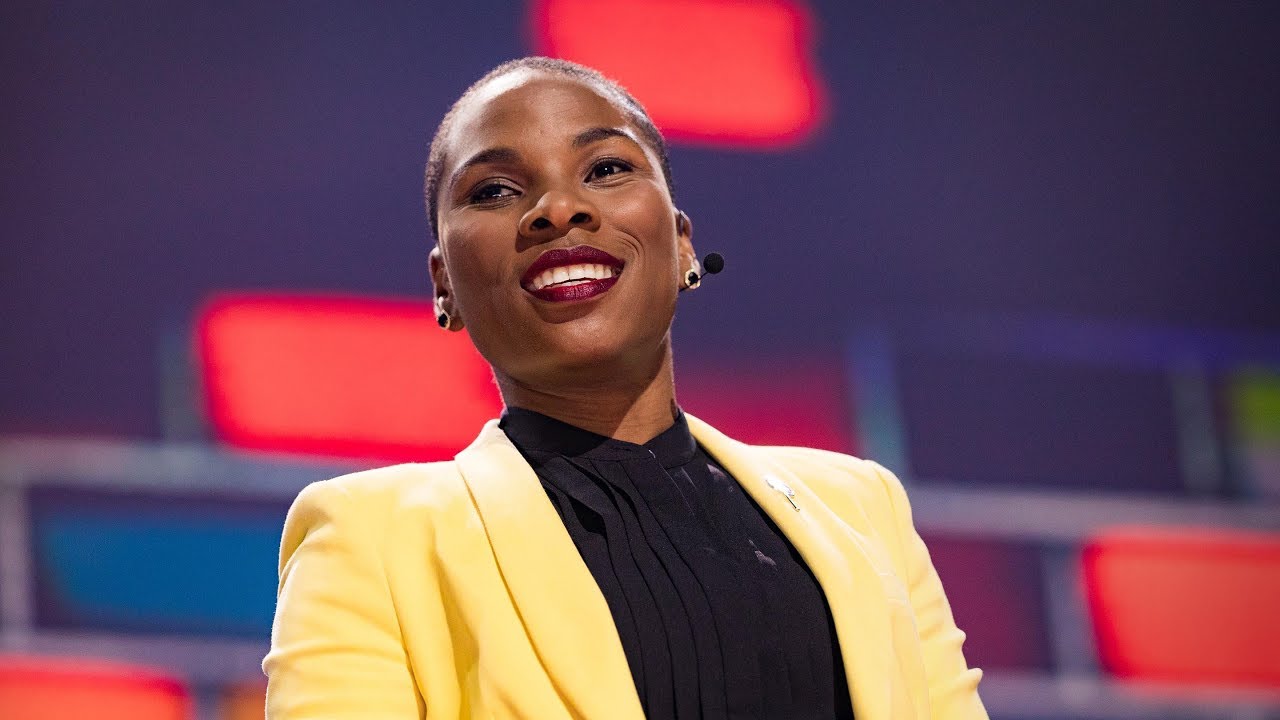
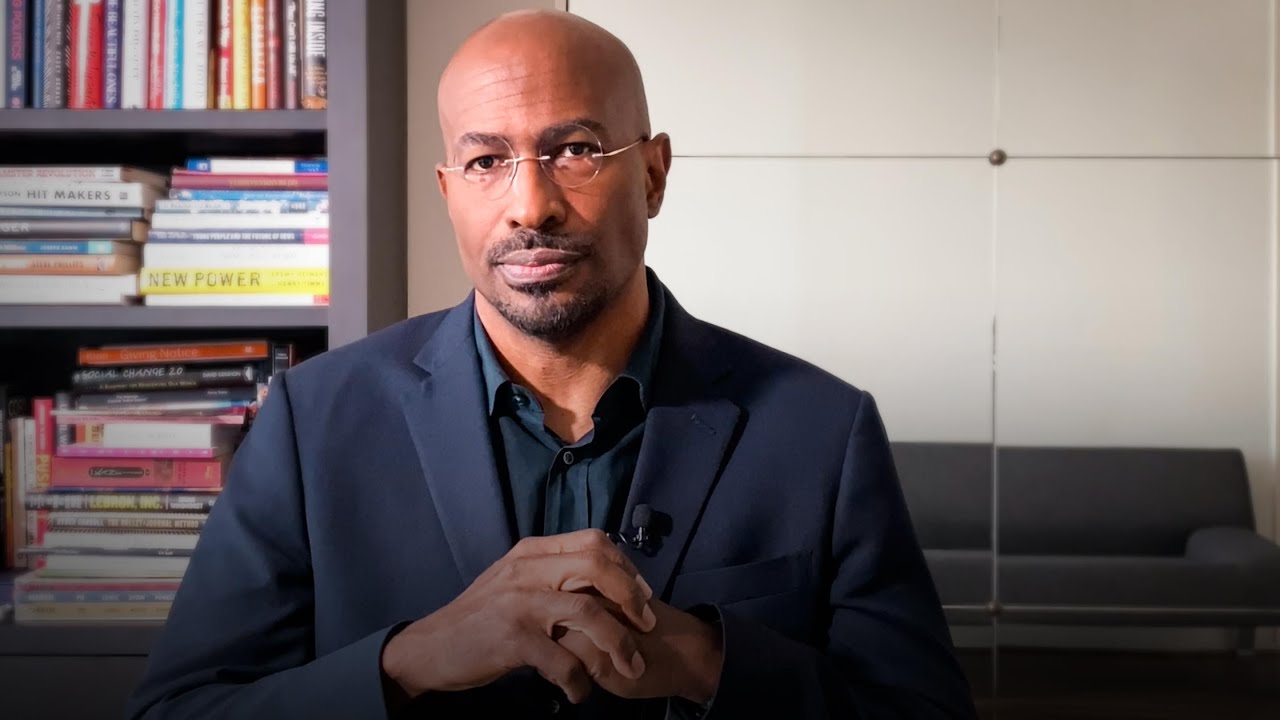
Video creator Jon Youshaei (@youshaei) and workplace expert Michelle Weise (@michelleweiseALWW) team up to crack the code on how to thrive through career chaos. They discuss how technological change is upending traditional career paths, explore the art of making your skills stand out and offer essential advice for young people entering the workforce. (This conversation is part of "TED Intersections," a series featuring thought-provoking conversations between experts navigating the ideas shaping our world.)
Watch Michelle Weise's TED Talk: https://youtu.be/b7eMnAn_WhI
Watch Jon Youshaei's TED Talk: https://youtu.be/CPszftsUGVM
Join us in person at a TED conference: https://tedtalks.social/events
Become a TED Member to support our mission: https://ted.com/membership
Subscribe to a TED newsletter: https://ted.com/newsletters
Follow TED!
X: https://www.twitter.com/TEDTalks
Instagram: https://www.instagram.com/ted
Facebook: https://facebook.com/TED
LinkedIn: https://www.linkedin.com/company/ted-conferences
TikTok: https://www.tiktok.com/@tedtoks
The TED Talks channel features talks, performances and original series from the world's leading thinkers and doers. Subscribe to our channel for videos on Technology, Entertainment and Design — plus science, business, global issues, the arts and more. Visit https://TED.com to get our entire library of TED Talks, transcripts, translations, personalized talk recommendations and more.
Watch more: https://go.ted.com/tedintersections
https://youtu.be/plbqT4dBNwo
TED's videos may be used for non-commercial purposes under a Creative Commons License, Attribution–Non Commercial–No Derivatives (or the CC BY – NC – ND 4.0 International) and in accordance with our TED Talks Usage Policy: https://www.ted.com/about/our-organization/our-policies-terms/ted-talks-usage-policy. For more information on using TED for commercial purposes (e.g. employee learning, in a film or online course), please submit a Media Request at https://media-requests.ted.com
#TED #TEDTalks #Career
Оглавление (6 сегментов)
Segment 1 (00:00 - 05:00)
Jon Youshaei: Right now, if you're a creative and you feel like AI is coming for your job, I think that says something about your skill set right now. Honestly. I think good technology will always displace something. And there's going to be a rough patch and maybe we’re already going through it in terms of, like, jobs, you know, and retooling and all that. But I think, for the large part, it can be such a compliment and amplifier. [Intersections] [Michelle R. Weise, Education and workforce strategist] [Jon Youshaei, Video creator] MRW: I've always been fascinated by the fact that even our younger boomers today are averaging 12 job changes by the time they retire. So if you think about for the rest of us, like, younger generations who are still immersed in the workforce, we're going to have to navigate more career shifts than we ever dreamed of. JY: Twelve job changes? MRW: Twelve. JY: Oh my God. MRW: And if you try to calculate, that younger generation's average tenure in a role is maybe less than three years, we might be looking at 20 or 30. JY: Yeah, Gen Z, maybe it's like, 50 job changes, yeah. MRW: And I know you went through your own sort of, career shift. You started off at Instagram and YouTube, and now you are a creator yourself. Can you just sort of walk us through what that felt like to make that really big shift? JY: Oh, yeah. There's so many things that I learned working at YouTube and Instagram that prepared me for this job, like, how to speak to brands, how to speak to sponsors, how to understand, OK, there's somebody who has a marketing budget. What are they looking for, like, on that return on investment. And just how to communicate. I think you talk a lot about, like, soft skills that you can have, but they could change in different contexts. And I feel like I've taken that to heart in so many ways in terms of, like, OK well, in a corporate environment, I'm speaking to people across the table, but as a creator, I'm speaking across the camera. But there are a lot of the same skill sets. Or putting together a deck for a brand to try to get a sponsorship for our episodes and our show now. So many things are transferable, even though on paper they look like different roles. MRW: So I'm so fascinated by what you do because it's just not the way my brain works. I started off my career as an academic and have gotten into producing content, but I don't think about it as how to make it go viral and how to get the most impressions possible. And I just think your brain works so differently from the way that mine does, and I was just wondering if you could, kind of, teach me some tricks, like, how to do this better. I know you have kind of a worldview where you want people to put their content out into the world without worrying about it being perfect. At the same time, I think there's a lot of really terrible content out there, too. So are you just hoping that more great folks put out their better content than the really terrible content? (Laughs) JY: Well, I think you need two things. It's like, experience and then entertainment. And when you have both of those, it works really well. A lot of people who have experience, especially in academia or in the corporate world, don't know how to package it or make it more entertaining. So a lot of their content falls flat. And then there's a lot of people who are entertaining for the sake of entertainment, which is fine, we need some of that, some escapism. That's always great. But then it creates kind of, this spiral of trying to sustain that and that becomes very hard. But if you have both, it could work really well. So even as we were setting up for this, I'm trying to think about, OK, what are the things that we want the viewer to remember from this talk? What does our intro look like? And just setting that up so that people get as much value as possible from the experience and educational side of what we're talking about. MRW: I'm just wondering, are you also thinking that certain kinds of content just doesn't fit into certain mediums? Just because I think about how amazing a TikTok could be, but the kind of work that you know, someone in thought leadership is doing might not always translate well into these short, bite-sized pieces. How do you think about kind of, connecting, the actual content to the right medium because it's always shifting, too? JY: Well, I think context definitely defines content, but if you're aware of how a platform works, you could figure that out. Like, for example, on a YouTube video, you have a bit more breathing room to talk about what you want to say in the intro versus a TikTok or a Short or Instagram Reels. We're not even thinking about the intro, we're thinking about what I like to call the first frame. What do you see at 0.00 seconds? And can you set as much up in that to set expectation of what people will see? So for example, I have this format on my YouTube channel where I go on the streets of Hollywood and do a highly scientific study
Segment 2 (05:00 - 10:00)
where I ask people who's more popular, you know, like MrBeast or Tom Cruise? And basically it’s a commentary on what's more popular: social media or traditional media. And there's people on the street, like, Gen Z, young people I talk to, do not know who Tom Cruise is. Do not know who Tom Cruise, don't know who Tom Hanks is, but they know who MrBeast, Logan Paul is. And there's people, you know, older generations typically, who know who Tom Cruise, Tom Hanks is but don't know who MrBeast, Logan Paul is. So immediately, you have this interesting generational divide. But for that format, I experimented with different intros where I was like, "Hey guys, I'm right now on the street of Hollywood, and I'm asking people who's more popular, Logan Paul or Tom Hanks, so we could see what's going on in terms of social media..." Way too long for a TikTok or a YouTube Short. So instead, I was like, how can I set up that first frame, that zero-second experience when you're coming across it to immediately define what you're about to watch. So I went to the local print shop. I got a poster with two faces on it, and I held it up and I had a microphone and literally, that zero-seconds is, "Who are these two people?" And I turn the mic to the person on the street, and they're answering and looking at it. And so stuff like that, where I'm like, the idea was there and it's really just taking a stat and turning it into a story, because there's a lot of statistics about social media versus traditional media. I want to make it feel visceral. I want to make it feel emotional, and I want to bring it to a human perspective, not just a statistic, and do it in a first frame where it could fit the context of that, so the message can be heard. But it takes a lot of defining and understanding and studying what works on the platform to get there. MRW: One of the things I'm thinking about as we're talking about this really abbreviated but powerful content that's dynamic and vibrant in this way is it feels really compact and it feels, like, really compressed. And it's a lot all at once, right? And when I think about having to slow down and lengthen our attention span, especially as we see in the world that narcissism rates are going up and empathy rates are declining. And I'm wondering how we better practice empathy? I'm just curious, like, what can the media, like, how do you think about empathy, in this space that we're in? Because it is a strange world in which the rise of social media and the proliferation of digital platforms makes us sort of, think more about ourselves versus how we inhabit, sort of, the life of someone else. I don't know if you think about that at all. JY: Oh, all the time. I feel like algorithms create echo chambers in many ways. And that's why an interview format is so powerful, because you'll opt into following that one person, but then if they're talking to somebody else who may not be in your periphery or in your circle, then you're getting another perspective. And then hopefully that can create a jumping off point to almost, like, poke a needle in that bubble to go even further. I find that on-the-street content is so interesting. You see a lot of people doing man-on-the-street content because it's bringing somebody into your feed by way of who you follow that you wouldn't have normally heard from, you know? So like, there's this really interesting format that somebody takes a Walkman or a cassette and shows it to a Gen Z, and is like, do you know what this is? And they're like, "Oh, what is it?" Like, it's just little things like that put things in perspective. But it's interesting. I'm wondering, for you, you've done so much research on the future of work, how do you think about communicating the message to a generation that needs it most, in Gen Z? They’re navigating a totally different career landscape than ever before. How do you think about all the work and research you've done in terms of making it relevant and understandable to a new generation? MRW: It's really hard because I think we go through life believing that there's this sort of arc where we get front loaded with a lot of education on the front end, and then we get to sort of build and launch a career, build a life, and then retire. And that whole arc has just been completely upended by exponential advancements of technology. And so it's really going to be this learn-earn, learn-earn cycle. And it's never going to end. Because with all of this change, we're just going to have to keep continuously learning. And at the same time, we don't have any of the real infrastructure and architecture out there to facilitate this kind of seamless education throughout life. We talk about lifelong education, and yes, I’m going to be a lifelong learner, but we don't have those systems set up. And so we have a ton of people falling through the cracks
Segment 3 (10:00 - 15:00)
and not able to access precisely what they need in order to make progress in their lives. And so the main message, especially to younger generations, is that we have to have a real mindset shift. And it's not a bad thing. It's not a bad thing to need to grow. And you have these kind of constraints that are forcing you to grow and seek out new information. But unfortunately, also the onus is on us as people to navigate this because we don't have that infrastructure set up. My whole work in life is trying to kind of begin to set up those regional, different kinds of better-functioning learning ecosystems to facilitate these movements. But it’s slow-going and it’s nascent, right? And so in the near term, it's on us. We actually have to figure out how to surface and articulate our skills and translate them into the language of the job market. And so it's unfortunately a lot on us, but we get to do it. We get to actually shape our future, and I think both of us have made multiple pivots in our lives. And we realized how amazing it is, like, once you're on the other side of it. But we also realize how much of it is kind of fortune, luck, you know, your network, all these things kind of coming together in a beautiful way that a lot of people don't have access to. So how do we make those kinds of social networks, professional networks, more available to people to actually bring them along? So that’s the huge kind of, lift for all of us is, unfortunately, it just kind of, rests on us more, that burden is on us. And we have to do this really interesting kind of storytelling and translation about all of the hidden skills we bring to the table, and make that understandable to a prospective employer. JY: Let's say you're somebody who just started a new job or you're entering the workforce for the first time. What are three things you would tell them? These are what you should remember, what you should take away in your next year on the job to be well set for the future. Right now. MRW: For younger workers who are going into their first job that might not be their first choice, one of the things is to just remember that we don't have to sort of search for that higher, lofty calling. Sometimes we can work with purpose, even when our work doesn't feel purposeful. And at the same time, I know employers tend to kind of fixate on very technical, hard skills that we need to bring to the table, but also realize that as we contend with this longer, more turbulent work life, we're going to have to actually really get sophisticated at our human skills. When we think about critical thinking, systems thinking, emotional intelligence, that empathy, all of that still requires practice, even though it's innate within us. We're not actually sophisticated at it. And so one of the ways to think about it is I can almost imagine taking, like, a tech boot camp for cybersecurity and learning that technical skill in a short amount of time. It's a lot harder for me to think about how I practice the human skill of empathy as an example. JY: Yeah, I think the soft skills are so important, especially learning how to empathize and communicate. But I don't know, I feel, like, I look back at my time in the corporate world, a lot of those hard skills prepared me for what I'm doing right now as a creator. I’ll never forget when I was at YouTube and I had an amazing boss, Ross Warren, who was just so good at marketing and branding, but he also knew Photoshop. And I remember, our one-on-one meetings, and I'm just like, "Ross, can I see how you designed this on Photoshop? Can I just watch as you do it and ask a few questions and learn how to design myself?" And now that's helped me, as a YouTuber, design our thumbnails or be able to give better direction to our team to be like, "Hey, add a bit more drop shadow here, increase the saturation there." And I feel like I wouldn't have that language if I didn't have that technical know how. Or even on a more practical level for everyday presentations. Like, I remember at Instagram, one of my colleagues, Peter Shields, was kind of like a Picasso of PowerPoint. He just was able to design these beautiful slides. And now, I'm able to make slides to pitch our sponsors for brand deals for our show. And I feel like a lot of that is in the packaging of the deck and that technical skill that I learned, and I just tried to be a sponge with. So I don't know, I think the technical skills are super important. MRW: So I don't think it's an either-or. I think it's a both-and. Both are generalist, humanist skills that we need to bring to the table, but we also have to have enough technical skills in order to know when to intervene at the right time. So even all the things you're talking about, absolutely. Those hard skills have given you a level of expertise to sort of engage with the material in a different way, right? But then when you think about something like AI and machine learning and the ways in which we are now able to sort of leapfrog
Segment 4 (15:00 - 20:00)
and I can build a website even though I have zero coding skills. And I can build a beautiful deck using these different kinds of AI tools that I've never been able to present in that way before. But I also have to have enough knowledge and understanding to get in there and edit, because what's being fed to me isn't quite what I need. It's not going to be exactly, I'm not going to receive it from the AI and present it to whomever, right? So it's really, for me, it's not this kind of either-or, it's just that we just have to remember that those human skills require some deep practice, and we don't actually have a lot of mechanisms to practice those skills. So we see a proliferation of different kinds of certificates, like, Google's got their own certificates, Salesforce has their own, like, there's different ways of learning these new skills that are more kind of vertical skills. But those horizontal skills as like, of a T-shaped learner, those are a lot harder to kind of get access to. JY: Yes, well said. Yeah, I think a lot about people who I meet, who are just entering the workforce, or they're trying to become a creative entrepreneur. I think they can move even faster if they just had one or two years, like, learning within a team or a system. I feel like now I know how to run a team and manage folks because I was managed by other people. And I go into a meeting and I'm like, alright, what's the agenda? Who's taking notes? What are the action items? And that was very much something I learned inside YouTube and Instagram and just understanding, if we're going to have a meeting, we have to have a purpose to it. And I find a lot of folks like, especially in the creative world, where it’s like, OK, I’m going to make content, and we'll see how it feels today, I'm like, what's the process? And if we do something more than three times, can we create a doc, almost as a checklist? And there's just so many things that I wouldn't have known if I wasn't a part of a team or part of an organization, or a lot of people with much more experience taught me that, or I was able to absorb it. MRW: What you're talking about feels like a confidence-building exercise that you were able to kind of access through that experience. And I'm wondering where in your career and sort of, if you look back, when in the shifts did you feel -- did you ever feel a sense of imposter syndrome? JY: I definitely felt imposter syndrome. But I have a hot take on imposter syndrome. There's that saying, like, the more you know, the less you realize you know. And I feel like there's a lot of folks who learn more about their subject matter and like, oh my God, I didn't realize there's this aspect to it or there's that perspective and you start unraveling all the different nuances and complications of any industry and field. So naturally you're like, wait, I don't know a lot, actually. But then, like, that's kind of, you know, midpoint of the journey. You keep learning a lot and then as you go, and if the experience is this spectrum and it's like, inexperience and you know, expert, though I argue that journey never ends. As you get closer to expert or have more expertise, you develop more imposter syndrome. You realize you know less, but you keep going down that path. Then there's a moment where you look back at those people who are inexperienced, and you realize there's a lot of people who are inexperienced, who talk a lot. MRW: They're very certain. JY: They're very certain. I'm like, what are you talking about? You don't even know what you're talking about, you know? And I had that experience firsthand where I'm like working at YouTube for five years, learning how the platform works, working with a lot of creators, then going to Instagram, learning how it works. And then I see these people on social media being like, "No, this is how it works." I'm like, that is outdated and wrong. And seeing that, I don't know what that's called, like, reverse imposter syndrome or something. I'm like, there's just so much misinformation out there that also gave me confidence to be like, I'm learning, there's still a ton to learn, but I've got to get out there, you know? That was a big motivator to say, wait, there's not a lot of people on YouTube who have worked at YouTube. Let alone another platform like Instagram, who can talk about it in the way that I can. So maybe I should at least try. MRW: One of the most powerful things I've heard recently is Malcolm Gladwell talking about having to revise his stance on his past work, "The Tipping Point." And I love what he said, he talks about feeling so sure of himself as a young person 25 years ago and feeling so certain of these things, even though he had just moved to New York like, three months earlier and didn't really understand the context. And he said that now what he'd like to say is, "This is what I believe today, now, to be true." JY: I love those qualifiers. MRW: And I think that's like, a great way to think about it.
Segment 5 (20:00 - 25:00)
But yeah, the expertise can definitely, you know, sort of probably make you question how much you know. And I don't know, I felt imposter syndrome even when I was, like, a new professor. I had gone to six years of grad school to become a professor. And I realized, like, I didn't know how to teach. I knew my subject area, and I knew what it looked like to be a good teacher. I saw my professors do it well, some of them. But then once I had to do it, I sort of felt like this real disconnect of, oh my God, I'm in this place of authority. And it felt like I was wearing a giant suit that I didn't fit in. And yeah, it just felt like -- it just felt really, really vulnerable. And it felt like I'm not doing this well, like, I'm failing at this. And it’s a really -- I don’t know if you’ve ever like, had those kinds of moments where you're just like, "I have no idea what I'm doing." JY: Definitely, I mean, as you try to do new things, I think I experience that more and more. But I think there's two powerful things in what you said that just hit home for me. One, I had these two amazing YouTuber journalists on my show, Cleo Abram and Johnny Harris, and they said these quotes, I'm paraphrasing: never underestimate the viewer’s intelligence, but never overestimate the amount of context they have when they're coming in to watching a video or watching something. And I think that can be extrapolated across so many different fields, you know, because I think nowadays people underestimate people's intelligence, especially when it comes to viewing a piece of content. I think people are smart and people want to learn, at least I truly believe that. But they don't always have the context. Because to me, I hope to always relate to an introductory creator or somebody. And if I get away from that, I feel like I'm, I don't know, getting too far away from the field. Like, I always want to be connected to the beginner. Even if I'm learning and trying to be the expert. Because if I can't distill what I'm saying to that I'm losing touch. MRW: How do you see technology and AI right now affecting what you do? And do you have any sort of fears or reservations about it? JY: I think there's two sides to it. As a creator, majority of my feeling about AI is I'm very excited about it, because I think that right now, if you're a creative and you feel like AI is coming for your job, I think that says something about your skill set right now. Honestly, like, I think that, you know, good technology will always displace something. But there’s a lot of like, there's going to be a rough patch and maybe we're already going through it in terms of like, jobs and, you know, and retooling and all that. But I think, for the large part, it can be such a complement and amplifier to getting more rough draft. I like to say, like, there's this rough draft problem where one of the most overwhelming things as a creator, or maybe like, anybody, is looking at a blank screen versus looking at something that's even terrible and editing it. MRW: And having, like, a launch pad. JY: Yeah, and if an AI tool can give you a first draft, as crappy as it may be, and you can edit it, and that first draft is based on a prompt that you give it, so it's based on an idea, then you can move faster. MRW: Yeah. JY: And so yeah, I remember I wrote this post on my LinkedIn. I was like, it's kind of like the Chipotle rule, I like to call it, which is like, if you and I are going to dinner and we have our friends around, and maybe you had those moments where it's like, "Hey, where do you want to go to dinner?" Everyone is, "I don't know." And then somebody's like, "How about we go to Chipotle?" And then everyone's like, "No, we're not going to Chipotle. Let me look up a few restaurants" you know? All of a sudden, you have, like, a prompt and you have something to build off of. And I love Chipotle, nothing wrong with it. But if we're going out to a nice dinner, we're probably not going to have, you know, burritos. So something like that just triggers more creativity. And there's amazing tools that you can get a thumbnail idea, a concept. So, I find that -- or tools that help clip and you know, repackage something that you already have and put it into new formats and subtitle it. Yeah, I'm very excited about it. But how do you think about it in terms of your field? MRW: No, it's super interesting because obviously it can generate a lot of writing, right? But when I look at the content, at first I was amazed. And just sort of trying to understand what I was grappling with. But when you deal with more and more of the generations, you see, sort of, the repetition, you see the kind of, lack of tone or the mixtures of tone
Segment 6 (25:00 - 26:00)
and you don't know how to fix it unless you have some understanding of how to edit. So it's that technical skill coming into play. But I think what's really exciting and what you mentioned, which is, you know, if you're doing a job that you see as becoming obsolete, then there's something missing, right? And I think what's really exciting about this moment is, in the past, whenever we've had automation and you've talked about sort of, technology displacing something, yes, it's been true, but really only since ATMs have we seen, like, a full displacement of a role and that actually generating new creative forms of labor. And so you saw actually banking do a really good job of turning into a services industry because this idea of just giving out money could be automated. And they did it in a way where they also trained up their workforce to take on those new skills. And so actually, the person who just earned a Nobel Prize in economics, Daron Acemoglu, he actually has called this so-so automation. Ever since that moment in time, we've only had so-so automation. So the automation has been poor enough that we always have to keep humans in the loop in like, a really terrible way, right, where we're like, that's a hot dog, that's a human body part, right? Like that’s the kind of work we’re doing. And that's not inspiring creative work. But if AI can actually displace some of that work where we actually get to create really new forms of creative labor, to me, that's super exciting. And it's precisely kind of, up your alley, where you get to do more with what you're given. JY: 100 percent. MRW: Thanks so much, Jon. It's been so much fun getting to know you more. JY: It's been a pleasure, Michelle. It's been a great back and forth I'm excited to continue to follow your work.