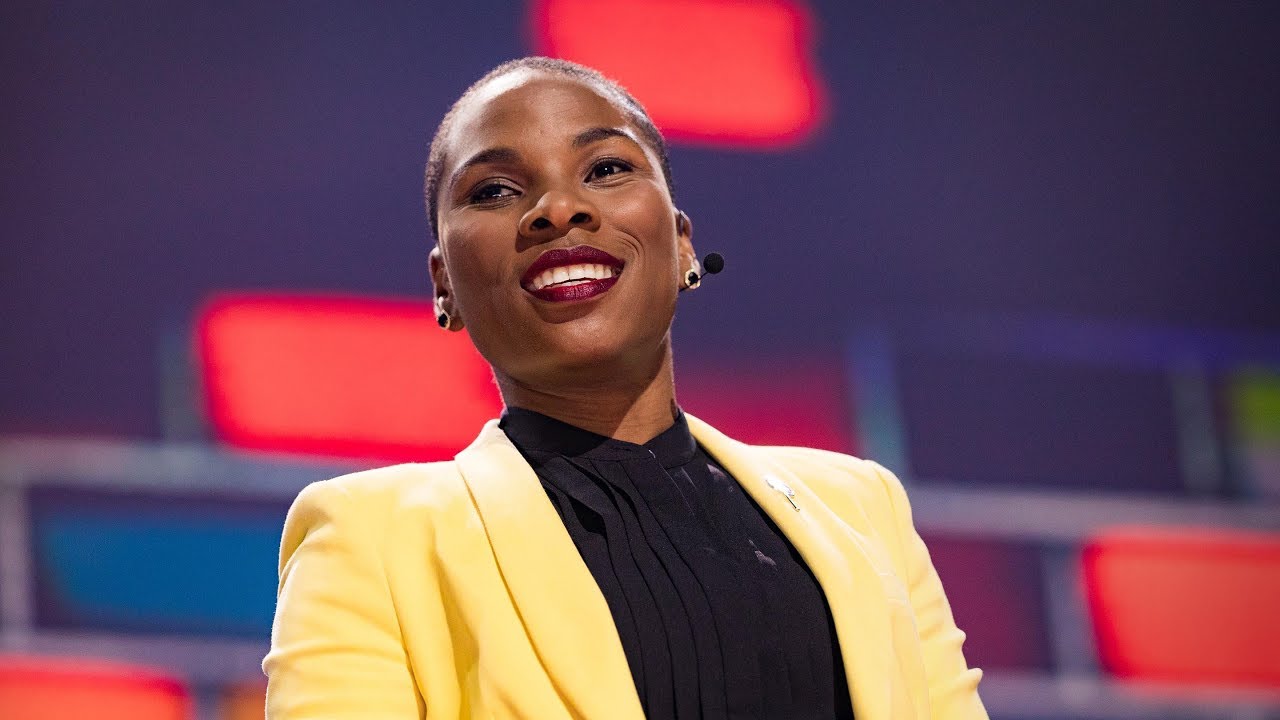
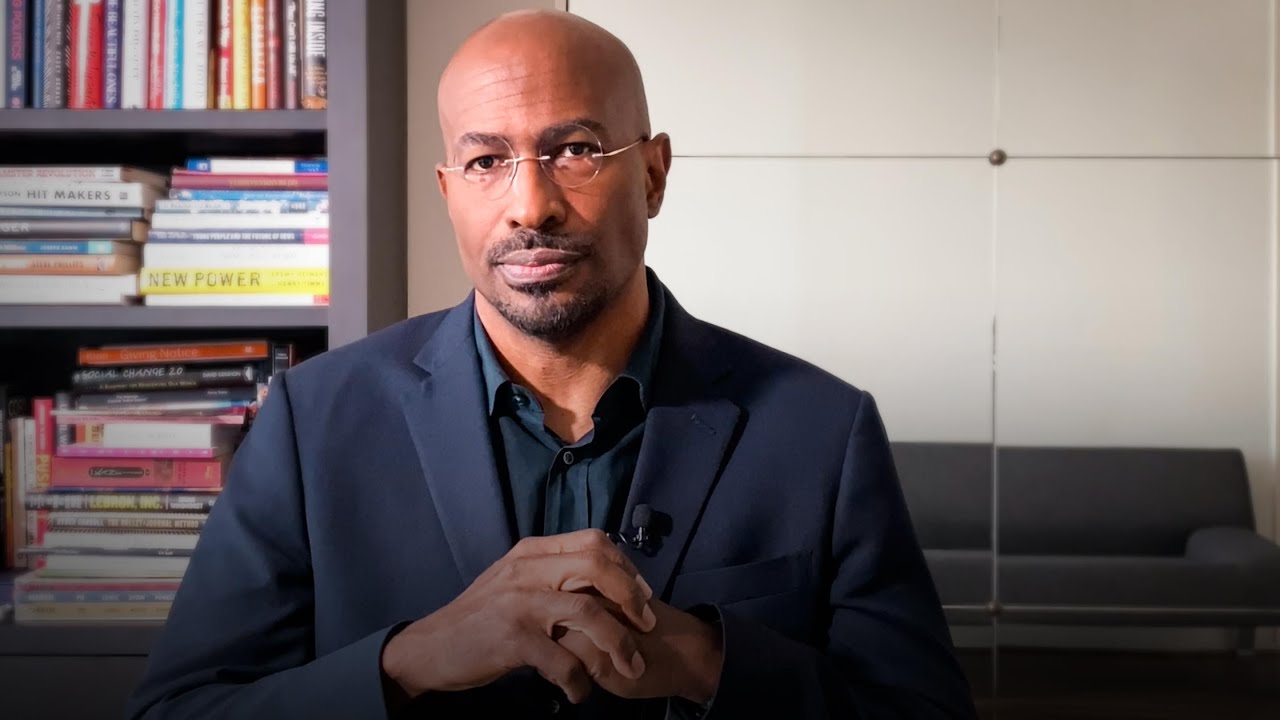
When medicine mixes with metaphor, what kind of healing transpires? In this unexpected meeting of minds, physician Amy Baxter shares her innovative approach to treating pain, while cartoonist Navied Mahdavian explores how he traces its deeper meaning. From punchlines to pain scales, they reveal how drawing can be diagnostic and why medicine might just need a touch more whimsy.
Watch Amy Baxter's TED Talk: https://youtu.be/5SpaXqAQ4Wo
Watch Navied Mahdavian's TED Talk: https://youtu.be/YPQ-jHxcSqc
Join us in person at a TED conference: https://tedtalks.social/events
Become a TED Member to support our mission: https://ted.com/membership
Subscribe to a TED newsletter: https://ted.com/newsletters
Join us in person at a TED conference: https://tedtalks.social/events
Become a TED Member to support our mission: https://ted.com/membership
Subscribe to a TED newsletter: https://ted.com/newsletters
Follow TED!
X: https://www.twitter.com/TEDTalks
Instagram: https://www.instagram.com/ted
Facebook: https://facebook.com/TED
LinkedIn: https://www.linkedin.com/company/ted-conferences
TikTok: https://www.tiktok.com/@tedtoks
The TED Talks channel features talks, performances and original series from the world's leading thinkers and doers. Subscribe to our channel for videos on Technology, Entertainment and Design — plus science, business, global issues, the arts and more. Visit https://TED.com to get our entire library of TED Talks, transcripts, translations, personalized talk recommendations and more.
Watch more: https://go.ted.com/tedintersections
https://youtu.be/I_bKcljIzU4
TED's videos may be used for non-commercial purposes under a Creative Commons License, Attribution–Non Commercial–No Derivatives (or the CC BY – NC – ND 4.0 International) and in accordance with our TED Talks Usage Policy: https://www.ted.com/about/our-organization/our-policies-terms/ted-talks-usage-policy. For more information on using TED for commercial purposes (e.g. employee learning, in a film or online course), please submit a Media Request at https://media-requests.ted.com
#TED #TEDTalks #Creativity
Оглавление (5 сегментов)
Segment 1 (00:00 - 05:00)
Navied Mahdavian: Every artist will say their medium is the highest art form, but they’re wrong, because cartooning is the highest art form. Because you can say so much with so little. And with just like a few lines, you can express happiness and smugness and sadness. Because every time I am drawing something, I mean, I find that I'm recreating the cartoon on my face, like, I'm expressing on my face, exactly, contorting my face as I'm drawing it. And there's constant, like, the erasing until I get that expression. [Intersections] [Amy Baxter, Pain management pioneer] [Navied Mahdavian, New Yorker cartoonist, writer] NM: One of the things that I like about it, and being here at TEDNext, is the intersections between -- like when I was asked to sit down with you, I was like, I'm going to be talking to a doctor. I don't know what I'm going to be talking about. But then as I started thinking about it, like, realizing that there were those overlaps. Amy Baxter: I think that’s one of the things that the people I've met are really good at, is finding threads and then sort of pulling them until you both come to the place where you're together. One thing I thought was interesting about our intersection is that most of my life and my scientific work has been kind of in chunks, you know, it's like I get interested in this thing, and I do the thing, and I publish the paper or whatever, and then I move on to the next chunk. And I wondered, when you make a book or when you even make one cartoon, does that exercise whatever either demon is pushing you or whatever creative nugget? Or do you still keep a thread that goes through all of them? NM: I was going to make a joke about the demon where it makes it sound much more dramatic, but I think the demon is this desire to be liked and for people to laugh at what I'm doing. But the book and the cartoons are really different, because the cartoons, you're just doing one after another and you just kind of like, turn them out. You find something that's funny, and then they're inevitably going to be rejected at the end of the week after I've submitted, and then you just move on where the book is a much larger project. And, so the book that I wrote, "This Country: Searching for Home in (Very) Rural America," I mean, that was a project that from its inception to publication, was about three years, which is a very different process than the cartoon that, you know, I think of something funny about dog butts, draw it, send it out, and then just move on to the next cartoon idea. But I don't know if there's ever this, excising or, like, reaching a point of completion, like, the book was finished, but even... in the process of drawing it, there's like, getting the 10,000 hours in where the beginning of the book to the end of the book comparing it, the drawing, like, style at the end is better. And I've spoken to other artists about this, the frustration that when you're working on something long where you are just always getting better at what you're doing because it's a craft. And then wanting to go back and like, I wish I could go back and redraw those, but then inevitably then that would look better than the end. And I feel like that process is a constant. And so maybe that's the demon. It's just the never being satisfied with what you're doing. AB: Interesting, so it’s the craft, it’s not the idea or the nitus of it, it's really more the execution of it. NM: Yeah, well then there are the ideas. So most of the work that I've been doing in the past couple of years, since I finished the book, I went from the single gag cartoons to comics that are about me and like the memoir and so using myself as a starting point to explore things that in that moment are interesting. But I think they fit into -- there are themes and genres, and so I think I'm just exploring those through these little nuggets. And so I don't know if that exploration is ever -- so there’s the craft and then there is the idea. And I'm exploring the idea while refining the craft and then figuring out new ways to explore those ideas. AB: So you -- and I'll let you ask questions, too, but you have moved to a lot of different places. And one thing I find about being in foreign countries, whether it's in your own country or just difference, I think that we know who we are because the banks of our river are made up by the things and the people that keep us in place. And so when you leave those and you no longer have your banks, it can be very destabilizing. How do you get adjusted to a new environment, and are there things you do better each time or things that are always disorienting? NM: So I think in the past -- I have a five-year-old daughter, and I think within the first four years of her life, she lived in four different cities in two countries. And I think we always say kids are really resilient, but then I think we're really resilient. But I don't know if that process does get easier. And I think that there's always the destabilizing
Segment 2 (05:00 - 10:00)
and I think, like, as you get older, it becomes harder to make friends and like, you have the certain things that are anchoring. But one of the questions that I explore in my book is, what is home? So it's like searching for home in very rural America. But I think that that's just like, what we're constantly doing, no matter where we are. And I think we have those, the concentric circles where, you know, you have your immediate home, like, your house, and then you have your yard and your wider community. And I think that moving, there's like that inner ring and then the outer rings are the things that are constantly changing. And sometimes you're not able to find that stabilizing force. So like when I moved to rural Idaho, I tried finding, like, circles, those outer circles, they never really felt stabilizing. And so then there was the decision then to move. And so now I'm living in a new place and hopefully, you know, find that. AB: Yeah, we used to think that, you know, happy people can be happy anywhere. And then we went to Dallas and it was really interesting because the values of the people around us were so different. It really was hard to trust and feel common ground. And it turned out it was much more what mattered to people that made us feel comfortable. Not even activities or educational level or any of those things, although they helped. But what made much more of a difference was the why of the people. NM: I mean, what about for you? What is it like? Because, I mean, you've developed like, physical products. I mean, I really want to talk about the BARF system, but what is it like for you, as you are developing these I mean, is there the moving on, excising? AB: So the thing you're referring to, my first grant was to make a scale for nausea, and I had the idea, sitting at my desk, I'd been working with pain for so long, and so I had all of these pain scales. And you know, which pain scale has better psychometrics and is valid. And I thought, you know, what would be great is if we had a scale for barfing, and then the last face could be this blowing chunks face. So that made me chuckle. And so then I thought, you know, actually, it's worse for many people to feel nauseated than it is to feel pain. So I had my brother, who's a computer programmer, make a Python program, and we had Luke Conrad, who's a cartoonist, draw a whole bunch of different faces that represented the six basic, Ekman calls them the six -- six universal faces or six universal emotions. So we represent it -- and I read all this stuff about nausea on spacecrafts. And so we figured out which parts of a face on a cartoon made someone feel like that person had nausea, you know, was it sweat coming out? Was it a trembling lip? Was it feeling dizzy, what was it? And so we made all of those things together. And then we had 120 faces, and we just morphed them. So it was like a little animation of this, you know, neutral face going blah, chunks and then, and so the nurses would figure out where they thought each of the different intermediate places was. But the things that I'm most proud about the BARF scale, are that it's been translated in three languages for kids with cancer and validated in those languages. NM: Do they keep the acronym BARF in the different languages? AB: That's a great question, I don't know. I think they do, because I don't think they realize that the acronym stands for Baxter Animated Retching Faces Scale. But the only reason I had to have an acronym was because the journal I wanted to get into was too highbrow to use the word barf. And so I snuck it in, but I was like, "No, no, no, this is the name of the creators. It came from an animation of cartoons. That's why we have to keep this name." So I got the name BARF in and also there's a little monster hidden in the last face. It's got a very dear place in my heart. But despite this whole hero's journey spiral concept, once I was done with it, I wasn't interested in researching nausea anymore. I did my thing, other people can use it, I'm on to my next thing. I got so much grief from the doctor who had mentored me through it, because he was like, "Pain is dead, we've got it taken care of. Nausea is the next frontier." And I was like, well, yeah, but I'm more interested in pain, so I'm done with that part. So when I get something done, I'm much more interested in going on to the next thing. And I may bring pieces with me, but it's no longer interesting. NM: As you were talking about the development of the scale, as a cartoonist, I was getting excited, and that was the thing that I was most excited to talk to you about because I was like, oh, what an interesting overlap.
Segment 3 (10:00 - 15:00)
Something I talk about in my TED Talk is the power of cartoons and why every artist will say their medium is the highest art form, but they’re wrong, because cartooning is the highest art form. Because you can say so much with so little. And with just a few lines, you can express happiness and smugness and sadness. And so as you were talking about developing, like, finding what the neutral is to the barfing, but then all those in the middle, like, I didn't know, you said, that somebody had developed the different faces... which I mean, as a cartoonist, I would have loved to have known. Because every time I am drawing something, I mean, I find that I'm recreating the cartoon on my face, like, I'm trying, I'm expressing it on my face, exactly. Contouring my face as I'm drawing it. And there's constant, like, the erasing until I get that expression right. And so I'm constantly recreating that in it. And so hearing the process, like, how did you settle on these are the six? AB: Well and that's the thing, we had the essences of the emotions. So we had the essence of disgust, the essence of sweating, the essence of feeling nauseous and concerned. And then once those faces looked good, then everything morphed from a computer standpoint until it was incremental. And then we had real people, nurses, gauge where on that spectrum they thought 20 percent, 40 percent, 60 percent, 80 percent was. But it's interesting what you say, because I think that, we just got back from going to a bunch of different Picasso museums in a row. And so the time where he backed off from expressing everything in a face to expressing an eyebrow and a nose with one arc, and finding what the most distilled essence is of something. And I think that is a really interesting part about cartooning. NM: It's like that distillation of what are complex emotions, but into just a few lines. And we’re immediately able to recognize those emotions through those lines. AB: Do you know if that transcends cultures? NM: It's the phenomenon of face pareidolia where we see faces in inanimate objects. AB: Oh that's cool. What's that word again? NM: Pareidolia. I should know this. I was a Classics major, I should know the Greek for it, but yeah, I mean there's something evolutionary about it that we see faces in like, sort of happy, the front of a car, we'll see a smiley face or whatever. We see faces everywhere. And so I think that the ability to recognize smiley face as a smiley face is whatever that -- AB: It's hardwired. Because developmentally for children, they are only able to see black and white early on, but one of the reasons why you actually can tell autism very, very early is because they're not making the eye contact or they're not seeing the face shapes. That's not where their attention is. And as kids get older, you know, 18 months, their attention is not at the interaction between people. Their attention is at a spot on the distance or a tree or something like that. So for most people, I think you're right. It's just universal. And it probably is part of that hardwiring in for how we're born. Things that we may also overlap on, pain is interestingly very cultural. It is very different in different cultures. NM: Go on. AB: Go on. Yeah, so there are different cultures where letting it out is more what you're supposed to do. NM: It's the culture of my parents' household. AB: Yeah, cultural, so it is much more permissible to not be stoic. It is much more permissible just to say, you know, to really lean into how you're feeling or letting people know. And then there are cultures that are very stoic. And male and female feel pain differently. So it's interesting to me that cartooning or that expressions could be so... symmetric amongst different cultures when one of the most basic self-protection techniques we have is actually represented in very different ways in different cultures. NM: Which also, I mean, I thought about this after having my daughter, where the ways that we, even within, like, American culture, the way that we express happiness or sadness, the sort of smiley face, the up and the down, we don't actually frown, but we recognize the frown as being sad. But then I saw with my daughter when she was a toddler, she actually would frown. And she would -- so there was something that was much more representative of our pictorial representations of happiness and sadness and whatever else in her face, and for whatever reason, adults don't do that anymore. And I wondered if, like, are all kids like that?
Segment 4 (15:00 - 20:00)
At what point do we lose that? Because she would definitely frown. AB: Have a full-on pout. NM: Exactly, the full-on pout, but we don't actually see adults do it with sort of, often with the downturn, it’s usually the comical expression of that, but not actually. Because I think with our expressions and our feelings and how we express them, I mean, often it's not really in the face that we're representing how we're feeling, right? It's what makes it so difficult to know, like, you're speaking to somebody, how are they actually feeling? Because we can mask it so well. Where little kids, they don't do that. AB: Nor do people with visual impairments. My son has a visual impairment. And so he has often a resting superiority face or a resting... hungry. Many things will come across his face that he doesn't hide. It is also getting back to the genetic hardwiring ideas, this concept that if you make yourself smile, even holding a pencil in between, that it becomes so ingrained and such a repetitive thing that you will feel happier, you'll feel more joyful. And so I wonder if we also negatively reinforce ourselves and don't frown because it does make us feel worse. NM: Oh, that's interesting. AB: I don't know. When you're drawing something that is about your own family, or about something that's really personal to you and grief. How does that change how you approach drawing it? NM: So I wrote a piece about... I've done a couple of pieces related to grief. One about accompanying my dad to dialysis for the first time, and another about my grandmother the last time I got to see her before she passed. And in each of those, I mean, like... grief is complicated. So my approach to both of them was to try to take something big and to make it simple. And I did that by focusing on certain things. So one was going to dialysis with my dad. He's slowly dying of kidney failure. And then for my grandmother, it was focusing on her hands. One of my earliest memories is of her hands. And I think that... when we’re trying to dodge grief, like, not deal with our grief, we tend to caricature the person that we've lost. And cartooning has allowed me to focus on certain details, which then I think opens up into this complex person and to my complicated relationship with them. So like, with my grandmother, focusing on her hands was just this focal point. Because there's so much that I could have written about her, but focusing on that allowed me to sort of explore certain memories that were related to that and to also keep it in this very personal realm, because my grandmother's not here. So I'm, in some ways, speaking for her and on her behalf, but keeping it firmly rooted in my experience of her, if that makes sense. AB: Did coning it down make it easier to handle? NM: Totally. Because, and particularly with comics, I tend to think of it as, like, I have these number of panels in order to express this very big experience. And so that allowed me to... yeah, I guess just to focus in on this one specific thing and this expression of my love for my grandmother, because otherwise, I mean, there's just so much that you could explore. AB: It's interesting that that's really one of the best ways the people who get through pain and don't have pain later in life is because they learn how to only focus on one thing, that meditation teaches you how to not pay attention to extraneous things. And so to be able to just focus on hands or just focus on a rock or a breath is partially allowing you to let go of all the pain externally. And it's both physical as well as mental. If you're in one place that you can control, that filter is healing and liberating and safety. NM: So what you're saying is I dealt with my grief in the correct way. AB: I think it's just interesting that it's analogous to the way we deal with physical pain. And so what you did was a visual embodiment
Segment 5 (20:00 - 22:00)
of the same techniques that are helpful for dealing with physical pain. And I don't think there's a correct or a right or wrong. It's just interesting that both of them are effective. That's probably what's important for everyone dealing with grief, is finding what works for you and healing, hearing about other people's mechanisms for dealing with pain or grief or anything helps you figure out which one does work for you. I don't think there's right or wrong for any of it. NM: So you're using vibration to deal with pain. What is the hardest part of that? AB: I think the hardest part is worrying that people are going to laugh at me when I'm talking about vibration or vibrators or not taking it seriously. I think that probably for me, the worst thing is not being respected, is being dismissed. I think it's feeling marginalized. And so because what we're doing is very specific with different frequencies, it’s really easy for someone to say, “Oh, well that’s distraction.” Or, “Oh you’re dealing with vibrators.” And so, I think the hardest part for me has been trying to not get my emotions in the way or my fear of rejection or fear of not being taken seriously because we’re working with a different kind of physics, and it can be so easily reduced, kind of like, you know, your work is so artistic and so deep and emotional and then people say, "Oh, but you're making cartoons." NM: My little doodles, as people love to say. AB: Oh, nice, yeah. NM: I love your little doodles. AB: Love the one where your grandmother died. That was so cute. NM: Yeah, so, another commonality, the fear of rejection and not being taken seriously. AB: Yeah, yeah. So much in common. NM: Thank you for having this conversation. I'm really happy that you were able to inject into the conversation, what was it, BARF and vibrators. AB: There's so many good things. I think that this is actually the best part of this space for intellectual discourse, is when you can find a commonality with things that seem so completely different and then open up these connections. Because one thing about innovation is that you're never going to innovate if you're only talking to people in your own space. So really, the only way you can make huge leaps is by having a great conversation with someone who's in an arena and a discipline that you would not normally talk to. So this has been really great. I appreciate you having the time to talk to me. NM: Thank you.