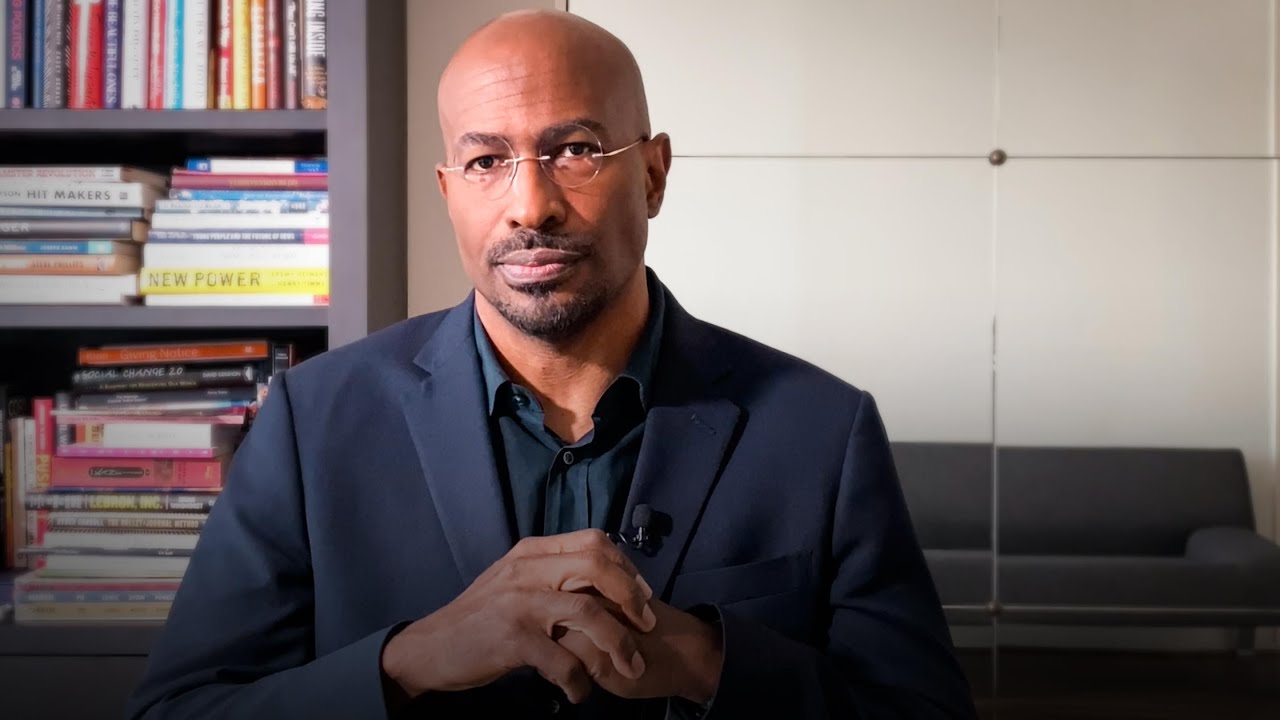
The Role of Art and Forgiveness in Democracy | Marc Bamuthi Joseph and Wendy Whelan | TED
9:40

The Role of Art and Forgiveness in Democracy | Marc Bamuthi Joseph and Wendy Whelan | TED

TED 25.05.2025 21 823 просмотров 487 лайков обн. 18.02.2026
Поделиться Telegram VK Бот
Транскрипт Скачать .md
Анализ с AI
Описание видео
Can art pave the way for a politically divided nation to move forward? Artist, cultural strategist and TED Fellow Marc Bamuthi Joseph reflects on the role of art, forgiveness and remembrance in the pursuit of public healing — especially at a time when trust is contested and community forums fractured. Wendy Whelan, associate artistic director of the New York City Ballet, joins him on stage for a rendition of “The Carnival of the Animals,” exploring how the cuckoo bird exemplifies the cycles of inaction that lead to injustice. It's more than a performance — it's a reckoning. (Recorded at TEDNext 2024 on October 24, 2024) If you love watching TED Talks like this one, become a TED Member to support our mission of spreading ideas: https://ted.com/membership Follow TED! X: https://www.twitter.com/TEDTalks Instagram: https://www.instagram.com/ted Facebook: https://facebook.com/TED LinkedIn: https://www.linkedin.com/company/ted-conferences TikTok: https://www.tiktok.com/@tedtoks The TED Talks channel features talks, performances and original series from the world's leading thinkers and doers. Subscribe to our channel for videos on Technology, Entertainment and Design — plus science, business, global issues, the arts and more. Visit https://TED.com to get our entire library of TED Talks, transcripts, translations, personalized talk recommendations and more. Watch more: https://go.ted.com/marcandwendy https://youtu.be/30SmyLqZ1vw TED's videos may be used for non-commercial purposes under a Creative Commons License, Attribution–Non Commercial–No Derivatives (or the CC BY – NC – ND 4.0 International) and in accordance with our TED Talks Usage Policy: https://www.ted.com/about/our-organization/our-policies-terms/ted-talks-usage-policy. For more information on using TED for commercial purposes (e.g. employee learning, in a film or online course), please submit a Media Request at https://media-requests.ted.com #TED #TEDTalks #SocialChange
Оглавление (2 сегментов)

  1. 0:00 Segment 1 (00:00 - 05:00) 628 сл.
  2. 5:00 Segment 2 (05:00 - 09:00) 460 сл.
0:00

Segment 1 (00:00 - 05:00)

About five years ago, I moved to Washington, DC, to become one of the vice presidents of the Kennedy Center. For the last 25 years, I've made a living writing everything from poems in Oakland to operas in Amsterdam. Living in DC, though, has made me obsessed with forgiving. And also with forgetting. Forgiving requires a deeply personal commitment to healing. But forgiveness is also a political animal. Like, how do I, as a citizen, forgive what happened on January 6? How do I reconcile what I think is a national injustice, which is that since the pandemic, through the jungle of managing a national trauma in public health, we haven't really invested very much in public healing. Which leads me to forgetting. It seems like when you start banning books in a country, you're asking us all to forget a bunch of things. Historical erasure in schools is how forgetting happens in a systemic way. But forgetting also happens through disputed realities and a disruption and disinformation. Through a culture that manages to produce multiple options of facts. Says, yeah, maybe it was a riot, but also feral tour of a federal building, as if we're all supposed to forget what we actually saw. So is it possible to remember and forgive? And let's say we can remember and forgive. How does art make that possible? My job at the Kennedy Center is not social passivity, it is social impact. People ask me all the time, what can art do to help create an equitable society? But that's the wrong question and it puts the onus on the wrong people. The actual question is why aren't our healthcare systems more like music? Why doesn't our political apparatus operate more like the flow of a poem? How do we elevate the stock of art that helps create an infrastructure for both remembrance and forgiveness? Chasing these questions led me to a piece of classical music called "The Carnival of the Animals" by Saint-Saëns. Historically, is performed as a series of 14 mini suites, each inspired by a different being in the animal kingdom. Our version of the carnival, which has a mix of Saint-Saëns' music, some new music, some a capella moments, asks a different set of questions. We ask what if "The Carnival of the Animals" took place in the Capitol building on January 6? Who were the animals that were present on that day? We ask, can our democracy survive if we don't manufacture the empathy it takes to forgive? This country uses alloys to manufacture cars. We use brick to construct buildings. Can we use art to manufacture empathy as an intentional aspect of our economy? As an example, we want to share with you our version of the cuckoo. Now, our piece premiered in an election year when one of the candidates running for president was indicted in federal court for his role in the riot. That said, the cuckoo is not about crazy. It's about cycles. It's a moment in our work that remembers the toxic cycles that led to January 6. It's a piece that asks, how do we forgive the actors of chaos if we don't remember the cycles of inaction that propagated them? Here to help me is the great Wendy Whelan. "The Carnival of the Animals" is a parable about structure structured in parallels about animals. I want to bring one of those animals to life. Joining me is New York City Ballet icon, the artistic director of the New York City Ballet. This is Wendy Whelan. (Cheers and applause) About 2:30, maybe 2:45, my mom texts me to see if I'm safe. That's a lie. I text her to see if she's OK. My mom is from Haiti.
5:00

Segment 2 (05:00 - 09:00)

She's seen this before. A riot, a coup, a despot, his crew. I ask her if she's triggered. The cuckoo flies above and after a while, falls slowly to the Earth. It has a slight speech impediment. The human ear thinks its call repetitive. repetitive, as if humans could be the arbiters of another species' song. Though in this case, the human ear is not wrong. The cuckoo repeats herself. Like each leaf on the branch upon which she perches is a rosary bead or a Tibetan mala. The human ear doesn't hear the slender bird's prayer. No matter. No matter, she attends to other concerns. Laying eggs in other birds' nests, eating insects, learning French. (French) The cuckoo flies. And after a while, falls slowly to the Earth. (English) Because her mantras strike the ear as monotonous drone, humans clone her tone in their clocks. The hour comes, like clockwork. The song that we recognize as time does not stop. The cuckoo is no yeoman laborer, singing like the incessant swinging of a mountain sculptor's chisel. Her song is not relentless work. It is incessant prayer. Humans think her crazy, repeating herself, repeating herself. They use her name in pejorative vain, call each other out by slurring the sound of cuckoo. Expanding her striped-feathered breast and giving the sky her mouth. Cuckoo comes in many colors. Mad styles. Got family in Europe and the tropics. Tragic and romantic like unrequited love on a North Pacific island. And for the record, clock fabricators and American gift makers, She is not simple-brained. She happened to be outside the window when George Santayana coined the aphorism that those who cannot remember the past are condemned to repeat it, condemned to repeat it. She's been there for trickle-down economics, for TV personalities running for public office, for athletes rapping, for European peace treaties with native people, and for 14 different ends to the COVID 19 pandemic. Remember the past. Remember, cuckoo. Matter of fact, she's noticed that in the cyclical strain on the infrastructure of public health, there hasn't been very much attention being paid to public healing. Like the act of intentionally and collectively acknowledging the social and psychological trauma of loss and divisiveness, acknowledging that the planet has endured a rift, and being intentional about healing together from that rift in public. Public healing, cuckoo. Repeating, cuckoo. The song on the automatic rifle. Mediocre and entitled, tantalizingly bland, middle class, white supremacist, disconnected, white man is on the premises. American terrorist thinking and praying and thinking and praying like American senators or American Second Amendment defenders, neglecting the context of the weapons that the framers were suggesting. They was talking about muskets, yo. The cuckoo flies above. Cuckoo. (Cheers and applause)

Ещё от TED

Ctrl+V

Экстракт Знаний в Telegram

Транскрипты, идеи, методички — всё самое полезное из лучших YouTube-каналов.

Подписаться