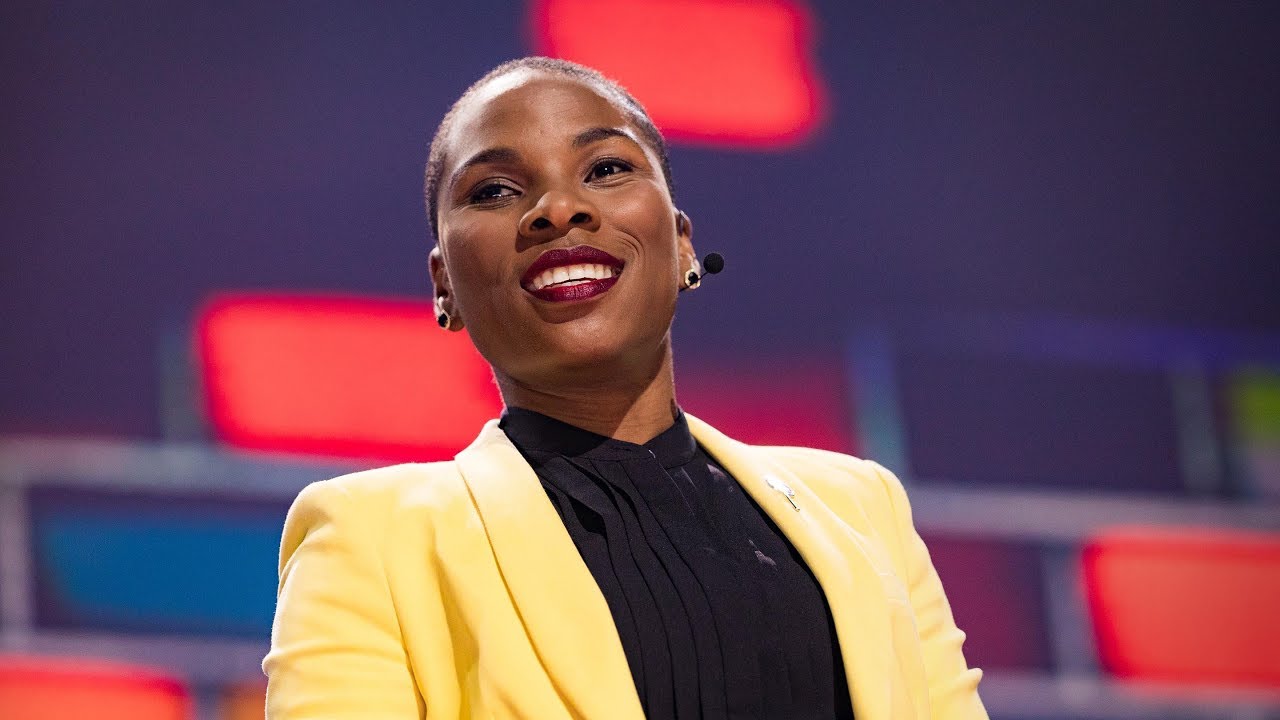
Are you thinking of returning to school? Educator Candice Neveu shares three challenges you might face continuing your education mid-career — and three mindset shifts to speed up your learning, improve your confidence and achieve the results you want.
If you love watching TED Talks like this one, become a TED Member to support our mission of spreading ideas: https://ted.com/membership
Follow TED!
Twitter: https://twitter.com/TEDTalks
Instagram: https://www.instagram.com/ted
Facebook: https://facebook.com/TED
LinkedIn: https://www.linkedin.com/company/ted-conferences
TikTok: https://www.tiktok.com/@tedtoks
The TED Talks channel features talks, performances and original series from the world's leading thinkers and doers. Subscribe to our channel for videos on Technology, Entertainment and Design — plus science, business, global issues, the arts and more. Visit https://TED.com to get our entire library of TED Talks, transcripts, translations, personalized talk recommendations and more.
Watch more: https://go.ted.com/candiceneveu
https://youtu.be/T8jz74FTUNU
TED's videos may be used for non-commercial purposes under a Creative Commons License, Attribution–Non Commercial–No Derivatives (or the CC BY – NC – ND 4.0 International) and in accordance with our TED Talks Usage Policy: https://www.ted.com/about/our-organization/our-policies-terms/ted-talks-usage-policy. For more information on using TED for commercial purposes (e.g. employee learning, in a film or online course), please submit a Media Request at https://media-requests.ted.com
#TED #TEDTalks #learning
Оглавление (3 сегментов)
Segment 1 (00:00 - 05:00)
Isn’t learning fun? I absolutely love it. For the past 15 years, I have been an academic writing instructor, and I've been a coach for the last five. The people that I usually work with are adults who've returned to school, and I really love working with these folks because, like them, I'm a lifelong learner, and I've been to school three times, so far, in the past 20 years. But I still remember the first time that I went back. I almost quit, the first semester. By midterm, I was collapsed into this shabby chair in my prof's office, in the corner, in the midst of an existential crisis. Things were going horribly. The seminars that I so diligently prepared for were painful. Every time we were asked for our responses and analysis of the readings, everyone else's responses sounded so smart. Mine, by comparison, seemed so basic. And then, I got my first paper back... and I'd bombed it. Yep. (Laughs) So there I was, in tears, convinced that I was the dumbest, least capable person in the class. And honestly, I got to tell you, I was ready to quit. But I had actually staked a lot on going back to school. I had actually quit my best job to date to pursue my dream of becoming an instructor. So I wanted my prof’s advice before I made any final decisions. She handed me some tissues, and instead of agreeing with my assessment, she told me to stick it out. And she said that apparently, I wasn't doing any worse than anyone else. Now, I was pretty skeptical, because all the evidence seemed to point to the contrary. But figuring she knew something that I didn't, I held on. By the end of term, she was right. My grades began to improve, and I learned that my fellow students were just as overwhelmed as I was. Needless to say, this experience has stayed with me, and it has informed how I teach and coach. I've been where my prof was and said the same things to my students and clients. I've also learned a lot since then about the relationship between confidence and learning. Nowadays, the mid-career professionals who come to me for help with their academic success come to me because they think they have a skill problem. And sure, they could use some skill-building for sure. But for many, that's not the crux of the issue that's getting in the way of their success. The real issue lies in how they think about themselves as learners and what they believe to be true about their abilities. Now, this might seem like a bold claim, so let me explain. Why aren't skills the real issue? Most of us are very capable learners. The people I work with are accomplished professionals and experts in their field. They wouldn't be where they are if they didn't know how to learn and build skills. When I went back, I had been writing and training for several years in a professional context. My challenge was up-leveling my analytical and critical thinking skills. Once I was oriented to that gap, I set about closing it. My grades began to improve. I see the same thing with my students and clients. Bridging the skill gap is easier than we think. It's the confidence gap that is much harder to bridge. But it needs addressing because that is what is getting in the way of our academic success in learning situations. So what's going on with our confidence anyway? What is happening? Why is it so hard? Based on my experience, adults in learning situations face three main challenges. The first one is that we struggle with a lot of self doubt and uncertainty. For many of us who go back, the learning curve is really steep. It's not only been years, maybe decades, since we'd been back in school. We've spent a hot minute or two since we've been a beginner at anything. All of a sudden, we find ourselves having to navigate online platforms and figure out study habits
Segment 2 (05:00 - 10:00)
and this whole academic writing thing is a whole next level. And then, we have to read critically. It's a lot. And then add to this that when we return to school, we often bring with us all the old patterns and beliefs that we've been carrying for the past ten, maybe 20 years, about who we are as learners. In the past, if we thought that we were weak students, we've already got bags of doubts and insecurities and anxieties, and we judge ourselves harshly right out of the gate. Now if you’re thinking, “I was a good student, I got this,” -- no, no. We struggle because we can set the bar unreasonably high and then judge ourselves just as harshly and as quickly. And it's difficult. The second challenge that we face is that we spend a lot of time comparing ourselves to everyone else. Now, this is a really human thing to do, and it's a very easy pit to fall into for high-achieving adults. Because, let's face it, we want to know that we can at least keep up with or do better than our peers. But when we compare ourselves to other folks, it can be paralyzing, because we can fall into thinking that we are less than them. This is especially true when people start sharing grades and progress reports. We can go from feeling accomplished and on top of things to feeling behind and confused, in a matter of minutes. And the third challenge that we face is that we have a strong fear of failing. Now, for most of the folks who go back, we've got a lot on the line. We're juggling a job and family responsibilities alongside school. Plus, we want to do well, because we're usually there to up-level our career or hit a career goal in some way, to say nothing of the time and the financial investments involved. So being afraid of failing, well, it's understandable, right? But it is an obstacle to getting the very thing that we want. So those are the challenges. There is good news, though. These can be overcome by making three important mindset shifts when we are in learning situations. The first shift is that we really need to question the stories that our brain is telling us about who we are as learners. Every day, we have a ton of thoughts, and we often don't stop to examine them. But when we do, we notice that often most of them are really unhelpful. And this is especially true when we are pushing ourselves out of our comfort zone. Our brain interprets the challenges and discomforts that come with learning and trying new things as dangerous, and it wants to move us into what is familiar and safe. So the way that it does that is it amplifies all of our fears and cranks the volume on our inner critic, who's more than happy to tell us all the ways we sucked in the past, how we're not doing it now, and there's no hope for the future. Our job is to notice these stories and why they're happening -- because we're stretching -- and to challenge these outdated beliefs. So when we question the truthfulness and the relevance of the stories that we're carrying for who we are in our current context, and choose more accurate and helpful ones, we can change our entire experience. The second shift that we need to make is that we need to look for the lessons in the mistakes. As learners, we are going to make mistakes. We just are. Rather than making them mean something about our current or our future ability, or our self-worth, for that matter, we need to get curious and look at these setbacks as offering data that we can use to improve. And part of being curious is remembering that the mistakes are where the learning happens. And that's what we need to aim for -- progress, not perfection. When we release ourselves from the need to know it all, be perfect and do it all perfectly, we are much better able to evaluate our progress and actually identify the skills we need to build for the outcome that we want. And then finally, the third shift we need to make is to practice self-compassion, not self-criticism. Learning and pushing ourselves to our growth edge, it's uncomfortable work. It's not easy. And that's why this shift is the most important one
Segment 3 (10:00 - 11:00)
because it's actually the fuel for our success. When we stop criticizing ourselves and start showing ourselves the kindness and the compassion that we so easily give everyone else... we are much more likely to take risks, because we create a sense of safety inside ourselves, that it's OK to make mistakes and learn from them. And when we remember that we're imperfectly human, and that our fellow students are also imperfect humans, we’re less likely to compare ourselves to them and more likely to connect and collaborate with them instead. When we cultivate a belief inside ourselves and show ourselves compassion, we increase our ability to face challenges and learn from them. And we build the resilience and the confidence that we need to succeed in learning situations. And from that foundation, we are better able to identify the skills we have -- and we do, by the way -- the ones we need to hone and the ones that we need. Closing the confidence gap enables us to reach our goals, feeling accomplished and proud rather than bedraggled and depleted. My experience and my work has convinced me that when we build a positive growth mindset alongside our skills in learning situations, not only do we increase our success -- like, intensely -- we uncage our fullest potential, and our possibilities for change and growth are limitless. Thank you very much. (Cheers and applause)