Is Technology Our Savior — or Our Slayer? | Ruha Benjamin | TED
11:53

Is Technology Our Savior — or Our Slayer? | Ruha Benjamin | TED

TED 07.11.2023 95 562 просмотров 2 156 лайков обн. 18.02.2026
Поделиться Telegram VK Бот
Транскрипт Скачать .md
Анализ с AI
Описание видео
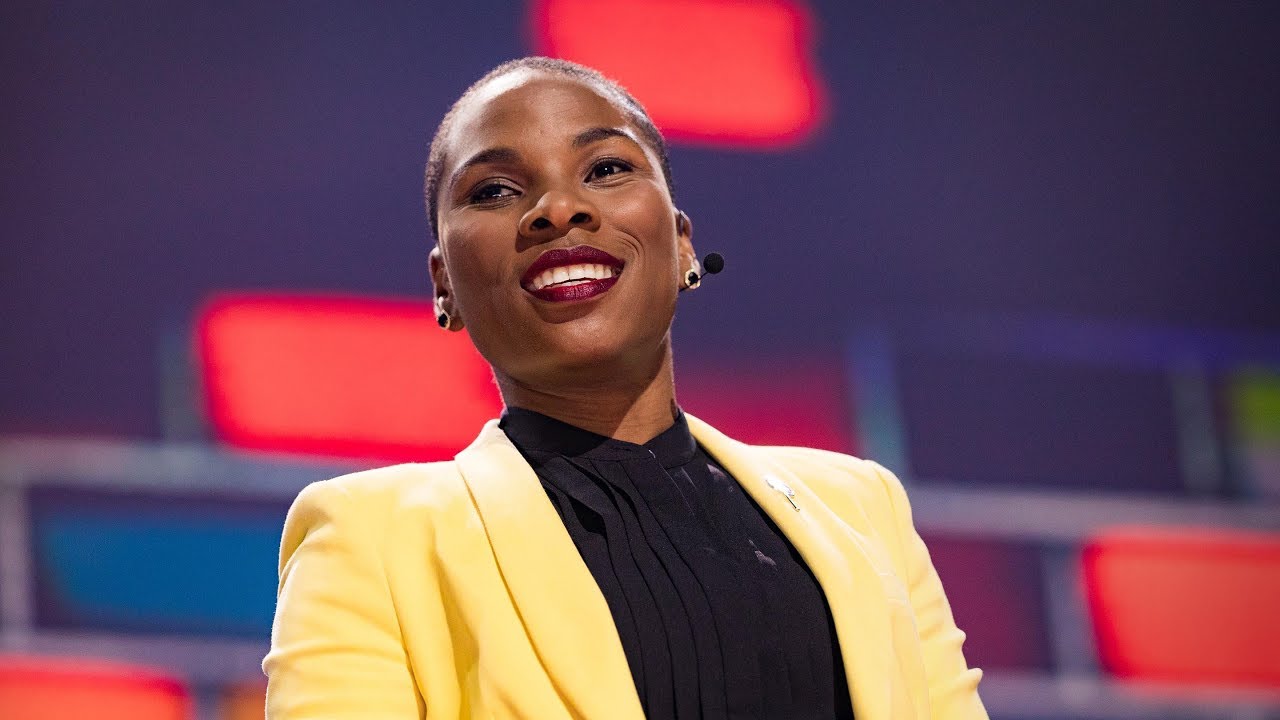
When it comes to technology, we're often presented with two contrasting visions of the future: one where technology fulfills all our desires, and another where it leads to chaos and conflict. Sociologist Ruha Benjamin is here with a more radical vision of the future — one where humanity isn't saved or slayed by technology, but rather uses it to uplift ordinary people and make things like health care and housing for all a reality. If you love watching TED Talks like this one, become a TED Member to support our mission of spreading ideas: https://ted.com/membership Follow TED! Twitter: https://twitter.com/TEDTalks Instagram: https://www.instagram.com/ted Facebook: https://facebook.com/TED LinkedIn: https://www.linkedin.com/company/ted-conferences TikTok: https://www.tiktok.com/@tedtoks The TED Talks channel features talks, performances and original series from the world's leading thinkers and doers. Subscribe to our channel for videos on Technology, Entertainment and Design — plus science, business, global issues, the arts and more. Visit https://TED.com to get our entire library of TED Talks, transcripts, translations, personalized talk recommendations and more. Watch more: https://go.ted.com/ruhabenjamin https://youtu.be/QO3nY_u6hos TED's videos may be used for non-commercial purposes under a Creative Commons License, Attribution–Non Commercial–No Derivatives (or the CC BY – NC – ND 4.0 International) and in accordance with our TED Talks Usage Policy: https://www.ted.com/about/our-organization/our-policies-terms/ted-talks-usage-policy. For more information on using TED for commercial purposes (e.g. employee learning, in a film or online course), please submit a Media Request at https://media-requests.ted.com #TED #TEDTalks #technology
Оглавление (14 сегментов)

  1. 0:00 Intro 90 сл.
  2. 0:50 Silicon Valley 91 сл.
  3. 1:30 Hunger Games 212 сл.
  4. 3:20 Estopia 72 сл.
  5. 3:57 A lopsided imagination 128 сл.
  6. 4:57 Utopias require inequality 89 сл.
  7. 5:49 Desad 102 сл.
  8. 6:40 Barcelona 165 сл.
  9. 7:50 Atlanta 91 сл.
  10. 8:35 Tech Booms 28 сл.
  11. 8:51 Cop City 72 сл.
  12. 9:21 Forest Defenders 56 сл.
  13. 9:51 Collective Imagination 61 сл.
  14. 10:25 A Shared Vision 156 сл.
0:00

Intro

This transmission is for future generations. As it stands, a small sliver of humanity is currently imposing their visions on the rest of us. They invest in space travel and AI superintelligence and underground bunkers, while casting health care and housing for all as outlandish and unimaginable. These futurists let their own imaginations run wild when it comes to bending material and digital realities, but their visions grow limp when it comes to transforming our social reality so that everyone has the chance to live a good and meaningful life.
0:50

Silicon Valley

We are in many ways trapped inside the lopsided imagination of those who monopolize power and resources to benefit the few at the expense of the many. And as I see it, there are two stories these monopolists sell us about what the future holds. The first is the Silicon Valley version, in which all our preferences are tracked and desires catered to. Chatbots, virtual assistants, driverless cars at our beck and call. All our wants and needs met in an instant. This is their utopia, where technology is our savior
1:30

Hunger Games

a future where our automated offspring know us better than we know ourselves. Ease and convenience, just a click away. And in their wildest dreams, we merge with technology, optimizing our potential to be stronger, smarter, superhuman. The other story, preferred by Hollywood, is grittier, more chaotic. Conflict and competition run rampant. It's "Hunger Games" meets "Blade Runner" meets "The Matrix." People are ruthless and unpredictable. Inequality and precarity are permanent features in our lives. In this dystopian vision, technology is our slayer, displacing and dominating humanity. And while these sound like opposing narratives, they have different endings for sure, one in which we're saved, one in which we're slayed, they actually share an underlying logic. And in both, we give up power. Both stories assume technology is in the driver's seat, propelled by a will of its own. In the utopic and dystopic stories, technology impacts us for better or worse. But our impact on technology, the human inputs, shall we say, are missing. The values, assumptions, interests and needs that shape our digital and physical worlds are nowhere to be seen. To move forward, we have to pull back the screen. Rather than agonizing about a coming dystopia or longing for a future utopia, we have to reckon with ustopia.
3:20

Estopia

Ustopia is a word I'm borrowing from Margaret Atwood to describe the fact that the future is us. However loathsome or loving we are, so will we be. Whereas utopias are the stuff of dreams, dystopias, the stuff of nightmares, ustopias are what we create together when we're wide awake. Ustopias invite us into a collective imagination in which we still have tensions, but where everyone has what they need to thrive.
3:57

A lopsided imagination

When I was a grad student at UC Berkeley in the early 2000s, I witnessed firsthand how innovation often deepens social inequity. As the tech sector grew, people who had lived in the Bay area for generations were displaced and discarded. At the time, I was researching the social dimensions of biotechnology. As I observed scientists growing heart cells using pluripotent stem cells beating in a petri dish, I thought about how hard it is to grow empathy for other human beings in our everyday lives. Here were billions of dollars being poured into the future of medicine, but health care for all was somehow far-fetched. This is what I mean by a lopsided imagination, where we can imagine regenerating sick bodies but not an ailing body politic.
4:57

Utopias require inequality

Utopias require inequality and exclusion. Ustopias center collective well-being over gross concentrations of wealth. They're built on an understanding that all of our struggles, from climate justice to racial justice, That we are interconnected. Take what's happening in Barcelona, Spain, where a large-scale participatory experiment has been underway for almost ten years now using a digital platform called “Decidim,” which means "we decide" in Catalan, alongside in-person neighborhood-level deliberations to create policies that respond to people's actual needs. And the thing is, technology companies are not driving what's happening.
5:49

Desad

The collective intelligence of people from all walks of life are. Proponents call it a “New Deal on Data” that recognizes data sovereignty, privacy, collective rights to data. Decidim is open-source software, so it's already been adapted and used in over 80 other cities, guaranteeing public transparency in a way commercial platforms don't. Once you install Decidim, you can create, comment, consult on ideas and track what happens in real time. Over 40,000 residents have submitted proposals on everything from affordable housing to air quality, and about 70 percent of the government's action plan have been derived directly from these proposals. (Applause)
6:40

Barcelona

Take “Superblocks,” an initiative to cut carbon emissions and improve air quality, where 12 city districts have been closed to through traffic so the interior blocks are more hospitable to pedestrians, cyclists, more green space. On the Barcelona coastline, another initiative is underway in which residents are working to make it more accessible to locals, rather than simply a playground for elites and cruise ships. Notice how different this is than the typical top-down, "we know best" approach to shaping the future. Like what happened with Sidewalk Labs in Toronto, Google's urban development smart city play that would have collected masses of data in order to create more efficient and convenient city services. But which in the end was tech-driven rather than people-driven. Sidewalk Labs staged public input sessions in order to appear responsive to residents' concerns about the newfangled surveillance that would have been embedded into the Quayside neighborhood. But people saw through the proposal and put an end to the development. In fact
7:50

Atlanta

there are ustopias taking shape right here in Atlanta. Known by some as Silicon Peach or Techlanta, because it’s the fastest-growing urban tech hub in the country, it’s also the city with the highest income inequality in the nation. Which shouldn't surprise us when we remember that the fantasies of some are so often the nightmares of others. In many places, tech booms actually exacerbate inequality, increasing the cost of living, displacing local residents and creating high tech tools for surveillance and social control. But that's only half of the story.
8:35

Tech Booms

Because here in Atlanta, and in many other locales, we're also witnessing a historic mobilization of residents, creating ustopias that prioritize people over profit, public goods over policing.
8:51

Cop City

It started a few years ago, when Atlanta officials announced plans to build Cop City, a massive 90-million-dollar facility that would have trained police from all over the country. The development would include cutting down Weelaunee Forest, one of the four lungs of Atlanta that protects against heat waves and floods, and which is located next to a predominantly Black working-class community. But ATLiens were having none of it. (Cheers and applause)
9:21

Forest Defenders

Utilizing direct action, digital tools, a broad coalition has formed to push back against the militarizing imagination of the city. Atlanta's forest defenders remind us that true community safety relies on connection, not cops. On public goods, like housing and health care, not punishment. They understand that protecting people and the planet go hand in hand.
9:51

Collective Imagination

From college students to clergy, environmental activists to Indigenous elders, they’re inviting us into a collective imagination in which our ecological and our social well-being go hand in hand. An ustopia right in our own backyards. And even children are pushing back against the lopsided imagination of city officials. Like one who asked, "What did cops do to deserve a playground?"
10:25

A Shared Vision

As they sat in the kids zone outside of the city council meeting where hundreds of people had showed up to speak out against Cop City. Together, they're reminding us that deadly systems may seem durable, but they're not inevitable. And we don’t simply have to click: submit. We can each work to strengthen the social fabric in our own locale and create a shared vision in which no one is left behind. We can follow the example of data justice organizers in Barcelona, forest defenders in Atlanta, imagining and crafting the worlds we cannot live without, just as we dismantle the ones we cannot live within. The first step is to stop policing the borders of our own imagination. A world without prisons? Ridiculous. Schools that foster the genius of every child? Naive. Work that doesn't drive us into the grave? Impossible. A society where everyone has food, shelter, love? In your dreams. Exactly. (Applause)

Ещё от TED

Ctrl+V

Экстракт Знаний в Telegram

Транскрипты, идеи, методички — всё самое полезное из лучших YouTube-каналов.

Подписаться