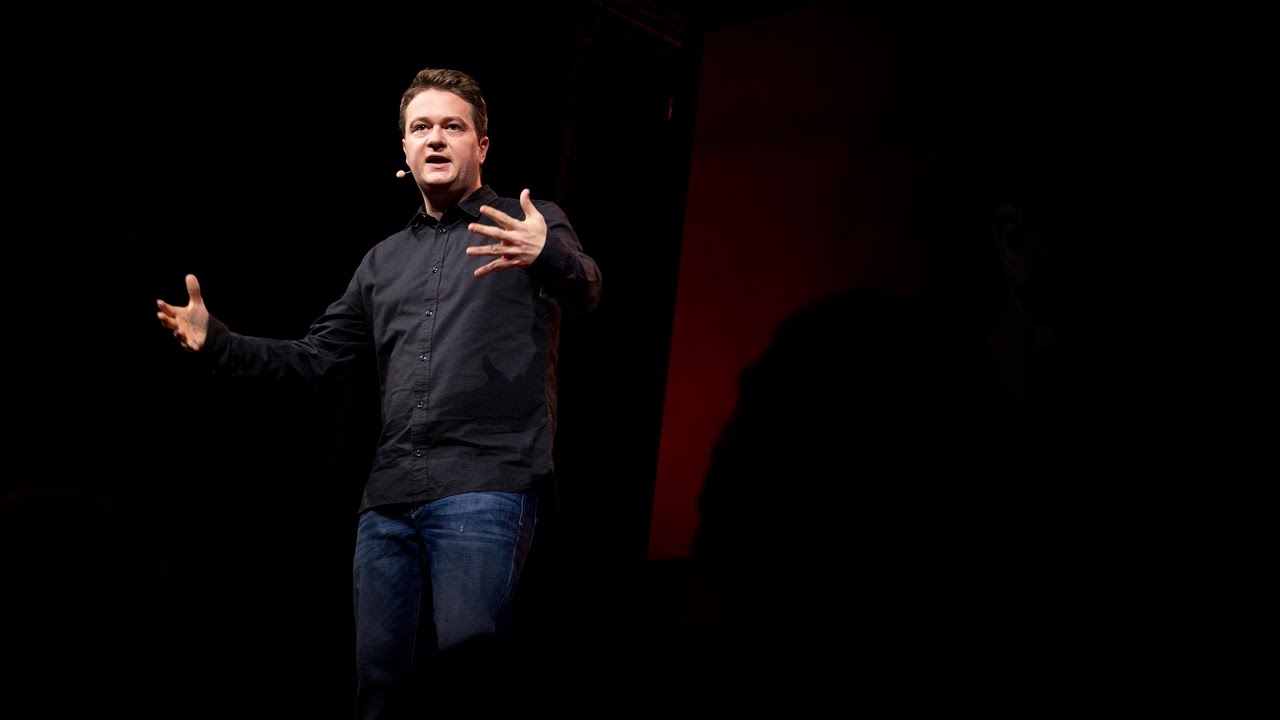
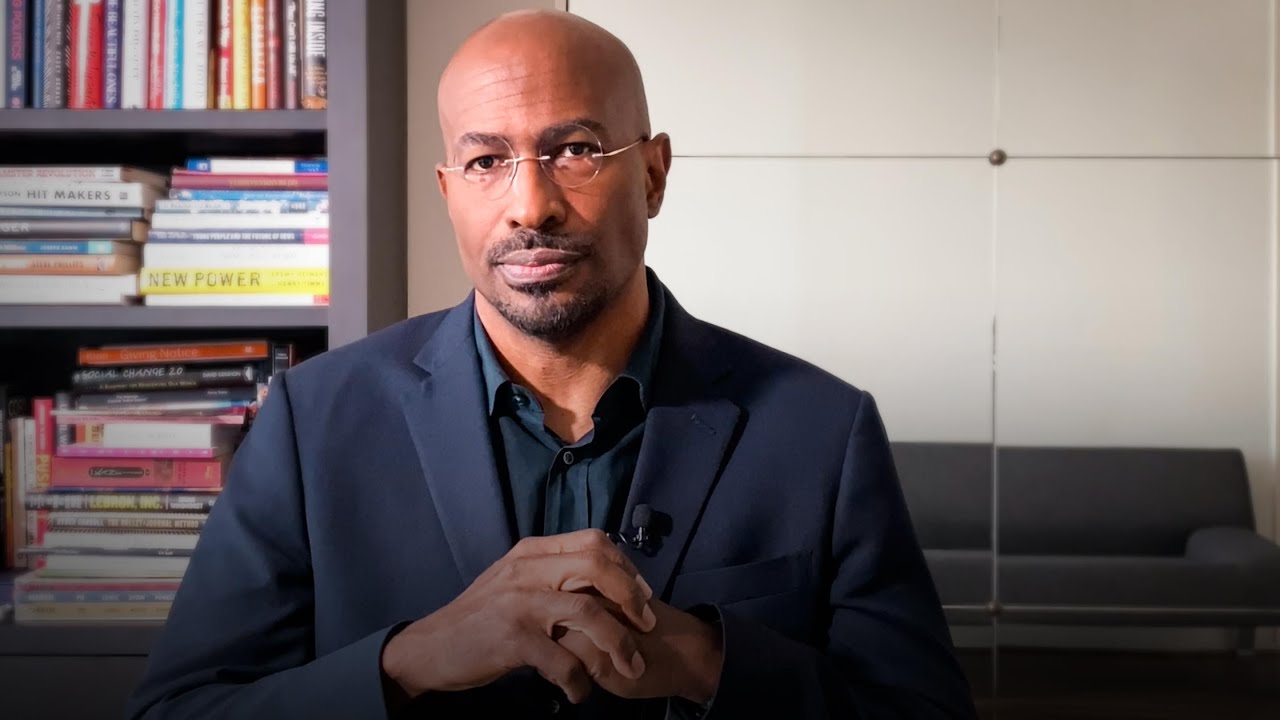
How Ethics Can Help You Make Better Decisions | Michael Schur | TED
11:31

How Ethics Can Help You Make Better Decisions | Michael Schur | TED

TED 07.07.2022 447 518 просмотров 8 045 лайков обн. 18.02.2026
Поделиться Telegram VK Бот
Транскрипт Скачать .md
Анализ с AI
Описание видео
What would Immanuel Kant say about a fender bender? In a surprisingly funny trip through the teachings of some of history's great philosophers, TV writer and producer Michael Schur (from hit shows like "The Office" and "The Good Place") talks through how to confront life's moral dilemmas -- and shows how understanding ethical theories can help you make better, kinder decisions. If you love watching TED Talks like this one, become a TED Member to support our mission of spreading ideas: http://ted.com/membership Follow TED! Twitter: http://twitter.com/TEDTalks Instagram: https://www.instagram.com/ted Facebook: http://facebook.com/TED LinkedIn: https://www.linkedin.com/company/ted-conferences TikTok: https://www.tiktok.com/@tedtoks The TED Talks channel features talks, performances and original series from the world's leading thinkers and doers. Subscribe to our channel for videos on Technology, Entertainment and Design — plus science, business, global issues, the arts and more. Visit http://TED.com to get our entire library of TED Talks, transcripts, translations, personalized talk recommendations and more. Watch more: https://go.ted.com/michaelschur https://youtu.be/BAswj8evFZk TED's videos may be used for non-commercial purposes under a Creative Commons License, Attribution–Non Commercial–No Derivatives (or the CC BY – NC – ND 4.0 International) and in accordance with our TED Talks Usage Policy (https://www.ted.com/about/our-organization/our-policies-terms/ted-talks-usage-policy). For more information on using TED for commercial purposes (e.g. employee learning, in a film or online course), please submit a Media Request at https://media-requests.ted.com #TED #TEDTalks
Оглавление (6 сегментов)

  1. 0:00 Intro 33 сл.
  2. 0:17 Michaels Story 301 сл.
  3. 1:59 Michaels Response 430 сл.
  4. 4:26 Philosophy 404 сл.
  5. 6:33 Utilitarianism 418 сл.
  6. 8:56 Conclusion 382 сл.
0:00

Intro

I've been a television comedy writer for almost 25 years. I have written sketches and animated shows and sitcoms, but for the last decade, my real passion has been the study of ethics.
0:17

Michaels Story

It's a classic cautionary tale, right? You move to Hollywood, you get seduced by the bright lights and the fast cars, and before you know it, you're reading 18-century German philosophy. (Laughter) I've always been an intense rule follower. When I was in kindergarten, our teacher would tell everyone to line up, and I would immediately line up and then I would look at all the other kids who were still goofing off, and I would think, "What are they doing? Did they not hear her, she said to line up." I rinsed my mouth with mouthwash for at least 30 seconds every night, because on the label, it says "Use for 30 seconds." I know, I'm irritated by me, too. (Laughter) But the real reason that I became interested in ethics is because in 2005, I royally and epically screwed something up. So, 2005, my wife JJ, driving along in slow-moving traffic bumps into the guy in front of her. Police officer looks everything over, doesn't see any damage, they exchange numbers and they go on their way. A couple days later, we get a notice that the guy wants 836 dollars because, according to him, the entire fender needs to be replaced. This is happening during Hurricane Katrina. JJ and I had just been to New Orleans on a trip, we had really fallen in love with this beautiful city, which was now literally under water. I was very riled up. This was hitting me really hard. So I went and I looked at the guy's car, and if I got very close, and I strained my eyes, I could just barely see this little line on the crease. It looked like the mark you make with a pencil on the wall when you're trying to hang a picture.
1:59

Michaels Response

And I told the guy, essentially, that he shouldn't care about this. I told him that things like this were why car insurance rates in LA were so expensive. I told him that cars get little dings and dents all the time, and he was stupid to care about that. I told him that there were more important things in life than this, like Hurricane Katrina. And then I made him an offer. I said that I would donate 836 dollars to the Red Cross Katrina relief fund in his name, if he agreed not to file this claim and fix his car. He said he would think it over. So I went back to work, and as very confident people want to do, I started telling all my friends about how awesome I was being. (Laughter) And then they jumped in and started pledging more and more money if this guy would agree not to fix his car. So suddenly, it was 2,000 dollars, then it was 5,000 dollars. In like, a day and a half, I had pledges from hundreds of people, all across the country, of more than 25,000 dollars if this guy would agree not to file an insurance claim and fix his car. And by the way, he has no idea this is happening. He is completely in the dark. I started a blog, where I gave people hourly updates -- yeah. (Laughter) It's beginning to dawn on you what a bad idea this is, right? I started a blog, gave people updates, I got media inquires from news programs, from NPR. I had a dream of rescuing New Orleans by myself, (Laughter) with nothing more than my computer and a fire hose of self-righteous anger. And then I started to feel sick to my stomach. And so did JJ, at the exact same moment. We both were suddenly overcome with this awful feeling that there was something very bad and wrong about what we were doing, but we could not pinpoint what it was. I just remember thinking, "Alright, I don't care about cars getting little dings and dents, but this guy does. Is that wrong somehow? I don't think that's wrong. And also, is this little, tiny negotiation that we're in really worth all of this fury and rage and shame that I'm whipping up and sending in his direction? I don't think it is." So I did what any rational person would do in this situation. I started crying, and I hid under my bed. (Laughter) And then, I started reading philosophy.
4:26

Philosophy

And I started calling philosophy professors and asking them to talk this out with me. And in the process -- yeah, and they all, by the way, did it, because philosophy professors love talking about philosophy. The drop of a hat, they will all talk about philosophy with you. So in the process, I learn all of these incredibly wonderful theories that the smartest people who have ever lived have developed over the last 2,500 years that help us make better decisions and become better people. For example, I learned about Immanuel Kant and the categorical imperative. So Kant says, when we're about to do something we have to design a rule or a maxim that we could will to be universal. Meaning, we have to imagine, what if everyone did what we're about to do, what would happen to the world? Would it be OK or would it get all screwed up? So the maxim I'm designing here is something like, anytime two people are in any kind of negotiation, one of them can drag into the negotiation an entirely unrelated global calamity (Laughter) and tell the other person that they shouldn't care about whatever they care about, because they should care about that instead. That world would suck, right? Like, your sister borrows five dollars from you, you ask for it back, she says, "How dare you care about five dollars when the polar ice caps are melting?" No one wants to live in this world, right? Kant also says, by the way, that you should treat people as ends in themselves, and not a means to an end, meaning, you shouldn't use people to get what you want. Well, that's what I was doing. I also learned about Aristotle and the study of virtue ethics. So Aristotle says there's certain qualities we should all have. Things like generosity and courage and friendliness and mildness, and he wants us to practice them every day so that we not only have them, we have them in the exact right amount. We don't have a deficiency of them, and we don't have an excess of them. Now virtue ethics can be kind of, maddeningly imprecise, but at the very least, it was pretty clear that I was exhibiting an excess of anger and maybe a deficiency of friendliness. I wasn't nailing it, is the point. Like, I definitely was not getting it exactly right.
6:33

Utilitarianism

Then I learned about utilitarianism, made famous by Jeremy Bentham and John Stuart Mill. And this one actually gave me a shred of hope that I was doing something good, because utilitarians only care about the results of our actions, they only care that we are creating more happiness and pleasure than we are pain and suffering. So yes, I'm being obnoxious and moralistic, and I hand it to this guy, causing him some amount of pain, but an enormous amount of money is going to be given to people in great need. So the amount of happiness I’m creating outweighs the amount of pain and suffering. But the utilitarians also said that when we're calculating the amount of happiness or pain we've created, we can't just think about the one person we're dealing with, we have to think about the fact that everybody in our society will now both know this happened and will fear that it could someday happen to them. And since we've already seen what a terrible, stinky world I was trying to create, everyone in our society would become a little bit bummed out and sad by what I did, and so the total amount of pain and suffering I've created might actually outweigh the happiness. I never got a straightforward answer, obviously, because Aristotle never wrote about, like, fender benders involving horse-drawn carriages in ancient Athens. But at the very least, it sure felt like Jeremy Bentham and John Stuart Mill would be a little disappointed in me. And it sure felt like Aristotle would be a little annoyed, and it sure felt like Immanuel Kant would wave a disapproving finger at me. And if all of the world's greatest philosophers are on one side of a debate, and you are on the other side... (Laughter) You fucked up, OK. (Laughter) (Applause) So I called the guy. I apologized profusely, I told him the entire story. He was very kind and forgiving, which was an enormous relief to me. I told him I had already cut him a check, which was in the mail. I went back to the blog, I told everybody the outcome. Most people, not all, but most of them, thought it was a pretty happy outcome. I encouraged them to give money to the Red Cross anyway, because giving money to hurricane victims is a nice thing to do, and in the end, more than 25,000 dollars was indeed donated to the Red Cross Hurricane Katrina relief efforts.
8:56

Conclusion

Don't applaud that, because that's the happy result of a bad event. So why did this embarrassing, miserable mistake that I made make me want to continue to study moral philosophy? If I told you that you were going to be on Jeopardy, how would you prepare? You would read some trivia books and flip through a world atlas. If I told you that you were going to take a half-court shot at an NBA game for the chance to win 50,000 dollars, how would you prepare? You would get a basketball, you would go to the YMCA and you would practice hucking up half-court shots. Well, you're probably never going to be on Jeopardy. You are probably never going to take a half-court shot at an NBA game for a chance to win 50,000 dollars. But you will, I guarantee it, at some point, become embroiled in a complicated, confusing, ugly, gut-wrenching moral dilemma. That is just a fact of life on Earth. There will be a dilemma in which there is no clear rule to follow. There is only a kind of, vague investigation and everything you do seems like it might be wrong. So how do you prepare for that? By reading theories of ethics and understanding what they say, what they mean, how they purport to help us make better decisions and become better people. And by the way, just reading these theories is no guarantee that you will actually make the right choice when you're inside one of these complicated and tangled ethical dilemmas. You can take all the practice half-court shots you want at the YMCA, but when you set foot on the floor of the NBA arena, and there are 15,000 screaming fans, you're probably still going to throw up an air ball, right? But if you've prepared, you will increase your odds of success. You will increase the chances that you sink the shot or that you at least get the ball close enough to the rim that you don't embarrass yourself and become a meme. (Laughter) Understanding ethical theories is how we increase our chances of success at simply being human beings who have to negotiate with other human beings. And to me, there is nothing more important than that. Thank you. (Applause)

Ещё от TED

Ctrl+V

Экстракт Знаний в Telegram

Транскрипты, идеи, методички — всё самое полезное из лучших YouTube-каналов.

Подписаться