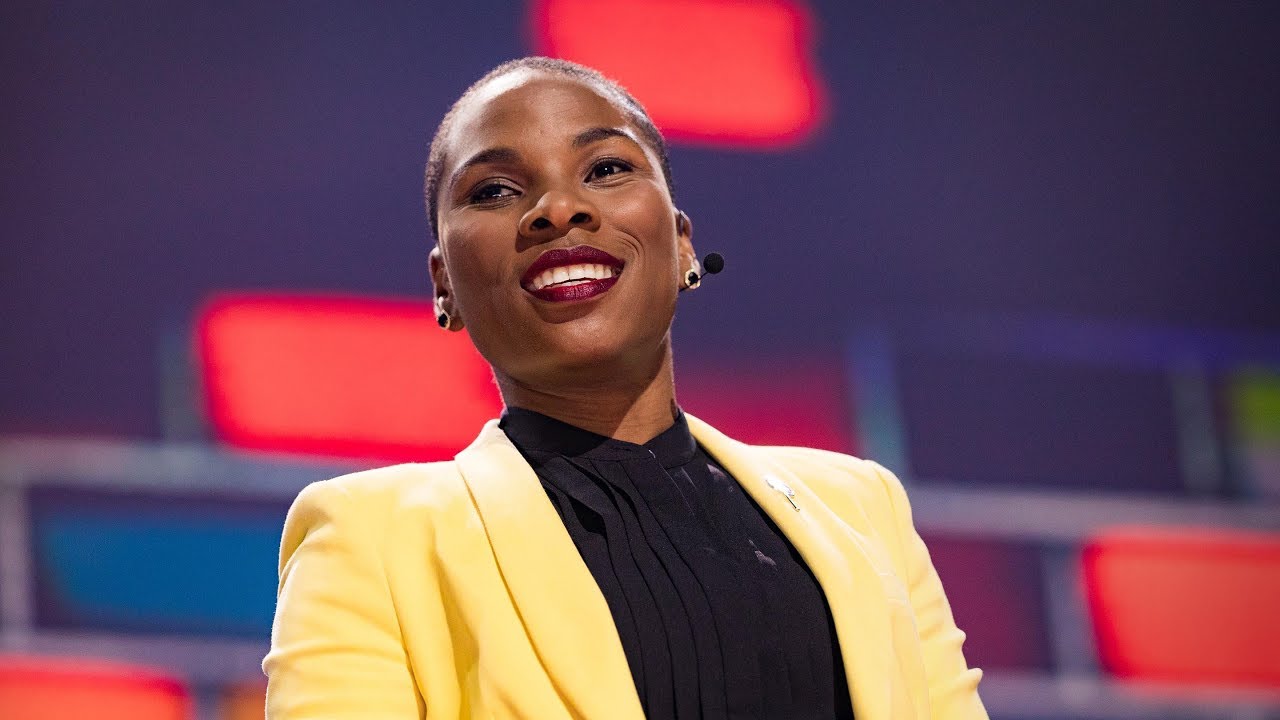
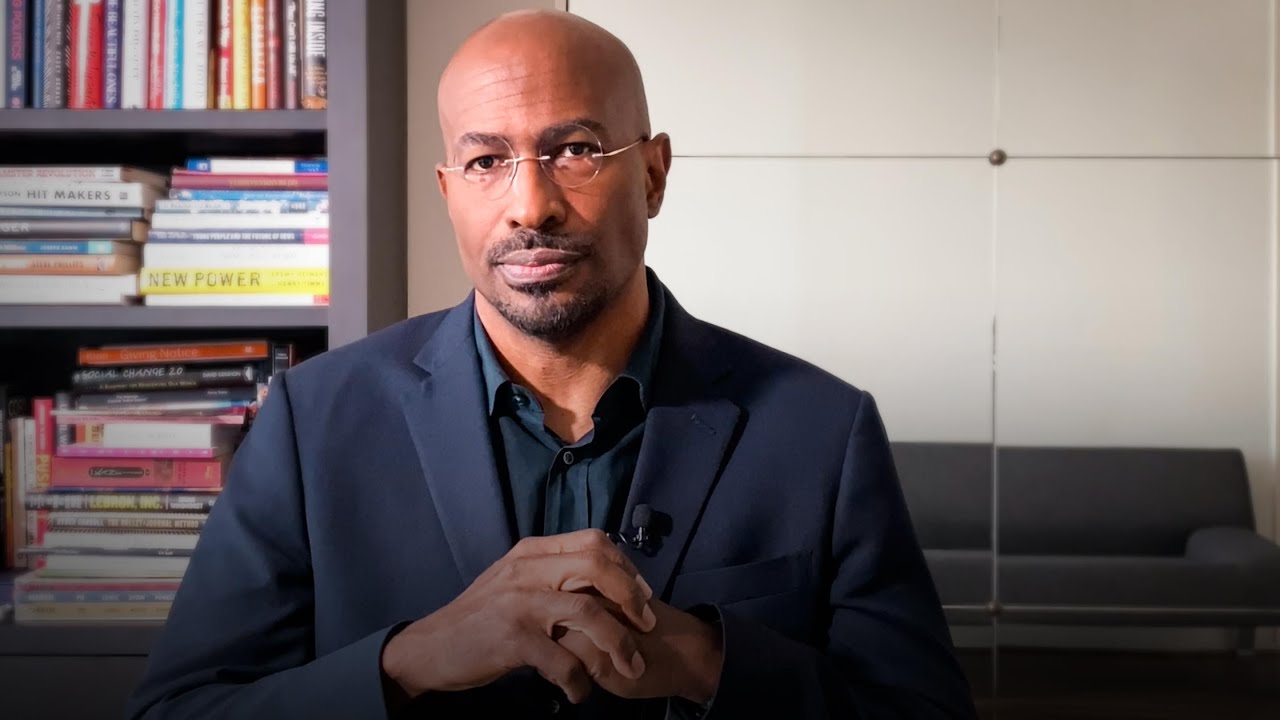
Two current US governors — Democrat Matt Meyer of Delaware and Republican J. Kevin Stitt of Oklahoma — trade notes on how to rebuild trust without partisan theater. In this special segment of "On the Spot" (TED's rapid-fire Q&A format), they share thoughts on leading when people live in different realities, swapping outrage for outcomes and why we need to govern like neighbors, not enemies. (Recorded at TEDNext 2025 on November 10, 2025)
TED is a non-partisan 501(c)(3) tax-exempt organization and does not participate or intervene in any political campaign and neither supports nor opposes any candidate for public office.
Join us in person at a TED conference: https://tedtalks.social/events
Become a TED Member to support our mission: https://ted.com/membership
Subscribe to a TED newsletter: https://ted.com/newsletters
Follow TED!
X: https://www.twitter.com/TEDTalks
Instagram: https://www.instagram.com/ted
Facebook: https://facebook.com/TED
LinkedIn: https://www.linkedin.com/company/ted-conferences
TikTok: https://www.tiktok.com/@tedtoks
The TED Talks channel features talks, performances and original series from the world's leading thinkers and doers. Subscribe to our channel for videos on Technology, Entertainment and Design — plus science, business, global issues, the arts and more. Visit https://TED.com to get our entire library of TED Talks, transcripts, translations, personalized talk recommendations and more.
Watch more: https://go.ted.com/meyerandstitt
https://youtu.be/9o1HPx__P9w
TED's videos may be used for non-commercial purposes under a Creative Commons License, Attribution–Non Commercial–No Derivatives (or the CC BY – NC – ND 4.0 International) and in accordance with our TED Talks Usage Policy: https://www.ted.com/about/our-organization/our-policies-terms/ted-talks-usage-policy. For more information on using TED for commercial purposes (e.g. employee learning, in a film or online course), please submit a Media Request at https://media-requests.ted.com
#TED #TEDTalks #politics
Оглавление (4 сегментов)
Segment 1 (00:00 - 05:00)
[On the Spot] Matt Meyer: First question. Good morning everyone. It's great to be in this hall. It's about the size of Delaware. What can Democratic and Republican governors do together to restore trust in government? J. Kevin Stitt: Well, thank you for that. I think, first off, that trust in the federal government, our Founding Fathers never envisioned the federal government to dominate every single part of our lives. They thought about this idea of federalism, that the states are closer to the people, that the states know how to educate our kids. We're focused on education, we're focused on infrastructure, on the economy and health care. And when you have a one-size-fits-all, it is a problem. And so we know that Delaware is different than Oklahoma. Our Founding Fathers knew that New Hampshire was different than Virginia. And I think if we get back to states rights and having the states, this 50 laboratories of democracy, I think we're going to be much better off than a top-down approach. Other countries were a little bit different, where the federal government created these subdivisions, but it wasn't that way in the US. The states created the federal government. Congress has about a 15-percent approval rating right now, and states are where it's at. That's where the ideas, the innovation comes. I think the more we get back to that, I think the people are happier. You know Delaware, I know Oklahoma. MM: That's right, Kevin. (Laughter) States rights. So 10 years ago, I was a sixth- and seventh-grade math teacher, and I ended up running for -- teachers in the crowd? (Applause) Not enough of us go into this business, politics. And I ran for office, I ran for county office. And I'm a pretty progressive Democrat. And I realized pretty quickly the MAGA Republicans, the Bernie Democrats, and pretty much everyone in between would support me if I kept sewage out of their basement and kept their sewer fees low, if we answer 911 calls quickly, police qualified, well-trained, with a sense of the community they're serving, showed up quickly at people's door. I think the way we restore trust in government is we deliver for people. If you go to 50 governments -- (Cheers and applause) governors across this country, Democrat, Republican, the bulk of our budget is four things: it’s education, medication, transportation and incarceration. And I assure you, if all 50 of us can do those four things with excellence, deliver and maybe reduce your tax bill a little bit so that it's affordable, I think we will get support and we will win back the American people. That's the way we win the trust of our people. JKS: Good. (Applause) OK, second question. Even information is now polarized. How do you govern when people may not share our reality or your reality? MM: Wow, you give me the easy ones. You make me start on this one, huh? My wife is an emergency-room physician, and we often joke that when someone comes into her emergency room, there is no alternative reality. If someone cannot breathe, and the data shows someone cannot breathe, she doesn't have a nurse or she doesn't say, "Hey, you're breathing," right? There's a reality, someone can't show a TikTok video to say, "Oh, your foot is not falling off" if it's actually falling off. I wish that same sense of data and truth that she has in her emergency room I had in my world. I wish that we looked at the data on vaccines, for example, and used that, it's black and white, and used that to make policy for our country. I wish we lived in a world where one social media influencer can't change the course of what data actually says. I think one thing that we both get a palpable sense of is how many Americans today are in echo chambers. They watch the same TV station, hear the same thing that gives them a pat on the back and reassures them. We need to do everything we can to break those patterns. It's going to be hard for us to build a democracy together without that. JKS: Very good. And I think the reality is we don't all think the same, right? Delaware, like I said before, is different than our state. And I think we all should ask ourselves this question as Americans. Because there’s people watching this, there's probably people in this room that hate me just because I'm a Republican. There's people watching this that hate Matt just because he's a Democrat. That we're polarized, that we're driven to our corners by social media and the media. And I know Matt. I know his wife, Lauren, he has three children. MM: Where I'm halfway to Kevin Stitt, he's got six. JKS: That's right. (Laughter) You're not done yet. (Laughter) MM: Don't tell my wife.
Segment 2 (05:00 - 10:00)
(Laughter) JKS: We just went to Switzerland together to study education and their model there and bring back these ideas about workforce learning and apprenticeships. But the thing is, I know that he cares about Delaware citizens, and I know he cares passionately about education and giving people in Delaware a better life, just like I do in Oklahoma. So I think that it's not our job to change everybody's point of view. I think we need to lead, and we need to ask ourselves this question, not just be so driven by polarized politics. And when you bring the humanity out in each other, and when you spend time with people that think differently, and this idea that we can debate policy and we can still like each other, and we may have a difference of opinion on how to lead things, it's so refreshing. And that's why we love doing these type of things together, showing that there's a Republican and a Democrat that actually like each other. And we can disagree, but we don't have to do it disagreeable. MM: That's right. (Cheers and applause) Alright, Kevin, what’s something your state has done that other states can learn from? JKS: You know, I think it's very topical right now with the government shutdown and SNAP benefits, are really affecting all of our states. I know governors, we've been on the phone, we've talked, what are you doing, how are we going to meet the needs of the most vulnerable in our state? And so we set up, and really, I did this back in 2019 when I was first elected, but I put up a "be a neighbor," beaneighbor. org. Because I don’t believe that you can pass a law in Washington, DC or Oklahoma City that can fix some of these social issues. It takes neighbors walking with neighbors. It takes churches and nonprofits. And so our "Be a Neighbor" concept is if you have a need, you can go to this website that we've set up, and it connects all of the nonprofits, the church communities, the state resources. And so that's something that I'm really proud of. Also -- we get a little wonky on policy behind the meter, this idea that we need to win the energy race that we passed in Oklahoma, the fiscal responsibility that we've done as coming from a business world, that I brought to state government. I believe that our job as governors is to be the CEO of our state. I've got a 40-billion-dollar budget, 30,000 state employees. I just want to deliver better services for Oklahomans. And I think that sometimes we elect people that don't have that focus. They're more playing politics than actually delivering for the people. And you said that great a while ago, too. MM: So that's great. I know in Oklahoma, there are a lot of Talladega Night fans. And, you know, I'm a big fan -- there are in Delaware, too. I'm a big fan of Ricky Bobby -- JKS: I love Ricky Bobby, yeah. MM: Who says, if you're not first, you're last. I happen to be from the first state, so just want to put that out. And what we're trying to do, on a serious note, is we're trying to put affordability at the center of everything we do. What's happening, I believe now, in today's economy, is you have billionaires with greater opportunity to build their wealth and working people who are getting squeezed, by public schools that don't seem to be working, by energy prices that are skyrocketing, by health care that seems saddled with 20th century problems and costs that seem to have no end. So we have an affordability agenda. We're working on building a medical school so that the medical providers will be available in our state. There's never been a medical school in our state. We're working on streamlining permitting, something in which I think we agree, getting rid of what the former president, someone I like, called bureaucratic malarkey. Getting rid of all the friction that prevents us from building the housing that our people desperately need to bring down rents. And we're working on building new energy sources, something that's desperately needed for our economy and so people can afford their power bills. (Applause) JKS: If you could fix one aspect of American political culture, what would that be? MM: One? (Laughter) 15 years ago, I was a diplomat. I was a US diplomat embedded with the army for 12 months in Mosul, Iraq. I wasn't a soldier, but I lived on a base with 10,000 soldiers during Operation Iraqi Freedom. And what was amazing is there were soldiers on that base from every corner of America. I went to Iraq, I thought I was going to learn about Iraq and Arab culture, which I did. But I learned a lot more about America. And there was a team there. I left the base two or three times a week to go and meet with Iraqis to build a lasting peace, and we weren't always on the same page with the Iraqis we were meeting with. But the American team was a singular team. I often wonder, in Delaware
Segment 3 (10:00 - 15:00)
how come when we're talking about housing or health care or education, we're talking about growing our economy, there are incredible divisions? How do we build that same sense of teamwork? We're in the midst of the greatest human experiment in self-government that's ever occurred. We're in almost year 250 of this experiment. I think we need to find a way, as Americans, to sit on stage together, to break bread with each other, to understand that we can't just channel all of our energies into knocking each other down. There are opportunities to be made in Oklahoma and in Delaware that people will realize if we do find a way to work together. JKS: Good, good. (Applause) You know, the one thing I would change, governor, is just inject more integrity into politics. And what I mean by that... (Applause) You know, to me, integrity is doing what's right just because it's right, even when it's costly. And I think politicians especially, that's why people hate politicians, is because they can see right through them. They're not doing what's right. They're blindly following some, you know, teams. It's either you're skins or shirts, you’re Democrat, you’re Republican, and you blindly are following things. Let’s call a spade a spade, and let’s not be driven to the corners. Most of America, you've got 10 percent on the far right, left. But most Americans are right there, and they're taking their kids to piano lessons and soccer practice, they want the best life for their kids, education, the best health care system. And so I think the more that we can talk like this, that we can come together as Americans and stop being so polarized and really debate the ideas, I think the better off we'll be. I also, I'm a huge fan of President Lincoln. And at the end of Civil War, it was almost over, and he was doing his second inaugural address, and he talks about malice towards none and charity for all. And there was people that wanted to, you know, punish the other side. And much like we are today, we've got a pendulum swinging from one side to another depending on who's in office. And we've got to stop that. I don't think Americans like it. You can't weaponize the Department of Justice. You can't cancel business deals based on politics, one side or the other. We've got to allow Americans to innovate and meet the needs of Americans. MM: Right. (Applause) JKS: So next question, with AI's influence on education, what happens to the neighborhood public schools? MM: You know, it's interesting. It's been said that the one thing Democrats and Republicans can agree on is social media needs to get out of the classroom. Weaning kids off social media. My first year teaching, I was in a program called Teach for America in Washington, DC. (Cheers) TFA in the House? And I had, we had no computers in our school, teaching in the Anacostia section of Washington, DC. And so we went on a mission to go talk to businesses, nearby universities, get any computers we can. Within a few months, we had two or three computers in every classroom. We plugged them into the wall and saw kids' faces light up as we brought something called the World Wide Web, where they suddenly had opportunities to explore and learn outside the walls of our school like never, ever before. I think AI similarly presents incredible opportunities. I think we can eliminate standardized testing in our school. If you look at the tools that AI has -- (Applause) We have better, more thorough assessments of students on a day-to-day basis using modern technology than would otherwise. One of the biggest problems I had as a sixth-grade math teacher is some students walked in with fourth-grade, fifth-grade skills, and others with seventh-grade, eighth-grade skills. Using technology, we can deliver education like never before that's relevant. But there are threats. We need to make sure we control the technology and the technology doesn't control us. And most importantly, it's not driven by trillion-dollar companies what our kids need. That our kids, families and teachers drive what the needs are. JKS: So good. You know, one of the technologies that we're trying to implement in schools in Oklahoma, and back to your point, what amazed me is, is I observed a sixth-grade teacher teaching their class, but this sixth-grade student wasn't reading at grade level and was way behind. And I was like, “Why are you teaching, why are you continuing to give this kid sixth-grade material? ” And she's like, "Well, I'm a sixth-grade teacher. What am I supposed to do? " And with AI, we can go back and teach first-grade phonics to that kid or second grade, and we can bring them up to grade level. We can use technology to benefit our students and get them and help and be a tool for our teachers. So we're embracing it.
Segment 4 (15:00 - 19:00)
I think we need to embrace it. On workforce and education, I think that the thing that we need to think about is get businesses more involved. We just got back from Switzerland. And this idea in Switzerland that compulsory education ends in ninth grade, and then every single kid, like, signs a contract. It was amazing for us to see. They sign a contract and they actually start going to work because they think workplace education is education. And so these kids, it's permeability. They can also go work, they get accreditation. But then they can go on to college if they want to. And so it's not a dead end like we think of it here in the US that oh, if you're going to a vocational school, you're a dead-end person, right? We want them all going to college. It's not that way in Germany, Switzerland. And I think we need to reinvent ourselves. MM: They were making money, too. JKS: It was amazing. The kids were making 1,000 Swiss Franks at 15, which is, I don’t know, 1,300, 1,400 US. But it was a great model. And we're bringing that back to Oklahoma and Delaware to get kids more engaged in the workforce. (Applause) MM: Alright, last one. Kevin, what gives you hope for American democracy? JKS: You know, as the chair -- we're both in the National Governors Association. It's the bipartisan group of all the governors, I'm the chair this year, and my initiative is reigniting the American Dream. And the American Dream is this idea that is so unique to our country. And other countries all want to come here because the idea is that you can be anything that you set your mind to. It doesn't matter who your parents are, it doesn’t matter if you were rich or poor. Through an education system, through free markets, you can achieve your American dream. And there's as many dreams as there are people. And it may be that you want to coach your daughter's soccer team, or you want to start a nonprofit, business. Whatever it is, you have the freedom to do that. And as long as the American dream is alive, I think the American democracy is worth fighting for. And we need to fight for that. not teach our children that there's such things as, you know, equal outcomes for everyone. But we want equal opportunities to go chase those dreams. And I just am so passionate about, that's why I think education is so important, to giving those kids those opportunities and expose them with what's possible because God has uniquely created everybody differently, with great skills and desires and abilities, and given them, everybody, an individual ability that we want to help that next generation find. And I think that's the greatness of America, is we're already different, Delaware is different than Oklahoma. But it is worth fighting for. And that's why we're up here, demonstrating that we do get along, we do like each other, and we can lead our states, maybe a little differently, but it’s still America, and we’re still fighting for it. MM: Yeah, I call that -- give him a round of applause for that. I call that, Kevin, a diverse, equitable and inclusive America. So don't use the initials. (Cheers) Don't make him use the initials. Listen, I've got to be frank. I didn't really come here to say this, but last Tuesday's election gave me a little bit of hope for American democracy. (Cheers) JKS: I think I'm outnumbered in this room, actually. (Laughter) MM: Listen, I’m a big Simpsons fan. And one of my favorite episodes of "The Simpsons" is when the Simpsons go to electroshock therapy. You know, if you feel empathy for the ones you love, you're going to care for them. And they shock each other for a few minutes until all the power goes down in Springfield. And I feel like when I look at Washington, that's a lot of what's happening right now. We weren't sure if we were going to be able to fly here. Maybe with what's going on, we'll be able to get out no problem. Our people literally aren't able to eat or haven't been able to get SNAP benefits. Listen, there is an opportunity here for us, as governors sitting together as human beings, as Americans, go and talk to someone who disagrees with you, not to argue with them, but actually to listen to them, empathize with them, understand the position that they come from. That's what I had to do as a teacher. That's what many Americans do, and that's how we ultimately have hope for the next 250 years of this great experiment in self-governance. Thank you very much. JKS: Thank you. (Cheers and applause) [Thank you for being On the Spot] [Matt Meyer + J. Kevin Stitt! ]