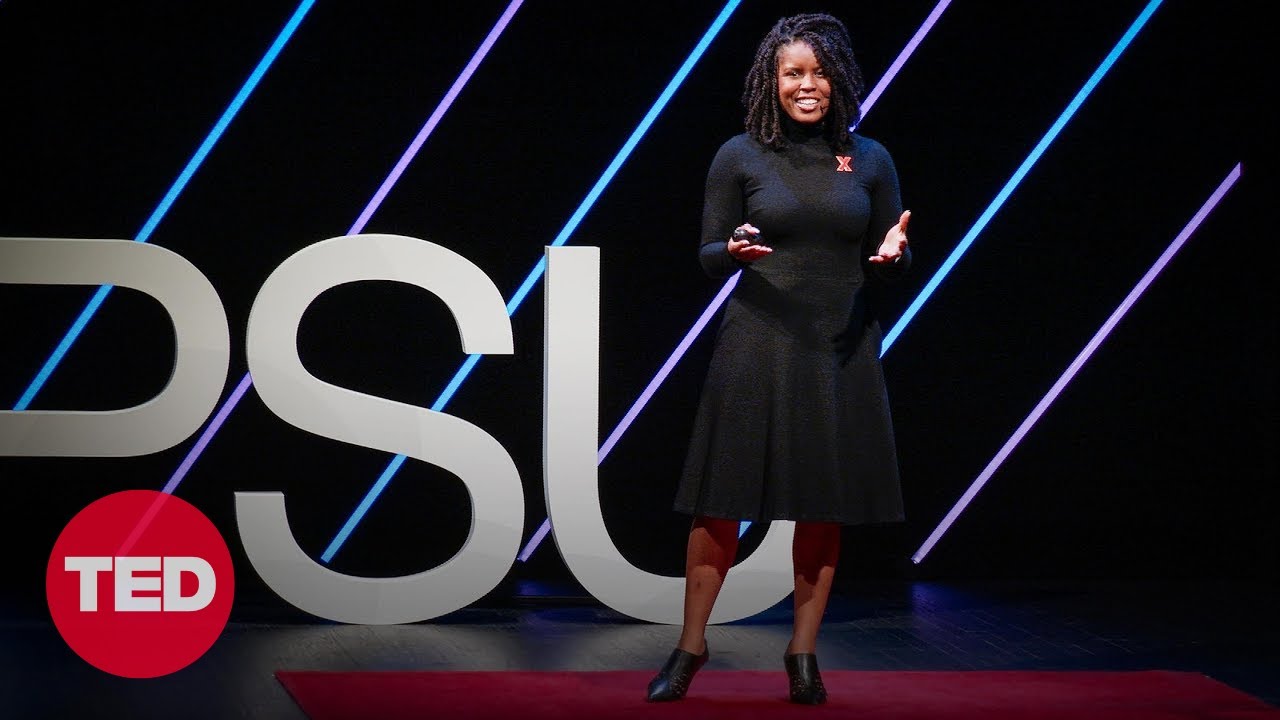
Candis Watts Smith: 3 myths about racism that keep the US from progress | TED
10:26

Candis Watts Smith: 3 myths about racism that keep the US from progress | TED

TED 13.08.2021 88 180 просмотров 1 898 лайков обн. 18.02.2026
Поделиться Telegram VK Бот
Транскрипт Скачать .md
Анализ с AI
Описание видео
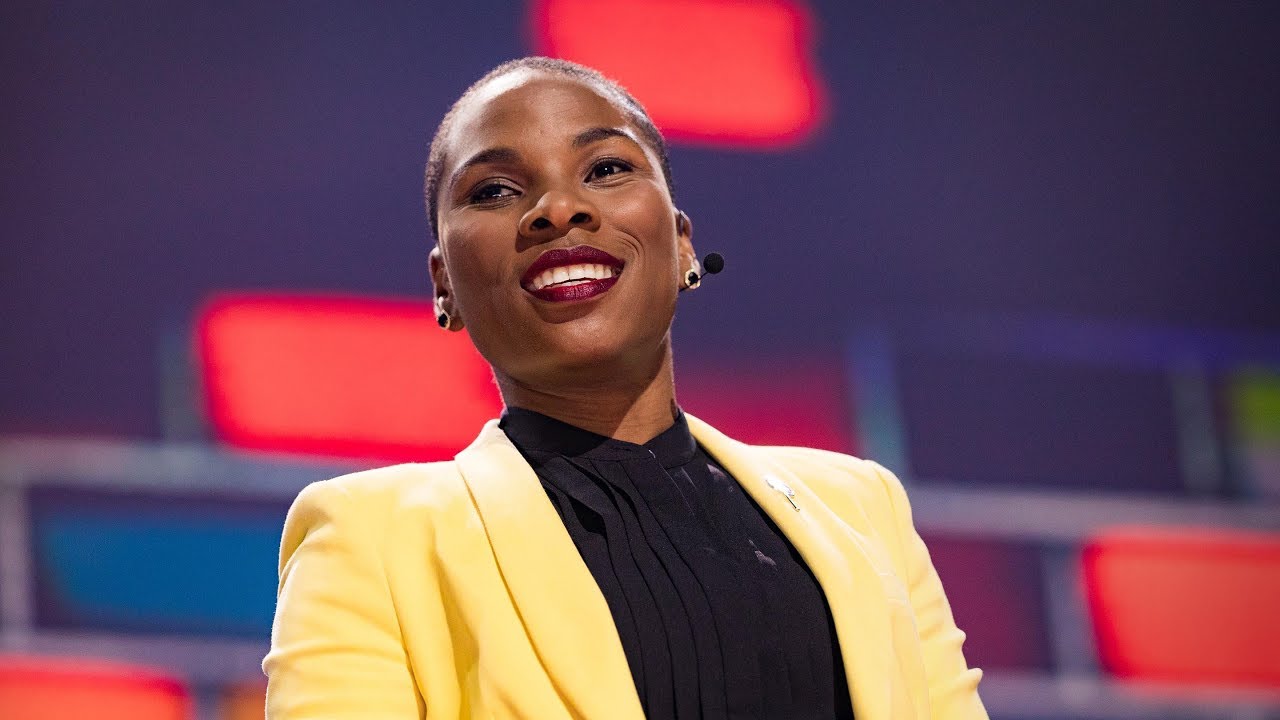
Racism morphs, spreading and hiding behind numerous half-truths and full-blown falsities about where it lives and who embodies it. In this actionable talk, political scientist Candis Watts Smith debunks three widely accepted myths about racism in the US and calls for a nuanced, more expansive definition to support this new era of anti-racist action. Visit http://TED.com to get our entire library of TED Talks, transcripts, translations, personalized talk recommendations and more. The TED Talks channel features the best talks and performances from the TED Conference, where the world's leading thinkers and doers give the talk of their lives in 18 minutes (or less). Look for talks on Technology, Entertainment and Design -- plus science, business, global issues, the arts and more. You're welcome to link to or embed these videos, forward them to others and share these ideas with people you know. Become a TED Member: http://ted.com/membership Follow TED on Twitter: http://twitter.com/TEDTalks Like TED on Facebook: http://facebook.com/TED Subscribe to our channel: http://youtube.com/TED TED's videos may be used for non-commercial purposes under a Creative Commons License, Attribution–Non Commercial–No Derivatives (or the CC BY – NC – ND 4.0 International) and in accordance with our TED Talks Usage Policy (https://www.ted.com/about/our-organization/our-policies-terms/ted-talks-usage-policy). For more information on using TED for commercial purposes (e.g. employee learning, in a film or online course), please submit a Media Request at https://media-requests.ted.com

Оглавление (3 сегментов)

  1. 0:00 Segment 1 (00:00 - 05:00) 733 сл.
  2. 5:00 Segment 2 (05:00 - 10:00) 730 сл.
  3. 10:00 Segment 3 (10:00 - 10:00) 34 сл.
0:00

Segment 1 (00:00 - 05:00)

Transcriber: When I’m out at the grocery store or maybe a restaurant or the park with my son -- he’s six and a half -- people will stop us and mention that they think that he’s handsome. I agree. They'll use that opportunity to chop it up with him, and often when they're done talking with him, they’ll mention that they think he’s a smart and engaging little guy. When those people walk away, the thought that comes to my mind is that I hope they remember meeting him as a child when they see him again as a grown man. This thought comes to my mind because I’ve written two books about race and racism in the United States, and this kind of work can produce feelings of pessimism. One of the things that I’ve learned is that Americans have an orientation toward progress. In this context, what that means is that we often celebrate the distance between where we were and where we are now. But that same orientation can blind us from the gap between where we are and where we could or should be. The other thing I’ve learned about Americans is that we have a very, very narrow understanding of racism, mostly in the minds and hearts of people, usually old people -- old people from the South. And this really narrow definition can constrain our opportunities to produce a more racially egalitarian society. We like to hunt for races and distance ourselves from people who say mean things about whole groups of people or who idealize the 1950s. But the fact of the matter is that we might just need to look in the mirror. Now, I'm not saying that everyone here is a racist, but what I am saying is that everyone here has the capacity and perhaps even the propensity to live their life in a way, to make decisions, to rely on biases that reproduce racial inequality. Some people say, “Well, you do all this work about racism. What’s the answer?” And I say that the first thing we might need to do is to come to a shared understanding about what racism is in the first place. History shows that racists have had the upper hand in deciding who the racists are and what racism is, and it’s never them or the things that they do. But maybe if we come together and come to a shared and perhaps a precise definition of what racism is, we can work toward creating a society where mothers like me aren’t in constant fear of their children’s lives. I'd like to dispel three myths about racism on our trek toward mutual understanding. First: it’s true that the South has done its work to earn its reputation as the most racist region. But there are other states and regions that are competing for the title. For example, if we look at the most segregated states in terms of where Black kids go to school, we'll see, sure, some are in the South. There are some out west, in the Midwest and in the Northeast. They're where we live. Or if we look at states with the biggest racial disparities in terms of prison populations, we see that none of them are in the South. They're where we live. My colleague Rebecca Kreitzer and I looked at a standard battery of racial attitudes of prejudice, and we found that in the 1990s, states in the South dominated the most racially negative attitudes. But this geography has evolved, and things have changed. By 2016, we found that the Dakotas, Nebraska, states in the Midwest, in the Northeast, were competing for the "most prejudiced population" titles. Now, I'm not saying that one state is more racist than another, but what I am saying is that every state might have its own special brand of racism. And it doesn't have to be like this. Most of the inequalities that we see in our day-to-day lives happen at the state and local level. What that means is that we don't have to go all the way to Congress to make change in our communities. We can simply hold our city, our county, our state legislators to task to produce more equitable outcomes. Myth two: we're not that good at hunting for racists. Remember that time when the governor of Virginia did blackface
5:00

Segment 2 (05:00 - 10:00)

and people were like, "Oh, that's bad. I need to get that racist out of here"? I was giving y'all the side-eye, and here's why. While people were going back to yearbooks to look for things that were obviously racist, fewer people were looking into the current-day policy stances of legislators who probably did blackface but didn't get caught. So, how many of us might have supported a candidate who is willing to let neighborhoods secede from their district so that kids could go to all-white schools -- in the 21st century? Or how many of us might have supported a ballot measure that systematically reduced some groups' chances of voting? Or how many of us might have focused on the behavior of Black mothers rather than doctors or health care systems and policies when we learn about the huge racial disparities in maternal and infant mortality? It doesn't have to be like this. We could do something different. We could scrutinize the behaviors of the rule makers. We could orient ourselves toward a more just society, and on our way there, we can't mystify practical policy solutions. Myth three: If you believe that when all the grandmas in Mississippi die that racism is going to go with them, you are in for a big disappointment. We like to think that young people are going to do the hard work of eradicating racism, but there are some things that we should note. We know that young folks, young white folks especially, like diversity, they appreciate it, they're looking for it. But we also know that they don't live diverse lives. Research shows that the average white American literally has one black friend. And what that means is that most don't have any at all. Sociologists like Sarah Mayorga show that even when well-meaning white folks move to diverse neighborhoods, they don't necessarily have positive interactions, no less any with their neighbors who aren't white. My research with Professor Christopher DeSante shows that when we ask white millennials their racial attitudes and policy preferences, that they're sometimes, just as in other times, even more racially conservative than boomers. When we ask them about the things that are important to them, they don't have any particular sense of urgency around questions of racial inequality. How did we get like this? Well, one of the things we might think about is how we raise our kids and equip them to solve the problems that we want them to solve. Research shows that white parents in particular will either choose to not talk about issues of racism to their kids in order to protect them from a harsh racial reality or they instill colorblind lessons, and that can actually reinforce negative racial attitudes. So it's kind of like how some of your parents might have given you books about puberty so they didn't have to talk about the birds and the bees, and then you tried to connect all the dots and then you did it all wrong. It's like that. It doesn't have to be like this. We can do better. We can have hard conversations with our kids so that they don't grow up like many of us did, thinking that talking about racism makes you a racist -- it doesn't -- and so that we can prevent them from making the same mistakes that we've seen in the past. Remember a long, long time ago in 2008, when we were all pining to live in a post-racial world? Well, I say that it's time for us to think bigger and dream bigger and think about what it would be like to live in a post-racist world. But in order to do that, we'd have to come together to have a shared definition of racism -- not just in the matter of hearts and minds, but in systems, policies, rules, decisions made over and over again to marginalize some people -- and agree to become anti-racists -- people who learn more and do better. So we could ask harder questions of candidates about their stances on racial inequality before we throw our full weight behind them. We could buycott or boycott businesses whose practices don't align with our values. We could talk to our kids about racism. We could figure out our state's special brand of racism and work to eradicate it.
10:00

Segment 3 (10:00 - 10:00)

People made racial disparities, and people can unmake them. And sure, it'll be hard, but the fact of the matter is, someone is depending on us to do nothing at all. Thank you. (Applause)

Ещё от TED

Ctrl+V

Экстракт Знаний в Telegram

Транскрипты, идеи, методички — всё самое полезное из лучших YouTube-каналов.

Подписаться