Visit http://TED.com to get our entire library of TED Talks, transcripts, translations, personalized talk recommendations and more.
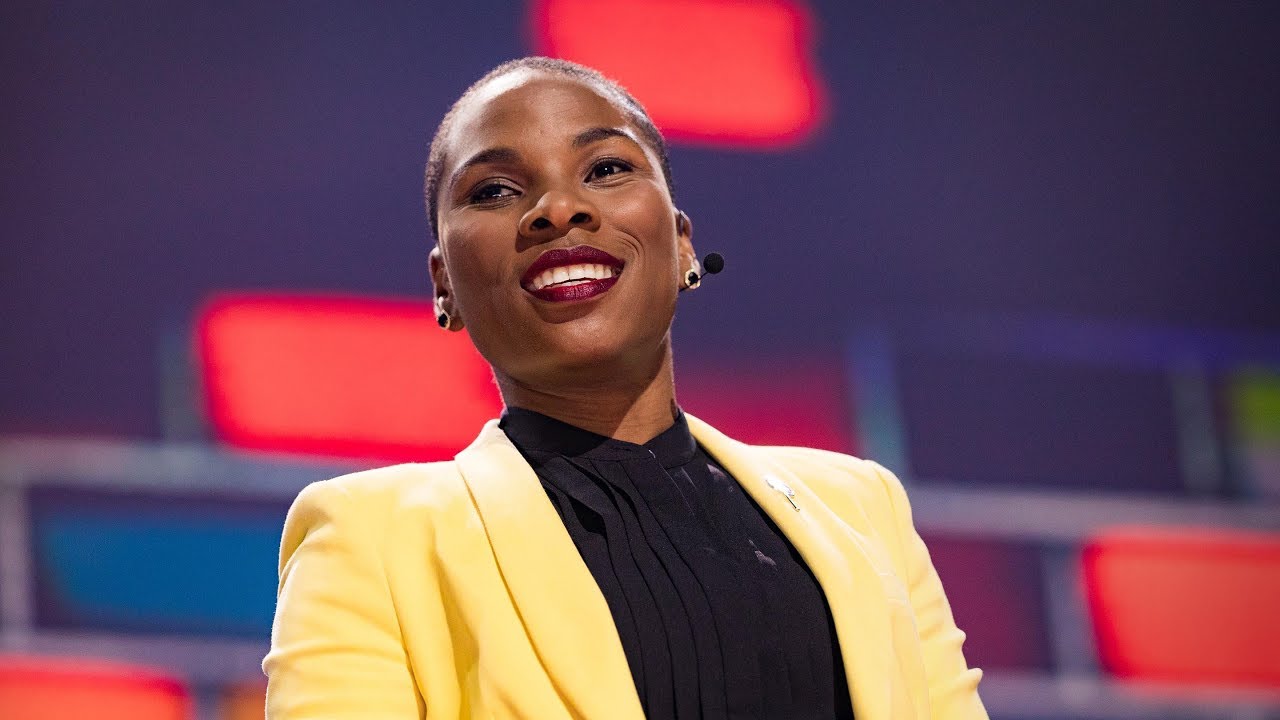
Corporations and big business have wrecked the environment, but disadvantaged communities living in "sacrifice zones" -- urban areas heavily polluted and poisoned by industry -- are paying the price, says climate justice leader Angela Mahecha Adrar. Explaining why racial and economic justice must be at the center of climate action, she takes us to the frontline communities that are leading the world to clean, innovative and just climate solutions -- like Cooperativa Tierra y Libertad, a local farm co-op in Washington that's disrupting the multibillion-dollar berry business.
The TED Talks channel features the best talks and performances from the TED Conference, where the world's leading thinkers and doers give the talk of their lives in 18 minutes (or less). Look for talks on Technology, Entertainment and Design -- plus science, business, global issues, the arts and more. You're welcome to link to or embed these videos, forward them to others and share these ideas with people you know.
Become a TED Member: http://ted.com/membership
Follow TED on Twitter: http://twitter.com/TEDTalks
Like TED on Facebook: http://facebook.com/TED
Subscribe to our channel: http://youtube.com/TED
TED's videos may be used for non-commercial purposes under a Creative Commons License, Attribution–Non Commercial–No Derivatives (or the CC BY – NC – ND 4.0 International) and in accordance with our TED Talks Usage Policy (https://www.ted.com/about/our-organization/our-policies-terms/ted-talks-usage-policy). For more information on using TED for commercial purposes (e.g. employee learning, in a film or online course), please submit a Media Request at https://media-requests.ted.com
Оглавление (4 сегментов)
<Untitled Chapter 1>
Transcriber
TED Ideas worth spreading
We don't just have a climate crisis, we have a climate leadership crisis. We've acted as though an environmental crisis created by corporate and government elites can now somehow be solved by these same corporate and government elites. While the people on the front lines, the people most impacted by wildfires, pollution, rising sea levels, have no other role but to suffer. Centering the leadership of these communities and leading us out of this crisis isn't only the just thing to do. It is the most important thing that we can do to actually solve this crisis. Because people, when they can't take anymore, they rise up, and they lead us to a better future. Desperate times lead to creative and just solutions by those most impacted. I know that from experience, because like so many other low-income families searching for livelihoods, when my mother, brother and I emigrated from Colombia, we made our homes alongside landfills, incinerators, oil refineries, power plants and waste-treatment plants. In neighborhoods that serve as the sacrifice zones to fuel the economy of this nation and, oftentimes, the world. In the '70s, in Southwest Detroit, we lived in the shadow of the Marathon oil refinery. And in the '80s, in Queens, New York, we played handball in vacant contaminated lots, unknowingly breathing in dangerously high levels of sulfur dioxide from power plants nearby. In the US, if you're poor, and you're Indigenous, Black, Middle Eastern, Pacific Islander, Asian or Latinx, you more often than not live, play, pray and work in a sacrifice zone.
SACRIFICE ZONE
I'm saying this because I've been assaulted by pollution violence my whole life. And although I've been on the front lines as a climate justice leader for 20 years, I've been envisioning solutions to the environmental crisis since I was a kid... dreaming up a better world. For people like me, people in sacrifice zones that are also leading a just transition away from the subtractive model of development to one that feels just for all of us, in the name of climate justice. So what is climate justice? It's simple. If... climate change was created by economic and racial injustice, then effective solutions to the climate crisis have to include economic and racial justice.
Solution: ECONOMIC & RACIAL JUSTICE
Climate justice centers the struggle and the solutions of those on the front lines of the crisis, communities who have been underresourced and plagued by everything from police violence, racism, struggling schools and so much more. These same communities have been, historically and disproportionately, exposed and subjected to pollution and contamination from industry. These are the workers who are essential, but are treated as expendable by big corporations and this wildly unjust economic system in which we live. Frontline communities aren't the people whose homes on the beach are threatened by erosion. They're communities and families whose homes are already underwater. Children who already can't breathe from asthma, and neighbors who are already drinking polluted water and poisoned water. In the midst of a global pandemic, multiple uprisings for racial justice and democracy and record wildfires, droughts and storms -- it's time we finally realized we can't fix injustice with more injustice. I'll go so far as to say that frontline communities are the only ones that can get us out of this crisis. And in fact, they already are. And there's so many great examples, but to give just one... In Washington State, a rural farming community created a local, scalable community farm. It produces healthy, affordable food, it renews land ravaged by pesticides and it respects and protects workers. "Tierra y Libertad" was created when four farm workers came together to start a berry-growing cooperative, owned and managed by themselves. They pay workers 15 dollars an hour, otherwise unheard of in a historically exploitative industry. They take regular breaks and they eat free communal meals. "Tierra y Libertad" also has a capital plan for expansion that includes energy-efficient worker housing and a large community space. If you think this is a small step, that a berry cooperative is small potatoes, in the US alone, berries are a multibillion dollar market. Now that's a lot of change, in every sense. And while the "Tierra y Libertad" story has all the signs of a scalable investment in community asset building, it can resolve a number of issues, from the need to reduce greenhouse gas emissions and discrimination to the right to a liveable wage. The truth is that "Tierra y Libertad" is barely hanging on... like so many other environmental frontline solutions that are healing and transforming communities today... but are overlooked and underresourced by foundations, banks and other sources of support. Overlooked by us and many. Meanwhile, the fight against climate change is increasingly positioned as a big business opportunity for big business. But corporate greed and expediency is what got us into the crisis to begin with... squeezing out as much profit from our natural resources, whatever the cost to people and the planet. Incorporating Band-Aid fixes that rely on markets and technology to heal what wasn't broken until markets and technology broke them. Take cap and trade, which doesn't stop pollution, but simply gives the right to pollute to the highest bidder. When enacted statewide in California, oil and gas emissions, they went up, and frontline communities, they continue to bear this disproportionate health impact, while greenhouse gases and coal pollutants continue to rise under cap and trade. Or take stratospheric aerosol injections that would shoot sulfur dioxide up into the stratosphere to try to block out solar radiation from reaching the earth. Nothing about polluting the air with sulfur dioxide was innovative in the '80s, and it isn't innovative now. These kinds of interventions can have planetary consequences in different parts of the world. Dangerous ideas that are backed by the same fossil fuel industry... They don't address root causes of the climate crisis, and they don't reduce emissions at the rate that we need now either. Let me be clear, making money off of the climate crisis... That isn't innovative. It's not new and it's not going to lead to the kind of effective solutions we need to solve this crisis. And I'm not talking from a moral perspective, I'm talking from an on-the-ground, practical perspective. Because this crisis, climate change, was created by centuries... of exploitation and greed and injustice. And if solutions are not addressing and meeting the needs of those most impacted by the climate crisis itself, then frankly, they're just false solutions. The future that we want, the future that we need, has to be led by frontline communities, here in the US and all across the world. And it has to happen now. In the Climate Justice Alliance, where I organize with thousands of other frontline leaders, we're uniting... for a transition. But not just any transition -- a just transition, away from a dig, burn, dump economy to one that is just and clean for everyone. Reinvesting in local, place-based solutions that are led by the very communities with the very most at stake. Solutions that more often than not will lead to benefits for all of us. And not just to line the pockets of just a few. Because solutions like "Tierra y Libertad" are being implemented all across the globe. Earth-Bound, for example -- a Black-owned regenerative building cooperative. They travel in brigades to restore the depressed farmers to sustainability. Indigenous communities from Pine Ridge to the Four Corners of the Navajo Nation, they're building regenerative energy enterprises to power their territories. Now that's a regenerative economy. The wind power alone, from those tribal lands, can satisfy 32 percent of the US demand for energy. In Puerto Rico, mutual support networks that gather together, powered by youth, by teachers, by workers, by organizers and farmers, were able to renew hope and adjust recovery with more efficiency and with greater compassion than FEMA after those islands' climate disasters. And in Miami, where I live now, residents in the historically Black Liberty City, they came together and started a land trust to protect their community from gentrification due to rising sea levels and flooding in other parts of the city. In Portland, Oregon, communities came together and passed a corporate Clean Energy Tax. This tax will fund tens of millions of dollars into green jobs and healthy homes. I'm saying these are just a handful of the innovative, creative solutions that are healing and transforming communities right now, today. These are desperate times, and desperate times can lead to beautiful strategic and innovative solutions. Can, but not necessarily will. It depends on whether we continue to grasp at the same models that got us into this situation to begin with, and can only make it worse. Or if we really just wake up. Disrupt the status quo and pay real attention, real, respectful attention to these leaders, who are on the ground, implementing and creating solutions that are leading us out of the climate crisis right now, day by day. There's no time to waste. Thank you.