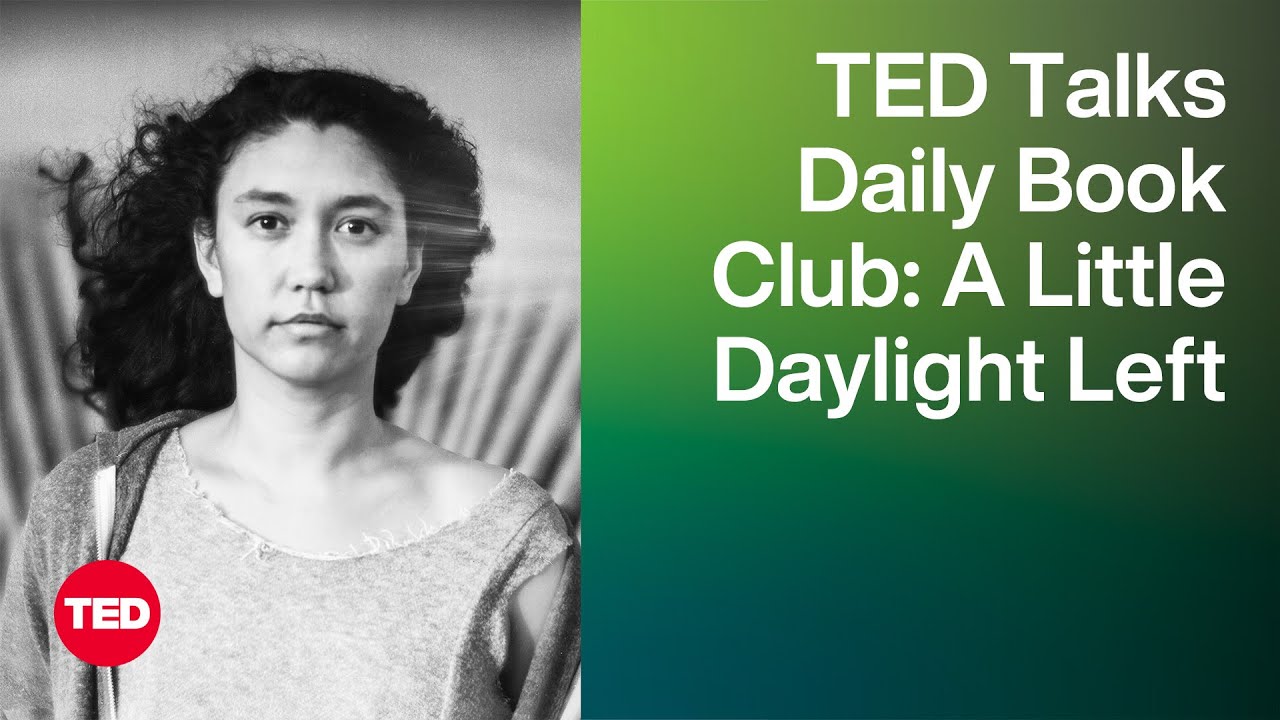
TED Talks Daily Book Club: A Little Daylight Left | Sarah Kay | TED
52:08

TED Talks Daily Book Club: A Little Daylight Left | Sarah Kay | TED

TED 11.10.2025 16 404 просмотров 282 лайков обн. 18.02.2026
Поделиться Telegram VK Бот
Транскрипт Скачать .md
Анализ с AI
Описание видео
Sarah Kay is a spoken word poet and the author of the new poetry collection "A Little Daylight Left." In this TED Talks Daily Book Club interview with host Elise Hu, Kay reflects on her relationship with poetry — from reading the poems her parents left in her lunchbox to frequenting the local dive bar’s weekly poetry slam to becoming an “accidental ambassador” of spoken word. She also talks about how she uses different artistic mediums to invite others into poetry, showing how the art form can open you to community, healing and vulnerability. The TED Talks Daily Book Club series features TED speakers discussing their latest books and exploring their ideas beyond the page. Stay tuned to our feed for more interviews like this one and for special live book club events open exclusively to TED members. (Recorded at A TED Original Podcast on June 3, 2025 Join us in person at a TED conference: https://tedtalks.social/events Become a TED Member to support our mission: https://ted.com/membership Subscribe to a TED newsletter: https://ted.com/newsletters Follow TED! X: https://www.twitter.com/TEDTalks Instagram: https://www.instagram.com/ted Facebook: https://facebook.com/TED LinkedIn: https://www.linkedin.com/company/ted-conferences TikTok: https://www.tiktok.com/@tedtoks The TED Talks channel features talks, performances and original series from the world's leading thinkers and doers. Subscribe to our channel for videos on Technology, Entertainment and Design — plus science, business, global issues, the arts and more. Visit https://TED.com to get our entire library of TED Talks, transcripts, translations, personalized talk recommendations and more. Watch more: https://go.ted.com/sarahkay25 https://youtu.be/V2H3M_0i1Fo TED's videos may be used for non-commercial purposes under a Creative Commons License, Attribution–Non Commercial–No Derivatives (or the CC BY – NC – ND 4.0 International) and in accordance with our TED Talks Usage Policy: https://www.ted.com/about/our-organization/our-policies-terms/ted-talks-usage-policy. For more information on using TED for commercial purposes (e.g. employee learning, in a film or online course), please submit a Media Request at https://media-requests.ted.com #TED #TEDTalks #Poetry
Оглавление (11 сегментов)

  1. 0:00 Segment 1 (00:00 - 05:00) 734 сл.
  2. 5:00 Segment 2 (05:00 - 10:00) 760 сл.
  3. 10:00 Segment 3 (10:00 - 15:00) 853 сл.
  4. 15:00 Segment 4 (15:00 - 20:00) 758 сл.
  5. 20:00 Segment 5 (20:00 - 25:00) 795 сл.
  6. 25:00 Segment 6 (25:00 - 30:00) 730 сл.
  7. 30:00 Segment 7 (30:00 - 35:00) 559 сл.
  8. 35:00 Segment 8 (35:00 - 40:00) 693 сл.
  9. 40:00 Segment 9 (40:00 - 45:00) 676 сл.
  10. 45:00 Segment 10 (45:00 - 50:00) 675 сл.
  11. 50:00 Segment 11 (50:00 - 52:00) 265 сл.
0:00

Segment 1 (00:00 - 05:00)

Hello and welcome TED members. I am Elise Hugh. I'm the host of TED Talks Daily podcast and I am so glad to be here with you today for the latest edition of the TED Talks Daily Book Club. Welcome. Along with this live event, this is a special series on the TED Talks Daily podcast. And if you don't already know, it's a show where we deliver ideas that inspire daily. And now I'm so excited to introduce our special guest, Sarah Kay. Sarah is a writer, performer, educator, and a beloved member of the TED community. She was just in her early 20s when her first TED talk went viral. You've probably seen it. Um she has since given four more TED talks and was the host of the TED podcast, Sincerely X. Sarah is the author of five books of poetry and her new fulllength collection, A Little Daylight Left, which just came out in April. Sarah has performed her work all over the world. From the cornfields in Iowa to a ship on a fjord in Norway to a nightclub in Singapore to Carnegie Hall to many middle school gymnasiums, the back rooms of dive bars and more. She is the founder and co-director of Project Voice, an organization that uses poetry to entertain, educate, and empower students and educators worldwide. Sarah's poems invite us to consider what it might look like to boldly face the hard things we so often run from and to celebrate what we hold dear. I love her work. The result has been described as quote, "a blueprint for discovering beauty in all that makes us human. " Sarah Kay, welcome and thank you so much for joining us today. Oh, thank you for having me. Thank you for that kind intro. Of course. Well, I am amazed and long have been amazed at the way you're able to bring together such vast and sometimes overwhelming topics into a space that really feels safe and relatable. You wrote in your poem Orange about, I'm quoting now, the invisible thread of poetry that so many people are holding on to even and especially people who may not have anything else in common. In your view, what makes poetry so powerful that so many people are drawn to it and hold on to it? Oh, that's a big question. Um, well, I think my relationship to poetry has evolved over my living, but one of the reasons I love reaching for poetry is when I am feeling an emotion or going through an experience or revisiting a memory that feels unllanguageable. And then I discover that someone has found language for it in the form of a poem. And that is one of the most magical experiences. And poetry has provided language certainly, but also um like camaraderie or um belonging or reassurance or community or a lot of things. Poetry offers So I reach for it for a lot of reasons. And then I get to see the way that other people also build lives around poetry for healing, for processing, for um for activism, for education, for uh collective experience, for live performance. I mean, it goes on and on. That's my whole thing. Let's talk a little bit about your life and where you began. You grew up going to see spoken word poetry, I believe, being performed in New York City. Um, New York City is a big part of your latest collection. Um, tell us a little bit about how you became a poet. Sure. So I think the first if I'm going to tell my story and my relationship to poetry, it actually has to start earlier than that, which is that when I was in elementary school, my parents on a daily basis would pack me lunch and they would take turns. They would trade off writing a poem and putting it in my lunch box. And neither of my parents consider themselves writers. Neither of them consider themselves poets. This was not part of a grand plan. They definitely did not think this was going to happen. But that is something they did as one of many things that they did to show me magic and wonder and care and love. And inadvertently they therefore introduced me to what a poem was. And through that version of poetry, my
5:00

Segment 2 (05:00 - 10:00)

definition for a poem was something that was a surprise, secret, something that was as dependable as clockwork, something that someone who cared about me had made for me. Like that's what I understood a poem was from a very early age. Um, and so that's what I treated poems as. I wrote them in a notebook. they were a secret and they were a small, you know, unit to present to someone I loved, usually my parent. Um, and then when I was around 13, 14 years old, I got an a letter in the mail, this is before email times, I got a physical letter in the mail that said, "Congratulations, you've been registered to compete in the New York City Teen Poetry Slam. " And a poetry slam was a competition for poetry that was performed, which I did not know. I had never seen a poetry slam. I had never heard of a poetry slam. I'm an elder millennial, so we didn't have YouTube back then, so I couldn't look it up. All I knew about this event was that it was for teenagers in New York City who liked poems, and that was me. And so, I went to this event and it was a room full of teenagers sharing poems that they had written and listening to each other. and applauding each other and making room for each other. And I had never experienced something like that. And the lightning moment was in discovering that poetry, which had previously been a solitary secret moment, could also be a communal experience. And that is what lit my wick. And um this particular event, they had rented out a dive bar on the Lower East Side for this teen competition. Yeah. And I was so taken with the whole event. I thought, "This is the best thing I've ever seen. I want to come back next week and the week after. I want to keep coming back and keep seeing more and keep doing this forever. " And there was a little bar flyer on the way out that said Thursday night poetry slam. And I said, "Perfect, perfect. I'll come But I didn't understand that 364 days a year it was a dive bar. And so I came back the next week as a 14-year-old and I was like, "Hello, I'm here for the poetry. " And they were like, "Uh, okay. Sit over there and don't order any alcohol. " And um my parents were a little baffled because again they're not writers and they're not performers, but they were like, "Okay, this is a thing she seems excited about. Um we're not going to let her go by herself, but we will go and sit on the other side of the room to not cramp her style. " And that is where I went to see poetry. And I kept coming back. And so I spent all four years of high school going to this dive bar and watching poets perform. Mainly adult performers, mainly poets who were at least a decade my senior, but it meant that um sometimes when I'm feeling cheeky, I say I didn't fall in love with poetry in a book. I fell dive bar, which is true. And it also meant that I learned poetry almost in an apprentichip form. So, by watching what was possible and seeing all of these different styles and people who either lived in New York or were coming through New York, I got to experience such a wide range of what was possible in poetry. And I got the unbelievable gift of a room full of adults making room for me and my poetry and taking it seriously and taking me seriously, which became the thing that I wanted to share with everybody else. Yeah. Speaking of a room full of adults, by the time you were 22, you were on stage giving your first TED talk. This was 2011 and you began your talk with If I Should Have a Daughter, which was the name of your first collection of poetry. That talk went super viral and has been watched literally millions of times. If I should have a daughter, instead of mom, she's going to call me point B because that way she knows that no matter what happens, at least she can always find her way to me. and I'm going to paint the solar systems on the backs of her hands. So, she has to learn the
10:00

Segment 3 (10:00 - 15:00)

entire universe before she can say, "Oh, I know that like the back of my hand. " And she's going to learn that this life will hit you hard in the face. Wait for you to get back up just so it can kick you in the stomach. But getting the wind knocked out of you is the only way to remind your lungs how much they like the taste of air. There is hurt here that cannot be fixed by band-aids or poetry. So the first time she realizes that Wonder Woman isn't coming, I'll make sure she knows she doesn't have to wear the cape all by herself. Cuz no matter how wide you stretch your fingers, your hands will always be too small to catch all the pain you want to heal. Believe me, I've tried. And baby, I'll tell her, don't keep your nose up in the air like that. I know that trick. I've done it a million times. You're just smelling for smoke. So you can follow the trail back to a burning house so you can find the boy who lost everything in the fire to see if you can save him. Or else find the boy who lit the fire in the first place to see if you can change him. But I know she will anyway. So instead, I'll always keep an extra supply of chocolate and rain boots nearby because there is no heartbreak that chocolate can't fix. Okay, there's a few heartbreaks that chocolate can't fix, but that's what the rain boots are for. Because rain will wash away everything if you let it. I want her to look at the world through the underside of a glass bottom boat. To look through a microscope, at the galaxies that exist on the pinpoint of a human mind, because that's the way my mom taught me, that there'll be days like this. My mama said, when you open your hands to catch and wind up with only blisters and bruises. When you step out of the phone booth and try to fly and the very people you want to save are the ones standing on your cape. When your boots will fill with rain and you'll be up to your knees in disappointment. And those are the very days you have all the more reason to say thank you. Cuz there's nothing more beautiful than the way the ocean refuses to stop kissing the shoreline no matter how many times it's sent away. You will put the wind in winome, lose some. star in starting over and over. And no matter how many landmines erupt in a minute, be sure your mind lands on the beauty of this funny place called life. And yes, on a scale from one to overrusting, I am pretty damn naive. But I want her to know that this world is made out of sugar. It can crumble so easily. But don't be afraid to stick your tongue out and taste it. Baby, I'll tell her. Remember, your mama is a worrier and your papa is a warrior. And you are the girl with small hands and big eyes who never stops asking for more. But remember that good things come in threes and so do bad things and always apologize when you've done something wrong. But don't you ever apologize for the way your eyes refuse to stop shining. Your voice is small, but don't ever stop singing. And when they finally hand you heartache, when they slip war and hatred under your door and offer you handouts on street corners of cynicism and defeat, you tell them that they really ought to meet your mother. Thank you. And you have since described that TED talk as the start of an accidental ambassadorship. What do you mean by that? Well, I was 22 when I was given that opportunity. And so all I knew was I was invited to a cool conference and maybe I'll learn some smart things. And that's about as much as I understood. And I love performing poetry in lots of strange spaces. That's a huge part of my joy. And to me, this is just another strange space to share poems. And of course, we didn't know that the TED platform would become so global and would become so widespread. And after I gave the talk, the video did go viral. And I started to receive emails from people all over the world, many of whom would say, "Not only was that video my introduction to you and your art, but that video was my introduction to this art form. I did not know poetry was performed. Are there more people like you? Can I do this? Could you come here and show me how to do it? " And it became this unbelievable adventure of getting invited to so many surprising corners of the world to share poems and help people figure out how this art form could be useful in their communities and in their classrooms. And uh and that's
15:00

Segment 4 (15:00 - 20:00)

the accidental ambassadorship that I certainly did not know was coming. You mentioned using poetry in the classroom. So let's jump to poetry as education and in education. You have been an educator for much of your adult life now, having started Project Voice when you were in college. Can you share some of your experiences with poetry in the classroom and what it's like just teaching poetry um and the benefits of younger folks learning it? I guess they don't have to be younger even. Certainly not. I believe you are never too young or too old for poetry. I have taught workshops that are pre kindergarten and with the elderly and everybody in between. Yeah. Um, I really love working in schools probably because I fell in love with poetry as a young person and I think it was instrumental in my formation of self. And I love getting to help facilitate and witness someone else falling in love with poetry and discovering that there is room for them in the house of poetry. And so that's the drive. That's what continues to bring me to all these different schools and corners. And I've been doing this work for now a long time. And so trying to think of, you know, examples or stories from the classroom. There's I could we could just talk about that for the rest of the time together. But I'll tell you something that just happened. uh this week is um well it started longer ago in back in 2014. Uh I was teaching at a school in rural Georgia with uh another poet named Franny Choy who I love and who was working with me at Project Voice for a while. And um we were we did performances and we did workshops and then after school we were invited out to dinner by some of the English teachers which often happens. And at the dinner they had brought along two high school boys, two students and that's unusual. Usually after hours the students are home, but they brought them along to dinner and we had a lovely dinner, all of us together. And after dinner, um, one of the students who I want to say was maybe even like on the high school football team or I think he was an athlete, um, but he asked he was like a polite uh, you know, southern gentleman and he asked if he could walk us from the restaurant, the three blocks to our hotel to make sure we got home safe, which we thought was very sweet. And when he walked us home, he handed me this letter that he had written on notebook paper. And the letter was about how much my poetry had meant to him and how excited he was about poetry. And he used lines from my poems in the letter. Wow. And I have a line in an old poem that the last line of my poem is uh there is a girl who still writes you. She doesn't know how not to. and he ended his poem by saying, "There is a boy who still writes poems. He doesn't know how not to. " And there was something about the letter that just really got me. And it was sort of like I don't write poems when I'm writing poems. I don't think I'm writing poems for an a high school senior on the football team in rural Georgia. But also, maybe I am. And maybe you never know who needs a poem that you're writing and you never know who is on the other side of a door that you can open for them into poetry. And it was so meaningful to me that I kept the letter and I, you know, push pinned it onto my the bulletin board in my bedroom and figured I'd never see this kid ever again, but was grateful to him. And last week, uh, not even on Friday, uh, I had a show, um, about, uh, 30 minutes south of Atlanta for my new book and, um, I was at the table signing books afterwards. And this young man walked up holding his phone in front of him to show me a photograph, and he was like, "Hi, I'm sure you don't remember, but um, I actually met you a long time ago. you came to perform at my school with Franny. And I looked at the photograph and I was like, "Wait, did you write me
20:00

Segment 5 (20:00 - 25:00)

a letter? " And he was like, "Yeah, I did. " And I was like, "Of course I remember you. " And he was like, "I can't believe I can't believe you remember that. " And I was like, "I can't believe you're a whole grown-up. " And he was like, "I'm I'm a medical doctor. " Oh. So he's a family doctor. His wife was there. I got to meet her. She's a third grade teacher. They're like, you know, both wonderful humans. And um it was so lovely because when I teach poetry workshops, I'm not teaching them with the belief that I'm that all of these kids are going to become poets, you know, and maybe some of them will never write a poem ever again, although that would make me sad. But even if they don't, even if it was just the time that I got to have with them, one of the things that I love about poetry is that teaching poetry or facilitating poetry is a way of teaching so many other things that is useful to you no matter what you end up doing. Right? Like when I'm working in a classroom with young people, really what I'm doing is helping them figure out what they really care about, what is important to them, helping them find language to talk about it in a manner that is authentic to how they actually communicate, how to present it with joy and confidence and um in to a room of their peers. uh to be able to bear witness to each other, be a good listener, to be able to learn empathy for a foreign narrative, to be able to collaborate, to be able to receive criticism and give helpful feedback. And all of those things are going to be useful even if you do end up a family doctor, right? Yeah. What a beautiful story. Let's get practical then. How do you think readers should engage with poetry? Do you have a preferred way of teaching folks how to approach a text? Oh, wow. I love that question. Um, I think because I use the metaphor of having been welcomed into the house of poetry myself and how I'm always thinking of ways to try to open doors for other people into the house of poetry. To me, I also think there's no wrong way in. And so, whatever door feels open to you into poetry, try that door. Okay? And I'm also always thinking of or trying to think of new doors. So, for example, if you're the kind of person who is never going to pick up a book of poems, that's fine. Maybe you're the kind of person who would listen to an audio book. I made one of those for you. And if you're like, "No, thank you. I don't want a whole audiobook to listen to, but I would maybe watch a YouTube video of a three minute live performance. " I've got a few of those for you. And if you're like, "No, I don't want to watch a live performance video, but I would maybe watch a beautiful animation. " I actually got to collaborate with the folks at TED Ed a few years ago and we made this beautiful web series that I'm still really proud of which is called There's a Poem for that and it's a collaboration between animators and poets. Um, and so maybe you would watch an animation. I would like to read a poem. " But maybe that's new to you and you're a little nervous about how to read a poem on the page and it looks different than you're used to and you're worried that there's a wrong way of doing it and you'd like someone to show you. Um, there's also a beautiful web series that I helped curate which is called Ours Poetica. And the visual is the text on the screen, but the audio is either the poet who wrote that poem or somebody who loves that poem so much reading it for you. And so you get to see how this person would read this text on page. Um, and so I'm always trying to figure out what where can I meet you person who perhaps doesn't know that poetry might be for you yet. I love that. Let's talk a little bit about the writing process. You now have five collections of poetry out. You're very prolific. What does the process of writing and gathering or curating a collection of poetry look like for you? Well, two different things. The writing looks different from the collection uh creation. The writing of each individual poem is I think for me
25:00

Segment 6 (25:00 - 30:00)

I have learned that I have been reaching for poetry my entire life and the reasons I reach for it are sometimes new and the moments in which I reach for it sometimes new but the reaching is not and that might be one of the oldest parts of me and I think I a common denominator of the instances in which I'm reaching is often when I have something that I am trying to figure out and I often think of poem as a verb and sometimes when I can't understand something and I'm wrestling with it, I have to poem my way through it and then I get to the end of the poem and I go, "Oh, that's what was going on. " And sometimes I get to the end of the poem and I still don't know what's going on, but at least I have a new poem out of the situation. Yeah. And so for me, it's not super romantic. It's not like, oh, I'm inspired and the muse visits and out comes a poem. It's more like math. It's more like I'm doing a math equation in another language. And as soon as I poem my way through it, that's the puzzling. And um so I write the poems for my own brain and heart. It's a navigation tool is what it is. It helps me maneuver my way through my own living. And sometimes that's what the poem is for. Sometimes I write a poem and I just needed to write it and then I go, "Thank you for your service and I put it in the drawer and that's the end of that. " And sometimes I write a poem and there's something about the poem that I think someone else might get something out of this poem. And then I get to decide, okay, well, does this poem want to live on the page? out loud in front of people? Um, am I thinking about what the words are doing physically on the page and the way my eye is pulled across the words or am I thinking about what my face and my voice and my um intonation and my hand gestures are going to be? what are the tools at my disposal when I start to think about um sharing this poem with other people if I decide to share it and then if I get all the way to and now we're building a collection then it's a whole different set of questions uh which for me is I write lots of poems not all of them are going to be in this collection and so what is this collection for doing is there an arc and what poems serve the ark. And I want a person reading this collection to go on a journey that they are rewarded for reading poems in the order in which I place them. Well, let's apply those questions to your latest collection, A Little Daylight Left. What are those poems for? What are they doing? What is the arc? Great. Uh, don't be theoretical about it. Be specific. So yeah for this collection so you are correct that I have five books but I actually three of those books are single poem hardcover books. Yeah that I made with my lifelong collaborator Sophia Janowitz who provided beautiful art for them and they um so three of them are like one poem each but I actually only have two collections. Uh the first one um came out 11 years ago and then this one just came out in April. And so it's been a decade of time. Totally different fade. Totally different era, if you will. Different era, different everything. Yeah. And you write a lot of poems in 10 years. And so when I started looking at all of those poems and um with my amazing editor Maya Millet um she is the one together we noticed this theme of a person reaching for poetry to process whatever was happening at that moment. in her life. Yeah. So, this book ended up being sort of like a chronology of my reaching for poetry. And the book is in three sections. And the first section shows the way that I reached for poetry as a young person moving out of childhood and
30:00

Segment 7 (30:00 - 35:00)

specifically to help me process violence. I think the introduction of violence into my consciousness and my life. Um personal violence, gendered violence, systemic violence. Um and then the second section is um processing using poetry to process falling in love and spoiler alert heartbreak and um and also reaching and searching in the way that um you I did as a young person. And then the third section of the book um is a reflection of where I am now, which is reaching for poetry to help me process aging and mortality and um and the sort of newer moments in which I reach for poetry. And that became the project of the book. And once I found that sort of spine, then I was able to see which of all these poems help show that chronology like little ticks on a timeline. Okay. Well, as we talk about this timeline, we have a really great question from Miriam Kay, who's one of our TED members, who asks, "If you Sarah in 2025 who just gave her fifth TED talk, could give advice to the Sarah in 2011 who was about to give her first, what would that advice be? " Oh, you know what's so funny? I wouldn't say a single thing to her because the only reason it worked is that I knew absolutely nothing about what was going to happen. I was so naive and I was so genuinely present and just delight just happy to be there and you can see it when you watch the video. a Yeah. who's just like, "Wow, here I am, what a day. " And I think if I tried to say anything, it would betray too much to that kid and it would uh it would trample it. And so I wouldn't say a thing. I would just watch. And in your acknowledgements, you wrote, "Thank you to the many poets who provided doorways through which I could and needed to walk in order to find these poems of my own. " Which leads me to ask, what is your relationship to your ancestors, your teachers, both alive and no longer living? And why is their influence so important to your poetry? Well, poetry is this ancient art form. It's as old as we are. And there are so many poets who were maybe even not allowed the title of poet or were not concerned with the title of poet. And we're still reaching for language for the un languageable. Yeah. And I think because I fell in love with poetry in a dive bar, so much of my love of poetry comes from its communal possibilities. both as shared experience of live performance but also opportunity for community building, opportunity for healing, opportunity for naming, opportunity for um calling out, in, for showing each other um ourselves and our vulnerable humanness and our bravery. And I would not be here if a room full of adults had not taken me seriously as an artist before I took myself seriously as an artist. And so I'm so aware of the many shoulders upon which I stand. Yeah. Many of whom are, you know, also standing next to me. You know, I there's a lot of um like horizontal mentorship too that's really important to me. Um, and
35:00

Segment 8 (35:00 - 40:00)

because I get to work in schools with young people, um, I learned so much from them as well. I think an accidental incredible gem of a gift of being in that dive bar is it allowed me to have intergenerational friendship, which is rare. But because I was 14 in a dive bar, I became friends with people who were at least a decade my senior, sometimes more, but they were my friends. They weren't my parents' friends. And so even just having intergenerational friendship from the beginning then became so ingrained in me as important as a way to learn from someone whose life is at a different stage than yours. And so now I also have uh friendships with people who are you know generationally younger than me and um yeah so I don't know I we are both descendants of and ancestors too at the same time all the time. Um, and I hold that both of those roles with great esteem and um, importance and responsibility. Yeah. Okay. So, for someone listening to this and um, maybe they're feeling inspired to write or create but doesn't know where to start, what would you tell them? I would tell them the best thing about poetry is there are no locked doors in front of you for trying. There's so often barriers or um obstacles or equipment standing between you and the art you're curious about. Right. Not so with poetry. The starting is in your pocket. It is waiting for you. And the great news is, you know, if you wanted to be a filmmaker, you would watch a lot of movies. If you wanted to be a novelist, you would read a lot of books. Um, movies and novels take a long time. But poems, they're quite small and you can read many of them pretty quickly and you can watch quickly. And um so watching and reading and listening and seeing all you know as many different kinds of poems from people as possible is the best way to just learn about what is possible and then you can expand on what is possible. Great advice. And now we're going to transition into the closing section of this conversation, which I'm super excited about. We're going to do a version of something that you used to do with the Paris Review, which I think is pretty brilliant. So, before we get started, can you tell us a little bit about what we're about to do? What poetry RX means, where the idea came from, and what it means when you say to reach for a poem? So, Poetry RX was a column that I got to co-write with two other poets, my dear friends Kava Akbar and Claire Schwarz for a little while at the Parish Review online. I think all the archives are still online, so you can still find it. And it was sort of a faux advice column. Yeah. But really what it was is people would write in and tell us about their very specific heartache and then we would prescribe them a poem for their troubles. And again, I think because one of my favorite moments of living is when a poem reaches me at the exact moment I needed it. Yes. and I go, "Oh, I didn't even know I needed language for this and they found it and now it's in my hands. " Nothing feels more lucky or aligned for me personally. And so I love the challenge of trying to create that or something close to it for other people. And so we asked folks to write in with their very specific current heart ache or heart question. and um I tried to find them a poem for their troubles. We had so many thoughtful submissions when we asked you all to write in to Sarah. So here is the first one I have for you Sarah K from Angela S. They are asking about how to manage an immigrants distress in the current state of America. Angela writes, "It's hard to feel grateful for the opportunities this
40:00

Segment 9 (40:00 - 45:00)

country has given while also feeling afraid and unwelcomed. That kind of emotional conflict is hard to explain to people who haven't lived it. It's like holding your breath in a place that's supposed to be home. " Thank you for writing this prompt. The poem that I chose for you is one of my favorite poems. It's by the poet Safia Elhillo, who's a Sudin American poet, and her poem is called Self-Portrait with No Flag. I pledge allegiance to my homies, to my mother's small and cool palms, to the gap between my brother's two front teeth, and to my grandmother's good brown hands. Good, strong brown hands gathering my bare feet in her lap. I pledge allegiance to the group text. I pledge allegiance to laughter and to all the boys I have a crush on. I pledge allegiance to my spearmint plant, to my split ends, to my grandfather's brain and gray left eye. I come from two failed countries and I give them back. I pledge allegiance to no land, no border cut by force to draw blood. I pledge allegiance to no government, no collection of white men carving up the map with their pens. I choose the table at the Waffle House with all my loved ones crowded into the booth. I choose the shining dark of our faces through a thin sheet of smoke. Glowing dark of our faces, slick under layers of sweat. I choose the world we make with our living, refusing to be unmade by what surrounds us. I choose us gathered at the lakeside, the light glinting off the water and our laughing teeth and along the living dark of our hair. And this is my only country. Thank you so much for sharing that. We only have time for one more, but we again we received so many incredible prompts. So, thank you to everyone who took the time to submit something. Um, our last prompt for today is from Robin S. who shared with us, "When I get a whiff that something beautiful is happening, my mind automatically warns me that it will not last or that maybe I am mistaken. What is your advice? " And just full disclosure, I' I totally relate to this. I'm always like, is there another shoe about to drop? So, give us a poem for this, Sarah. Certainly. Um, this is a poem by Palestinian American Hala Alion that I love called Spoiler. Can you diagnose fear? The red tree blooming from my uterus to throat. It's one long nerve, the doctor says. There's a reason breathing helps. The muscles slackening like a dead marriage. Mine are simple things. Food poisoning in Paris, hospital lobbies, my husband laughing in another room, the door closed. For days I cradle my breast and worry the cyst like a bead. There's nothing to pray away. The tree loves her cutter. The nightmares have stopped. I tell the doctor. I know why they stopped because I baptized them. This is how my mother and I speak of dying. The thing you turn away by letting in. I'm tired of April. It's killed our matriarchs. And in the backyard, I've planted an olive sapling in the wrong soil. There is a droopiness to the branches that reminds me of my friend. The one who calls to ask, "What's the point? " Or the patients who come to me swarmed with misery and astonishment. Their hearts like newborns after the first needle. What now? They all want to know what now I imagine it like a beach. There is a magnificent sand castle that has taken years to build. A row of pink seashells for gables. Rooms of pebbles and driftwood. This is your life. Then comes the affair. Nagging blood work. A freeway pileup. The tide moves in. The water eats your work like a drove of wild birds. There is debris, a tatter of seaggrass and blood from where you scratched your own arm trying to fight the current.
45:00

Segment 10 (45:00 - 50:00)

It might not happen for a long time. But one day you run your fingers through the sand again, scoop a fistful out and pat it into a new floor. You can believe in anything. So why not believe this will last? The sea shell rafter like eyes in the glowing. I'm here to tell you the tide will never stop coming in. I'm here to tell you whatever you build will be ruined. So make it beautiful. Thank you so much for that. By the way, I feel like you know what a special and sacred time that we all get to spend together in community. Thank you to everybody who wrote in. Before we wrap, a lot of people have been asking questions and submitting questions, too. So, I want to just end our hour with as many questions as we can get to. First from Zanap, I feel hopeless as a young person living in a world that's going through wars, genocide, inequality, uncertainty, capitalism, in a world that's in a state of despair. What do I do as an individual? What does art stand in here? Well, I think large systemic fires cannot be put out by individuals, but individuals can be responsible for offering what they have to offer. The poet Eve Luing has this beautiful call to action which is to always be teaching someone and learning from someone. And so to ask yourself, what do I know how to do that I could teach someone else how to do? That education, we often put education in only formal settings, but learning is lifelong and happens outside the classroom all the time. sometimes in a dive bar, but it happens everywhere. Happens in your community, happens with your neighbors, happens with your nieces. What are the things you know how to do, how to see, how to um explain, and how can you teach people what you know? That's something you uniquely are qualified to do and can offer. and then always also trying to learn from other people what they can uniquely teach you. I think that's something that feels actionable and focusable. Yeah. Um this might be tricky to just list off, but Laura asks, "Which poems are on your life soundtrack? Which poems could be credited with moving or changing you the most? " Oh, good heavens. Uh yeah. Okay. Well, an easy one um is one of there's two epigraphs at the beginning of a little daylight left. One is a quote from the poet Laura Lamb Brown Lavoy and it comes from her poem that the whole title is on this the 100th anniversary of the sinking of the Titanic we reconsider the buoyancy of the human heart which is one of my favorite poems and you can find a video of me reading it online. Um, that's a poem that I revisit multiple times a year. From Cat H, is there a moment when your poetry gave you a revelation or offered you a revelation that frightened you? H um I'm thinking of there's uh the poet and writer Hanifurakib uh has a story in one of his books where I think it's in there's always this year where he talks about getting to meet um an astronaut as a child. he got a chance to meet um a famous astronaut and he got to ask one question and his question was when you were up there um were you scared and his answer was yes of course but never more than I was curious and I think that that's really helpful as a guideline for me like yeah things realizations and um self-realizations and discoveries about the world can be scary and I am so curious about myself and the world that I live in um and letting that curiosity take the steering wheel like fear can be in the car but it doesn't get to drive. Yeah. Okay. This is very TED question from Mari Angela A. How will AI change
50:00

Segment 11 (50:00 - 52:00)

the way we make poetry? I don't know. I you know that's a predictive question that I a prediction I won't make. But um I think I would caution or what I would say is it makes me sad. It makes me sad when people delegate their the parts of themsel that make them human to the nonhumans because it's a it means you're robbing yourself of those opportunities to be as human as possible. And so like um you know when people are like, "Oh, you can just get the AI to write your wife a love letter, I guess. " But do you think your wife wants like a well scripted AI written love letter or do you think your wife wants like you to be vulnerably stumbling through trying to find language for your feelings for her? You know, like that's the human part. and to give it away robs you of that opportunity. Um, so I think you know you could read AI poems I guess but I think when we read a poem written by a human we feel their humanness through the language and it is their mortality unique life and living that is only theirs that made that poem possible. That's what we're interested in and excited about. not um predicting what words belong in what order. Right. Well, Sarah K, that brings us to the end of our time together. Thank you so much for this incredibly moving and soul nourishing conversation. Thank you, Elise, so much. Thank you to everybody at TED. Thank you. Bye y'all.

Ещё от TED

Ctrl+V

Экстракт Знаний в Telegram

Транскрипты, идеи, методички — всё самое полезное из лучших YouTube-каналов.

Подписаться