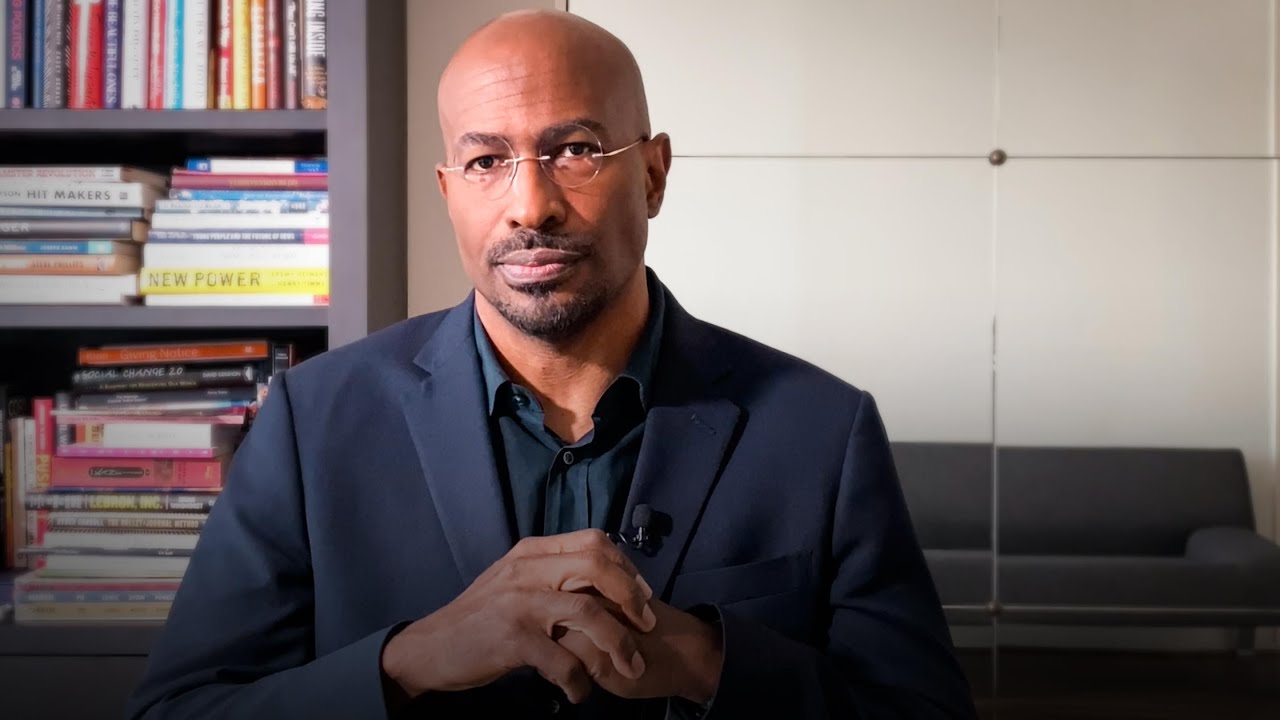
In 1992, something unprecedented happened in Los Angeles: rival gang members negotiated a historic peace treaty, significantly reducing violence across the city. Aqeela Sherrills, one of the key negotiators of that treaty, continues to bring his vision of community-led peace programs to cities across the US. He shares how the new initiative Scaling Safety is empowering trusted local leaders to redefine public safety and create lasting change from the inside out. (This ambitious idea is part of The Audacious Project, TED’s initiative to inspire and fund global change.) (Recorded at TED2025 on April 11, 2025)
Join us in person at a TED conference: https://tedtalks.social/events
Become a TED Member to support our mission: https://ted.com/membership
Subscribe to a TED newsletter: https://ted.com/newsletters
Follow TED!
X: https://www.twitter.com/TEDTalks
Instagram: https://www.instagram.com/ted
Facebook: https://facebook.com/TED
LinkedIn: https://www.linkedin.com/company/ted-conferences
TikTok: https://www.tiktok.com/@tedtoks
The TED Talks channel features talks, performances and original series from the world's leading thinkers and doers. Subscribe to our channel for videos on Technology, Entertainment and Design — plus science, business, global issues, the arts and more. Visit https://TED.com to get our entire library of TED Talks, transcripts, translations, personalized talk recommendations and more.
Watch more: https://go.ted.com/aqeelasherrills
https://youtu.be/IKOpcSRxHxQ
TED's videos may be used for non-commercial purposes under a Creative Commons License, Attribution–Non Commercial–No Derivatives (or the CC BY – NC – ND 4.0 International) and in accordance with our TED Talks Usage Policy: https://www.ted.com/about/our-organization/our-policies-terms/ted-talks-usage-policy. For more information on using TED for commercial purposes (e.g. employee learning, in a film or online course), please submit a Media Request at https://media-requests.ted.com
#TED #TEDTalks
Оглавление (3 сегментов)
Segment 1 (00:00 - 05:00)
In 1992, the year that the Los Angeles homicide rate reached an all-time high, members of the Crips and Bloods, two of the largest gangs in the US, sat down together and brokered a peace treaty. This historic event ended a three-decade-long urban war that claimed more than 10,000 lives in LA County alone, not including those permanently maimed or incarcerated for life. I was one of those gang members who negotiated that treaty. (Applause) Thank you. (Applause) Growing up in the Jordan Downs housing projects in the Watts section of Los Angeles, I witnessed things no child should ever be subject to. By the time I was 16, I had attended 20 funerals of friends. And like so many youth surrounded by violence and poverty, I was desensitized and angry. And joining the neighborhood gang was my solution for safety and protection. Now, it's important to understand that Black American gangs aren't inherently violent. Less than three to five percent of so-called gang members are actually committing violent crime. More often, they're like surrogate families. We're protecting one another, but sometimes the only way we knew how to survive. In the first two years of the peace treaty, homicides in Watts declined by 44 percent, changing the quality of life in my neighborhood. I was just 23 years old, and my firstborn son, Terrell, had just turned seven. Driven by the belief that our children would not inherit our conflicts, we took the call to peace to 16 more cities, contributing to a national decline in youth violence. You see, peace was possible because nobody could stop that war but us. Those of us at the center of the conflict. It took months of intense high-stake conversations, starting with a handful of brothers from the four housing projects. During the negotiation, I asked who was winning the war that we were waging against each other. Every time we'd die or go to prison, no one was there to provide direction and guidance for our kids. You see, violence is about proximity. I had known most of my so-called enemies my entire life, from school and from the neighborhood. A small group of us went into so-called enemy territory. The news of the peace treaty spread like wildfires. Hundreds of youths from formerly warring gangs attended celebrations in the projects to mark the new beginning. The peace treaty inspired similar agreements across the country and lasted for 12 years. Fast forward into today, the cycle of violence remains an extremely concentrated problem with unequal impacts. Residents in low-income urban communities of color are 15 times more likely to be harmed by violence, but yet three times less likely to get help. And for Black males ages 14 to 25, violence is the number one cause of death. As this crisis has worsened in cities, overwhelmed police departments are joining forces with community leaders to say that arrests alone will not end the cycle of violence. Many solutions are being proposed. But what we're proposing is an internal solution. A solution led by those most impacted by violence. A solution that lifts up nontraditional leaders to play a key role in creating safety in their own respective communities. You see, investing in nontraditional leaders as a complement to policing works. In 2014 -- (Applause) I got a call from my friend Ras Baraka, mayor of Newark, New Jersey. Mayor Baraka asked me to help him to strengthen his community violence intervention strategy. Now, Newark had been on the top ten most violent city lists for almost 50 consecutive years. With a modest investment from local philanthropies, I launched a Newark Community Street Team. I hired 16 credible messengers, many of them ex-gang members and formerly incarcerated folks who have deep relationships in the neighborhood. We trained them in conflict resolution and mediation strategies and deployed them in high-violence areas, and asked them to use their relationship capital to intervene and mediate gang disputes that could lead to violence. Now, you know, law enforcement investigations are crucial, but not always successful, and often painstakingly slow, whereas the credible messengers can prevent the next shooting in real time. We launched the Safe Passage program to ensure our kids went to school safely, because violence often happens before and after school. We launched the city's first trauma recovery center to provide therapeutic services to victims to help them heal. We also provided mentoring and outreach and case management. You see, safety isn't just one intervention. It's a shared strategy and requires an ecosystem of programs that residents trust.
Segment 2 (05:00 - 10:00)
When we started our work in Newark in 2014, the city had 103 homicides. In 2024, we had 37. (Applause) Family, these are not just numbers. They're actual lives saved. Newark now has nine consecutive years of decline, and we're no longer on the top ten most violent city lists. (Applause) Now, what we achieved in Newark was more than historic lows in violence. Local law enforcement credits us as the essential strategic partner in reducing violence in the city. And today, the Newark Street team has over 80 staff, is a formal partner with the city, and received millions of dollars in public funding. Now, family, we're not just the only ones that's improving safety in our cities. It's just rarely recognized and supported. Take my good friend, Miss Brenda Glass, a survivor of violence from Cleveland, Ohio. Brenda started Cleveland's first trauma recovery center, but had to cash in her retirement fund just to keep her doors open. And despite being the city's only 24-hour assistance for victims, it took the city five years before they granted her money. Another champion is my brother Lyle Muhammad from Miami, who employs credible messengers in some of the most violent neighborhoods but struggles to provide a livable wage and ongoing training for his staff. These often overlooked groups are most of the time ineligible for public funding, but what they do have is deep commitment, lived experience, trust and community support. Now, other cities are primed to replicate the successes that we had in Newark and following the steps of leaders like Brenda and Lyle, but very few essential community organizations have the know-how to become a permanent part of the city's public safety workforce. Family, we're about to change all of that with the generous investment from the Audacious TED community. (Applause) And support from people just like you. We're launching Scaling Safety, an initiative to put the public back in public safety. Our solution is simple. Redefine public safety by investing in a coordinated set of high-impact, resident-led programs that create real, lasting change. In 2021, I launched a community-based public safety collective to spread the Newark Community Street Team strategy nationwide. We've already helped 150 organizations in 60-plus cities. Now we're teaming up with the Alliance for Safety and Justice, the nation's leader in public safety advocacy. ASJ has unlocked three billion dollars in funding and led 150 policy reforms to support community safety programs. Together, we're creating a stronger, more effective approach to safety, one that complements law enforcement and breaks the cycle of harm. Now, addressing violence is extremely complex, but just as we no longer rely on hospitals and emergency rooms alone to improve public health, we cannot rely on the justice system alone to create safety. (Applause) In public health, community health workers emerged to improve preventative health care by training residents in outreach and peer support. They've reduced the burdens on emergency rooms and improved public health. We believe the same can be done with public safety, because racially equitable access to safety begins with community engagement. Now, in 2003, my oldest son, Terrell, that was seven years old when I negotiated the treaty, graduated from high school and was accepted into Humboldt State University. (Applause) The proudest day of my life, family, was driving this kid to school to start his first day as a college student. Terrell was an inspiration to his younger siblings and the reason why I became a lifelong advocate for peace. He came home from winter break. He went to a party with some of his friends in an affluent neighborhood in LA. There, some kids from a local gang showed up at the party, mistook his red Mickey Mouse sweater for gang colors, and shot him to death. Family, I'm no novice to violence, I've witnessed it my entire life. But nothing prepares you for the loss of your child. But what I've come to understand is that peace is a journey and not a destination. And that public safety is not just the absence of violence and crime, but the presence of well-being and the infrastructure to support victims and survivors in their healing journey. Scaling Safety is our healing journey and my continued commitment to Terrell and Oscar Guizar and Ronzell Pointer
Segment 3 (10:00 - 12:00)
and the thousands like them, that their deaths were not in vain. Thank you. (Applause) Helen Walters: Aqeela, another hug, if you will. OK, come right here, I have a question. Thank you for sharing your story. I speak on behalf of everybody when I say that we're so sorry for your loss. Aqeela Sherrills: Thank you. HW: We talked a lot this week about actionable hope. What you're doing exemplifies a spirit that too many of us have no idea what you've experienced and what you do on a daily basis. What advice do you give those who are trying to dig deep in this time, to step up and to find actionable hope? How do you do it? AS: I would say that where the wounds are in the personal life is where the gift lie. Sometimes we have to sit long and hard, in the anguish and the pain of the things that we suffered and keep our eye on the prize, you know, continue to look for the gift despite, you know, the circumstances around you. You know, the thing that I would encourage folks to do is to find someone that you know or don’t know, sometimes it’s easy to talk to people that you don’t know. And expose the deep secrets in your personal life, you know, as a way of accessing the gift of who you are. Because when you undress yourself, others can’t undress you, right? And I would say, for the folks who are the listeners because, you know, people always, you know, come to us and they tell us their horror story, hold space for them, behold them, don't define them as their experience, because we're not the things that we've perpetrated or the things that have been done to us. Those things are only informing who we become, they don't define who we are. HW: Aqeela, you're an inspiration. Thank you. One more. (Applause) Thank you so much.