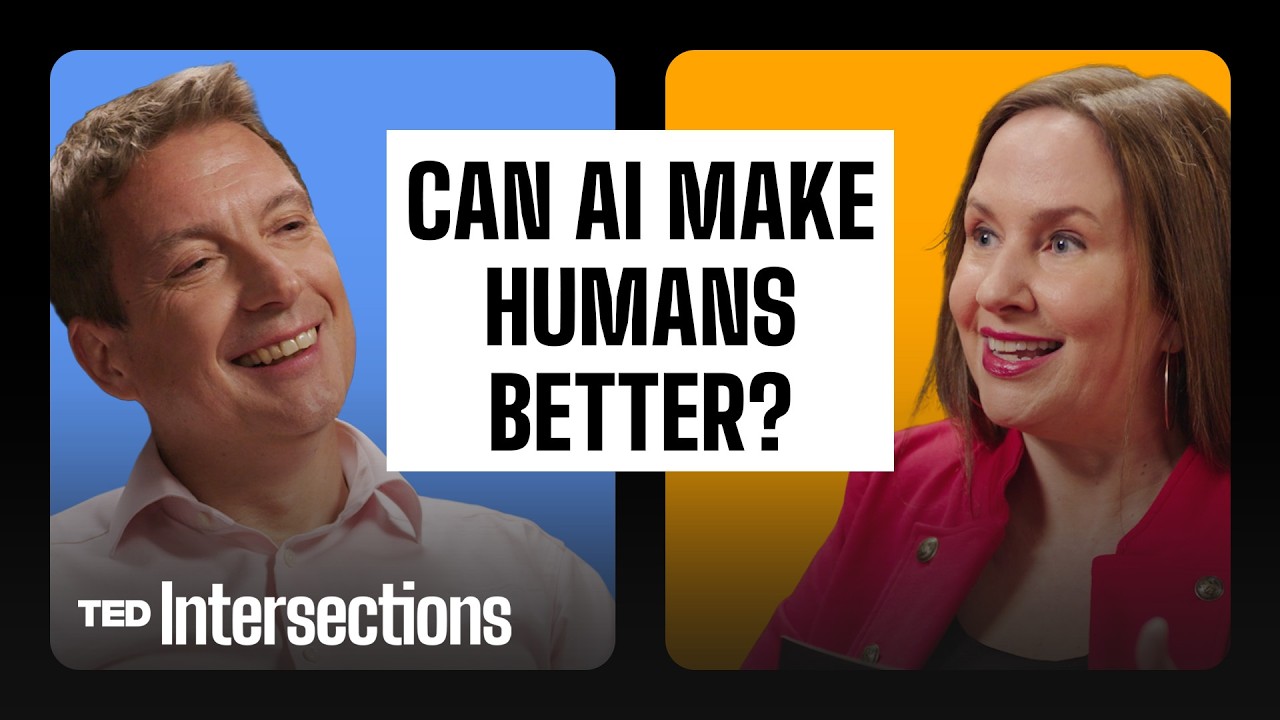
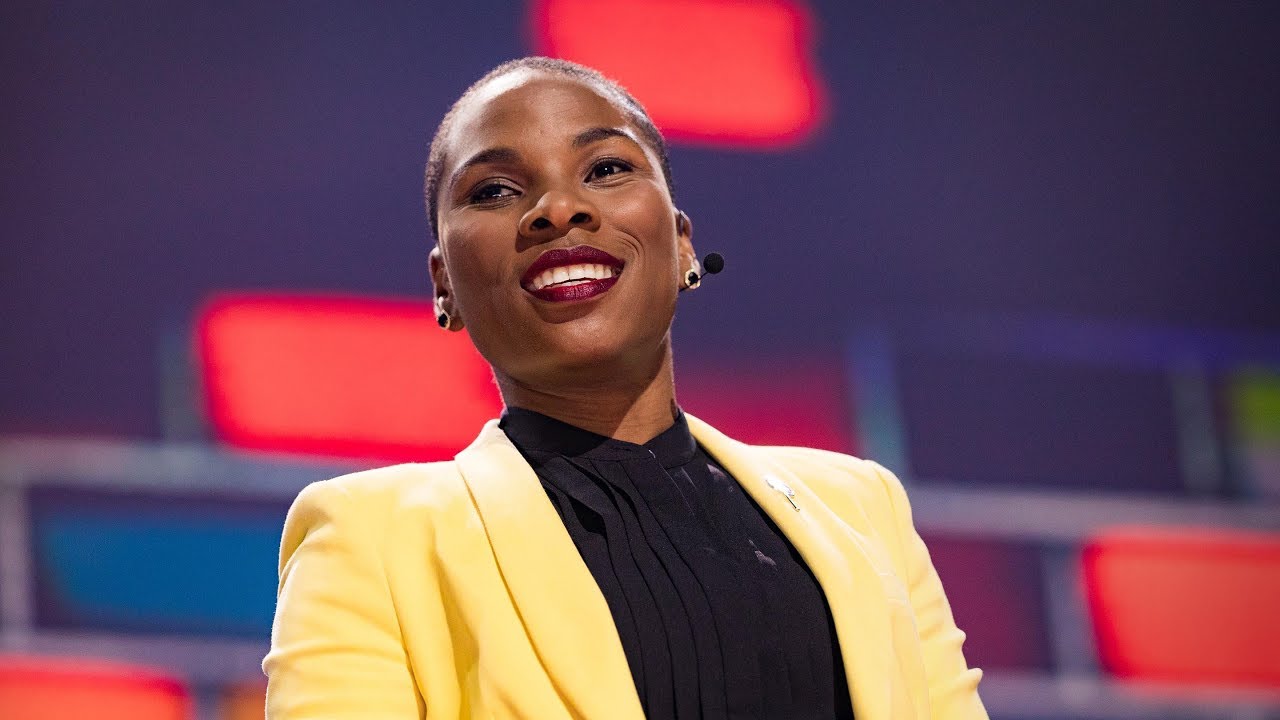
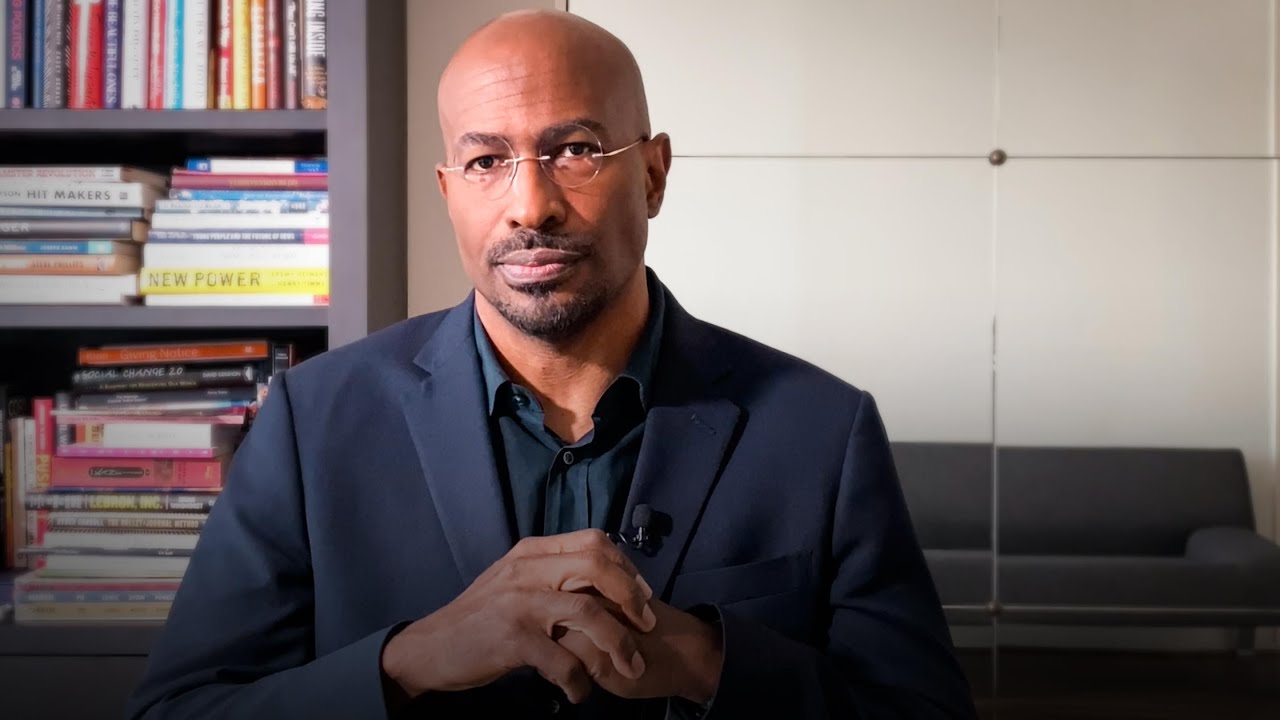
As AI continues to integrate into our workplaces, how do we ensure we don’t lose what makes us human? Social psychologist Heidi Grant speaks with NiCE's CX Division president Barry Cooper about why the current era of AI is misunderstood and how working with this new technology — instead of against it — can help you grow both inside and outside of your career. (This content is made possible by NiCE. It however does not necessarily reflect the views of NiCE.)
Join us in person at a TED conference: https://tedtalks.social/events
Become a TED Member to support our mission: https://ted.com/membership
Subscribe to a TED newsletter: https://ted.com/newsletters
Follow TED!
X: https://www.twitter.com/TEDTalks
Instagram: https://www.instagram.com/ted
Facebook: https://facebook.com/TED
LinkedIn: https://www.linkedin.com/company/ted-conferences
TikTok: https://www.tiktok.com/@tedtoks
The TED Talks channel features talks, performances and original series from the world's leading thinkers and doers. Subscribe to our channel for videos on Technology, Entertainment and Design — plus science, business, global issues, the arts and more. Visit https://TED.com to get our entire library of TED Talks, transcripts, translations, personalized talk recommendations and more.
Watch more: https://go.ted.com/tedintersections
https://youtu.be/vd2AklBK-GA
TED's videos may be used for non-commercial purposes under a Creative Commons License, Attribution–Non Commercial–No Derivatives (or the CC BY – NC – ND 4.0 International) and in accordance with our TED Talks Usage Policy: https://www.ted.com/about/our-organization/our-policies-terms/ted-talks-usage-policy. For more information on using TED for commercial purposes (e.g. employee learning, in a film or online course), please submit a Media Request at https://media-requests.ted.com
#TED #TEDTalks #TEDIntersections #Sponsored
Heidi Grant: AI can help us be the self we're trying to be and the person we intend to be in our interaction with someone else by telling us where our blind spots are, what we may be missing. [Intersections] [Presented by TED] [Made possible with the support of NiCE] [Barry Cooper, President, NiCE CX Division] [Heidi Grant, Social psychologist] Barry Cooper: I’m really interested, if someone's starting out in their careers these days, you know, in the era of AI, going into an entry-level job or something, you know, what should they be thinking about? HG: Well, it's a great question. I mean, in general, I think, and it's been true for a time, even before AI in the last couple of years really lit up in a big way, it's been true for a while that sort of being a ravenous, continuous learner was probably going to be the secret to success in life. And that's very -- That sounds easy. It sounds easy to have a growth mindset. I mean, people just say, you know, everyone thinks they love to learn because in some sense we do. In some sense, human beings do love to learn, and that's innate. But really loving to learn, as an adult, in the real world whose performance is being evaluated, who has real consequences for success and failure, it gets awfully hard to love to learn, because you really are so focused on looking like you already know everything, right? That's the headspace that we get into. You're terrified to not look like you already know it. And of course, that then sort of forces people into wanting to stay safe, to stay with what's familiar. And we really need to fight that. I think that the pace of change is not going to slow down. BC: The company I work for, we work in the space of customer service and using AI in customer service, and the people that are speaking on phones and using chats with consumers, you know, it used to be, before AI, that there was a coach, a manager, a quality manager that would basically listen in to one in 10 of their calls or would look, review one in 50 of their emails and then subjectively give feedback to them, and that the argument would be, "Well, you listened to my crappy call. All my other calls were great. What about the other ones?" So we have software that's been around for quite a while now using AI, that's listening to every call that they do, that is monitoring every email and actually scoring those people on how well they do, the behaviors they demonstrate, the outcomes they generate, all that kind of stuff. So that allows you basically to understand the areas for development. It's not down to a coach's opinion on that day, who maybe had a bad night the night before and he's in a bad mood. And then there's really clever ways of actually executing that training. You can do very, very specific AI-driven training for a particular behavior. You could, for example, give a demonstration of another call with someone that one of your colleagues did where they did a great example of that particular behavior. And we even have examples of simulated customers. So we know a particular agent or employee struggles in this situation, so we'll have an AI simulate a customer that will test that situation. And the AI can give training to the individual, the employee, to say, "Look, you should have said this rather than this. You should have done that rather than that." HG: There's such a great example of where the potential for AI rests in learning and development. Because you touched on so many things, I think, that are important. One is the idea of really quality feedback, feedback in the human-and-human world is subjective, inherently, and truthfully, a lot of research suggests the feedback you give is as much about you as it is about the person you're giving feedback to. For better or worse. So that ability to be getting really rich feedback that is a little bit less perhaps grounded in your own kind of subjective state. I think also your ability to get feedback at the moment that you could use the feedback, you know, nudging behavior is much more effective if you can nudge the behavior in the moment that the behavior is occurring, which is, again, very difficult for human managers or human coworkers to do. But AI can actually kind of give you that when you could use it most, where it's most likely to change your performance. So I think that those are some of the things that are really rich. And the idea of also being able to practice, particularly challenging behaviors in a less threatening environment.
Segment 2 (05:00 - 10:00)
The reality is, human beings care inherently about what other human beings think of them. And so in any situation with another human being present, it's inherently evaluative, even when people don't want it to be, even when they say "have a growth mindset, this is a safe space, it's OK to make mistakes." And even if you really mean that, on some level, human beings are still going to be concerned about how they look. And there is that potential with an AI coach and an AI-based simulation to feel about as free as you can feel. I'm not actually even sure the evaluation concerns go away completely. But less threatening, right? More free for trial and error, to do something new, to be curious, to explore. I think that is one of the things, as a learning scientist, that makes me really excited about AI, to create safe spaces for people to practice difficult conversations, to practice, you know, giving a client bad news, that's never fun, or your boss, telling somebody something that you suspect they may not want to hear and trying to do that in a way that doesn't demotivate them you know, these are hard things. So I love that AI can help us with that. So I think for young people coming into the workplace, don't lose your curiosity, keep trying to ravenously learn as many things as you can. And then again, I think with AI, be very thoughtful about the shortcuts you may be tempted to take. At some point, you know, in the moment, you might be able to kind of get the job done, but eventually, you're going to pay the price because you aren't learning. So I think that's one of the things I'd say, you know, we really have to exercise some willpower around, is, again, either trying to use AI as something that helps you get started but you are still going to do the synthesis. You're still going to pull all the notes together. Or conversely, you start by pulling all the notes together and then you have the AI help refine it. What am I missing, what am I not thinking about? How could I communicate this more effectively? And try to use AI as a coach to give you tips, rather than ask it to rewrite it for you. Again, I recognize that takes a lot of discipline. But it's really going to pay off in the end when you are, in fact, an expert, and others, who took shortcuts, are not. BC: You're 100 percent right. I think you hit the nail on the head with the growth mindset. You know, and rather than the fixed mindset to recognize that you've always got room to grow and learn. If you think back, you know, I don't know, 70, 80 years, People -- You had one profession. You'd go out, you'd learn that profession, and that would be your life’s work, that one thing. You know, for the last 20, 30 years, people have had two or three professions, you know, as technology came through and changed things each time, these waves. I think what we're going to see with AI is that every couple of years. So you're only going to get through that with the growth mindset, with recognizing that what you learned two years ago is no longer relevant. It's time to learn again. And you made another good point, which is, you know, AI is like a high-performance car or, you know, it's an amazing tool. It doesn't mean that everyone can use that high-performance car or tool the same way. So then there's, you know, knowing prompt engineering, for example, you know, being an expert prompt engineer is the equivalent of being an amazing car racing driver or something. You know how to move that car really, really quickly. But that will change again in a couple of years. But I think you really hit it with the growth mindset is key. HG: I'm curious what you think about, because I would say like, sort of the two major categories I hear from leaders who are reluctant to have their people using AI, you know, that there's even -- I’ve heard the phrase “AI shaming,” right, kind of really discouraging people from using it. The one concern we talked about, which is "I'm worried my people won't learn. I'm worried they won't build expertise." But the other one, of course, is the accuracy concern. And that, you know, again, there's a lot of sort of headlines about hallucinations. It's making up law cases. It's making up citations for science articles that don't exist. How do you think about that and how worried are you about that? And what, if anything, do you think people need to be, again, those young people who are starting to use AI in their roles, how they need to be thinking about how they evaluate output, how they think about whether or not -- I can trust what I’m getting. BC: Super. So to second question, first of all, and that's about being really good at prompt engineering.
Segment 3 (10:00 - 15:00)
The questions you ask an LLM, you know, conversational AI, is key. And so asking the right questions is prompt engineering to getting the right answers. You can very easily ask an ambiguous question that is very open to multiple interpretations. That's going to more likely produce hallucination. That's today, it's early days. In a year or so, you know, it'll be self-correcting and better than that, I believe. The first part of your question, you know, does it make people lazy? You could say the same thing, you know, oh, we have GPS in our cars now. Does it make you lazy that you don't carry a map around and pull over every ten miles and check the map kind of thing? Well, kind of yes, but actually you're no longer focusing on navigation. You've outsourced that to something else. So maybe you listen to a podcast while you're driving your car. The point being is that you know, yes, it's going to change things that we previously applied great value to. Writing an essay on something or whatever, you know. But then it elevates us to something that's even more valuable and even greater, done correctly. As long as that technology is not -- it's the equivalent of someone moves from sewing clothes to, you know, building the machines that make clothes, for example, or a fashion designer, because we can produce so much in the way of clothing these days. There's new roles around fashion design as well, because it's now a commoditized -- The production of clothes is a commodity. The AI is going to do the same thing. It’s going to commoditize things that we previously held a lot of value for. But then, as you said, we'll then elevate to higher purpose, higher-value activities. HG: I love the thinking about the potential for -- because you were talking about, you know, the right prompt can mitigate the odds of a terrible answer. And we think about that with, you know, confirmation bias, right? If you write a prompt and you say, “Tell me why Taylor Swift is the greatest songwriter who ever lived,” then it's going to tell you why she is. But if you were to say "and then tell me if there's anyone who doesn't think that and why they don't think that." Now you're going to get -- And it's literally what we teach when we teach decision making. And for how people to think about how not to fall prey to certain assumptions or certain biases, you're kind of building it in. But it's also, you know, the reality is, if you just took a decision-making course as a leader ten years ago, we would teach you all of these techniques on how to make better decisions. Some of them are quite challenging. If I say, well, you need to engage in critical thinking, let's say. You need to think about all of the assumptions you're making and surface them. Well, a that's a challenging thing to do. Assumptions are almost inherently unconscious. So even if I sit there for a long time and I think about what are all the assumptions I'm making that are leading to this decision, I may get some of them. Maybe if I'm using the perspectives of other people, I'll surface a bit more. AI can be a brilliant partner in decision making because you can ask it, “Hey, what are some of the assumptions I may be making here?” And the odds, you know, it'll find some and go, oh yeah, you know what? I am making that assumption. Is that a valid assumption? Is there information suggesting that assumption is no longer true? Things we told people to do for decades to make better decisions, are so much easier with something like AI to augment the process. BC: And what you just described is prompt engineering. You know, that's exactly it. Telling it "validate my assumptions" is prompt engineering. So it's something that was meaningless. No one had heard of prompt engineering two years ago. But, you know, many entry-level jobs that come up in the future, I believe, this will be a fundamental prerequisite. And being good at that, I imagine there'll be degree courses, at least for a few years until it's superseded, around, you know, clever, smart, prompt engineering to get the best out of that high-performing vehicle, which is AI. HG: Well, and again, it's one of those things where, you know, there's a certain expedience to having people write mega prompts and then you go, OK, here you can use my mega prompt. That's fast, I get it. But what's even better is to really have people studying the process, because then you are learning. In order to make a really great mega prompt that takes me through a whole process, I need to understand why each piece of that prompt was necessary. And so along the way, I'm learning things like, well, there's something called the confirmation bias. If you ask a question a certain way, asking for evidence for one thing, that's what you're going to get, right? So it's exciting for me to think about all the things we can teach through the process of teaching prompting
Segment 4 (15:00 - 20:00)
that helps people to arrive at better questions, better and more thorough understanding of information. How do we get people to think rationally about risk? That's incredibly hard. Loss aversion is a very strong impulse in the brain, but through really good prompting, we can get people to actually think through information in a much more even-handed way. So I'm very excited about the future of decision-making with AI, because it's not about AI making the decision for you, it's about it really helping you to see the things that you might be missing. And treating it like the future, as Bob Johansen said this in one of his books, and it cracked me up, but I think it's a really great analogy that AI, at least in its current state, is sort of like a really well-read but overly confident intern that's with you all the time. And I love that idea. BC: And it's only as good as the training it's got. HG: And as the person who, again, is sort of behind the wheel. And I think that human-in-the-loop part is so important, that we're still going to need people. I mean, when you think about that, what are the things you think of that we're kind of always, or at least for the foreseeable future, going to want a human playing a role in? Sort of like, there’s the things we’ll let AI do and that we'll let agents do, but where, to you, are the most important places for humans to still actually be a big part of the equation? BC: Very, very good question. And, you know, I think everyone's going to be different. Clearly there's moments that matter, where you need that human connection. You know, and it may be an emotional moment, it may be something that requires empathy. It could be something that's of massive significance that can't go wrong. So I think, you know, we're going to need that moment. But what's interesting is those moments that matter where there's a human, probably that human you're interacting with is leveraging AI, you know, in some way, to make them superhuman, to help the problem that you have. And again, we're talking a little bit about business here. And there's kind of, the other aspect, I think that really is interesting is how AI is going to help people in their personal lives, you know, and it's -- and that human connection and stuff. And so -- I'm really interested in your opinion as a psychologist in this, you know, we're all familiar with "the algorithm," you know, and the rabbit hole and the fact that social media is so personalized that it takes people down these rabbit holes of very individualist, lonely places in many cases. And you know, I've got a strong hope that we're going to use AI to create shared communities, shared water cooler-type places of like-minded people, you know, who can get together and share things either in the real world or in, you know, in virtual spaces as well, rather than kind of the rabbit holes we find ourselves in today. HG: I mean, I think in general that I believe that that's going to be the case. I do feel... To me, some of the places where AI can help us be better humans the most are those places where, for some reason or another, there is sort of a human quirk or sort of a limited capability that AI can help us augment. So right now, the solution for not going down the rabbit hole is people say, “Put your phone down.” OK, well, that's hard, right? Because my phone is full of interesting things and all kinds of things that give me those little dopamine hits that I'm looking at. They'll also give me a lot of dopamine deficit, but it'll give me those dopamine hits. And very often, when do we want people to put their phone down? Well, we want them to put it down at night because there's lots of research that shows it's terrible to be on your phone right before you try to get sleep. When do we have the least willpower to do something like that? At night. Because you have spent it. Willpower is a limited resource. We all spend it all day long, every time we make decisions, every time we resist an impulse, every time someone sends you an email and you don't immediately fly off the handle. We're using that limited supply and... I mean, this is why happy hour exists, right? By the end of the day, it seems like a really good idea. So I think those places where AI can really help us be the people we want to be is where we can use it as a almost like you would a human partner who was saying, "Hey, this is really the time you wanted to put your phone down, let's do something else instead." It's helping manage your day, giving you little tips like, "Hey, maybe you want to -- You've been staring at your computer screen for two hours. Maybe you should do something for five minutes
Segment 5 (20:00 - 25:00)
that replenishes you and puts a little bit of that gas back in the tank. And I happen to know that you enjoy these kinds of five-minute activities. Here are some suggestions." So I think it's really exciting. I think those places where we struggle to be our best selves, where we have our blind spots, where maybe there are unconscious forces that are undermining the pursuit of our goals, that AI can play a role in helping us in those moments where we need it most, I think is so exciting. BC: It's really cool. It's an argument I have with my kids, around AI and personalization. And especially with art, for example. So you know, we’re all familiar with like, a playlist of music that's curated for you. You know, based on what you listen to, what you've liked, you get a list of songs that it predicted you'll like. In the age of AI, you know, this will go beyond, there'll be music that's created for you. You know, it's not an artist that exists, it's just AI that's created, it's the perfect music for you for that moment, or even the perfect movie for you in that moment. You know, what you need at that time. So one of the arguments I have with my kids is quite interesting. It goes to this idea of a rabbit hole, because the movie that's created just for you at that particular time, is the ultimate rabbit hole. You're in this lonely place watching this lonely movie created for you, but it's hitting all the dopamine you need at that time. My kids' argument, which is quite interesting, is the idea of community. And actually part of the reason they like a movie or like a song isn't because it's good for them, but they know other people like it as well, and other people have watched it as well. So what's quite interesting to me is, you know, if AI is going to generate content, to what degree is that personalized? Is it personalized to the individual or to a group of friends or to a society or to humankind? HG: That's a great question. It's such a social psychologist question, because we think about -- When you think about identity, for decades, social psychologists have thought about identity as being -- It isn't who you are individually or your group identities. It's all of those. So you are a unique individual, but the groups to which you belong, that are meaningful to you -- those are important as well. And what tends to be the case is that people fluctuate a bit so it can fluctuate by culture. So in some cultures, your group identities tend to be more important than your individual identity. And vice versa. But I think it's also going to move kind of, throughout your day, where there may be moments where what you're really craving is something that is uniquely for you. And that's the piece you want in that moment. But I think there's also always going to be the things that you feel connect you to other people. So it's probably an "and." It's probably "I do want some --" There may be an evening where I want the movie that was made for me. There may be more evenings where I want something that I feel like I can share with people or that others are sharing with me. And I think we’re going to see that it’s quite fluid, because I, for one -- It’s funny that thinking about creativity and the arts, I do see that certainly artists are already and will continue to augment their art through with AI as a helper. I do think it still matters to people, and probably again, will, forever, because I think it's a human-nature thing that there is a human behind the art, right? That there's a human behind the music, there's a human behind a great piece of prose or filmmaking or a designer. However, that they'll be augmented a bunch? Certainly. And I think it will always matter, but I think there will be those moments. It's like elevator music. There's going to just be some times you're like, no, I just want -- I just want the thing that was manufactured for me right now. And then I think there’ll be times where the meaning comes from -- The meaning of something comes from the sharedness with other humans. I think that's probably always going to be true. BC: I think that's 100 percent. And in the same way that sometimes we'll want a burger, you know. And other times we want like, you know, a beautiful meal in a really nice restaurant. Life's about all of those choices and having those as well. And I'm hoping that AI doesn't just become fast food for everyone. And we have the right approach to it like we do with other parts of our lives. HG: Well, Barry, I just want to thank you so much. This was so much fun. This is one of these topics I can't stop talking about.
Segment 6 (25:00 - 25:00)
But it was really great to be able to talk to someone who is not only at the forefront of what we are doing today with AI, but someone who's thinking so deeply about what we're going to be doing with it in the future. BC: It's a pleasure, and thank you, Heidi. It's really good to speak to an expert in behavioral psychology. And I think it’s going to be interesting years ahead as the AI wave hits and what it means for people. So you've got some interesting work ahead. Thank you for your time. HG: I think we'll both have lots to do.