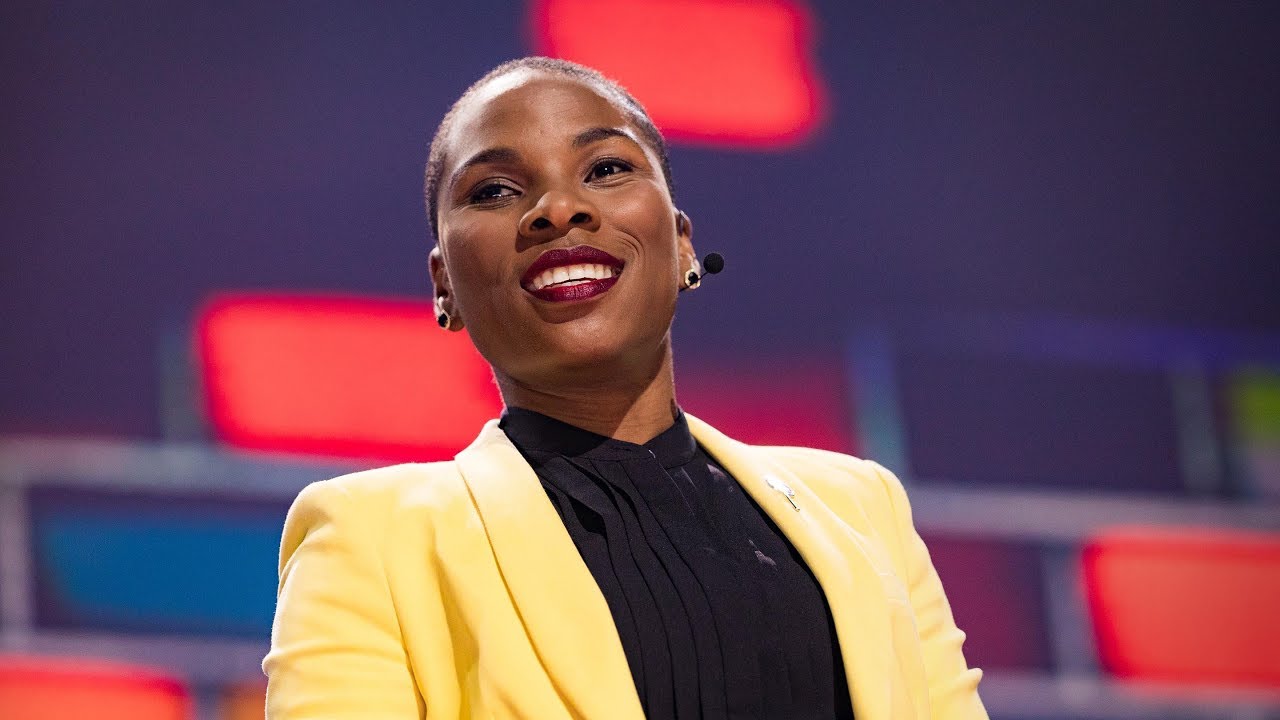
In a poetic, personal talk, TED Fellow Katlego Kolanyane-Kesupile examines the connection between her modern queer lifestyle and her childhood upbringing in a rural village in Botswana. "In a time where being brown, queer, African and seen as worthy of space means being everything but rural, I fear that we're erasing the very struggles that got us to where we are now," she says. "Indigenizing my queerness means bridging the many exceptional parts of myself."
Visit http://TED.com to get our entire library of TED Talks, transcripts, translations, personalized talk recommendations and more.
The TED Talks channel features the best talks and performances from the TED Conference, where the world's leading thinkers and doers give the talk of their lives in 18 minutes (or less). Look for talks on Technology, Entertainment and Design -- plus science, business, global issues, the arts and more. You're welcome to link to or embed these videos, forward them to others and share these ideas with people you know.
Become a TED Member: http://ted.com/membership
Follow TED on Twitter: http://twitter.com/TEDTalks
Like TED on Facebook: http://facebook.com/TED
Subscribe to our channel: http://youtube.com/TED
TED's videos may be used for non-commercial purposes under a Creative Commons License, Attribution–Non Commercial–No Derivatives (or the CC BY – NC – ND 4.0 International) and in accordance with our TED Talks Usage Policy (https://www.ted.com/about/our-organization/our-policies-terms/ted-talks-usage-policy). For more information on using TED for commercial purposes (e.g. employee learning, in a film or online course), please submit a Media Request at https://media-requests.ted.com
Оглавление (2 сегментов)
Segment 1 (00:00 - 05:00)
"You don't belong here" almost always means, "We can't find a function or a role for you." "You don't belong here" sometimes means, "You're too queer to handle." very rarely means, "There's no way for you to exist and be happy here." I went to university in Johannesburg, South Africa, and I remember the first time a white friend of mine heard me speaking Setswana, the national language of Botswana. I was on the phone with my mother and the intrigue which painted itself across her face was absolutely priceless. As soon as I hung up, she comes to me and says, "I didn't know you could do that. After all these years of knowing you, how did I not know you could do that?" What she was referring to was the fact that I could switch off the twang and slip into a native tongue, and so I chose to let her in on a few other things which locate me as a Motswana, not just by virtue of the fact that I speak a language or I have family there, but that a rural child lives within this shiny visage of fabulosity. (Laughter) (Applause) I invited the Motswana public into the story, my story, as a transgender person years ago, in English of course, because Setswana is a gender-neutral language and the closest we get is an approximation of "transgender." And an important part of my history got left out of that story, by association rather than out of any act of shame. "Kat" was an international superstar, a fashion and lifestyle writer, a musician, theater producer and performer -- all the things that qualify me to be a mainstream, whitewashed, new age digestible queer. Kat. Kat had a degree from one of the best universities in Africa, oh no, the world. By association, what Kat wasn't was just like the little brown-skinned children frolicking through the streets of some incidental railway settlement like Tati Siding, or an off-the-grid village like Kgagodi, legs clad in dust stockings whose knees had blackened from years of kneeling and wax-polishing floors, whose shins were marked with lessons from climbing trees, who played until dusk, went in for supper by a paraffin lamp and returned to play hide-and-seek amongst centipedes and owls until finally someone's mother would call the whole thing to an end. That got lost both in translation and in transition, and when I realized this, I decided it was time for me to start building bridges between myselves. For me and for others to access me, I had to start indigenizing my queerness. What I mean by indigenizing is stripping away the city life film that stops you from seeing the villager within. In a time where being brown, queer, African and seen as worthy of space means being everything but rural, I fear that we're erasing the very struggles that got us to where we are now. The very first time I queered being out in a village, I was in my early 20s, and I wore a kaftan. I was ridiculed by some of my family and by strangers for wearing a dress. My defense against their comments was the default that we who don't belong, the ones who are better than, get taught, we shrug them off and say, "They just don't know enough." And of course I was wrong, because my idea of wealth of knowledge was based in removing yourself from Third World thinking and living. But it took time for me to realize that my acts of pride weren't most alive in the global cities I traipsed through, but in the villages where I speak the languages and play the games and feel most at home and I can say, "I have seen the world, and I know that people like me aren't alone here, we are everywhere." And so I used these village homes for self-reflection and to give hope to the others who don't belong. Indigenizing my queerness means bridging the many exceptional parts of myself. It means honoring the fact that my tongue can contort itself to speak the Romance languages without denying or exoticizing the fact that when I am moved, it can do this: (Ululating) It means -- (Cheers) (Applause) It means branding cattle with my mother or chopping firewood with my cousins doesn't make me any less fabulous or queer, even though I'm now accustomed to rooftop shindigs, wine-paired menus and VIP lounges.
Segment 2 (05:00 - 05:00)
(Laughter) It means wearing my pride through my grandmother's tongue, my mother's food, my grandfather's song, my skin etched with stories of falling off donkeys and years and years of sleeping under a blanket of stars. If there's any place I don't belong, it's in a mind where the story of me starts with the branch of me being queer and not with my rural roots. Indigenizing my queerness means understanding that the rural is a part of me, and I am an indelible part of it. Thank you. (Applause)