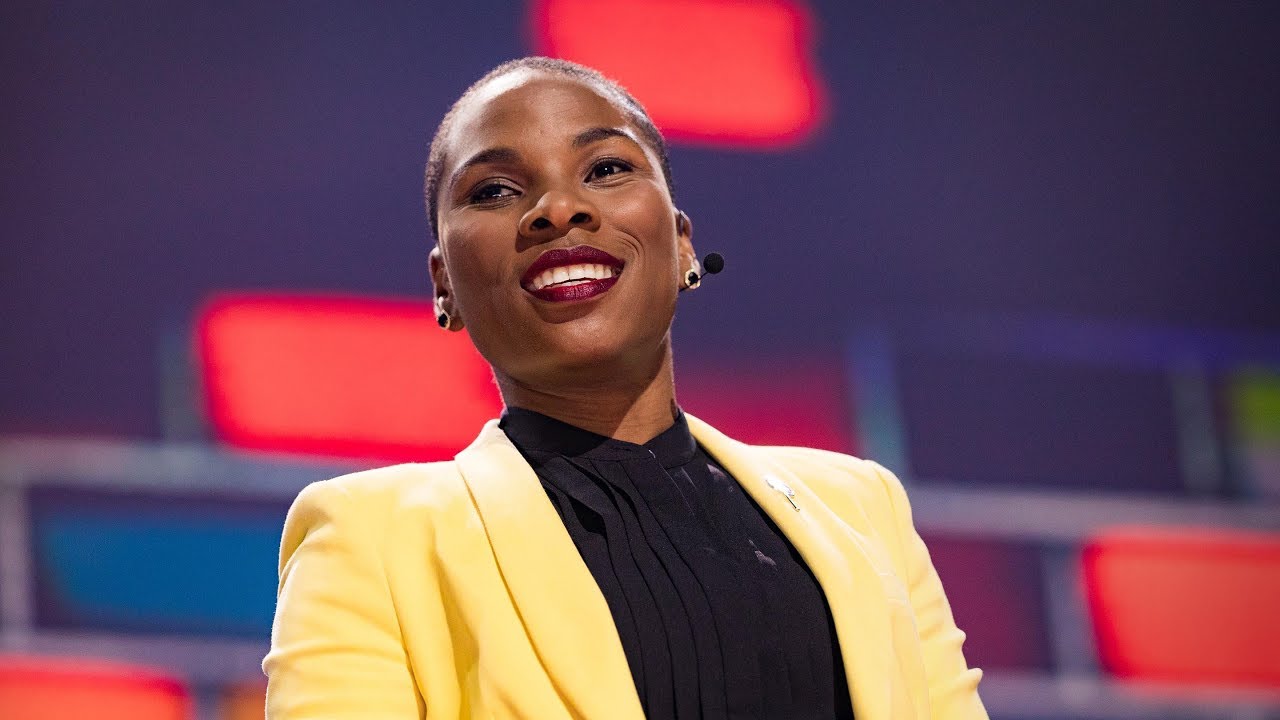
Whether it’s micromanaging playtime, constantly hovering or incessantly texting, the adult takeover of childhood has created a crisis of anxiety in both children and parents, says Lenore Skenazy, cofounder and president Let Grow, an organization dedicated to normalizing childhood independence. With wit and humor, she lays out the unexpected benefits of letting our kids be a bit more “free range” — and shows why the most teachable moments happen when parents aren’t there. (Recorded at TED2025 on April 8, 2025)
Join us in person at a TED conference: https://tedtalks.social/events
Become a TED Member to support our mission: https://ted.com/membership
Subscribe to a TED newsletter: https://ted.com/newsletters
Follow TED!
X: https://www.twitter.com/TEDTalks
Instagram: https://www.instagram.com/ted
Facebook: https://facebook.com/TED
LinkedIn: https://www.linkedin.com/company/ted-conferences
TikTok: https://www.tiktok.com/@tedtoks
The TED Talks channel features talks, performances and original series from the world's leading thinkers and doers. Subscribe to our channel for videos on Technology, Entertainment and Design — plus science, business, global issues, the arts and more. Visit https://TED.com to get our entire library of TED Talks, transcripts, translations, personalized talk recommendations and more.
Watch more: https://go.ted.com/lenoreskenazy
https://youtu.be/whaesnYloMQ
TED's videos may be used for non-commercial purposes under a Creative Commons License, Attribution–Non Commercial–No Derivatives (or the CC BY – NC – ND 4.0 International) and in accordance with our TED Talks Usage Policy: https://www.ted.com/about/our-organization/our-policies-terms/ted-talks-usage-policy. For more information on using TED for commercial purposes (e.g. employee learning, in a film or online course), please submit a Media Request at https://media-requests.ted.com
#TED #TEDTalks #Education
Оглавление (3 сегментов)
Segment 1 (00:00 - 05:00)
I am here to talk about parenting, which is kind of weird because if you Google "America's worst mom," you find me there for 22 Google pages, followed by "America's Worst Mother's Day gift," which, guys -- a lot of you here -- we don't want an iron and lingerie's for Father's Day. So -- (Laughter) How do you get a name like that? Well, years ago, when our younger son was nine, he started asking me and my husband if we would take him someplace he'd never been before in New York City, where we live, and let him find his own way home by subway. So we talked about it, me and my husband, who you never hear of as "America's worst dad. " Hmm. (Laughter) And we decided, sure. Long story short, I wrote a newspaper column, "Why I let my nine-year-old ride the subway alone," and two days later, I was on the "Today Show," MSNBC, Fox News and NPR. OK? Kind of wild. (Laughter) And I realize that a lot of you would not make the same decision, obviously. But you should have seen our son. He came into the apartment levitating. He was so happy. So I want you to think back for just a second on something that you absolutely loved doing as a kid. Maybe flashlight tag, building forts. And now I want you to raise your hand if your mom knew exactly where you were. OK. It's an older crowd here. (Laughter) It is usually the younger people who raise their hands because that's what's changed. In fact, that's what I wrote my book about, "Free-Range Kids. " For the last generation or two, kids have been getting so little time on their own, so little time unsupervised. And of course, some of that's good. Togetherness is good. Kids need a strong bond. But, you know, too much is driving us all crazy. There was the Surgeon General report from 2021, which a lot of you probably saw. It said that kids are more depressed and anxious than ever. Right? And then he came out with a report like two years later that said parents are more depressed and anxious than ever. I'm like, yeah, because we need our space, right? The olden days were not perfect, but back then there were three worlds that were absolutely, perfectly balanced. There was the kid world filled with, you know, bikes and adventures and playing, and the adult world -- so boring. People were always talking about politics and who was having a procedure. And a lot of polyps, polyps. And then there was -- (Laughter) Then there was family world when everyone was together, like on vacation or at dinner. But now they've all been sort of mashed up together, and especially since phones, because now, even when parents aren't physically with their kids, they can be texting and talking and tracking them. So the worlds are not in balance anymore. Fortunately, the reason I'm here, is that there is a sort of easy way to start teasing the worlds apart again, and it just begins with a little bit of deprogramming. So here goes. We have to realize that we've been sort of brainwashed into believing that anytime our kids aren't with us, they're in terrible danger of being kidnapped by a guy in a white van looking for his puppy. Or -- also tragic -- not getting into Harvard. And as a result -- (Laughter) Terrible. I don't even like to think about it. (Laughter) But the upshot is that we are spending way more time with our kids than our parents spent with us, usually helping them do things that they could do on their own. And the -- I call it the adult takeover of childhood because it's so vast that the University of Michigan did a study two years ago, and they found that parents want to give their kids independence, they recognize its importance. But the majority of parents of kids age 9 to 11, which is tweens, right, kind of old, will not let them play at the park with a friend, will not let them walk to a friend's house. And if they're at the store, shopping together, only 50 percent will let their kid go to another aisle. That's a real statistic. That's University of Michigan. So sending your kid for a can of peas is like sending them to Nam. OK? (Laughter) It's just crazy. We've got to get braver than that. We got to get brave enough to send our kids to the canned food aisle or to the park before their voice changes. So how? (Laughter) Well, I've got two helpful facts and three solutions. Helpful fact one is this: your kid is not going to be kidnapped.
Segment 2 (05:00 - 10:00)
OK? If for some reason you wanted them to be snatched off the street by a stranger, statistically, how long would you have to keep them outside? 750,000 years. OK? It's a while. And after the first 100,000, they're not even kids anymore, right? They're not even cute. They're like dust. (Laughter) Fact two is that when our kids aren't with us and all our teachable moments, they're actually learning more. And let me explain. When adults organize a game, we are efficient, right? We decide what they're going to play and whether the ball was in or out, and who gets a trophy, which is easy because everyone, right? (Laughter) But when kids are organizing a game, it is a total mess. Especially if you got, like, a bunch of kids of different ages, like the “Peanuts” gang, well, they have to decide what they're going to play, and then they have to make the teams kind of even -- lot of negotiating. And then you have to keep the game going, even when there are arguments, which there will be. So along the way, they're learning how to make something happen, how to get buy-in, executive function, focus, compromise, you know, communication, just all the skills they need to be a functioning human being. And if a 12-year-old ends up pitching to a five-year-old, which would never, ever happen in adult organized sports, well, there's no glory in striking out a kindergartener, right? So the older kid throws the ball kind of gently, and the little kid taps it, and the older one goes, "My God, it's a home run! " And the little kid is so ecstatic, right? But the older one is too, because he's doing something new. He is learning how to empathize and how to be generous, how to be an adult. And that's the most teachable moment of all. When we take those experiences out of our kids' lives by always being with them to help them and high-five them, "good job, good buddy," they get anxious because they don't see how much they can do, handle on their own. And we get anxious because we don't see it either. And so we're all feeling way more anxious than we have to. What can we do? Here's the deal. About eight years ago, the social psychologist Jonathan Haidt and I and two others got together, and we started a nonprofit to make it easy, normal and legal for parents to let go and let grow. OK? In fact, we call our organization Let Grow. And because a collective problem, which is nobody letting their kids do anything, needs a collective solution, everybody doing it at the same time so you don't feel guilty or weird or judged, God forbid, judged, we came up with two school programs that are free and one new law. The law is this. The law says that it is not illegal to let your kid play at the park with a friend, or walk to the store, do all sorts of things on their own. We call it the Reasonable Childhood Independence law, and so far as of last month, it has been passed in nine states. (Applause) Yes, right. Thank you. It's a great law. And actually they're voting on it in Florida tomorrow. And then our two school programs are these. We would like schools to stay open after school, not just for chess and homework help and soccer and all these adult-run activities, but for actual mixed age, no-devices free play. You put out some balls, some chalk, cardboard boxes, and there is an adult there crouching in the corner with an EpiPen. (Laughter) But they don't solve the arguments. They don't organize the game. They're like a lifeguard, OK? And I know everyone thinks that kids just want to run home. They really want to be with their phones. each other. They really want to be having fun, playing, having adventures, maybe flirting. And if the only place they can do that without constant adult supervision is on their phones, of course, that's where they go. But if you give them back a place that's free of phones, filled with kids a swath of time, they love it. I've gone to these play clubs. It is so great. I consider them a wildlife sanctuary -- (Laughter) for childhood, right? (Applause) Simple. Just keep the schools open for free play. Right? The second thing we suggest is that schools do the Let Grow experience. And that's when teachers give kids the homework assignment that says
Segment 3 (10:00 - 13:00)
"Go home and do something new on your own with your parents' permission, but without your parents. You can climb a tree, walk the dog, make pancakes, doesn't matter, anything. Depending on your age and your neighborhood, etc. " And it's in just over a thousand schools so far. And last year we heard of one kid who was 10 or 11, and he decided for his Let Grow experience he would make dinner for his family. So he went to get the ingredients at the store, and he's shopping and he's getting everything. And then he can't find the hot sauce. And the idea of asking a clerk for help, going up to an adult like a moron, an idiot -- He just felt so tiny. He couldn't do it. He ran out of the store. He literally left his cart and all the other groceries there, and he bolted. And then... he went back in and he talked to the clerk, and he got the hot sauce. And in one sense, it's just a simple errand. Right? But in another sense, it's the hero's journey, right? Because he had been defeated and humiliated. He actually abandoned his quest, just like they say in those hero's journeys books. But then he went back in... and he did it himself. “I did it myself” are childhood’s magic words. "I did it myself" is the original anxiety buster. And in fact, if I asked you right now -- and probably we'll talk about it later -- to remember something that made you really proud of your own kid or your grandkid, or your niece or your student or nephew, whatever, it's usually something like, you know, he was on an overnight last night, and the other mom called to say he cleared the table. Really? Or we were on vacation and she got lost, but she found her own way back to the hotel. Or my kid took the cousins out last night and let the five-year-old get a home run. We're most proud of our kids when they do something on their own, and our kids are most proud of themselves when they do something on their own. So the solution to the parent anxiety crisis and the kid anxiety crisis turns out to be the exact same thing. You got to pull apart those worlds again. You got to put the kid world separate from the parent world. Put them back in balance. You got to let kids do something on their own in the big wide world, maybe without even tracking them or talking to them or texting them, just trusting them to do something on their own. And if you can do that, if you can let go, I can guarantee your kids are going to end up less anxious. smarter. And your kids are going to feel really proud, but not as proud as you. Thank you. (Applause) Thank you. Thank you.