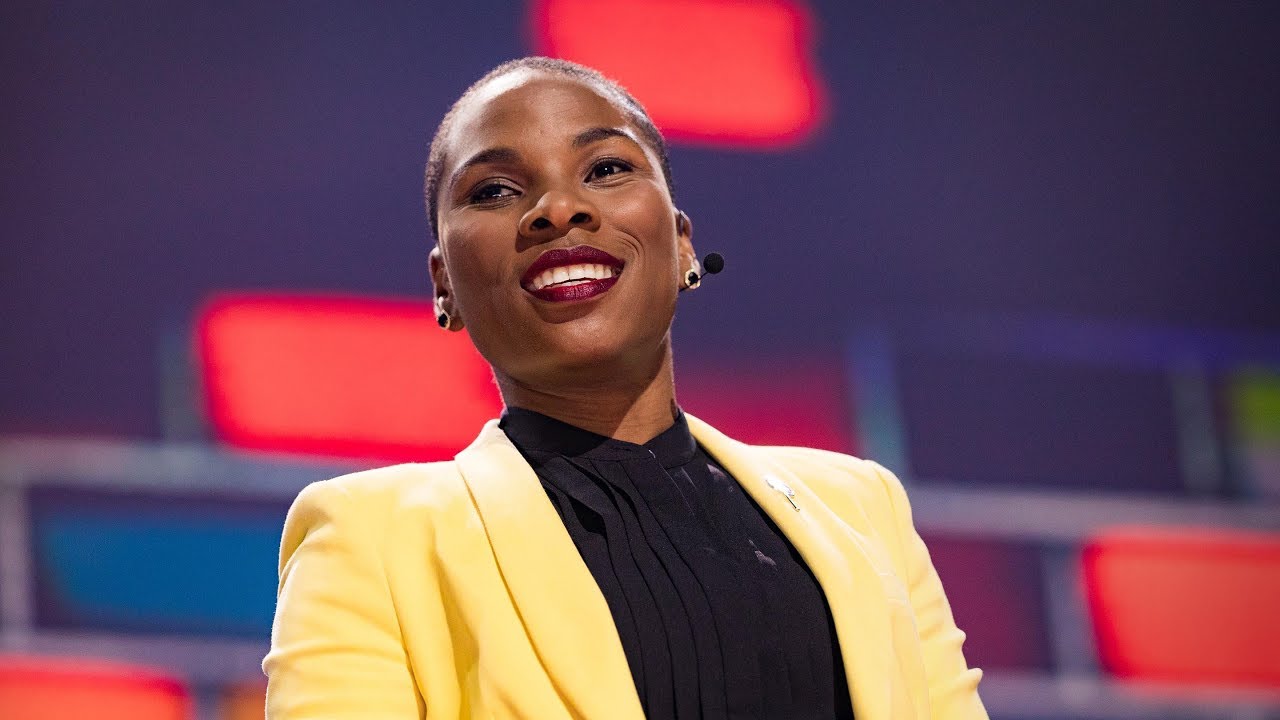
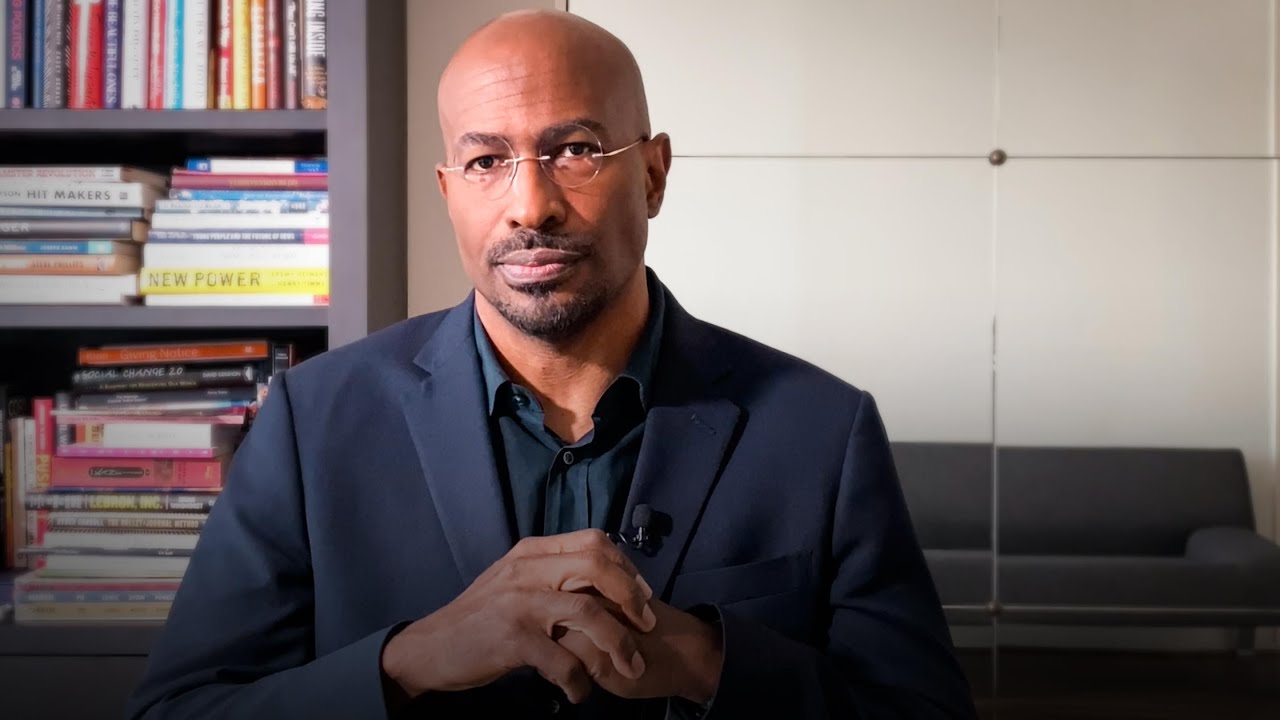
Can art help us usefully address polarizing issues such as gender, abortion or race? In a performance of “Faces of X” — a series that seeks to reframe culture-war clashes — actor Bill Heck stages different sides of a debate between capitalism’s champions and its critics, illuminating a new way to grapple with complex realities. After the performance, creator Stephanie Lepp offers three questions we should all ask to move to clear perspective and new understanding. (Recorded at TED2025 on April 9, 2025)
Join us in person at a TED conference: https://tedtalks.social/events
Become a TED Member to support our mission: https://ted.com/membership
Subscribe to a TED newsletter: https://ted.com/newsletters
Follow TED!
X: https://www.twitter.com/TEDTalks
Instagram: https://www.instagram.com/ted
Facebook: https://facebook.com/TED
LinkedIn: https://www.linkedin.com/company/ted-conferences
TikTok: https://www.tiktok.com/@tedtoks
The TED Talks channel features talks, performances and original series from the world's leading thinkers and doers. Subscribe to our channel for videos on Technology, Entertainment and Design — plus science, business, global issues, the arts and more. Visit https://TED.com to get our entire library of TED Talks, transcripts, translations, personalized talk recommendations and more.
Watch more: https://go.ted.com/hecklepp
https://youtu.be/oBP07G7PL-k
TED's videos may be used for non-commercial purposes under a Creative Commons License, Attribution–Non Commercial–No Derivatives (or the CC BY – NC – ND 4.0 International) and in accordance with our TED Talks Usage Policy: https://www.ted.com/about/our-organization/our-policies-terms/ted-talks-usage-policy. For more information on using TED for commercial purposes (e.g. employee learning, in a film or online course), please submit a Media Request at https://media-requests.ted.com
#TED #TEDTalks #SocialChange
Оглавление (3 сегментов)
Segment 1 (00:00 - 05:00)
Bill Heck: So... Capitalism. Capitalism is the most powerful prosperity-generating force ever known. Excuse me! Yes. Uh, sorry. I think you mean the most extractive force ever known. Oh, hello. Well, it's lifted billions of people out of poverty and expanded access to food and literacy. It basically birthed our modern world. Yeah, and in the process, it's wiped out hundreds of species and decimated countless cultures, extracting resources faster than anything that came before. OK. But the market is a genius at driving innovation, giving us the freedom to buy, sell, compete and create in ways that make society better. Yeah, but how can you call it freedom when the most affordable food is diabetes-inducing junk? How can it be genius, when life-saving drugs aren't fast-tracked because they don't generate enough profit? Oh, so you want to grow the pie? Well, then the name of the game is capitalism. The game of capitalism is rigged. I mean, who cares about the size of the pie if it's so unevenly distributed? Sweetheart, size always matters. (Laughter) And who would you have managing our food supply or setting drug prices? Do Venezuela or North Korea develop any life-saving drugs? Sure, capitalism has its problems, but it solves them through innovation. Yeah, I'm all for innovation. But toward what end game? I mean, there's this paradox where innovations in energy efficiency often make us use more total energy, which is a problem if that energy isn't clean. Listen, the economic system in America today isn't even true capitalism. It's a crony perversion of capitalism. But even in its imperfect form, capitalism is still humanity's greatest champion. Try not to drop your hammer on his toe or gut him with your sickle. (Laughs) OK. See, criticizing capitalism does not mean pushing for socialism. It means recognizing the fatal flaw of capitalism. In its pursuit of profit, it fails to account fully for its costs. We are in the midst of an existential crisis when arms races are counted as economic growth. A tree is worth more dead than alive. And people are worth more outraged and addicted than they are conscious and free. I'm not saying that capitalism itself is the goal, OK? It's simply our best strategy for achieving the goal. Oh, so then what is the goal? That is a question for society, not capitalists to answer, you oligarch! Bring it, Pinko! Whoa, whoa, fellas. What!? Oh, boy, OK. (Laughter) What if you're both partially right? Look, everybody likes to pit capitalism and socialism against each other, but most modern economies are mixed. They combine the decentralized intelligence of the market with the stabilizing force of the state. But ultimately, most standard economic theories suffer from the same fatal flaw. They prioritize one metric at the expense of others. And capitalism has generated the most overall wealth. But if it keeps deferring costs of the future, it risks humanity's capability to play any game at all. See, it's not just that capitalism has its upsides and downsides, it's that its downsides are bringing us to the brink of self-destruction. But its upsides are empowering us to evolve beyond it. And at the end of the day, the internet likes to put us into a box. Gives us two options: red or blue, woke or anti-woke, capitalism or socialism. Don't fall for the false trade-off. Yeah, I don't want to fall for anything. Integrate more perspectives. Yeah, I'm all for that. So then, you are both partially right. As am I. I mean, our view will forever be inherently incomplete. But we can always strive to see more faces of the hyper dimensional shape that is reality. Be well. (Applause)
Segment 2 (05:00 - 10:00)
Stephanie Lepp: So you might think that your way of seeing the world is right, but the three Bills and I are here to suggest that perhaps you are all partially right. So instead of choosing one perspective and getting a partial view, how might we integrate different perspectives and gain a bigger view? Well, that is the inspiration behind what you all just watched. A performance of my latest production, "Faces of X." "Faces of X" is a series of short videos that integrate different perspectives on culture war issues like gender, abortion, and race. You know, keeping it light. The format is simple. Each video first presents the strongest arguments on each side, the thesis and the antithesis, and then attempts to integrate them into a synthesis perspective. Thesis, antithesis and synthesis are all played by the same person. So you all just watched the first ever live performance of "Faces of X." (Applause) The great Bill Heck just showed you "Faces of Capitalism." But the potential pipeline of the series is infinite. Imagine "Faces of Artificial Intelligence," right? Imagine "Faces of Free Speech." Imagine "Faces of" whatever issue you are wrestling with. And I do take requests, so come talk to me after. But zooming out, what does it actually mean to integrate different perspectives? Well, one thing it doesn't mean is meeting in the middle. Given the complexity of the challenges we face, instead of meeting in the middle, I want to see us move from the horizontal plane to a new dimension, from common ground to higher ground. Let's think not just in terms of changing hearts and minds, but of expanding hearts and minds. So one metaphor I love is parallax vision. The view from our right eye is slightly different than the view from our left eye. Each eye gives us a view that's true, but partial. So it's by looking through both eyes together, along with other visual cues, that the world goes from flat to 3D, right? Integrating different perspectives quite literally gives us greater depth. So a question that I always get asked is: How? How do we integrate different perspectives? Well, it's an art and a science and something that has been explored at length by thinkers from Georg Hegel to Ken Wilber. But for us here today, I'm going to distill it into three questions that I ask myself. Here we go. First question: Is there an either/or that can be flipped to a both/and? Well, on the issue of race -- yep, we're going there -- the problem is framed as either the system, which is racist, or the individual, who should pull themselves up by their bootstraps. But naturally, the drivers of racial disparity lie originally with the system, but now also to an extent with the individual, which means we must build systems that empower individuals. The question isn’t just do race-based policies work but how might we use race based-policies in a way that allows us to not need them anymore? Second question: Is there an opportunity to shift from “what’s right” to "under what circumstances, if any"? On the issue of abortion, we can shift from “Who’s right, pro-choice or pro-life?” to “Under what circumstances should abortion be legal?” And if we leave out "all circumstances" and "no circumstances," and we integrate the rest of the views of the American public, we will likely end up with a policy that generally elevates the rights of the woman up until a point of viability, and then elevates the rights of the fetus, while making exceptions for rape, incest and a threat to the life of the mother. And finally, are there perverse incentives that are making the issue harder to resolve? So on the issue of gender transition, we are up against a social media business model that drives poor body image, outrage and polarization, and a healthcare industry that is built around intervention. So if we addressed these upstream incentives, then more of us could trust
Segment 3 (10:00 - 11:00)
that an individual is making a gender transition not because social media made them feel awful about their body, but because that's truly the right thing for them. Now this kind of integration does get confused with both-sidesism, the idea that all sides are equally relevant and valuable. It also gets confused with relativism, the idea that there’s no absolute truth, and everything is contextual. But the reality is it's unlikely that one of us is entirely right. Usually that's a sign of tribalism. It's also unlikely that all of us are equally right. That's both-sidesism. What's most likely is that most of us are partially right, and some of us are more right than others, which doesn't make for a great tagline. But that's what's up when we're contending with the complexity of reality. So next time you are in a gridlocked argument about some hot political issue, assume that the other person has some nugget of insight, and your job is to find it and incorporate it into your perspective. Challenge yourself to not just listen to each other and hang out on the horizontal plane, but to enter a new dimension. Thank you. (Applause)