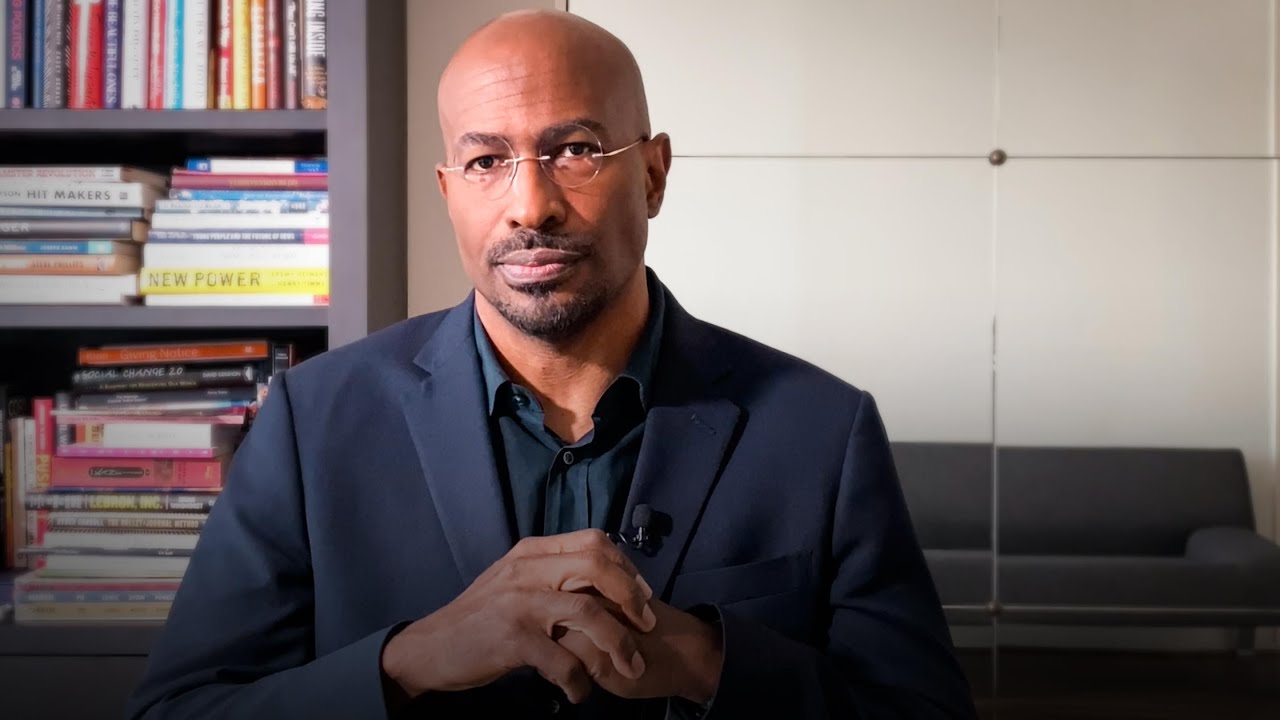
What Kids Actually Need Today (w/ Richard Weissbourd) | How to Be a Better Human | TED
31:56

What Kids Actually Need Today (w/ Richard Weissbourd) | How to Be a Better Human | TED

TED 13.08.2025 22 718 просмотров 502 лайков обн. 18.02.2026
Поделиться Telegram VK Бот
Транскрипт Скачать .md
Анализ с AI
Описание видео
Happiness, high achievement, or kindness – which is most important to you in your kids? Which do you think your kids think you care about the most? Richard Weissbourd is a psychologist, the senior lecturer at the Harvard Graduate School of Education, and the director of the Making Caring Common Project. Richard joins Chris to discuss the challenges facing American parents which he raised in his book, The Parents We Mean to Be. Rick also explains how parents can overcome their own shame, the importance of teaching kids to recognize others' emotions, and how acts of service can strengthen relationships. This is an episode of TED's How to Be a Better Human podcast. Listen on your favorite podcast app: https://tedtalks.social/4gmAZt3 For the full text transcript, visit go.ted.com/BHTranscripts Join us in person at a TED conference: https://tedtalks.social/events Become a TED Member to support our mission: https://ted.com/membership Subscribe to a TED newsletter: https://ted.com/newsletters Follow TED! X: https://www.twitter.com/TEDTalks Instagram: https://www.instagram.com/ted Facebook: https://facebook.com/TED LinkedIn: https://www.linkedin.com/company/ted-conferences TikTok: https://www.tiktok.com/@tedtoks The TED Talks channel features talks, performances and original series from the world's leading thinkers and doers. Subscribe to our channel for videos on Technology, Entertainment and Design — plus science, business, global issues, the arts and more. Visit https://TED.com to get our entire library of TED Talks, transcripts, translations, personalized talk recommendations and more. Watch more: https://go.ted.com/BHTranscripts https://youtu.be/Z0PeLwgy_Xo TED's videos may be used for non-commercial purposes under a Creative Commons License, Attribution–Non Commercial–No Derivatives (or the CC BY – NC – ND 4.0 International) and in accordance with our TED Talks Usage Policy: https://www.ted.com/about/our-organization/our-policies-terms/ted-talks-usage-policy. For more information on using TED for commercial purposes (e.g. employee learning, in a film or online course), please submit a Media Request at https://media-requests.ted.com #TED #HowToBeABetterHuman #podcast
Оглавление (18 сегментов)

  1. 0:00 Intro 293 сл.
  2. 1:21 Richard Weissbourd 149 сл.
  3. 2:06 Parents and community 254 сл.
  4. 3:21 Tough feedback 229 сл.
  5. 4:34 Good advice 301 сл.
  6. 5:59 Why does that matter 211 сл.
  7. 7:04 Shame vs Guilt 352 сл.
  8. 8:57 Interpersonal Relationships 262 сл.
  9. 10:32 Making Caring Common 355 сл.
  10. 12:38 Hyperindividualism 313 сл.
  11. 14:20 Happiness vs Goals 518 сл.
  12. 16:58 SelfHelp Culture 293 сл.
  13. 18:30 Achievement 389 сл.
  14. 20:42 Out of balance 252 сл.
  15. 21:57 Status doesnt matter 390 сл.
  16. 23:42 Social experiment 710 сл.
  17. 27:32 What can parents do 445 сл.
  18. 29:49 Self grows by being known 386 сл.
0:00

Intro

You're watching How to be a better human. I'm your host, Chris Duffy, and today on the show, we are talking with Dr. Rick Weissboard, a professor at Harvard University. I met Rick when I had just left the teaching job that I was doing, and I was starting to do comedy full-time. And that first year, I was not making a lot of money telling jokes. So, I was taking all sorts of random side gigs and part-time jobs. And the best one that I got by far was helping Rick and his lab at the Harvard Graduate School of Education make these videos that they were using as discussion starters in classrooms. We would get elementary school students one by one in a room and we would ask them, "What is a time that you did something even though you knew it was wrong? " And my favorite response by far was from this kid, Pice. Pierce was a very serious young man. And Pierce said, "Sometimes at night, I sneak into my parents' bedroom. I take their cell phone. I put in their password and then I watch TV on their cell phone. And I was already kind of trying not to laugh and I said, "Pice, do you ever get caught? " PICE turned and he perfectly hit the camera and he said, "Every single time. " To me, that is like one of the funniest things that I've ever seen in real life. Now, those kinds of moral questions, what does it mean to do the right thing when it's hard? Why do we do the wrong thing even though we know it's wrong? This is the bread and butter of what Dr. Rick Weissborg studies. Hi, my
1:21

Richard Weissbourd

name is Rick Weissbour. I'm a psychologist. I'm on the faculty of the Harvard Graduate School of Education and I'm the director of the Making Caring Common Project. The first question that I have for you, Rick, is your book, The Parents We Mean to Be. Um, this book, great book. It came out in 2009. And in this book, you wrote about three really big challenges that you saw facing America when it came to parenting and also to creating moral communities. One of those challenges was expecting more of America's fathers. Another was creating stronger ties among parents. And the third was finding ways to give each other feedback. I'm wondering now we're 16 years later. Where do you think we stand on each of those challenges? Have we made progress? Have we slid backwards? Are we the same place we were? Where are we? I unfortunately
2:06

Parents and community

don't think we've made much progress. Um in terms of parents and community, we got a lot of isolated, disconnected parents right now. and we have high rates of anxiety and depression among parents. There's a lot of alarm about the teen mental health crisis, but parents in our data are experiencing anxiety and depression at around the same rate as teens are. Uh so we would be just as right to sound the alarm about a parent mental health crisis as a teen mental health crisis. Yeah. No, I think we're still a culture where parents are allergic to feedback and that's really a problem. And that's not true across race, culture, ethnicity. I mean, you know, in some countries, it's very natural for parents to give each other feedback. They expect to get feedback and parenting is probably the most important thing we do or one of the most important things we do. And we've inoculated ourselves from feedback of any kind. So, one of the things I was just recommending in the book is that you identify one person who you really respect and trust and say to that person, you know, if I'm ever doing something that might be screwing up my kid, please tell me about it because I want to know about it. I feel like a lot of people don't want to know. You'd rather just think, well, I never do anything wrong. Than to hear that's some really tough feedback. You're doing something that could uh
3:21

Tough feedback

mess up your child. Yeah. No, that is really tough feedback. I, you know, I had a friend, a close friend who um gave me some feedback about something he was worried about with my parenting when my kids were young. And he's not my friend anymore. No, I'm kidding. He's still my friend. But I was ticked off about it. It's really hard to hear, but in some deeper way, I think you also really respect people who trust you enough and are feel close enough to you to give you really tough feedback like that. As we're recording this, I have my first kid who's just a little more than a year old. And it's been an amazing, beautiful, incredible year. It's also been unquestionably one of the most challenging years of either of our lives. I'm sure I speak for my wife Molly when I say that. And part of I think what is challenging about feedback is I desperately want to get advice and to know that we're making good choices and to get help making better choices. But also sometimes it feels like no one knows. And so taking advice from someone else is just taking their style as opposed to taking some sort of objective good advice. And I feel like that's not what you're saying. That that's actually not true. So push
4:34

Good advice

back on me on that. you know, I'm probably going to push back on you less than you would expect. I worry about some of the folks who are giving parent advice who give it um very, you know, forcefully and unequivocally because I still think we don't have great data on these things. Um I mean, there's some things we have good data on. There's some things that we don't have good data on. For example, authoritative parenting. You know, parenting, parents who are not too authoritarian, not too permissive, who listen, who are warm, who are responsive. I mean those things generally are really good for kids but there's lots of domains where you know we don't really know a lot and I think we're using our best judgment. I think we have to trust the experience of people that we really respect. Um and we also have to pull information from a number of sources and kind of do our best. I wish we could say there was a harder science here but there isn't a hard science at this point for a lot of things. Molly and I kind of identified when she was pregnant who are friends or um friends parents or just parents we know who are role models like who from the outside seem like oh we would like for our relationship with each other and our family and our kid to be like them. That has been really helpful to think of like what would these people who are our north stars do? How do we think they would handle this? And sometimes to literally ask them but even when we're not asking them to just think like how do we think they handled it and why does that matter to us? Yeah
5:59

Why does that matter

I think that's a great thing to do. And I think it's also, you know, a great thing when your kids get older to increase their opportunities to have contact with these people that you really trust and respect. I mean, there's some friends of my kids' parents who I just thought were wonderful parents and I always felt great when my kids were in those famil family's homes. So, I think understanding what those folks do and increasing our interaction with them is super important. Yeah. You talk about how one of the real challenges of parenting is getting past shame. Shame in yourself and shame about your parenting. And my kid isn't even able to speak yet. He doesn't have sentences that he's saying to strangers. And I already can feel moments where I have this real shame where he's yelling or where he's not behaving the way that I think that he should be. And it and a thing that your book, I think, really pointed out in a way that hit home for me is that it's not actually about him. It's about how I want to be perceived as a parent and that it makes me feel like I look bad. One of the differences, big
7:04

Shame vs Guilt

differences between shame and guilt. Guilt is really about a deed. It's really when you do something that violates one of your standards. And guilt usually insists on and reveals a path to repair itself. Shame sort of fers in the self. It's about defects and particularly the public exposure of defects. I think that some of us as parents are more prone to shame than others and it be it does become hard to manage. Kids have their own complicated powerful inner lives. They're going to do things that sometimes are going to feel embarrassing to us. And I think if you're a parent who feels shame in that those moments, it is really important to be able to do some reality testing to have a partner or close friends or whatever who can help you normalize these experiences that kids are having. This is what kids do. Your shame probably has much more to do with you than it does with any action that they have taken. And there just isn't this direct link that your child has problems. It means you're a failed parent. Lots of wonderful parents have kids who are struggling in one way or another. You know, on the one hand, I think as a child development matter, we have to send the message to parents that they do have lots of influences on kids' lives. But we can't send the message that there's a simple linear relationship between what they you do as a parent and how your kid feels because kids do have complex inner lives. They are influenced by many types of things. We are not the only influence on them. So much of your work strikes me as relevant to anyone who is a person whether you have kids or not. Right? These questions of how do we have morality? How do we think about doing the right thing? dealing with shame? How do we think about our interactions with other people? Those aren't just questions that depend on having a child or a parent child relationship. They're really interpersonal relationships. They're
8:57

Interpersonal Relationships

societal and cultural too. I mean, you know, at this moment in time, what I find myself sort of obsessed about is how much morality has been demoted or sidelined in our public life. There's a level of meanness, of lying, of polarization, a fragmentation, of demonization of people that, you know, has been unprecedented in my lifetime anyway. I'm sure there are other times in history where we've seen things that are like this in some way. And so, I think we're sort of morally off the rails. And so, you know, you're absolutely right. A lot of this is about how do we restore caring for other people, caring about justice, caring about the truth, uh the importance of honesty. I mean, how do we restore these things in our institutions, in our colleges, our schools, our homes, and in our public life more generally? M it seems like for a big chunk of your career, these questions would have been regarded as either apolitical or maybe even like a little bit more towards the conservative side of politics. And now, at least in the United States, there's been this huge push um I think against the idea that we should be teaching students these kinds of things, certainly in schools, right? the idea of like social and emotional learning became a culture war flash point. And it seems like you know you run a project that's called making caring common and it's interesting that has become an increasingly in my lifetime political statement. It feels like this is tricky
10:32

Making Caring Common

territory. So I find when I talk to conservative uh audiences too lot of concern about hyperindividualism that we've become too individualistic a country that we need to be raising kids who think about the collective who think about collective flourishing who think about we not just about I think there's a lot of agreement actually about that ac across the political spectrum um I think words like justice have become highly politicized when you use the word justice a lot people immediately associate it with woke efforts to promote racial justice or gender justice. So we use with a lot of you know very carefully these days because it's as politically divisive as it is. I think the seal movement in some ways people see as um an under the radar a sort of indirect and hidden way to promote a woke agenda um a racial and gender justice. I mean, I think that's one of the concerns about the seal movement. I think if you were to ask the great majority of Americans, and I said this based on our surveys, you know, is it important for kids to be caring? them to be empathic? fair? Great majority of Americans would still say yes to those things, I think. And when you say movement, just for people who aren't familiar, that's social and emotional learning. Yeah. Social emotional learning is around the development of social emotional skills. And those skills are things like self-awareness, um, self-regulation, self-control, perspective taking, empathy, social awareness, these skills that help us have better relationships day-to-day, and these skills that can help us be better community members. Or putting the political, you know, binary aside for a second of the US political binary. I think that you mentioned this idea of a hyperindividualistic society and I think that for me this seems to transcend politics but also to transcend our individual country that you know there's a real global sense that um the best thing you can do the smartest thing the most admirable thing you can do is to amass as much money as much fame as
12:38

Hyperindividualism

much attention for yourself as you can and I think that that's really uh that is not in line with the idea of building morality and community and kindness. There are a couple things that concern me about it. I mean, one is that it is not about the collective. It's not about the well-being of your community. And that means that, you know, most people flourish when their communities flourish. If we're all acting individualistically, our communities won't flourish. And we won't flourish as much as individuals either. I mean the irony of this is that individualism in that sense backfires. You want kids to feel some sense of collective responsibility. You want us kids to still be able to help each other out in preparation for a test and not just think of other kids as threats to them. But I think it's there's something beyond kindness too which is that I worry that we have lost any sense of sacrifice in this country. that part of what being a moral person is doing things at a to at a cost to yourself. That sometimes standing up for an important cause doesn't make you happy, you got to do it. Taking care of a sick relative or somebody with Alzheimer's doesn't make you happy, you got to do it. That this combination of being highly individualistic and besided by happiness, you know, hyperfocused on happiness, um means that we don't do things that um are right and moral and really important for any healthy society. I've heard you talk before and you've written about the difference between happiness and morality and those two as goals. I know this is something you could probably give hours of lecture on, but can you give us a a nugget of what you see as the difference between those two as goals? I'm going to
14:20

Happiness vs Goals

make a a radical proposition, which is I just don't think we should have happiness as a goal. I think we should teach kids to be caring. We should teach them how to have good relationships. work hard. We should teach them how to contribute to their communities. And if we have kids that are caring and uh have good relationships, they're going to be happier and it's going to be better for us collectively. I mean, of course, we I want kids to be happy and they can be happy and moral, but when we make happiness the explicit goal, we are often abandoning those things that are in fact more important for kids long-term happiness. One of the things you see uh you know on the playground or when you're around parents and kids and I think I I'm sure I did this when my kids were young is this allergy to kids experiencing adversity of any kind. So you're you know you're sort of swooping in to resolve minor peer conflicts because you don't want your kids to be unhappy or you're maneuvering them to get on winning teams because you don't want them to be unhappy. When you do that, you are in fact robbing them of the coping strategies that are so important for their long-term well-being. So these things we do in the name of protecting kids immediate happiness can be so detrimental to their long-term well-being or happiness. Sometimes in some communities, particularly in middle and upper class communities, there's a lot of mood meteorology going on. You know, there are parents who are policing their kids' moods every 10 minutes. That must make you frustrated. sad. That must make you angry. You know, again, in the name of protecting their kids' happiness. And it is very important to get kids to identify and articulate their feelings, especially boys. But if parents got kids tuned into other kids' feelings, if they got kids empathizing and caring for other kids and were more focused on other kids' feelings, their kids would have better relationships their whole lives. They would be better friends, mentors, parents, romantic partners. And those relationships are the most durable and robust sources of happiness that we have. This is a yet another moment where I feel like it's such good advice for parents, but it's also just people, right? If I focus so much on how do I feel today? Do I feel fulfilled? Am I happy? Often that sends me into a spiral. Whereas if I think like what can I do for someone else? to be of service to make myself be of any use in any way, even a tiny way, I almost always feel better by doing that. Even though, you know, the idea of being like, I'm going to go help someone move their stuff, that doesn't sound fun. That doesn't sound like it will make me happy. But at the end, I almost always feel happier than if I just sat around thinking like, what will make me happy today? I think
16:58

SelfHelp Culture

you said it beautifully. I um I worry about, you know, I'm a psychotherapist by training. So, uh I believe in psychotherapy. It's been helpful to me. millions of people. And you know, there's things about the self-help culture that have been really helpful to a lot of people. But I also worry about it. I worry it causes us to turn inward to find meaning when to your point we often find meaning and real gratification by service turning outward being helpful to other people. I worry it causes us to turn our inner lives into theater. I worry that it makes our feelings too precious. You know lots of people can benefit from therapy but lots of people also benefit more particularly men by getting more involved in other people's experience and actually being useful and mattering to other people. You know, I think there's also things that religious communities really got right about this and with the evaporate. I'm not saying people should become more religious, but you know, religious communities are places that do engage people in service. They are communities of obligation where you have obligations to other people. You're asked to feel part of a larger human project, to take responsibility for your ancestors, and to honor your descendants. I think we need to think about how to reproduce some of these communal aspects of religion in secular life and some of the traditions and rituals in religion and secular life. We talked about how you think morality should be the goal instead of happiness and happiness should not be the goal for our children. The another um countercultural idea that I know you really h have pushed hard is that achievement shouldn't be the goal. that
18:30

Achievement

we should focus more on building uh ethical moral children than high achieving children. And um just I think something that is truly like hilarious and perfect as a joke is that you did a survey that found that in these you know super high achieving high schools where people are really pushed hard to get into the very best most elite colleges that something like 50% of the parents said that they would rather have their kid get into a great college than be a good person. And that when you showed those results to the teachers, the teacher said, "No, those numbers have to be wrong because it has to be higher than 50%. " Yeah, that was in one independent school in the Boston area that I got that result. You know, around achievement, I think there are a few issues. I mean, one is the meaning of achievement for someone. If you're achieving based on something that really resonates with you in a deep internal way, that's very gratifying. If you're achieving to contribute to your family or community, that's very gratifying. If you're achieving because your parents have status concerns in their community and you want to please your parents or because you think your parents love is conditioned on your achieving at a high level, that can be really soul destroying. I mean, I think that's much more what I worry about is achieving for extrinsic reasons that feel alienate alien to them and achieving in ways that warp their relationships with their parents. I think the third danger is that it can when achievement pressure gets too high and it's super high in a lot of communities these days. Kids start to see other kids as threats. So, you know, it can really also undermine your relationships with your friends, with other kids. So, you know, it's not achievement pressure per se. I think it's the meaning of achievement pressure and the context for achievement pressure and how kids understand it, interpret it that that's a problem. I I'm glad that you framed it like that because I think that it's kind of easy to push back on the importance of achievement while you're at Harvard. Like you're literally work at Harvard. You are employed by the pinnacle of American uh achievement
20:42

Out of balance

culture. I feel very lucky that I, you know, am able to be at Harvard. I think going to um to colleges that have, you know, wonderful resources is a tremendous thing. The point is that we are so out of balance. This idea that you have to shoehorn your kid into one of 20 or 25 highly selective colleges and if you don't, their life is going to be shortchanged in some way or depleted in some way. Um, again, you know, I feel very lucky to be at Harvard, but I can tell you like from the bottom of my heart, there are hundreds, if not thousands of great colleges in this country. You don't have to go to one of these 25 colleges. And this is sort of an epidemic. And, you know, rates of depression, anxiety are so high in affluent communities among teens. And this pressure on selective college is become a really serious issue. You know, my kids did not go to highly selective colleges, but they went to great colleges and they're all doing great. And I think, you know, this is sort of a disease I had at one point. I can tell you a story about me and one of my sons. Please tell me. I'd love to hear that story. So, I was walking with my oldest son one night when he was like 17 or 18. He was just the beginning of this college path. I said to him, Jake, I
21:57

Status doesnt matter

just want you to know that I want to go to you to go to a college that really works for you, that I don't think status should really matter. And he said to me, you know, Dad, that's such I mean, this is our lovely father son walk that he totally exploded. And I was sort of stung at first. And he said, you know, you teach at Harvard and our cousins are all going to these highly selective colleges. You can kind of take the high road on this because there's so many forces doing the musling for you. This is so in the water in our community. And again, you know, I was sort of stung by it. But, you know, I also realized that he was right that um I could say sort of high-minded things like that because at some level I did know that there's enormous pressure on him given the community we're in and given the family we're in to go to one of these places. It made me really feel like I got to do some work here and sort out how I feel about this, but also that I got to be mindful of all the forces that are at play. And if I really believe there's hundreds of great colleges around the country, and I really do, that I I've got to learn how to, you know, close the rhetoric reality gap. I've got to learn how to live that and not just espouse it. It feels like so much of the challenge of parenting is a lot of the challenge is figuring out how to like let go and get yourself out of the picture um and get your own emotional needs met by yourself rather than by your kid. And that's really hard. I mean, you talk in the book about people who felt like the magic of having a kid was this new unconditional love that maybe they'd never felt before in their family. Maybe they had broken relationships or ch or challenging relationships with their own parents and family and then all of a sudden there's this pure perfect love. And to find ways to let go and to let your kid push back or do things that are different than you, that is an enormous
23:42

Social experiment

challenge. It's so difficult. Yeah. No, I you know I think you're right. I mean I think that we're we've embar I'm quoting from your book. I'm glad you're I know I realized I was congratulating myself. The um I think we're we've embarked on this giant social experiment in the last you know 30 or 40 years and it's really as far as I can tell it's unprecedented our history which we really want to be close to our kids. I mean in a different way you know we want to have reciprocal relationships with our kids. We want them to share with us. We want to be able to share more about our lives with them as they get older. We want to be vulnerable with them at times. We want to talk honestly about our mistakes. And I think those are great things. You know, I'm all for it. And I think it has this downside. You know, I think it's got a the downside that there are, you know, too many parents who at treating their kids at young ages as their best friends and looking to get their emotional needs fulfilled by their kids when sometimes they have to be the parent and do things that are going to be hard. Um, I think kids need to idealize their parents, too. And so, you know, it's not helpful sometimes to be uh interact with your kid as if you are peers or friends. There just things to be careful of with this. But I think the general trend is a really good one. I mean, I think particularly for dads, you know, the number of dads who now have close relationships with their kids has increased. Super gratifying for the dads as well as for the kids. In the conclusion of your book, you say there's a paragraph almost at the very end of the book of uh the parents we mean to be. There's a kind of beauty in being a moral person. A beauty that our best novelists and dramatists have evoked since ancient times. We are moved by kindness, generosity, and integrity. We are moved too because the deepest forms of morality, of knowing and valuing others are also the deepest forms of love. And we are aed by the clarity of new moral awareness and by moral transformation by the capacity of human beings to reckon with their moral failings. So you talk about how there's this societal idealization of these qualities of morality. And yet a lot of us struggle with taking what we love to see in others and in history and in fiction and put it into our actual lives as something that we value in our families and want to instill. That it's a lot easier to focus on, you know, achievement or happiness or feeling good for the that day than it is to focus on these big moral values, these principles. earlier generations throughout much most of our histories um understood something crucially important which is that uh we have to keep morality front and center in in child raising and that you have to do that intentionally. it systematically. Schools in this country were not founded to cultivate academic achievement. They were founded to cultivate ethical character. colleges. Almost all our colleges were founded to cultivate ethical character as well. It used to be mother's responsibility throughout most of our history to prepare children. Primary responsibility was to prepare children to be good citizens. It should have been fathers too. Part of the blame is the self-esteem movement in the last sort of 40 years, 50 years. And this idea that if you feel good about yourself, you're going to be a better person. Politicians, corporate leaders can have high self-esteem and not be good people. And I think our other generations understood that if we want kids to be moral, if we want people to be moral, we have to be very deliberate about it and we have to create institutions that cultivate uh important virtues, moral qualities. We have to have moral conversations. So for people who are listening, what are three things that people can do to actually put some of
27:32

What can parents do

these ideas into practice? What can you actually do to to change this? Yeah. Well, let me just mention a couple things parents can do. I mean, maybe that's a good place to start. You know, the reflexes of parent is you say to your kid, "The only thing that matters to me is that you're happy. " What if you said kind. " Henry James evidently said on his deathbed, "There are three things that are important in life. The first is to be kind. The second third is to be kind. " Kids say when you give them the choice, what's most important to you? Achieving happiness, caring. Kids tend to rank happiness or achievement first, the other second, and caring third. But when you ask parents, what's most important to you in child raising, they say that my kids are caring. They don't high achieving. And when you ask kids, how would your parents rank these things for you? Achievement, happiness, caring. They think their parents would rank achievement first, happiness second, caring third. You know, one of the questions that I encourage parents to ask their kids, to your point, is what do you think is most important to me? Do you think it's most important to me that you're a good person or that you're a happy person or you're a high achieving person? Do you think it's more important to me that you get good grades or that you're a good person? And I think they're going to be surprised by what some of their kids say in response to that. It's also an interesting question as an adult to ask your parent. Yeah, these are really interesting conversations I think to have. We've started an initiative to kind of restore the moral life of colleges. I think our higher ed institutions should be focused on uh on moral development, on generosity and grace and fairness and caring and daily interactions, but also in civic responsibility and um and I think that's true of our schools too that you know we have to put um caring for others, caring community front and center in schooling. Again, you know, when kids are in caring communities and where they feel connected and they feel anchored to adults, they learn at higher levels, too. One other idea that really hit me in my gut was the idea that um one way that we can influence our kids, but also, again, I think this is so true for interpersonal relationships of all kinds, is that um the self becomes stronger and more mature less by being praised than by being known. It's more
29:49

Self grows by being known

important that our interactions with our children or with other people reflect our knowledge of them, of them as a specific unique person than that we're praising the thing that we want them to do. And I think there's a lot of praising going on in ways that kids can experience um as meaningless. You know, that kids know when they've accomplished something and when they've not. And uh a lot of times we praise them. They can feel patronized when they haven't accomplished anything. And I think it's based, as you said, a false notion of how the self grows. That people think about the self as a tank. And the more you praise it, the more you're sort of filling up the tank. But I think that the self grows when um when we feel known, when we feel like the key people in our lives have listened to us and understand us and appreciate those qualities in us that we appreciate in ourselves, that we value in ourselves. when they're able to reflect back and distill who we are in ways that are meaningful to us, when they're able to help, in the case of our parents, when they're able to help choreograph our lives in ways that really respect deep knowing and appreciation of who we are. So, I think the listening, knowing, appreciation are really at the heart of the matter. How have you thought about that in your own parenting now that you have three adults as your children? There are things that I I felt were very important for my kids to embrace and uh and I also fully expected and excited when they take another road in some respects. So there's nothing more important to me than my kids were good people and I think they're all really great people and I feel super proud about that. I mean I think they're good friends. community members. I think they care about the right things. But if they depart and, you know, do things that are different than what I did or what my wife did, I'm mostly super excited about that. Well, Rick Wisport, thank you so much for being on the show. It's been an absolute pleasure. It's been wonderful. Thank you, Chris. It's great to reconnect.

Ещё от TED

Ctrl+V

Экстракт Знаний в Telegram

Транскрипты, идеи, методички — всё самое полезное из лучших YouTube-каналов.

Подписаться