Why Love Is Harder in a Second Language | Magdalena Hoeller | TED
15:51

Why Love Is Harder in a Second Language | Magdalena Hoeller | TED

TED 28.07.2025 765 969 просмотров 19 457 лайков обн. 18.02.2026
Поделиться Telegram VK Бот
Транскрипт Скачать .md
Анализ с AI
Описание видео
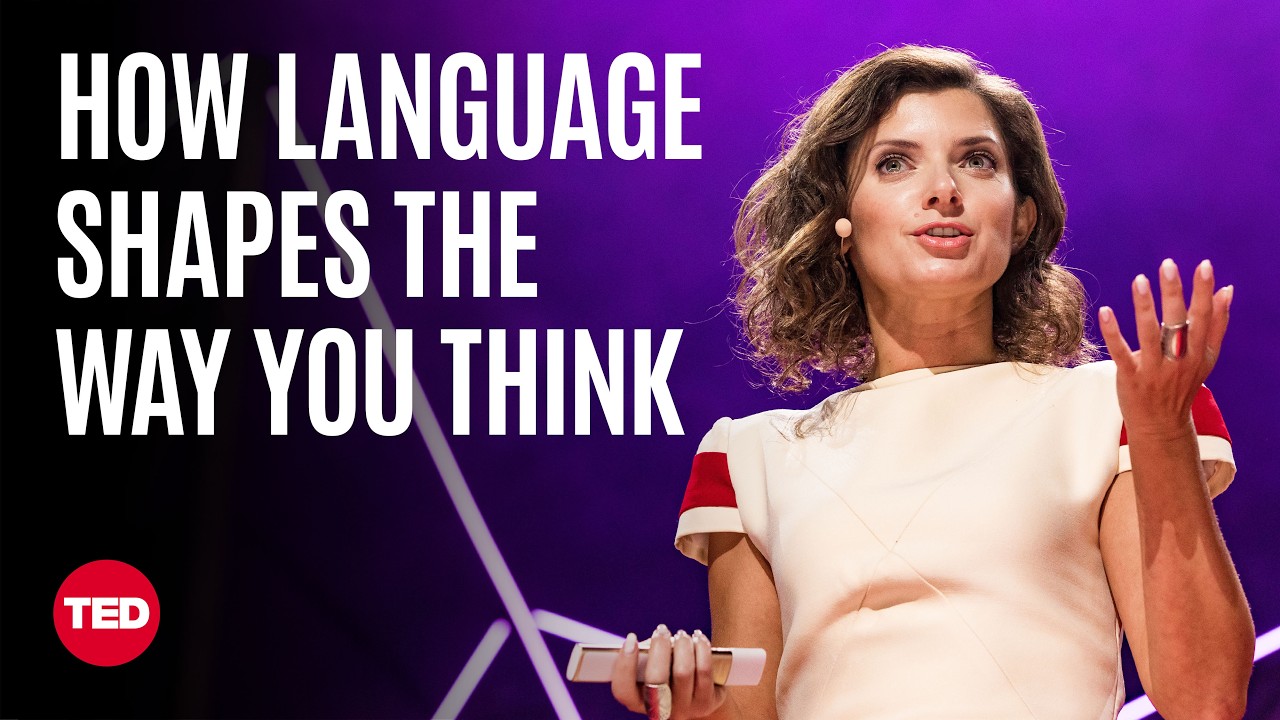
Saying “I love you” often feels more meaningful in your first language than in any other language you learn later in life, explains linguist and polyglot Magdalena Hoeller. Unpacking the hidden challenges of intercultural relationships — from language barriers and humor gaps to subtle power dynamics — she shares how couples can turn these struggles into opportunities to grow closer. (Recorded at TEDxCooks Hill on October 19, 2024) Join us in person at a TED conference: https://tedtalks.social/events Become a TED Member to support our mission: https://ted.com/membership Subscribe to a TED newsletter: https://ted.com/newsletters Follow TED! X: https://www.twitter.com/TEDTalks Instagram: https://www.instagram.com/ted Facebook: https://facebook.com/TED LinkedIn: https://www.linkedin.com/company/ted-conferences TikTok: https://www.tiktok.com/@tedtoks The TED Talks channel features talks, performances and original series from the world's leading thinkers and doers. Subscribe to our channel for videos on Technology, Entertainment and Design — plus science, business, global issues, the arts and more. Visit https://TED.com to get our entire library of TED Talks, transcripts, translations, personalized talk recommendations and more. Watch more: https://go.ted.com/magdalenahoeller https://youtu.be/L_3KmTevD5o TED's videos may be used for non-commercial purposes under a Creative Commons License, Attribution–Non Commercial–No Derivatives (or the CC BY – NC – ND 4.0 International) and in accordance with our TED Talks Usage Policy: https://www.ted.com/about/our-organization/our-policies-terms/ted-talks-usage-policy. For more information on using TED for commercial purposes (e.g. employee learning, in a film or online course), please submit a Media Request at https://media-requests.ted.com #TED #TEDTalks #Love
Оглавление (13 сегментов)

  1. 0:00 Introduction 129 сл.
  2. 1:00 Intercultural couples 141 сл.
  3. 2:00 How does this affect your relationship 165 сл.
  4. 3:10 What does this mean 161 сл.
  5. 4:15 Anger frustration 376 сл.
  6. 7:05 Receiving humor 127 сл.
  7. 8:05 Producing humor 126 сл.
  8. 9:00 Lack of humor 113 сл.
  9. 9:50 Language proficiency 245 сл.
  10. 11:30 Global status 179 сл.
  11. 12:50 The linguistic environment 162 сл.
  12. 13:55 Two simple recommendations 116 сл.
  13. 14:50 Conclusion 122 сл.
0:00

Introduction

On a cold but sunny autumn afternoon, I was riding on the back of my husband's motorcycle, just cruising along one of our favorite routes around Newcastle. It was a pretty fresh day, so we were all rugged up in our protective gear. At a set of red lights, my husband lifted his visor and he said to me, "Hey, come feel my handles." So naturally, I reached for his hips and gave them a playful squeeze and said, "These handles are perfect, baby." What he, of course meant was his heated motorcycle handles, not his love handles. Yeah, a classic and genuine misunderstanding. And lucky we both have good humor, otherwise this could have ended in an argument. But interactions like these happen every day in intercultural relationships.
1:00

Intercultural couples

This is not unique to us, of course. In fact, one third of Australian marriages are intercultural these days, according to the ABS. Which means we've never been more intimately connected across the globe than we are right now. What I didn't tell you so far is that I'm from Austria, so my first language is Austrian German, and my husband is from Australia, so he speaks English. So these kinds of conversations, misunderstandings, long explanations of jokes and words shape our relationship. By a show of hands, who in here knows at least one intercultural couple? Maybe it's even you. Yeah, exactly. Now in my research with intercultural couples, I found many beautiful aspects of having two different languages amongst partners, but also quite a few challenges that monolingual couples don't necessarily have to face. Let me ask you this.
2:00

How does this affect your relationship

If you cannot flawlessly communicate with the person you want to be closest to in this world, how does that affect your relationship? This is what I'm going to answer for you today. I speak six languages, and I focus my studies in linguistics. And I worked with intercultural couples to uncover their language behavior and their dynamic. So let me take you on a journey today through the science behind all of these "love handles" stories out there. I'm going to let you in on three specific challenges that intercultural partners have to face on a daily basis, but sometimes don't even know that they're facing them. Some of these are very, very hidden. Now I'm focusing mostly on romantic relationships here, but you can apply this equally to intercultural friends or even workplace encounters. Oddly, these domains sometimes overlap. The first challenge I'd like to share with you today is how different languages carry different emotional weights for people. What does that mean?
3:10

What does this mean

It basically means that when I say "I love you" in English, it doesn't feel the same as saying "ich liebe dich" for me as a German speaker. That's because language isn't just a tool for communication. It shapes our emotional experience, and our first language usually evokes the strongest one. That's why a declaration of love, which is such an emotionally charged statement, usually holds more weight for someone in their first language than in any language learned later in life. Now I grew up with the words “ich liebe dich” from my parents, so over the years of my life, these have gained an emotional weight beyond what any other language can achieve for me. So what does that mean for intercultural partners now? Imagine a Japanese-French couple, and they speak English together. Are they unable to communicate the true strength of their feelings because of this language distance? Now my husband and I, we mostly speak English together.
4:15

Anger frustration

Does that mean when I say "I love you" in English, it means less because I'm emotionally detached from it? We can observe this also with other emotions. For example, something that comes up in relationships? Anger, frustration. Now with anger, it's very often a totally different experience in English. It's very often the impact that matters more instead of the words. It's the classic, "Honey, it's not what you said, it's how you said it." Sound familiar? Yeah. Let me give you an example. Early on in my relationship, during an argument, I dropped a certain C-word. I'm not going to say what it is, you all know. Now at that time in my relationship, I had no grasp how offensive that word is in English. To me, it was just four letters string together. Just something I heard around the street here in Australia. (Laughter) I had no emotional connection to it. But my husband, he was shocked and rightly so. I've never used it since in any context. (Laughter) But that's the thing, when intercultural partners fight, we have to think of many things here. Is the word choice right? Mine clearly wasn't. How does that word land on the other person? So what's the impact? Mine was clearly horrible and misdirected. And thirdly, what is the delivery of it all? So what's the intonation? Is it too strong, too weak? And that's where intercultural partners, they bring their language background, they bring their cultural background to one table and have to negotiate this in a heated moment, at the same time. There's too much happening. Now fighting is already difficult with monolingual partners, but adding all of these elements, that requires a lot of communication. But let's be honest, who actually sits down to determine the terms of a fight before a fight, right? It doesn't happen. The second challenge I'd like to share with you today is humor. Making each other laugh is a big part of relationships, but humor often doesn't translate very well. Sometimes a joke is funny in one language, but it falls flat in another. Or it could be quite offensive. Now linguistically, we can break this down into two parts: into receiving humor and producing humor.
7:05

Receiving humor

From a receiving side, a partner might feel unsure if they grasp the true meaning of a joke or just a superficial facet thereof. That could be a purely linguistic issue, like not picking up on sarcasm or not recognizing a pun because the language skills just aren't there yet. There's also the cultural aspect, of course. Partners with different language backgrounds naturally grew up in different in-groups of a joke. So the people that understand a joke and the people that don't. I never understood why the Aussie phrase "shrimp on a barbie" isn't actually funny to Australians. It actually quite annoys them. My husband doesn't understand why the super cringey, nostalgic '90s TV show "Liebesg'schichten und Heiratssachen" is so hilarious to me. (Laughter) Different in-groups.
8:05

Producing humor

That means that intercultural partners have limited common ground to work with here. And if one partner doesn't understand the joke, the other is stuck trying to explain it to them. And that conversation is never funny. From a producing side, we all know that producing humor in a second language is an incredibly difficult skill to master. There are so many elements to get right. The subtext of a joke, the punchline, the context, the delivery, all while making sure that it's appropriate and, well, funny. Right? Now in my research with intercultural couples, they all confirmed that they feel less funny when joking in a second language with their partners. Can you imagine what that does to your self-esteem and to your couple dynamic?
9:00

Lack of humor

In one particular interview, one of the male participants said about his wife, "I don't think she's ever made me laugh in English. She's a German speaker." Now these sentiments aren’t uncommon. Even I can attest to that. I always felt that I was effortlessly hilarious in Austrian German, but I couldn't bring that same energy to English, and I was so disheartened that my husband would never know the true comedic genius his wife actually is. (Laughter) Such a tragedy. (Laughter) But that's the problem here. Humor, or the lack thereof, can create distance between partners. It can stop us from truly knowing each other. I've left the last challenge for you
9:50

Language proficiency

which I find the most interesting one, and it is also the most hidden one. It is something couples deal with and it is so subtle, they very often don't even notice. And it is the hidden power dynamics between intercultural partners. From a pure language perspective, and we're only talking language here, there is always a partner who is linguistically superior and someone who is inferior. You might think now, well, it's the one who speaks the language better, right? That can be one aspect, but it's not quite that simple. There is many more layers and facets to it. You are correct though, one aspect is language proficiency. Now even though my English skills are really good and high, my husband is a native speaker. He will always be more proficient in English than I am. And that puts him at an advantage in a lot of situations. He's the one who manages all of our contracts. He's the one who explains vocabulary to me during movies when I don't understand. All of this isn't a big deal, of course, but in some ways, it flows into the dynamic of our relationship because I am linguistically dependent on him. And that is something we never notice on a daily basis. It's extremely apparent, though, when we have an argument. We're having all these heated discussions in English, my second language, his first language. After a day of processing life and work and emotions
11:30

Global status

and conversations in English, it takes me double the energy to find the right words in these heated moments. His responses are immediate, but I would very often just like to say, "Thank you for your response. I will get back to you in three to five business days." (Laughter) So you see, the partner with the higher language proficiency does have the upper hand here. But like I said, there’s other factors, too. There's also the global status of the language in use amongst partners. Now global player languages like English, Spanish, Mandarin, they are viewed as superior in comparison to lesser-spoken languages. So couples naturally gravitate towards them. Again, English versus Austrian German? I'm not winning so far. The dominant global status of English will always take preference, and that flows into the dynamic of our relationship. Because we're not speaking my language as much as I'd like to. But one factor we cannot forget is the linguistic environment where a couple chooses to live or the country. Now in Australia, a native speaker like my husband
12:50

The linguistic environment

is in his linguistic comfort zone. But if you remove that safe environment, the power dynamics can very much change. As soon as we travel to Austria, suddenly, I'm the one ordering food at restaurants. I'm the one translating at family events. The roles reverse. So the power dynamics are not just defined by the couple itself but also by their surroundings. I've presented you with a range of hidden language challenges now that intercultural partners face on a daily basis. And I think it's pretty apparent: dealing with two different languages here is tricky. You might be asking yourself right now, so what's the solution? What can we do? The bad news is that these things never really go away, no matter how long your relationship lasts. My husband and I, we've been together for nine years now, and we still struggle with most of these things. The good news is that I can give you two very simple recommendations today.
13:55

Two simple recommendations

The first one is awareness. Be aware that your emotions can be guided by your language, love, anger and everything in between. Be aware that your humor is rooted in your cultural background, and it sometimes doesn't translate in another language. And be aware that your language skills and your surroundings can raise or lower your linguistic power over your partner. Because if you're conscious that these things are happening for you behind the scenes, you'll realize that these things are also happening for your partner. And only then you can work on my second recommendation together. And that is actively build your microculture. Your microculture is your perfect blend of both your cultures, your habits
14:50

Conclusion

your traditions and your languages. So build your love language. Invent new words that don't exist. Switch between your languages as much as possible. Define your own humor. Get your own insider jokes. Define your own comedic language. That's the humor that counts. And work towards an equal power dynamic. Give each other chances to grow in each other's languages and countries. What I want you to take away today is that all these challenges are tricky, but they're also an opportunity to evolve. No matter if it's with an intercultural friend or at work or in a romantic relationship. Love is hard in a second language, but it's definitely worth it. I’m sure you’ll all “handle” it, too. Thank you. (Applause)

Ещё от TED

Ctrl+V

Экстракт Знаний в Telegram

Транскрипты, идеи, методички — всё самое полезное из лучших YouTube-каналов.

Подписаться