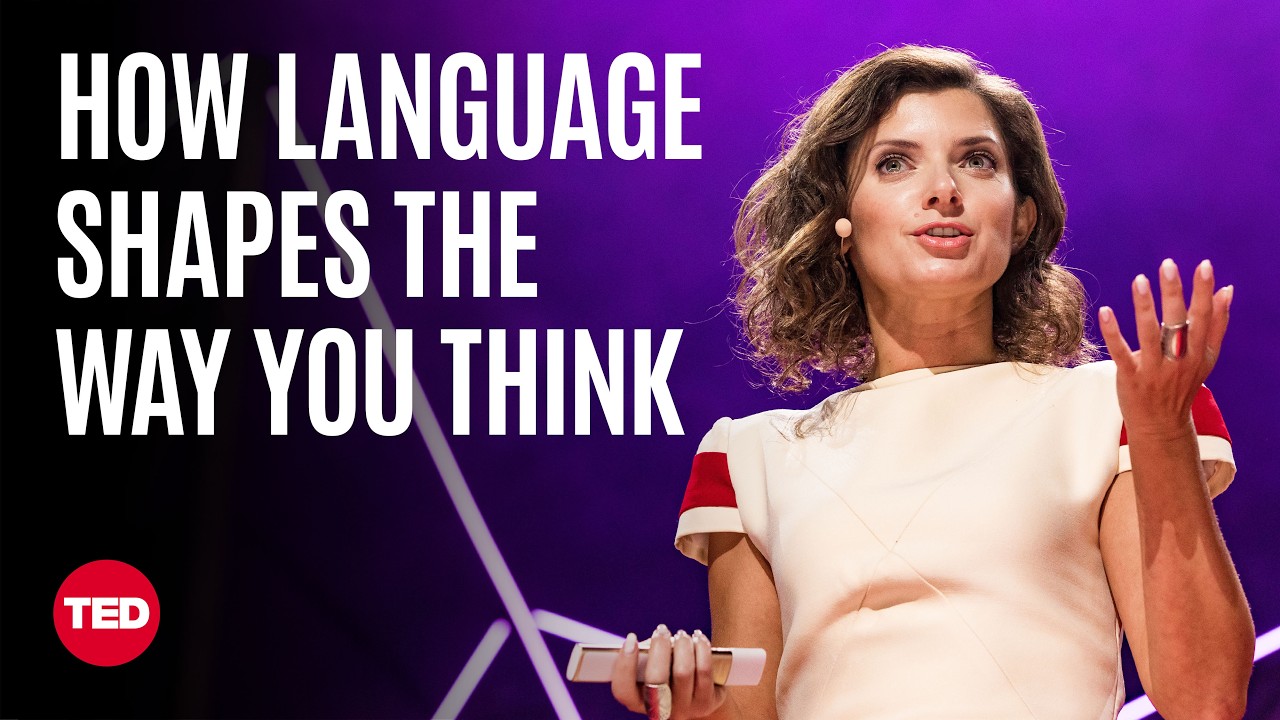
The Purity Test That’s Killing Clean Energy | Riddhima Yadav | TED
8:52

The Purity Test That’s Killing Clean Energy | Riddhima Yadav | TED

TED 17.02.2026 9 596 просмотров 279 лайков
Поделиться Telegram VK Бот
Транскрипт Скачать .md
Анализ с AI
Описание видео
Why is it taking so long to finance the climate transition? After years working with the world's largest wealth funds and banks, finance innovator Riddhima Yadav has seen the same pattern: the climate movement is seeking perfection over progress, and starving the very industries that need to transition most. Discover why working with emerging markets and heavy polluters might be the uncomfortable solution to powering a clean future. (Recorded at TED Countdown Summit 2025 on June 18, 2025) Join us in person at a TED conference: https://tedtalks.social/events Become a TED Member to support our mission: https://ted.com/membership Subscribe to a TED newsletter: https://ted.com/newsletters Follow TED! X: https://www.twitter.com/TEDTalks Instagram: https://www.instagram.com/ted Facebook: https://facebook.com/TED LinkedIn: https://www.linkedin.com/company/ted-conferences TikTok: https://www.tiktok.com/@tedtoks The TED Talks channel features talks, performances and original series from the world's leading thinkers and doers. Subscribe to our channel for videos on Technology, Entertainment and Design — plus science, business, global issues, the arts and more. Visit https://TED.com to get our entire library of TED Talks, transcripts, translations, personalized talk recommendations and more. Watch more: https://go.ted.com/riddhimayadav https://youtu.be/L12cMGUsf1Y TED's videos may be used for non-commercial purposes under a Creative Commons License, Attribution–Non Commercial–No Derivatives (or the CC BY – NC – ND 4.0 International) and in accordance with our TED Talks Usage Policy: https://www.ted.com/about/our-organization/our-policies-terms/ted-talks-usage-policy. For more information on using TED for commercial purposes (e.g. employee learning, in a film or online course), please submit a Media Request at https://media-requests.ted.com #TED #TEDTalks #ClimateChange
Оглавление (2 сегментов)

  1. 0:00 Segment 1 (00:00 - 05:00) 628 сл.
  2. 5:00 Segment 2 (05:00 - 08:00) 572 сл.
0:00

Segment 1 (00:00 - 05:00)

Climate finance finds itself in a confused position today, in 2025. It is viewed as insufficient by many, as a niche by mainstream finance and as elusive by everyone else. And yet, financing a clean growth economy relies entirely on the real money. Today, we are investing a little over a trillion dollars every year, globally, in the energy transition. By our best estimates, we need that number to rise to 3. 5 trillion every year between now and 2050. Why is there a gap? As a financier and investor myself, I've been at the heart of how financial institutions and institutional investors, including sovereign wealth funds, asset managers, asset owners and banks, think and act on the clean energy transition. And I believe there is one major fault line in global climate finance. We have prioritized perfection over progress by painting entire swaths of sectors, industries, companies and countries in purely binary terms of gray or green. But as we all know, there are 50 shades of green. (Laughter) And we need to work with them all if we have to solve this challenge at speed and scale. And yes, that means that the money must flow not just to clean solutions but also, and specifically, to heavy polluters and emerging markets. And yes, we are not going to solve the climate challenge through purity tests. The developed world committed 100 billion dollars for the developing world to facilitate the clean-energy transition annually. That goal was achieved 13 years later. That time has broadly become symbolic, in addition to that goal itself, of our inability to finance the transition at the speed and scale needed. By contrast, governments all over the world allocated 10 trillion, with a T, in COVID economic stimulus in two months. Did we spend years or months coming up with what COVID finance means? Did we create standards, working groups, taxonomies, frameworks, definitions? Yet somehow our lexicon of financing the climate transition grows. The dollars? Not so much. If we are to truly work on this, we need integrity. Absolutely. But in our quest for perfection, we are losing out on the goal itself. On the goal of unleashing the largest commercial opportunity of our time. Financing green requires greening finance. And guess what? In many cases, it actually makes you money whilst reducing emissions. For instance, many utilities around the world are realizing that it is more expensive to run coal plants than renewables because of the rapidly falling cost of renewables. For investors, this is an incredible opportunity. By buying up some of those coal plants and developing a strategy for an accelerated phaseout, investors have the opportunity to not just generate an attractive return. They can also reduce emissions as well as reduce costs for tax for ratepayers. Why hasn't this happened? The idea of working with heavy-emitting industries and polluters is incredibly uncomfortable for a lot of my climate activist friends, as well as some of the most sophisticated investors I've worked with, who have spent decades trying to understand the impact of their emissions on the planet's trajectory. But not working with them is worse still. Let me walk you through a concrete example. Although I'll talk about steel. Imagine you are the CEO of a steel company in India. You have a decarbonization strategy in place, and you want to invest to reduce the emissions in your steel-making process and reduce your reliance on coal and increase your capacity for renewables. You go out to the capital markets to raise capital to fund that plan. Great. Everyone should love this, right? Here's what you hear on the investor roadshow. "Ah, I'd love to invest in you, but my policy prohibits me from having exposure to coal. "
5:00

Segment 2 (05:00 - 08:00)

Or, "I'd rather not have the NGOs demonstrating on my doorstep if I start working with you. " Or, "I'd love to invest in you, but I have a net-zero portfolio target, and that will increase my emissions. ” So after a long and arduous process of no's, you go back home and wonder: should you just scrap the plan, or should you stick to it and use your own balance sheet capital? You stick it through, and then you go to your shareholders for approval to allocate the capex. But your shareholders are not happy because that affects their dividend. Congratulations. You've officially found yourself in a transition trap. You want to transition, but your hands are tied. So as investors and financiers, this dynamic of potentially starving companies of capital is likely to put them back into their status quo or worse still, put them into the hands of investors who don't really care about the climate. So how do we prioritize progress over perfection? By building trust. Because trust, and I say this as a financier, trust and not capital is the key currency for the energy transition. We need to put trust back on the climate finance term sheet. And we can do that by mobilizing finance with less strings attached. As an example, in the recent past, several countries, including major economies, have refused financing packages on clean-energy transition offered by several countries in the Global North. Because they're concerned that they're being asked to commit to goals in exchange for capital that may, at best, come in a trickle or at worst, increase national debt levels. That erodes trust. So if we are to truly crack global climate finance partnerships for the South, we need to make it easier and faster for entrepreneurs and those countries to access that capital. We need to put that capital to work to scale the clean-energy ecosystems and systems in those countries, but we also need to provide the enabling infrastructure in the interim period to ensure a stable and secure grid and supply. We can all work together on this because we know that if we expand the investable universe by expanding the scope of what is included, we can together ensure that finance reaches every part of the global economy. I often go back to how I thought, with the frustration and the impatience of my 12-year-old climate activist self, demanding that we need a clean-energy system now. But with hindsight, and with my years of experience thus far, I know that we cannot get perfection if we don't start acting. I want us to think about what role each of us can play. And I want us to think about how we can engage with high-emitting industries using finance as the language, because that is the language they understand and respond to. So if you're a financier, embrace the opportunity to work with all sectors, industries, companies, countries. If you're an activist, hold them accountable, but not by ostracizing them. And if you're neither, then you still have the opportunity to become the rare breed that is both. I truly believe in the ability of our generation to use the power of markets and rebuild the trust in climate finance, to get it out of its confused position and unleash the trillions that we need to generate clean energy and clean growth for everyone. Thank you. (Applause)

Ещё от TED

Ctrl+V

Экстракт Знаний в Telegram

Транскрипты, идеи, методички — всё самое полезное из лучших YouTube-каналов.

Подписаться