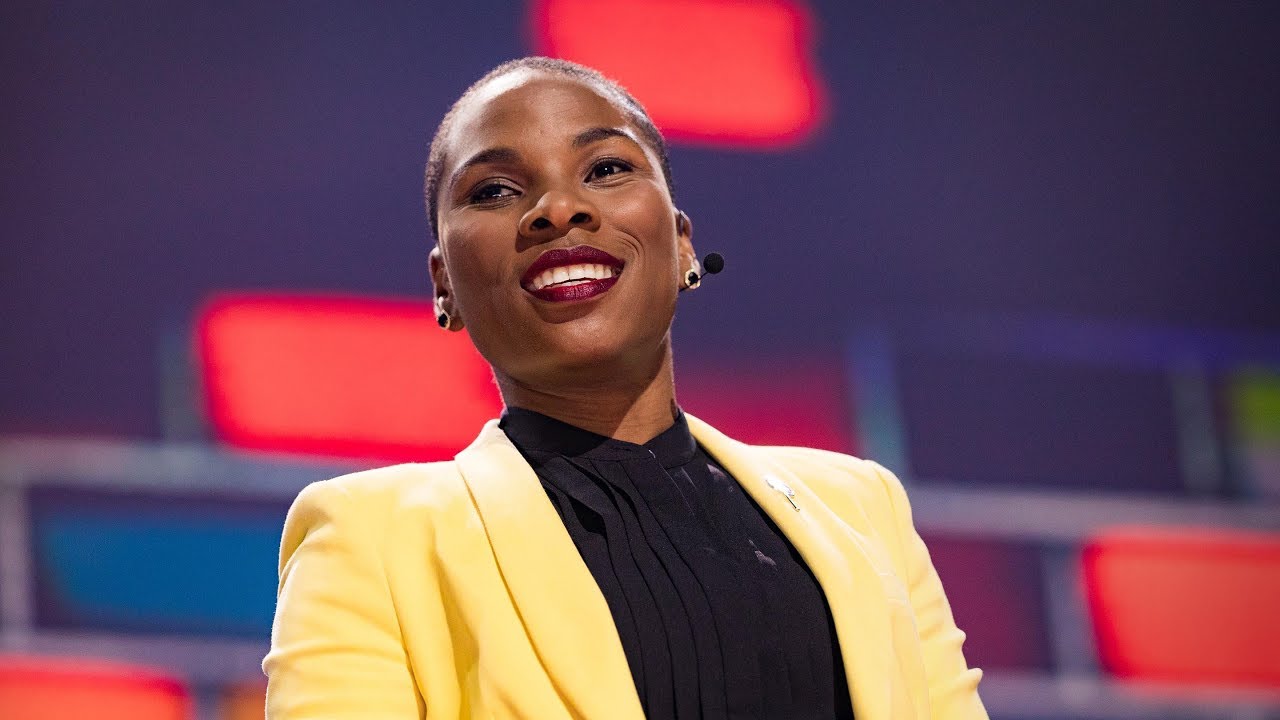
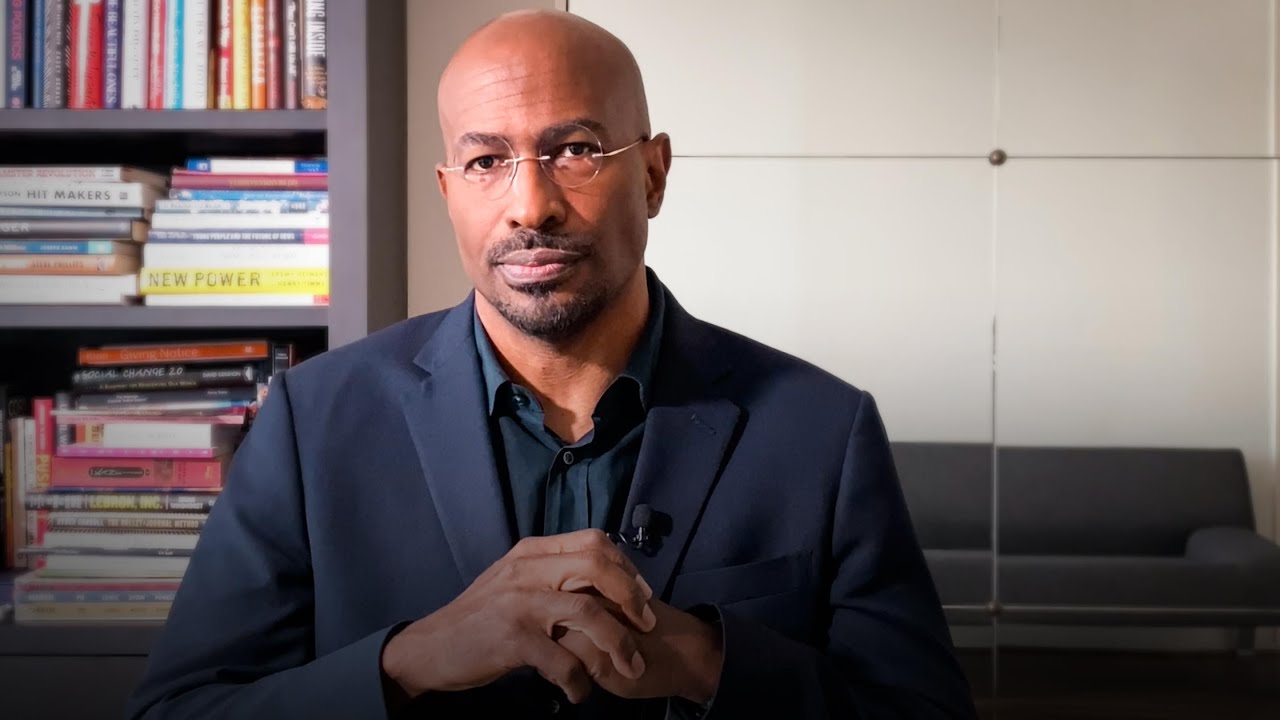
In a now-famous Go match against a human in 2016, AI made Move 37 — a seemingly nonsensical play that baffled every expert but ultimately won it the match. Amen Ra Mashariki, director of AI at the Bezos Earth Fund, thinks we need AI to make that same kind of creative leap for climate solutions. In conversation with TED Radio Hour host Manoush Zomorodi, he shares a vision for new AI solutions to environmental problems that human experts haven't yet dreamed up. (Recorded at TED Countdown and Bezos Earth Fund on September 24, 2025)
Join us in person at a TED conference: https://tedtalks.social/events
Become a TED Member to support our mission: https://ted.com/membership
Subscribe to a TED newsletter: https://ted.com/newsletters
Follow TED!
X: https://www.twitter.com/TEDTalks
Instagram: https://www.instagram.com/ted
Facebook: https://facebook.com/TED
LinkedIn: https://www.linkedin.com/company/ted-conferences
TikTok: https://www.tiktok.com/@tedtoks
The TED Talks channel features talks, performances and original series from the world's leading thinkers and doers. Subscribe to our channel for videos on Technology, Entertainment and Design — plus science, business, global issues, the arts and more. Visit https://TED.com to get our entire library of TED Talks, transcripts, translations, personalized talk recommendations and more.
Watch more: https://go.ted.com/amenramashariki
https://youtu.be/zQY0zf9-WXI
TED's videos may be used for non-commercial purposes under a Creative Commons License, Attribution–Non Commercial–No Derivatives (or the CC BY – NC – ND 4.0 International) and in accordance with our TED Talks Usage Policy: https://www.ted.com/about/our-organization/our-policies-terms/ted-talks-usage-policy. For more information on using TED for commercial purposes (e.g. employee learning, in a film or online course), please submit a Media Request at https://media-requests.ted.com
#TED #TEDTalks #ClimateChange
Оглавление (3 сегментов)
Segment 1 (00:00 - 05:00)
Manoush Zomorodi: OK. So Amen, I gave this shortest bit of your bio. But tell us the story of how you got to be working with Bezos, your sort of trajectory to being here. ARM: Yeah. You still have me blushing, nonetheless. It's really interesting that you asked that question, because my pathway to the Bezos Earth Fund is almost polar opposite to how we think about our pathway to adopting and using AI to accelerate climate and nature solutions. And I'll explain why, really, in some quick points. I -- undergrad, master's, doctorate, computer science, computer scientist, research labs -- did the whole thing. I was one of those computer scientists that believed in computer science, you know, algorithm optimization. Through a couple of personal things that took place, I realized that was only a mechanism by which I could do other things, which is have an impact. So then I began to chase problems you mentioned here. I was the chief analytics officer for the City of New York. How do we solve problems here? And then, you know, coming to the Bezos Earth Fund, how do we use AI, computer science to solve climate and nature problems? And so I was AI in search of a problem. At the Bezos Earth Fund, we think about starting with a problem first and understanding that problem, and then looking for ways to use modern AI in order to scale solutions in that space. MZ: OK, so let's go deeper into that. How are you looking at different projects that are out there? What are sort of the big ideas that you're using to sort of lead you to find what you want to fund? ARM: So, internally, we have a mental model that we use to really get there. We think about this difference between inventions and discoveries. And the way you want to think about that is a telescope is an invention, looking through the telescope to notice that Jupiter has moons is the discovery, right? And so for us, when we look at it, it's how do we identify big, big innovations, grand innovations that have an impact such that you can have discoveries that then have an impact in climate and nature. And so we look for projects and efforts that sort of go across that mental model. MZ: So before we get into the discovery part, let's talk about the tool. Where are we when it comes to AI? I know there are some people who might think, "What do you mean? We're at ChatGPT 5. " But like from your perspective, much different, where do you think we are? ARM: So I could spend hours talking about digital twins, Earth observation models, edge AI and all of those things. But one of the things that have resonated with me is this concept called move 37. So move 37 was this move that AlphaGo, when playing against Go champion, early on in the game, in its 37th move, did a move that was counterintuitive to all experts. It made no sense to any Go expert, but it was the move that ultimately won the game. And so where AI is, is these two places. Right now, it's at a place where it answers questions based on what it knows, right? It takes an average of reality and then gives you answers. Move 37 was this view into how AI can be creative and actually come up with a move that no one has ever thought of, and it was counterintuitive to use. And so we really want to get to a place where in climate and nature, AI is actually offering solutions, creative solutions that even the world's greatest experts find counterintuitive, but are actually really powerful. MZ: Do you have an example of something that's maybe happening already that demonstrates that? Well, one of the projects that really goes across this mental model that I talked about is Meta really came up with this AI innovation, invention called DINOv3, which is a computer vision model, very powerful computer vision model. And then they matched it with satellite data. And it's really powerful innovation. But what they did was partner with WRI in its restoration efforts, such that you could actually track the growth of trees
Segment 2 (05:00 - 10:00)
to an 80 percent accuracy of field surveys at three percent of the cost. And so now you can actually unlock performance-based financing with this technology. So it followed that mental model of grand innovation and invention, and ultimately a discovery that leads to an impact. The move 37, the whole thing about that is we haven't gotten there yet, and that's where we should be going, which is there are restoration solutions that people are using. And if you ask AI, "Tell me some of the best ways to do restoration in this particular area," what it's going to do is identify an average or interpolation of the existing good solutions. What we want is AI to come up with something that no one in the room can come up with when it comes to restoration, and that's the trajectory. MZ: What's the timeline look for that? How will we know when we have sort of hit that tipping point? ARM: One, there has to be trust by the experts and the experts are using it, but then also there has to be a mechanism by which everyday people who are living their lives, who are living in these regions that we're concerned about, who are doing the work on the ground, can trust and use these tools as well. There is anyone who gives you an exact number. Does it know the number, how long it's going to take? But that's where we have to get to, that level of trust and that level of use across a number of types of people. MZ: I want to be sure to ask you, because there are many people who say that the same tech giants who are driving AI are also responsible for a lot of the environmental harms, and that their climate initiatives essentially amount to greenwashing. How do you respond to that? ARM: You know, at the Bezos Earth Fund, we believe that on balance, AI is going to be a tool and a force for good and saving the planet. We have to acknowledge that AI does contribute to degradation and challenges when it comes to the environment. There are many, many solutions that a lot of these companies, a lot of NGOs, a lot of academic institutions, and a lot of governments are applying in this space. And we will continue as the Bezos Earth Fund to support those type of efforts, such that we are deliberate in meeting that broad statement that AI, on balance, will have a positive impact on the planet. MZ: I mean, it makes me nervous because it’s like, “Let’s hope it works” a little bit. What are some of the sort of milestones that we need to be looking for as we go forward? ARM: So I was listening to a panel the other day, and someone said something along the lines of, "Every time you do a query on ChatGPT, It's like throwing away a bottle of water on the ground. " And as soon as they made that statement, they said, "You know, I don't know if that's true, but it sounds, you know, like it might be true. " One of the things that we need to begin to do is to have precise accuracy and understanding of exactly the impact that AI is having on our environment and a shared understanding across the board, such that we can make statements that we all agree on, such that we can identify the solutions. So the first milestone, which will include a level of transparency, a lot of information and data, such that we can really get to a place of agreeing on exactly what those challenges are. The next milestone is because, as we speak -- as you mentioned, I came to the Bezos Earth Fund from NVIDIA -- as we speak, companies are shifting how they build technology to support AI. For instance, cooling is no longer -- just cooling at the data center level has shifted to now there are mechanisms where you can cool at the chip level, such that the burden on water is not so great. So these are the types of milestones that would have to be in place. MZ: So I guess I want to end by saying, you know, it's an exciting time, it's a scary time. What is getting you sort of -- what makes you most hopeful? What are you most excited about when you get up every day to go figure out how we're going to find solutions?
Segment 3 (10:00 - 11:00)
ARM: So let me say this. We believe that we are in a space where the consequential decade meets the decisive decade. And so if you've heard that term before, the consequential decade, it's what AI practitioners use to talk about, this is the time in which we have to think about ethics, policy, regulation, technology, innovation, invention, because these are the decisions that are going to decide, these are the things decide what impact AI has on the global community. And we all know here what the decisive decade reference is. And so this is a place where the consequential decade meets the decisive decade. And so it really has to be all hands on deck. And a commitment from communities in the AI space and communities in the climate and nature space. And the Bezos Earth Fund, we see ourselves as sitting right in the middle and being a leader in that space. MZ: OK, we'll have to leave it there. Amen Ra Mashariki, thank you so much. (Applause)