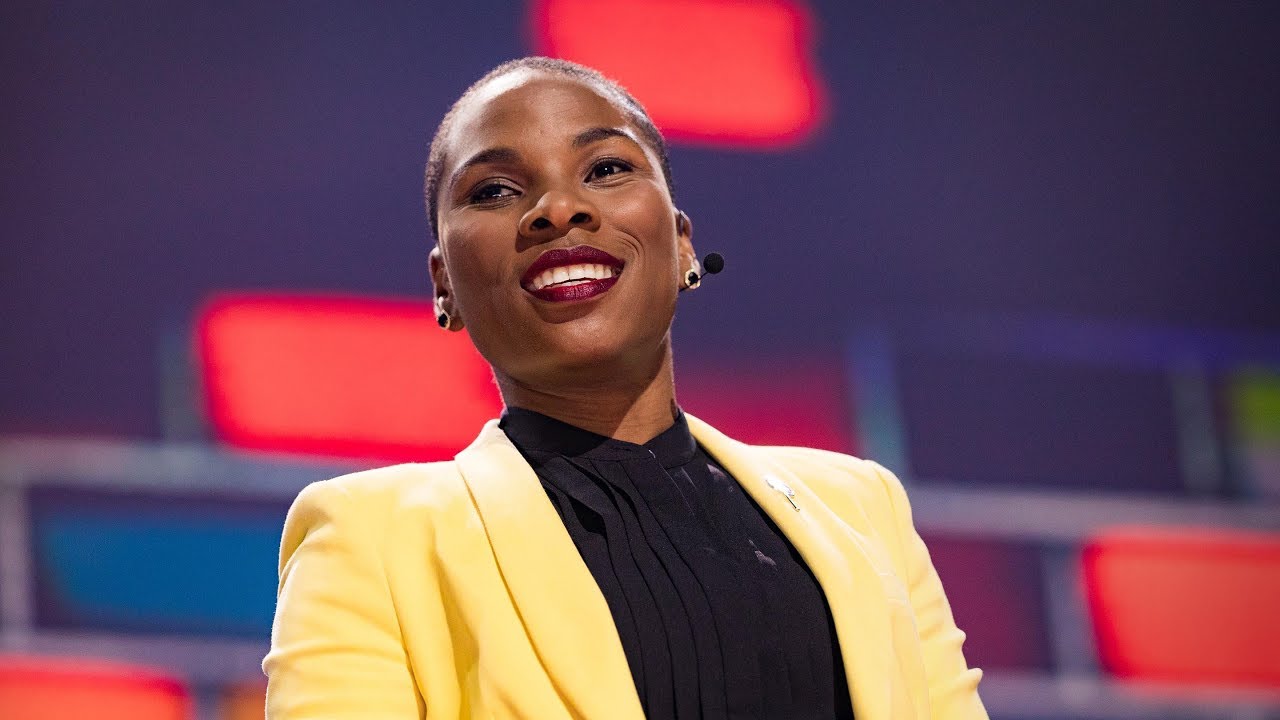
The Future Isn’t Just Coded — It’s Built | Lauren Dunford | TED
10:43

The Future Isn’t Just Coded — It’s Built | Lauren Dunford | TED

TED 12.06.2025 48 730 просмотров 1 147 лайков обн. 18.02.2026
Поделиться Telegram VK Бот
Транскрипт Скачать .md
Анализ с AI
Описание видео
Look around — almost everything you see was manufactured, from baby formula to AI data centers and beyond. Yet we rarely think about how it’s all made. Factory fixer Lauren Dunford pulls back the curtain on modern manufacturing, revealing just how thrilling and world-shaping this unsung engine of progress can be. Discover how reinventing this overlooked industry could be one of the most important opportunities of our time — and why we all have a role to play. (Recorded at TED2025 on April 10, 2025) Join us in person at a TED conference: https://tedtalks.social/events Become a TED Member to support our mission: https://ted.com/membership Subscribe to a TED newsletter: https://ted.com/newsletters Follow TED! X: https://www.twitter.com/TEDTalks Instagram: https://www.instagram.com/ted Facebook: https://facebook.com/TED LinkedIn: https://www.linkedin.com/company/ted-conferences TikTok: https://www.tiktok.com/@tedtoks The TED Talks channel features talks, performances and original series from the world's leading thinkers and doers. Subscribe to our channel for videos on Technology, Entertainment and Design — plus science, business, global issues, the arts and more. Visit https://TED.com to get our entire library of TED Talks, transcripts, translations, personalized talk recommendations and more. Watch more: https://go.ted.com/laurendunford https://youtu.be/qhuZvtb0cbE TED's videos may be used for non-commercial purposes under a Creative Commons License, Attribution–Non Commercial–No Derivatives (or the CC BY – NC – ND 4.0 International) and in accordance with our TED Talks Usage Policy: https://www.ted.com/about/our-organization/our-policies-terms/ted-talks-usage-policy. For more information on using TED for commercial purposes (e.g. employee learning, in a film or online course), please submit a Media Request at https://media-requests.ted.com #TED #TEDTalks #Sustainability
Оглавление (10 сегментов)

  1. 0:00 Intro 336 сл.
  2. 2:30 Manufacturing is everything 183 сл.
  3. 3:55 AI is magic fluff 92 сл.
  4. 4:40 We are at a turning point 76 сл.
  5. 5:12 People everywhere stepping up 78 сл.
  6. 5:57 From food manufacturing 176 сл.
  7. 7:07 From production 165 сл.
  8. 8:16 Universal translator 105 сл.
  9. 9:05 Manufacturing 109 сл.
  10. 10:00 Conclusion 77 сл.
0:00

Intro

As we get started, I wanted to first ask everyone to set aside any thoughts on current events for the moment, and let's take five seconds to look around this big room we're all in right now, to try to find even one thing that was not manufactured. Other humans don’t count. Ready? Go. Make eye contact when you're done. One thing that's not manufactured. Not actually that easy, is it? Manufacturing is a sixth of our global economy. One third of all greenhouse gas emissions, about. And for context, that's huge. That is three times all the emissions of the United States. Somehow, though, it starts to actually feel even bigger than that, when you try to think of what, in our daily lives, isn't manufactured. The trees, the ocean. Fluffy clouds, of course. But everything we humans make, which is more and more every single day, is manufactured. So how that manufacturing happens is so important. I want to share how we can all think differently about manufacturing, why the greatest opportunity of our generation is manufacturing, and why the heroes of our time, with the coolest, most absolutely cutting-edge careers, are going to be in manufacturing. And here's the great news. 57 percent of Gen Z wants to go into manufacturing. Just kidding. (Laughter) 57 percent of Gen Z wants to be social-media influencers. (Laughter) And that's the problem. Manufacturing has an outdated reputation as three D -- dull, dirty and dangerous. So I grew up in the San Francisco Bay Area. Friends went into tech, saying code was the future, but I was a wide-eyed 23-year-old on the hunt for purpose. I joined a company on a mission to bring millions of students fresh and healthy food, and I showed up my first day ready and inspired. First thing, my new boss handed me: a hairnet. Let me tell you, nothing brings you down to earth faster than realizing your actual first job is not to get hair in someone's food. (Laughter)
2:30

Manufacturing is everything

But then, I stepped onto the production floor. Conveyors moving, machines sealing meals, and I realized I had always thought of food as cooking. But everything at scale becomes manufacturing. I spent five years there, and I can never see the world the same way. Manufacturing is everything. Not just food, but cardboard boxes, pipes bringing clean water, asphalt roads our trucks drove on. Manufacturing is everything. But we don't give it a second thought, or in most cases, even a first. We should. Where and how we manufacture has never been as important as it is today. We got a tiny taste of it in COVID. Trapped at home. At first, it was kind of a joke, stores are sold out of toilet paper. But then it cuts deeper. Groceries, baby formula, N95 masks, when it actually felt terrifying not to have one. And then, I realized if someone I love has to go to the hospital, they may not have gloves or masks either, because we don't have the factories. For critical things, if we can't make, we break. Even AI.
3:55

AI is magic fluff

We all talk about the cloud like it's some magic fluff in the sky. Nope. Every conversation I have with AI leaders, they're trying to figure out how the heck to build and power massive data centers stacked full of metal servers, wrapped in steel and cement, with fans and cooling towers, all using more power than this entire city. That's all made in factories. The future isn’t just coded -- it’s built. If we can't build, we can't lead. we are handing the keys to our future to those who can.
4:40

We are at a turning point

We're at a turning point. And as humans, we've actually had a moment like this before. In World War II, people rolled up their sleeves, Rosie the Riveters, powering manufacturing that saved the world. The choice we humans face today is actually even bigger than that. It's not just about which countries are going to run our planet. It's about whether we humans are going to have a planet that we can live on at all.
5:12

People everywhere stepping up

I'm seeing people everywhere stepping up. Jacob Malowa, efficient solar-powered manufacturing of HIV meds, locally in East Africa. Olivia Weatherly, optimizing massive spinning machines, making water tanks in Indiana. Lisa, transforming bottling across Latin America. Paul Boudreau making coffee pods compostable. Cesar Bermudez, making igloo coolers. Beth Esponnette, 3D-weaving jeans. Medicine. Water tanks. Jeans. Satellites. Sutures. Speedboats. Underwater drones. Animal crackers. This can be fun. It can be entrepreneurial, it can be sexy, and it can be sustainable.
5:57

From food manufacturing

From food manufacturing, I headed to Stanford for my MBA, and I saw incredible technology to decarbonize manufacturing. Win, win. Lower cost, lower emissions and a sales advantage. First, it felt like we got this, and I thought, "I don't know if they even need me." But since then, I've spent time in more factories than I can count, everywhere from Minneapolis to Mexico City to Mombasa. And I've seen the same thing everywhere. Energy is a big cost, and 99 percent of the world's factories don't even have the foundation yet for those awesome Stanford solutions. The light bulb went off, and I started a company called Guidewheel to close that gap. At first, we got started with energy efficiency -- clipped sensors, like little smartwatches, on the power going into each machine, and launched, excited to see those energy savings start rolling in. And... nothing happened. Oh my gosh, I remember staring so sadly at those usage stats. Energy was a big cost. The team seemed to care, but they were not using it.
7:07

From production

Except for two guys, Willy and Purav. They were logging in all day, every day, like energy superfans. So we went out to their factory, and their production team showed us what all the energy teams had missed, which is that the power going into their machines wasn't just power, it was the heartbeat of their machines, which was the heartbeat of their production, which was the heartbeat of their entire business. Energy was a big cost, but production was the priority. It's all about production. And production had been a nightmare to measure and track across patchworks of different ages, makes and models of equipment across the factories. But every machine uses power. And just like you don't have to tell your smartwatch if you're running or resting, from that electrical heartbeat of the machine -- that's a real machine, actually looks like a heartbeat, wildly cool -- we can know exactly how much it's producing, how fast, and predict problems before they happen.
8:16

Universal translator

It's the first-ever universal translator for any machine, anywhere on the planet, energy to production, and the foundation for real-time intelligence. So any factory team on Earth can reach peak productivity and decarbonize. For a very simple example, if you have a big machine idling in between production runs, it's wasting energy and it's wasting production time. That's just one tiny part of why the hundreds of manufacturers using this technology are already seeing energy efficiency improve up to 45 percent, and productivity up 1.4x. That is a huge impact, and the impact just grows with more scale and as the power of AI improves.
9:05

Manufacturing

These are not dull, dirty and dangerous jobs anymore. These are clean, cutting-edge, and really dang cool careers. But unless we bring manufacturing from devalued to uplifted, millions of jobs in manufacturing are currently on track to go unfilled by 2030. That's innovation that's not going to happen, critical infrastructure that won't be built. Edison said, “Opportunity is missed by most people because it's dressed in overalls and looks like work." These awesome teams need talent excited for hard work to join them. If they come, we can build it. Imagine if 57 percent of the next generation actually was excited to make real things instead of Instagram Reels.
10:00

Conclusion

Each of us, whether we care about our countries or our climate, can help make manufacturing the biggest comeback story of our time. So here's my ask. If you're a parent, talk about this with your kids. If you're a kid, or a kid at heart, talk about it with your friends. And everyone, let's thank the makers, because our future isn't just coded, it's built. Let's roll up our sleeves and build it. Thank you. (Applause)

Ещё от TED

Ctrl+V

Экстракт Знаний в Telegram

Транскрипты, идеи, методички — всё самое полезное из лучших YouTube-каналов.

Подписаться