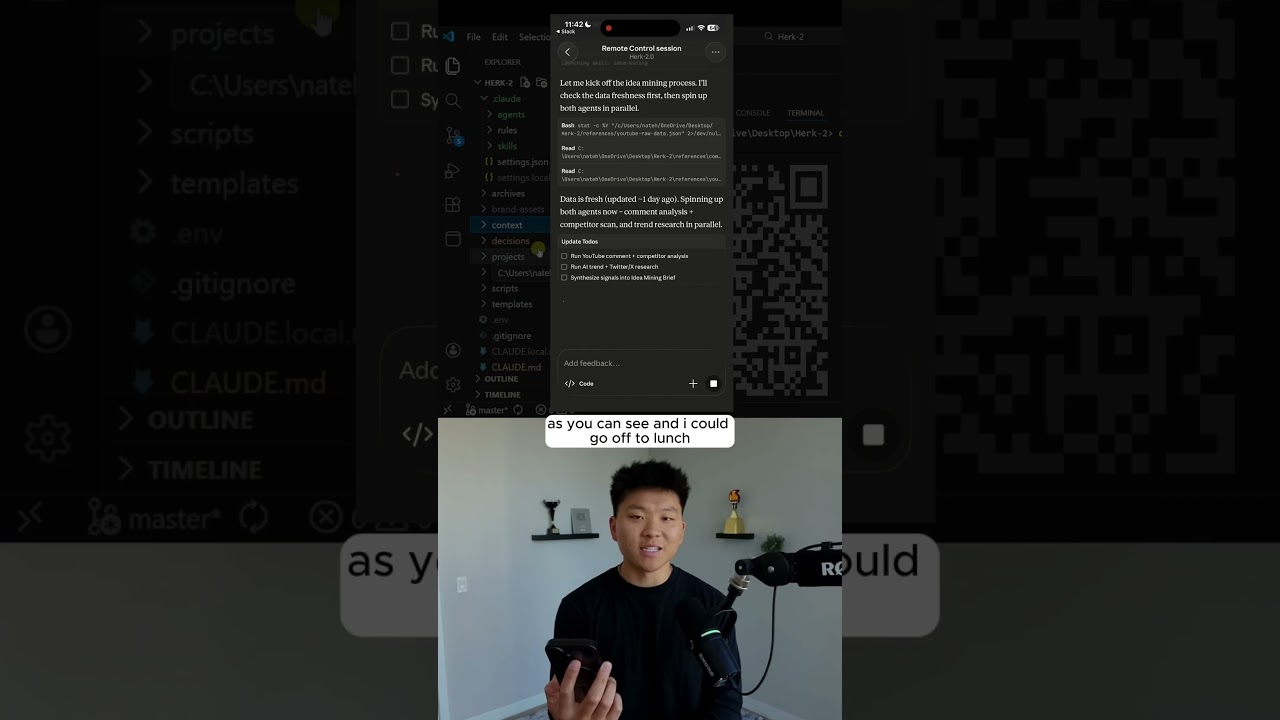
it's all just text. So what did Enthropic actually do that made all these skills better? They updated their skill creator skill, which is literally a skill that teaches Claude how to build, test, measure, refine, just make all the skills better and better. So let's actually cover why that matters and what happened. So the first thing I need you to understand is that there are two different types of skills. We have a capability uplift skill, which basically is a prompt. So it teaches Claude how to do something better. for example, design websites with the front-end design skill or create documents or run Excel formulas. Things that maybe the default model by itself doesn't know super well, but with a prompt, it does a much better job. And then we also have encoded preference skills, which means that Claude already understands each of these pieces, but it needs to follow them in a specific order. So these are way more like actual workflows, like actual kind of like step-by-step automations. So, quick example. If you ask Claude without a front-end design skill to build you a website, it could do it, but it might just look very generic. It might look AI slop as they call it. But if you give it the exact same prompt, but this time you also let it use the front-end design skill, it's going to look much better because that skill tells it stuff like good fonts, good color schemes, you know, good background elements, good layouts. And that is a classic capability uplift skill. Now, here's an example of an encoded preference skill, which is the one we just saw in my cloud code, which I call idea mining. And this skill is a little bit more sequential and there's different steps involved. So, first it will look at my YouTube comments. It will look at, you know, some videos in my niche. It will also look at AI trends on X and the web. It will then spin up two different agents. So, a YouTube agent that analyzes this stuff and a research stuff. And these run in parallel. And then they both send their output back to the main agent, which will score and cross reference. And then the main agent turns all that information into some video ideas for me, which is why I call it idea mining. So, what I could do is I could say, "Hey, Mr. AI agent, go look at my comments, go look at YouTube, go look at X, you know, analyze that and help me find some video ideas and every time it would give me different answers sort of do it differently or I can just say, hey, do some idea mining and it will just call the skill and every time I get an output that I like. And the reason why this is actually important to understand is because capability uplift skills might fade over time because for example with the front-end design skill, right now we're with Opus 4. 6, right? What if Opus 5 drops and default Opus 5 is better at front-end design than Opus 5 with a front-end skill? So, at that point, you might just need to retire that skill completely, but with an encoded preference skill, these will probably stay pretty durable and accurate because the process is very specific usually to you, which Opus 5 won't be trained on most likely. Okay, so those are the two
going to go ahead and switch on to plan mode and I'm going to see if it can build us a new skill. I need you to create a skill called YouTube weekly roundup where at the end of every week, you will look at the videos that I made that week. You'll analyze the comments, you'll analyze the views, engagement, things like that. And you'll give me a PDF report on all of the insights, strengths, weaknesses, threats, opportunities. So, that's all I'm going to send off. And I kept this pretty vague intentionally to see what it's going to come back with and how it's going to be able to plan this out for us. And this is where the future's going. And this is what Enthropic is talking about. Because most people that are using skills right now are actual just like executives and managers and operators. They're not engineers, which means we're really good at being able to explain what we want, the metrics we need to hit, and why we need that, but maybe not all of those technical nitty-gritty details. All right, so it came back and asked me some questions. The first thing I said is I want it to just be the last 7 days. So, it's a rolling 7-day window. It asked about the report sections that it came up with, and I said those look good. And for the PDF style, I told it to use the brand assets in my folder. So right over here I've got my brand guidelines and then this one is the actual logo for AIS. So I'm telling it to use those and hopefully it can throw all that on there and make it feel really branded. So it's going to keep going now with this plan. All right. So at this point it came back with a plan. And keep in mind I still haven't told it anything about text stack or anything else. It's writing out everything that it's going to do. And normally I would read through this and give it some tweaks potentially but I just want to see what this skill creator is able to do with a oneshot prompt. And I'm just going to go ahead and accept. And look at this. In its to-do list we can see that it creates all these things. But then the last step is to run the test and iterate with the skill creator eval process. So I'm excited to see what it does there. So you can see that it created everything and then what it did is it decided to test it to do a final iteration. Okay. So I was a little confused. I said, "Do you have an actual PDF file for me? " And it said, "Yes, it is in your projects folder. " I was looking in the templates where it created an HTML template, but apparently it actually rendered that as a PDF. So let me go to projects. We'll go to YouTube weekly roundup. And right here we have an actual PDF, which this doesn't look great. Obviously, this is not a PDF, but if I actually open it up from my files, it is a PDF. So, here we have the logo, we have weekly roundup, we have three videos published, and then we got some stats on views, likes, and comments. I'm going to keep going down. We have our executive summary. So, this is for it actually ran I think two weeks worth of data just to test this out. And I will say just by glancing at this, I don't think that this data is correct. So, keep that in mind. Here we can see the per video breakdown. Right now, we have nothing available in our SWAT analysis. And then we have competitor context and there's nothing available here. So now it's time to give it some feedback and see what it can do. I'm first of all going to clear out this context because it used up 62%. I'm going to go back into plan mode and just give it some honest feedback. All right, so the report looks great. Like aesthetically, you did a good job on the design. However, the data is all wrong. There was a lot of missing elements. I need you to really look at how you're actually scraping this data from my YouTube channel, how you're actually searching through the comments and competitor videos and make sure that there's actually data going into this report. And before I send this off, it's interesting because you can see here it sent us some JSON data, which is actually the raw information that it was able to find from my YouTube channel. And the thing is, this isn't super in-depth. So, I just don't think that it did a good enough job on the research element. And maybe this is exactly what we were talking about earlier over here where at some point the AI is going to be able to understand that we want all of this granular data, but maybe right now it's our job to just explain that really clearly. I want to see comments analysis. what's working for other people in the space. I want to see, you know, other trending videos in AI. And I want you to use all of that and use your brain to figure out what are the strengths my channel has, the weaknesses, and the opportunities and the threats. And then all of this information should be a pretty in-depth research report for me on, you know, my YouTube weekly roundup. So, while this is running, I thought that we should