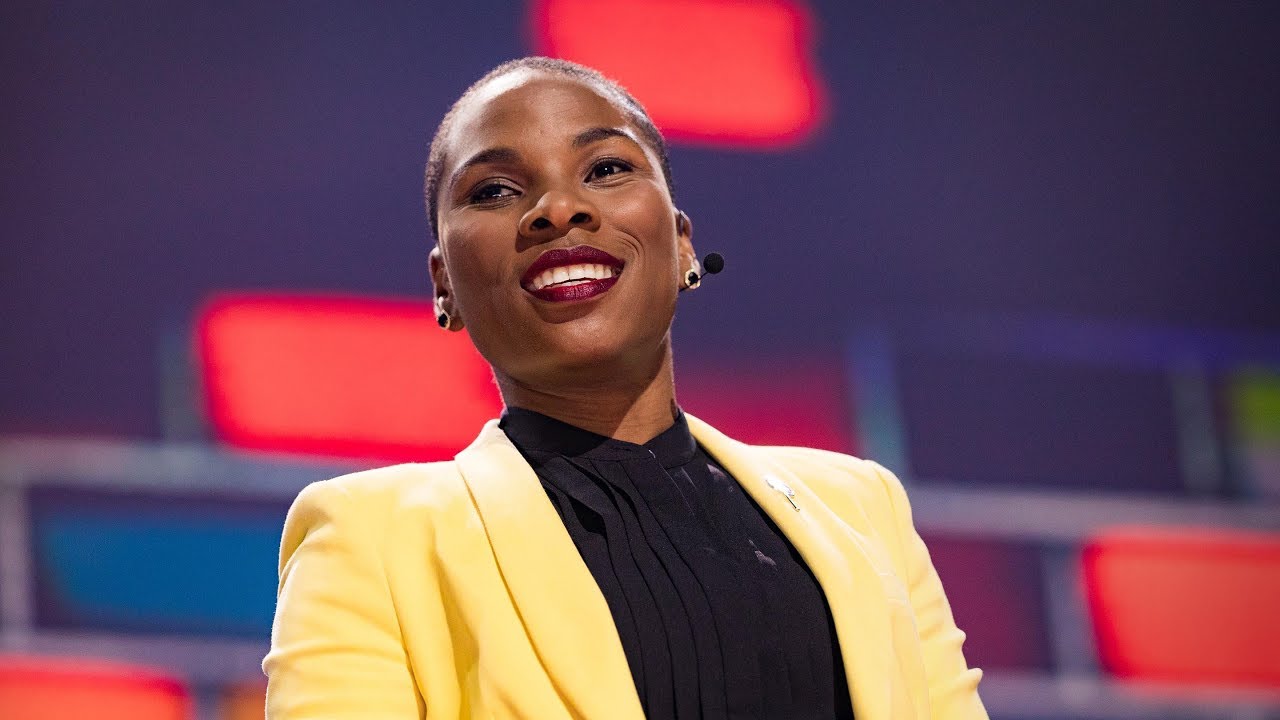
Heather Havrilesky is the author of the book Foreverland: On the Divine Tedium of Marriage. She’s also the writer behind the advice columns “Ask Polly,” and “Ask Molly,” which is written by Polly’s mischievous alterego. In this episode, Heather and Chris navigate how to showcase your whole self – even if it means embracing the messy parts – and how leaning into contradictions can make you happier and healthier. They also discuss how most people’s twenties are a disaster, how to write in a way that feels true, and why it’s necessary to laugh at your own ridiculousness.
This is an episode of TED's How to Be a Better Human podcast. Listen on your favorite podcast app: https://tedtalks.social/4gmAZt3
For the full text transcript, visit go.ted.com/BHTranscripts
Join us in person at a TED conference: https://tedtalks.social/events
Become a TED Member to support our mission: https://ted.com/membership
Subscribe to a TED newsletter: https://ted.com/newsletters
Follow TED!
X: https://www.twitter.com/TEDTalks
Instagram: https://www.instagram.com/ted
Facebook: https://facebook.com/TED
LinkedIn: https://www.linkedin.com/company/ted-conferences
TikTok: https://www.tiktok.com/@tedtoks
The TED Talks channel features talks, performances and original series from the world's leading thinkers and doers. Subscribe to our channel for videos on Technology, Entertainment and Design — plus science, business, global issues, the arts and more. Visit https://TED.com to get our entire library of TED Talks, transcripts, translations, personalized talk recommendations and more.
Watch more: https://go.ted.com/BHTranscripts
https://youtu.be/jHRoBLZ0GMw
TED's videos may be used for non-commercial purposes under a Creative Commons License, Attribution–Non Commercial–No Derivatives (or the CC BY – NC – ND 4.0 International) and in accordance with our TED Talks Usage Policy: https://www.ted.com/about/our-organization/our-policies-terms/ted-talks-usage-policy. For more information on using TED for commercial purposes (e.g. employee learning, in a film or online course), please submit a Media Request at https://media-requests.ted.com
#TED #HowToBeABetterHuman #podcast
Оглавление (10 сегментов)
Intro
You're watching How to be a better human. I am your host Chris Duffy and today we are talking with the advice columnist and author Heather Havleski about how to be 100% you. How to live without shame, without trying to force yourself into a box that you think other people want or that you think society wants you to be in. This is something that I know so many people struggle with. I struggle with it all the time. I put on this shirt and I was like, is this me? Am I trying to be someone who I'm not? Do I wear shirts like this? And you know what? The point is not about the shirt. Probably in the comments, people are going to say, "You shouldn't have worn the shirt. " And that's okay. The point is, it's not really about the shirt. It's about how do we live in a way that is true to our own desires and our own internal reading of who we are rather than trying to meet up with some external expectation. When you try and pretend that you're someone you're not, it just inevitably falls down around you. And Heather Havleski is there to help you figure out how to be who you really are. Hi, I'm Heather Havleski.
Heather Havrilesky
Havleski. I'm the author of four books, most recently Foreverland on the divine tedium of marriage. I write the advice column Ask Paulie, which is on Substack, and I also write a newsletter called Ask Molly, which is written by Pauliey's evil twin. I think of you sometimes in some ways as like the poet laurate of being yourself. Like you're allowed to be who you are and you don't have to feel ashamed of that. I feel like uh that comes up a lot in your writing and you write about it so beautifully. Um both about your own personal experience but in responding to people who are you know genuinely struggling and really like suffering from trying to be someone who they're not. It's interesting. I think I've just had a lot of different um experiences with being my complete self and being half of myself and being a third of myself. Um, I started out in the world as someone who um, I mean, I used to say I had a kind of a sociopathic streak to my behavior when I was really young, but it was a, you know, it's a defense mechanism that you sometimes have if you are um, determined to have a kind of bluster and swagger when you're young. I wrote a cartoon when I was 25 for one of the first websites online. And my whole thing was, you know, being kind of an [ __ ] My cartoon was about my co-workers. Uh they loved it. They were all [ __ ] I rode that horse until it died. And then I had to reassess and I had a bad kind of mid I would say like late 20s early 30s kind of come to Jesus oh my god I make everyone mad no one likes me moment. I recognized that I was very insecure a little narcissistic. I you know I had a lot of different problems. I was definitely a drinker. I wasn't necessarily completely over the top with any of these things. I just didn't know who I was. And so I spent years rebuilding. Then I had kids, which incites its own kind of crisis of identity. I struggled a lot with mom friends, kid play groups, the social scenes that my kids chose that I didn't choose. I mean, that was hellish for me. Um, I lived in the suburbs. Uh, and then and now I just, uh, four years ago moved to North Carolina from LA. So I'm undergoing this whole new um you know transformation adjustment to southern culture adjustment to much more polite much less uh extroverted culture. Um so I just I have been through the ringer I've tried everything. I've failed at everything you know and I am not uh really that naturally good at that many things. So that's at the heart of the whole column. It's just about being the joys and terrors of being humbled over and over again. Yeah. I think so much of what you're talking about too is at the core for me of like a good sense of humor. You can't really make a good joke about yourself unless it's true, right? No one laughs when you're like, I am so put together and I have my life on track. That's just not funny. I think being like able to look at yourself with clear eyes and then make a joke about it, that's to me at the core of like a really good sense of humor. Well, I mean, you know, I wouldn't want to write an advice column that where I didn't make mock myself, make fun of myself, joke about things. It would be excruciating for me. I mean, in some ways, my um my sense of humor helps me in everything I do. I don't think that I would still be interested in writing Ask Polly if I couldn't um swear and insult myself and go on tangents and do a lot of messed up stuff. And you know, in terms of my personal writing, I don't know if it's that part of it is um that
Being your best self
Polly is sort of uh serious a lot of the time and earnest so people confuse, you know, that with my tongue and cheek writing. They just or they assume that um I'm in earnest saying uh for example, everyone hates their husbands. it must be so you know as opposed to just um love and hate are things that exist hand in hand and they it's you know being an artist includes hating yourself and trying to create things is necessarily a battle of good and evil at some level and day-to-day kind of trivial um choices you make can feel heavily moralistic and moral and you know feel like giant moral failures. Um I take a lot of artistic license. I veer around a lot. I sort of drill down into the core weirdness of my being in order to do any of the stuff that I do. And when I stop doing that, when I feel like I'm just what do people want? I got to give them the product that they signed up for. And you know, that's when I really lose the magic. And so I think because I have to do that myself in order to produce work um it's easy to give people a lot of advice about when you're speaking from your core self. You're you know you are naturally being your best self. Um and also your best self is the same as your worst self. They are the same person. It's been interesting to see some of the like public reaction especially to your book which I loved. Foreverland I thought was so funny and so great and really like to me you wrote about marriage and relationships in a way that was so truthful and I had never read before. Um, but it's interesting to see that I think people were um they didn't always want to acknowledge that you could be joking or funny and there was this very moralistic tone around some of the parts of the book like what you said of like writing about like sometimes you're going to hate your husband which to me is like I can't think of a more innocuous and true statement than if you're in a long relationship with someone there will be times where you're like oh my god this person. Yeah. And yet I think because it was coming from you, people um that was like almost like shocking. People like clutched their pearls about that kind of an idea. Definitely people who had read my stuff for many years were sort of like, "No, no, you don't understand. She writes, this is how she writes. " I never really figured out um what it was, what kind of preconceptions people were bringing to the table. I mean, for sure, women talking about marriage don't have a ton of leeway. women have less leeway in
Challenging preconceptions
talking about almost anything. Honestly, part of what I love about what I do is challenging these kinds of like uh ways that people want to pigeon hole you and sort of pushing the new apparently new notion that each individual can be a lot of different contradictory things. And it's much healthier to embrace a lot of the contradictions in who you are. And it's more fun to bring your whole self to everything you do. Um, I mean, I started Ask Molly, my other newsletter, written by Pauliey's evil twin, partially because there's so much room for experimentation with creative projects and with your identity. I mean, it's a it sounds like hopelessly 2025 to say that, but I think I'm confused by the fact that people feel like they have to be a brand and the brand has to give one thing. I do understand the temptation. It It's hard not to worry about confusing people, right? Because when you confuse people, like we just said, you do end up not selling that many books, right? Like I, you know, I'm very proud of my book Foreverland, but it didn't sell that well. People I think were like a marriage. Is it are you talking about happiness? hating your husband? Why aren't you divorced? Why isn't this a divorce memoir? I mean, but I still feel like it's, you know, one of the most powerful messages I have to share is that we cannot be tempted to turn ourselves into brands because we're hollowing ourselves out, you know, when we do that. The more you bring your full self to anything you do, the happier that thing will make you and the more satisfying and the more brilliant the thing will be, you know. I think it feels really um in line with the arguments and the points that you know I think you make so persuasively across a lot of your work about being all of the complicated mess of yourself and not feeling ashamed of that. But people sometimes feel like they especially because there's this like what are we putting out publicly and how will I build my career and my friends and people want this thing from me. I have to have a thing. And yet like that's you don't want to you don't want friends who are that flat but we think that we should be that flat. Yeah. I mean I think that's absolutely true and I think that people are confused. I mean people in general who do things that are public facing are you know are very you know reasonably bewildered by how to manage the contradictions between private and public. It's just everyone's kind of learning on their feet, right? Like we're all sort of watching everyone do a lot of different levels of marketing of themselves and even, you know, people who don't have anything to sell are almost marketing themselves. It's not that smart to do things that you don't feel great doing. You're gonna feel a little bad doing a lot of things because yeah, things are weird and you have to, you know, all of your fears and insecurities, right, are triggered by this particular moment in self-marketing and self-branding. It's very it's very difficult to be a peaceful self-branded human being. This is certainly what I struggle the most with personally right now in like my own work is that I really love like I love having conversations for the podcast. I love writing essays and I love performing live comedy. Like I love those things, but they all require me to do this other thing that I don't like am not very good at. Like objectively I'm pretty bad at and that makes me kind of go crazy, which is to like post short clips or get people to come to a show, but also like entertain them in between that stuff. And it's like that's the thing that makes me be like maybe I should just do a completely different career. I should like go back and move to a completely new city and be a fifth grade teacher again because like no one when I was a fifth grade teacher was like I got to say you need to be more active on the newest social media platform. Like no one ever said that to me and I was like maybe that's what I need is just like to not do this. But then the thing is I love the other parts that I do. And so I think the thing that you're saying of like how do you figure out how to be who you are in a time and in a moment in like the culture where there's this huge pressure to flatten yourself and to become like I'm the guy who talks about sad stories while flipping pancakes. Like that's crazy. And yet that's probably arguably more successful for social media. Yeah. Well, I you know, I was going to say first of all, I think it's good to resist a lot of the dumb imperatives that are forced on you. Find something that you content that you want to create that's only loosely related to what you're promoting. You know what I
People understand you better
mean? Like if it's pancakes, you know, something small and weird is good. I mean, you know, we talked about being misunderstood, but I think that it's important also to understand as a person, whether we're talking about branding or just socializing, people understand you better than you think they do. The people who love you more you think hate you care a lot less than you think they do. They're just not invested. What's important is when you choose something that you find exciting, you serve everybody. You turn off the people who don't give a [ __ ] anyway. You know, you turn on the people who care and want the highest level of hit of your thing that they can possibly get. You know, Molly has been very nurturing to my soul and almost keeps Polly afloat just by allowing for a place for me to be ridiculous. You know, I need to remember that Polly is also Molly and Polly always was Mollyike from the very beginning and that's how Polly got popular in the first place. And Polly doesn't need to always be um serviceoriented. Polly can also just be fun. I think this is also 100% in line with what we're talking about in the sense that like you could reduce the work that you do with Ask Polly and Ask Molly into like their advice columns, but honestly like for me as a fan of them, as someone who reads them and really enjoys them and gets a lot of meaning out of them, to me like the least thing that they are is advice columns. Like they're so not just about like someone writes in with a problem and you give them a solution. They're like these big essays on life and meaning and culture and your own experience. like they're so they're not like I was wondering how do I invite people to my wedding and then someone and then you write back like well you should try like a heavy card stock and put it in an envelope with a nice personal signature like that's an advice column you know um yours are much bigger than that and yet I understand how it's really hard to say like this is like a humorous but also quite earnest at times like meaningful column that as that uses as a launching place like someone's real problem. you can't communicate that and yet that's what people like about work is the complicated nuancess of it. I mean in the beginning I called it an existential advice column. I love that. Uh, I pro I probably need to call it that in general um whenever asked. But it's also I mean I think of it as a lot of there are times when I fall down the rabbit hole of writing about what's wrong with culture right now and then or what's wrong with the way people do things or how you know what's wrong with the way people text or how passive people are how avoidant they can be how you know anxious they can be over so many things myself included I'm very anxious about a lot of dumb things there are days when you just want like the internet to sound more like a smart
Dont worry about dumb things
friend who's like, "Yeah, don't worry. Of course, you're going crazy. It's normal. We're all I' I've been trying to think of what my next book should be. " And I just keep coming back to like, "How do I You know, what should the title of we're all going crazy? We're all insane now. No one is sane anymore. " You know, like what is, you know, I did think of getting hotter. The world's on fire. Why shouldn't you be? Um cuz you know occasionally I'm like just write a book about something that's the maximum shallow that you could possibly write. you know, like stop trying to write literature and just write the stupidest, most insane thing that just sounds fun, you know? I mean, I do think we're in a moment of like where do we find the fun under these conditions? when you're writing and you're drawing on personal experience and you're also at least giving the impression of figuring things out by writing, how do you find the difference between like I guess you know uh a first draft that is just for you versus the draft that's going to work because you don't want to revise so that you lose the discovery that you have in there, but you also don't want it to be so muddled that people can't follow you along. And I think you do this really uh expertly in all of your writing. So, how do you do that? Like just on a craft level, how do you think about when something is done? I I'm going to make it sound too easy, but it's also really hard. Sometimes the best things I write, honestly, I start at the beginning and I just follow my whims and they go to the end and I'm like, "Yes, I did. " you know, I'm just on I feel like uh I'm just in the zone and I just have it. The best Ask Polly columns were all written in that way. The best Ask Mollies are like that. Although Ask Molly is slightly more go back, fix the joke, you know? I mean, when you're writing jokes lately, I've been like, I need to make everything funny. Everything's got to be funny for Ask Molly. I mean, it's too much to ask cuz you know, you I mean, I'm sure you struggle with this. Oh, yeah. Of course. when you're trying to be funny, right? That's your career kind of. Absolutely. I mean, it's I wouldn't have defined this as my career that many times in my life. But I just kind of value that writing the most. It's kind of crazy because funny people are also very moody. Definitely. It's like what are we doing to ourselves, right? Yeah. You can't How often How many times do you sit down, you're like, I'm gonna be funny today and you can do it. Oh, well, I was going to say very often the first part, very rarely the second part where I'm like, I'm gonna be funny, but then successfully doing it almost never. Like sometimes if I'm trying to be funny or I'm trying to write something that's worthwhile and I just veer in the total opposite direction and just go negative. Mhm. Just dark. It can be funny, too. Yeah. Like you let the some beast out
Follow your soul
and then you can but it's almost like um you have to follow what you have inside. your soul. You know, you can't just force yourself to be one thing or another. But I was going to say that when you put funny stuff down, it's, you know, it's the start of something funny. You pick it up again, make it a little funnier. I mean, that's how I used to write my cartoons. Put it down, pick it up, write another joke, put it down. But I would say though that how do you know something's done? How do you get to the place where you're not over, you know, second guessing yourself? I feel like sometimes you just write bad drafts of things and then forget them and then one day you get up and you know you're in the right mood and you're like maybe I'll write about that thing that I tried to write about before and then you've got it. The second chapter of Foreverland is about going to Europe um with my soon to be husband and just hating him. hating him the whole time and just we're about to get engaged and I've like I've never been less into this person and now I'm about to get engaged which was just a weird moment in time. It was just like I had high expectations of Europe. getting engaged. I you know I just wanted everything to be magic and of course everything was [ __ ] because I wanted too much. Um but I tried to write that experience so many times. I think I wrote actually wrote bad versions of it maybe five times. And then one morning I was like, I'm going to try to write that. That's just a funny story. I'm going to write it. And the whole thing just and I honestly I think I sent it to Corey Sega at the New York Times and I said, "This is a crazy piece. I don't know if you'll like it. " He was my editor at the all and hired me to write Ask Poly in the first place. He's so great. M um and he was like, "Oh, I don't want to change that many things. I want it to be just like this. " And I was like, "Yes. " You know, that's the magic that you love. Yeah. I mean, every now and then you're just like, "Ah, I I'm just on fire today. I can write about anything and it'll be great. " And half the time you're like, "Oops, that wasn't actually that great, but I hit publish before I knew that. " And other times you're like, "Wow, I just had the magic. " But generally speaking, especially stories that are yours, like from your past, it takes a lot of like processing that out, but fast processing. That's what I want to recommend. Fast. Yeah. You know what I mean? Like get it down, move on, come back. Yeah. I think especially like with a true story from your own life, almost always the best way is the way that you would tell it if you were telling it to someone who was in person. Exactly. That does require like you have to have the story, but you also have to not like overwork it and get it overly complicated. That's exactly right. And if you're that kind of person who enjoys entertaining people live and in person, right, if your favorite thing that you most human beings never let you do, damn them, is talk forever about your thing, you know? I'm like, [ __ ] Like, how do
Talk forever
you tell a story conversationally? like let some storytellers tell a damn story. I love it when people go along. But anyway, if you're that kind of person, it is like talking and it's sort of like you're really you essentially writing becomes building your relationship with the page so that your the page is a good friend that you tell everything to, you know. Yeah. And you I love that you try to enter that state as much as you possibly can. I think like the funniest moments come from not trying to make a joke, but it just like it exists because you're being honest or you're just having a natural reaction and that ends up being the funniest moment. Like in an Ask Poly column somewhat recently, there was a moment where like you were writing and then you paused and you said like I'm right now I'm sitting next to Bill in bed and I paused because I liked what I was writing so much that I wanted to like push this over into another day. And I was like, that is so funny to like have us see the meta of like, oh, she stopped writing this response and now she's like in bed looking at it and we're seeing that. I just like thought that was so funny and so perfect. But it's because it was like very truly honest. Uh, you know, like this is this thing where I wanted to sit with your letter for a little bit longer and here's where I am right now. We have a spotlight. Um, and I think whatever that moment is in people's writing where you get to see them, for me that's what I live for when I'm reading people's work. Yeah, that's true for me too. It's I need to remember that because I forget that that's part of my job sometimes. There are a lot of waring impulses with writing, right? Like you just there you can have these heavy things that you're carrying around like I'm a great writer. I'm really great. So I got to be more literary, more whatever that is. And then you read, you know, Nabacov or whoever and you're like, Jesus, these people were just casual actually, you know. Uhhuh. I mean, sure, they had a beautiful way with words. They also put in, you know, Moby Dick, the sperm whale. You know, I'm obsessed with whales, so I'm just going to tell you about whales for a while. Very much the energy of like a third grader telling you a lot of whale facts in some chapters, for sure. You're just like, "What? Why would I? " Okay, you know a lot about the whales. Like, you're you definitely know a lot about whales. There's a way that that those um parts of Obie Dig though are so great because I there's certain writers like making you pay a little bit because some of the pros in that book is so insanely good and so relatable. It's just like these soulful relatable moments. Um but you know, it's almost like you pay the price on your knees, you know, hearing about sperm whales. Um, maybe his poly is like that too. You know, I just like go on too long. I mean, I think that the main thing for me is just is there momentum? Does it feel like it's getting bogged down like a book, like a heavy book, or does it feel like there's something important to say here? When you're starting out as a writer, um, I think it's very natural to want to or maybe even unconsciously
How to write in a conversational tone
emulate writers who you like. like you start by kind of being like, I'm going to try and sound like that other person and your writing does sound like a bad version of them. Um, how do you get past that, right? Like how do you find the amalgamation of all these other people and yourself that is your actual writing voice or your tone so you can get to this place where it is just talking onto the page like you said talking to the good friend who is the page. How did you do that or how do what advice do you have for people who are starting out as writers? I think it was just um if you read enough of someone you love, you end up through osmosis kind of imitating them whether you want to or not. And my thing I think was just I love Joan Diddian so much. I mean like so many cliche white women of the universe. Um I also really love John Updike. Um and I think what happened was I had been writing in journals so much that I could freely write um in a conversational tone pretty early on in my career. Um I think that the key with me was if I managed to write about something that I was emotionally invested in. I mean in the old days it was TV shows I loved a lot. I could write really well about when I was a TV critic for Salon. um I could write passionately about them and that something would kick in about a third of the way through the piece where I'd start sounding a little diddian like but it didn't sound I mean I don't think it sounded imitative actually because I wasn't aiming for it. It was just part of my subconscious that um that conjured it. It's not that you're imitating their style. It's just that you it loosens you up like I can be funny. Uhhuh. I like making jokes, too. You know, look how because the funniest writers are always very loose. They're just like, you know, they go on weird tangents and you're like, "Yes, yes. Go on a tangent. " Yeah. Yeah. Of course. You trust them. You trust their tangents. I mean, that's like a good writer. You trust them to run with the ball. When you see that, it teaches you to trust yourself to run with the ball when you're feeling it. So, I feel like feeling it is like 90% of the battle. I mean that makes it sound a little bit magical thinking like but I don't think it's that's it. It's like you put in the practice until you can feel it right. I mean for me it started like when I started in comedy it was like very clear to me that I was like if you are looking for a less funny John Mlany here I am like I can copy him but not be as good at the thing. And then and a few times my wife and I would like go to his shows, you know, I'd be like performing for like five people in a basement where I was begging people to come and then we'd go and see like him tape a special at Radio City Music Hall. And he would have like just objectively the same topic but so much funnier and better. And she'd be like, "Well, I guess you got to stop talking about that joke. " And I'd be like, "No, why did you have to do it? Why are you so good? " But it was also like you said, it was this real like path of like, oh, I see what the craft is and like how you can do it in these ways. And I think it it does help to be like, okay, that's I think that I want to be like that, but actually I'm going to be myself and myself might be different. And it may not be, you know, it may not be a Radio City Music Hall level of comedy, but it may be something that's more me that I won't then be like a weird carbon copy. Um, and I don't feel like I'm a carbon copy of him anymore, but I also still don't feel like I'm as funny. And so I think that's both of those are okay. I had a little thing with um, Cheryl Stray for a while where I was like, I mean, you know, I was sort of writing advice before she started writing advice, but like she did it in a way that was amazing and I was like, she's great. I love her. But then, you know, I started writing advice, too. And I was like, I don't know, maybe I hate her just because it's, you know, you're competitive and you're like, I don't do it that way, I do it this way. Um, I think that one of the most beautiful things that can ever happen to you is turning to your nemesis and suddenly appreciating them, you know, and feeling like I mean, I don't think of Cheryl St is my nemesis. She's very cool. I like her a lot and she's a [ __ ] great writer. Um, I have a friend who always says, "H, someone wrote a female Frankenstein just like I wanted, you know, and I'm like, wait, I was working on a female Frankenstein, too. " You know, but she used to just write things off if she saw them in the culture. It was just like, h, that's been done now. And it's like, you're just, like you said, you're always going to bring your own weird [ __ ] to the table. You're always going to innovate. And the more you follow your own whims, I'm kind of just repeating what you said. No, I love this. That's my innovation. If there's one thing I love, it's someone saying back what I said. I love that. That's truly why I do what I do. Podcasting. It's a lot like therapy. Oh, absolutely. Yeah. You say it back to me and I go, "Wow, you're brilliant. " And then you say And then you say, "You're brilliant. " And then I say, "You're brilliant. " Thank you so much for having me. Wow. Oh my gosh. Thank you so much for being here. Um well actually let's talk about like the podcasting and the advice com because one thing I think is interesting especially about like you know a show called how to be a better human exists in this space that is like I don't think of this as a self-help show but it is in like a self-help adjacent place at the very least and I'm sure that plenty of people do think of it as a self-help show but there's this um there's this idea that's kind of implicit in a lot of self-help that's like you need to change you need to like make yourself better do all this work to improve who you are.
Living your best life
Maybe I'm putting words in your mouth, but I think that uh you have pushed back a lot on that idea of like you need to be someone different and better than who you are. That in fact probably what you need to do is to be exactly who you are and to understand that and accept that more. I always sort of flinched at the concept of living your best life even though um Oprah is awesome. Um I love Oprah. Um, and obviously anything you come up with, other people are just going to kick it over and say, "You know what? I hate self-care. Self-care is [ __ ] You know, every day you should whatever. " Um, but everything is a balance. Okay. Today, I literally wrote a ask column where I said, "We, you know who Brian Johnson is? He's that uh longevity guy. " I said, "We all have a Brian Johnson inside of us that we need to honor and respect. We all want total control and total perfection and we all want to live forever at some level and we're all a little self-obsessed that way and we're willing to be hated at some level just to kind of honor that neurotic perfectionist inside us. But then the other side of that is you can't live there all the time or you turn into Brian. No offense to Brian Johnson, but you turn into Brian Johnson. I think we can give offense to him. That's fine. Brian, you can be offended. I'll say at least on my part, you can be offended. It's I mean he sets himself up to be to offend people basically at some level just as you have to honor that inner perfectionistic neurotic. You also have to honor the grumpy troll bridge troll that lives inside you. And when you don't, you know, you have to and also invite the chaos of other human beings into your life where you become this isolated rich guy taking, you know, 200 supplements every day and working out and just, you know, failing to connect with other human beings as well as you might if you just seated some control, learn to surrender to the moment, awfulnesses of other people a little bit more often. So, I feel like I have so many self-improvement impulses just poised and ready to go inside me that are just really awful. There was a time in my life where I was a little bit chubbier and I would look at myself in the mirror and I was like, I don't feel like myself. this is me. And it's like, that's not a good place to be. If I if it if Chubby were myself, it would be great. I'd be able to eat more snacks. I would like it. It's just you have to be true to whatever crazy crazy mix of beasts exist inside you. A lot of the problem with self-improvement culture is that there's an inherent shame to believing that you should always be making progress in life. There's also just an inherent anxiety about it. It's depressing to think that you're supposed to always get better because people just don't do that. People don't understand that if you're not good to yourself, especially like if you don't learn to be good to yourself when you're younger, you grow up and have this like terrible, punishing, neurotic idea that you're supposed to keep improving. One of my main purposes in life is to just tell people once you cut out the shame of not being this idea, this fantasy idea of what you're supposed to be, you're going to be 80 times happier. You know, you just And it's hard because you don't want to stifle people's ambition or their dreams. I mean, dreams are a huge part of feeling happy. Dreams in and of themselves can make you bring you satisfaction even when you don't achieve them because it's just good to have dreams. It's they're good for you. They're part of your sort of like imagination and part of your ability to feel the possibilities in any given day, right? very naturally ambitious creative people have a lot of struggles for a very good reason because you can't be zen and be ambitious at the same time. You actually have to be both things. You have to be dark, light, optimistic, skeptical. You have to be all of it, you know, and you have to accept all of it and play with all of it to create. So, um, yeah, I'm pretty anti self-improvement. I don't think it's on the one hand, I'm obsessed with it. I love it, but I think that the language of self-improvement is just lazy and sloppy and it presupposes a kind of like um capitalism of the soul, you know, where you're optimizing your product for the masses. I mean, there's nothing worse for you than that creatively. Heather Heleski, uh, truly such a pleasure. I think you are also definitely the only person who has ever in the history of the show said the phrase let your freaks out and I love it. It was designed to start here. It's truly perfect. Thank you so much for being on the show. Really, this was great. Thank you. I had a really good time. It was uh fun and I hope I can come back and be my let my freaks out again. I would love that.