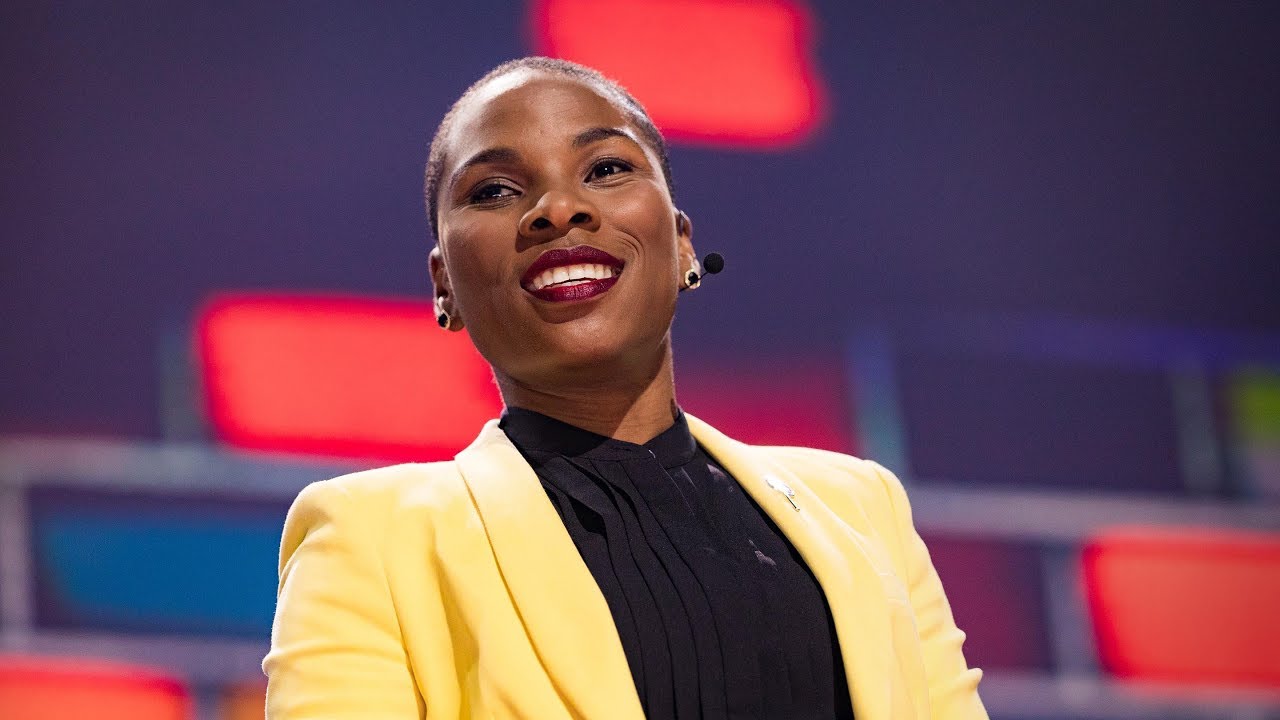
How do you build a lifetime of love? After analyzing 450 couples across more than 40 countries, relational psychotherapist Sara Nasserzadeh discovered six essential ingredients for successful relationships (hint: it's not just about sexual chemistry). Learn more about "emergent love" — a new, evidence-based model for fostering the love you desire. (Recorded at TEDNext 2025 on November 10, 2025)
Join us in person at a TED conference: https://tedtalks.social/events
Become a TED Member to support our mission: https://ted.com/membership
Subscribe to a TED newsletter: https://ted.com/newsletters
Follow TED!
X: https://www.twitter.com/TEDTalks
Instagram: https://www.instagram.com/ted
Facebook: https://facebook.com/TED
LinkedIn: https://www.linkedin.com/company/ted-conferences
TikTok: https://www.tiktok.com/@tedtoks
The TED Talks channel features talks, performances and original series from the world's leading thinkers and doers. Subscribe to our channel for videos on Technology, Entertainment and Design — plus science, business, global issues, the arts and more. Visit https://TED.com to get our entire library of TED Talks, transcripts, translations, personalized talk recommendations and more.
Watch more: https://go.ted.com/saranasserzadeh
https://youtu.be/21U0jTwBKIc
TED's videos may be used for non-commercial purposes under a Creative Commons License, Attribution–Non Commercial–No Derivatives (or the CC BY – NC – ND 4.0 International) and in accordance with our TED Talks Usage Policy: https://www.ted.com/about/our-organization/our-policies-terms/ted-talks-usage-policy. For more information on using TED for commercial purposes (e.g. employee learning, in a film or online course), please submit a Media Request at https://media-requests.ted.com
#TED #TEDTalks #Relationships
Оглавление (2 сегментов)
Segment 1 (00:00 - 05:00)
Let me tell you about Claire. Claire is 42, a sharp executive. On paper, her marriage is perfect. And in my office, she whispered, "I feel nothing. " And then she asked me, "Am I asking for too much? " Max is 38, a founder who has lived happily with Allie for the past four years. And yet, he found himself in my office asking me, "Do you think she's the one? " We all carry stories about how love should be, feel and look like. I see this through the lens of my work as a relational psychotherapist, psychosexual therapist and social psychologist. In the past 20 years, I've helped more than thousands of people across the world to help them make sense of their relationships from the most intimate spaces to the most public ones. Today, I want you lovelies to look at me as your relationship architect. Because I'm here to offer you a blueprint that is evidence-informed and is going to introduce you to a whole new model of love so that you can develop the loving relationships you desire without second-guessing yourself, the other person or the relationship. I hope you're ready. So my colleague and I studied 450 couples who've been together anywhere from one to 40 years. And these couples showed us six essential ingredients. And after we analyzed 180,000 data points about them, we came up with these six ingredients, but also, surprisingly, we found out about a whole new model of love that I call “emergent love,” because it can only exist when the six ingredients that are essential for thriving relationships are present. Imagine it as a warm and cozy fire that can only be alive when all the essential elements are there to keep it going. Now when I walk you through these six ingredients, you might say, "Oh, they sound familiar," but there's a twist because our thriving couples embody them and define them differently. Number one is attraction. For thriving couples, attraction is way beyond sexual chemistry. It's only one of the reasons that they come together. And in this way, attraction is a renewable energy because it wants you to be around the person and explore new ways of being with them and re-knowing them. On the other hand, sexual chemistry is a fleeting biological desire that can fizzle out when the initial infatuation phase is over. I'll tell you what, when the novelty part of the relationship is over, if you want to chase the chemistry, it's as if you're tickling yourself. It just doesn't work. And then we are convinced that we fell out of love with our loved one or we chose wrong. There is also a daily practice that we observe in thriving couples that they didn't name it, but in social psychology we have a term for it. It's called reciprocal liking. What it is basically, is if I think that you like me, I like you back. It's more likely that Now these daily signals need to change as we change over time. Really think about it. Between diaper duty and deadlines, where is that signal that says, “I like you? ” “I’m into this version of you, now. ” Number two is respect. Respect literally means to look again. So basically, it's the opposite of taking anyone, including yourself, for granted. And obedience, walking on eggshells, is not respect. They are fear. Thriving couples have basic etiquette. They say hello in the mornings. They say good night before they call it a night. They don't interrupt. They don’t walk away mid-conversation. And they don’t cover up sarcasm as humor. I often hear, “I’m not respected by my partner. ” And I ask, "Are you respectable? " And there's a pause. I say, "Look, do you live by your own principles, or are you the first person walking all over them? " Do you communicate your boundaries as invitations so the other person knows how to be around you lovingly, firmly and on time, or as passive aggressive ultimatums? And do you equally have regard for the other person's boundaries? Thriving couples are both respectable and respectful.
Segment 2 (05:00 - 09:00)
Number three is trust. We found that trust has two main pillars. One of them is consistency, and reliability. So you have to really be able to have both. Now thriving couples know that trust is built and rebuilt based on little promises kept over time. Not grand and expansive and expensive apologies. Think of it this way. That you need to show up for one another, no matter how big or small the stakes are. You can't leave the other person hanging. Think about that unpaid bill. Think about the second drink you chug down and you don't even remember it. Think about the private story that was shared public. Think about the harmless DMs and likes. Number four is compassion, not empathy. If empathy is feeling with the other, compassion is feeling for the other without losing your own ground. Our couples told us that overemphasizing and overidentifying can kill your relationship, can really drain your relationship. Yes, there are moments that you would like to commiserate with each other or feel those juicy sensations when you have erotic empathy with one another. But for daily lives, everyday life, compassion is the default for these couples. Picture this. I come home upset. You match my intensity to the level that you lose it with me. If we are both bleeding, who gets the band-aid? So thriving couples can be there for the other without making the scenario about themselves. Next one is shared vision. You need to know where you are going individually and as a couple. At least know where you don't want to end up. Otherwise, your resources will be scattered, and resentment will be inevitable. Thriving couples have plans for their days, weeks and years ahead. They name a destination, and then they prioritize their resources of time, energy, attention and money, and they commit to them. So their daily choices are strategies, not tug of war. They also negotiate often what movies to watch tonight. They compromise sometimes. This holiday at my parents', the other one at yours. They sacrifice rarely. For example, let's have this relationship long-distance for two years until your degree is over. They make it time-bound. Specific, rewarded, not expected. Last but not least is the loving behaviors. Loving behaviors show us you don't fall out of love. You fall out of loving. So one thing that we learned is loving, thriving relationships is not unconditional or a given. When was the last time that you went out of your way for your partner? Do you give each other the benefit of the doubt? Thriving couples are tender with their touch, with their words, with their presence, and they make them exclusive and specific to each other, even if other people are in the mix. So, for example, if they say "honey," their dog and partner and mom and neighbor, everybody don't show up all at the same time. (Laughter) There you have it, lovelies. I offered you an evidence-informed blueprint to build thriving relationships so love has a chance to emerge. You build what fits your life. And tonight we talked about coupledom. But trust me, I've seen it over and over again, if you master these six ingredients, you will rise in all of your relationships. Because the way we do one relationship is them all. And if you're going to take one thing out of our time together tonight, let it be this. Everyone can and deserves to be in the loving relationships they desire. Thank you. (Applause)