Developer State Of The Union
53:32

Developer State Of The Union

OpenAI 08.10.2025 22 148 просмотров 335 лайков

Machine-readable: Markdown · JSON API · Site index

Поделиться Telegram VK Бот
Транскрипт Скачать .md
Анализ с AI
Описание видео
The developer experience is being rewritten with AI. The Developer State of the Union will explore how Codex, gpt-oss, and our API open up powerful ways to build, experiment, and scale. We’ll share the latest updates, demo new capabilities, and look ahead at what’s next for developers.

Оглавление (11 сегментов)

Segment 1 (00:00 - 05:00)

I'm Greg Brockman. I can't believe it's already dev day number three. And now developers are key to advancing OpenAI's mission. Um, but before we're going to talk about today, I want to talk a little bit about how we got to here. So 2015, we got together what became the founding team of OpenAI at an offsite in Napa for a day and we came up with this plan for what OpenAI was going to do. Very simple plan, three steps, not ordered. Uh step number one, solve reinforcement learning. Step number two, solve unsupervised learning. Again, I said not ordered. Uh and then step number three is gradually learn really complicated things. Um now we we're not the best at spelling. Uh so we misspelled gradually. Uh but fortunately later we made an AI that could help correct that. But so that was our initial plan. The question was well how do you actually turn this into practice? So 2016 people showed up at our first office uh which also happened to be my apartment uh pictured here. and got to work and started thinking hard about what do we actually do to realize this mission that we set out in order to build AGI to make it be something that would benefit everyone. So we tried a bunch of things that didn't work. But the first time we tried something that did work was 2017 with our success in the complex video game Dota 2. Does anyone remember our Dota results? Anyone follow us back then? Decent number of hands. Uh, it's still probably the most fun project that many of us have worked on. Just imagine an arena of 20,000 screaming fans as your AI plays against the best humans in the world. It was like so cool to see the engagement of that community. And we had this great success in this domain using reinforcement learning, right? That first step of the plan that we actually were able to see if you scale this up, great things will happen. Now, that was only one step. The next step was unsupervised learning and again in 2017 we had some magic come together. 2017 was a very productive year. Uh this was with a paper called the unsupervised sentiment neuron. Uh this was the first time that we saw semantics arise through this next step prediction process in a really concrete and sort of hard to deny way. Does anyone remember this paper? Okay. Very few hands a little less cool than Dota at least at the time. uh but it really set in motion a lot of what you've seen today. Uh the idea behind the result was that we trained a model. This was an LSTM before transformers to predict the next character in Amazon reviews just nextep prediction. And it learned a state-of-the-art sentiment analysis classifier. It learned not just where the commas go, but it actually was able to tell you if a review was positive or negative, which is harder than it sounds because you could have something that says, "Well, this product was so amazing, but it totally didn't work and wasn't as advertised. " And so you really need to understand the meaning not just like look for keywords. Um but because we saw this emerge from the data emerge from nextstep prediction we knew what we had to do. We had to scale this up. And so we did that and by 2019 we had GPT3 and we thought this model it feels not just like it's learned semantics it feels useful. You could probably build a product on top of this but what kind of product could you build? And we thought about, well, maybe we should build something in healthcare. Um, but then you start realizing, well, that means really giving up on the G and the AGI, the general, because that would mean we'd have to go do enterprise sales to hospitals. We'd probably have to hire doctors on staff. Uh, it would be just like really tunnel visioning, going allin on a specific application, right? Well, okay, what about education? But you have the exact same properties there. So instead we said what if we put this technology behind an API. We let developers figure out how to connect this technology to real world application. And honestly this project felt doomed. It was probably the hardest project that I've ever worked on because it's exactly backwards the way you're supposed to build a startup. You're supposed to have a problem that you want to solve and no one cares about the technology behind it. not a technology in search of a problem. But it worked. It worked wildly and it's still working. And the reason it worked is because of you. Because of developers, because of people who are passionate about this technology and bringing it to the world, making it useful, doing the work to connect it to real world application. So thank you. Thank you for that. That's

Segment 2 (05:00 - 10:00)

it was really amazing to see what what's happened over this time. Now last year we brought together these two pillars of unsupervised learning and reinforcement learning into one package. This was with the model 01 with our reasoning models. This is all part of the 2015 plan. Uh and you know now we're on to trying to gradually learn more complicated things connecting to real world application having that flywheel. Um you know you do see that one thing at the top that says don't scale the group size you know too fast stay less than 120 forever. We are a little bit bigger than that right now. Um, so that part didn't pan out, but the rest was was quite freshen. Now, the mission, it's still far from complete. Fast forwarding to today, we have GPD5, which many of you are using to build amazing applications. We have codecs which you are able to collaborate with in developing software for yourself build amazing applications on top of and soon as we announced today you'll be able to bring your application to hundreds of millions of users across the world in chatbt. We are so excited to shape the future of AI and software engineering together with you and to share more about how we're all investing in the future the developer tools that we're building the things we're building for you and together. I am excited to welcome to the stage Olivier. Thank you all. — Thank you, Greg. — Hi, I'm Olivia Gunmore and I lead the platform team at OpenAI. Today, I want to talk to you about four key things that we're working on. Number one is we are building intelligent models. Two, we are accelerating how you code. We help you build agents. And finally, we help you scale your applications in Chad GBT. So, we touched on some of those like earlier in the keynote with Sam, but now we're going to go deeper. Let's start with models. Just a few months ago, we shipped our most capable and reliable model, GPT5. We designed TP5 for agentic tasks. And by that, I mean that we made it really good at instruction following and tool use. We also push the limits on coding intelligence. GP5 can refactor complex large code bases. It can generate tasteful front-end UIs from a single prompt and can work autonomously for hours at a time. And we're seeing startups like augment code build longunning agents on DP5. So let's take a look here. It's a pretty simple example like the user is asking the agent to take a look at a GitHub issue. Then the agent is going to take essentially look at context by coding many tools. Uh I think the issue is adding a button here goes really fast but anyway you get the idea. Um it's pretty impressive. That's a basic like you know example but we're seeing like agents being built that call hundreds sometimes thousands of tools and run for like many minutes sometime for many hours and so that's the type of work that GPT5 was designed for but at launch one thing was clear a couple of months ago DT5 is not just any other model homes that worked with DT40 or 01 do not translate directly so here are three principles which I've seen from working with a bunch of customers to get the most out of GP5. Number one, keep the prompt simple. The shorter, the clear the instructions, the better with GP5. Number two, eval. And by the way, we built out a prompt optimizer to help you suggest more effective prompts to GP5. And finally, iterate systematically. Edit one variable of your prompt or your tool calls at a time. And we published documentation a few weeks ago that to walk you through these steps. So today GT5 Pro is available in the API. It's the same model which is available in Chad GPT and it's even smarter than GT5. It's more expensive. It thinks for longer. So save it for moments for use cases where precision is everything. And I think you will find its intelligence hard to beat. We also announced another model today, the highly anticipated Sora 2 in the API. So now you can generate high quality videos directly for your application. And there is one person at OpenAI who was really excited by that launch. — Developers, I was here this morning. That's exactly what happened. Um in fact we are shipping two Sora models in the API. One is Sora 2. The second one is Sora 2 Pro. So Sora 2 is ideal for fast experimentation. So essentially it's

Segment 3 (10:00 - 15:00)

useful when you iterate fast and you refine your prompt and once you have a prompt that works consistently you switch to Sor Pro and Soratu Pro pays even more closer attention to detail. Wanted to show you a quick example. Um, Invido is a startup building a video creation platform. With Sora, creators can make all kind of videos. So, for instance, here it's going to be a cinematic film about New York City being overrun by ducks. Okay, it's a little dramatic. Let's make it a little lighter. So I wanted to show that video mostly because that ability to reprompt the video can completely change the vibe and you can feel like the whole like character consistency is being held throughout. So super cool. In addition to Sora 2, we are also shipping two other models um that bring AI to life. So we're going to ship smaller voice and smaller image generation models at a fraction of the cost of the previous generation. So first we're going to ship a brand new mini realtime model in the API. That's the model which is being used for speech to speech. That small model it's 70% less expensive than the large model and it has on average the same voice quality and expressiveness. So it's a major win. Second, we're shipping a new image generation model in the API. It's a smaller one. It's actually the same model that we currently use in CHPT. And the model has similar quality as the original imagen model, but we are cutting the price by 80%. Speaking of making AI more accessible, earlier this year, we released GPT OSS, our open models. The goal was fairly simple. It was to truly democratize access to AI and those open models give developers flexibility to build wherever they are locally, offline or you know for industries with on-prem needs and the response from the community has been incredible. We've had I think as of this morning 23 million downloads on hanging face in a couple of months. We did a hackathon with submission from developers across 147 countries. But I wanted to show you a quick like you know a few examples that I found really cool here. So on the left what you can see is open sock open so it's essentially a security operation center to automate repeat security tasks. It runs locally on GPUs for extra data protection and because it's on prem security teams have full control on the data no need for the cloud. On the right, what you can see is a different one. That's lifeline mesh. It's a local agent which is built for natural disasters when the networks are down. So, it acts as a local mesh to keep people connected. For instance, translating languages and guiding people towards emergency resources. So, a couple of good examples of how DPKs can put AI in people's pockets. Next, I want to talk about coding. Over the last few months, the team has been really, really cooking on Codex. And in fact, knowing them, I know that as I speak, they are cooking right now. And Codex now works across your terminal, your IDE, GitHub, and in the cloud. And we recently made Codex even more capable with GPT5 codeex which is a version of GP5 which is even more optimized for agentic coding. That new model is really great in particular to collaborate with you in real time and to take on complex work by itself. Plus it has what we call adaptive thinking. That means the model can dynamically adapt the time it spends thinking depending on the complexity of the task and developers are already building incredible things with codeex. What example here is um a cool tool to visualize complex algorithm. Um that second one um new app such as an interactive notebook for JavaScript and that one yeah some music. who know that Codex will help you like code like house music. Um, yeah, I love this Codex vibes. Anyway, we've been blown away by how you're putting Codex to use

Segment 4 (15:00 - 20:00)

and today we ship new feature to make Codex even more useful for teams. We have a Slack integration and the goal here is that you can assign tasks to Codex directly in Slack within the team conversation. We have a Codex SDK and the goal here is that you can trigger Codex directly within your custom workflows and we are also announcing a bunch of new enterprise features environment controls monitoring analytics dashboards. But let's take a look at the new features and to that please welcome Roma back on stage. Thanks Olivier. It's truly amazing how Codex can boost your productivity and help your team way achieve way faster and way better products. But let's take a closer look at some of the new features that we're launching today. Earlier this morning, I showed you Codex over a different surfaces CLI code editor and even codeex cloud. But let's look at my laptop now and bring back some memories from uh last year's dev day for those of you in the audience who were there. So imagine we're working on Wonderust, our travel app, favorite demo app. And let's just jump on Slack. Uh over here, as you can see, I have a thread going on. Uh of course, Dom is pinging me as I'm on stage. Uh but take a look at this uh first uh thread here. For now, I've mentioned that the app doesn't work well on mobile, and Dominic also added it never got dark mode support. And of course, what can I do now? I can simply add codeex in the context of the conversation to mention, hey, can you please add dark mode and mobile support and then I can see right away that Codex thumbs up and then creates a task that's now complete. As for Dom, I think I'm going to tag Codex also to uh add Stripe later for subscriptions. But let's take a look at that task that Codex created. So if I jump over here, you can see that I can expand the prompt with the full context of that Slack thread. It worked for three and a half minutes on it. And better yet, we see a screenshot of what Codex did here. And so what's amazing is that uh you can see the models work better when they use tools. And in this case, the model was able to like use uh playright in the cloud to actually screenshot its work. So here we can see that it added dark mode support and check the mobile responsiveness of the app like bundled into one screenshot. And then of course after this I can simply go ahead and create a PR to fix the issue. All right. Now let's take a look at uh something uh beyond that. And talking about vision and multimodel capabilities in particular when you look at vision capabilities one of my favorite features is what we call best of n. It's the ability for the model to not just have vision capabilities for the sketch or the pictures you send, but also use those um capabilities in the cloud. So here I'm going to jump over to another uh thread here. This task I sent to Codex cloud. So take a look at this. For instance, I sent a whiteboard photo from my chat GPT app on my phone for a new screen to be added to Wonderust like a travel log. As you can see, it's very uh low fidelity. I had some ideas but then in my prompt I also mentioned add the third screen you can make that fun and interesting these are just some ideas make sure the app is responsive on mobile and so on and what's interesting now is like not only do I get a beautiful screenshot of what it came up with here I have multiple versions of it to choose from sounds like a bit of a network issue here but uh there's a screenshot here as well and what's amazing is like um you can go from any of these tasks and then bring them over to your VS Code ID. So imagine for instance you're working on one of these task. I'm sure you want to use one as a starting point, pull it down, start iterating on it and then the beautiful thing is that you have this magical pairing with your agent where you can either finish up the task locally or you can even hand it off back to Codex in the cloud to fish to finish it up. Uh great. So that's kind of like multimodality combined with codeex cloud. And then of course I can use all of that uh either with CLI or the extension. But there's one exciting thing I want to show you uh today and it's the ability to add uh MCP support. We're now supporting MCP tools uh inside the CLI as well as the ID extension. So if we jump over here for instance to my terminal I can actually type the command /mcp and you'll see I have added two new tools. Uh in here I have the chrome dev tools mcp as well as the figma mcp and the figma mcp in particular is very interesting. So take a look at this for instance I'm going to bring up my figma file and these are some of the beautiful design that our designer made for uh wonderust and we had implemented already

Segment 5 (20:00 - 25:00)

some of these for last year's deaf day. But for instance, if I scroll over here, there's one screen here, the trip planner that we never got the chance to implement. And it sounds like now we could put Codex to the task. So, uh, the one thing you have to do now is like when you enable the ability to have an MCP server right here in the desktop app from Figma, I can simply select one of these components, for instance, let's say this like date picker, and I can go back to my VS Code extension and take a look at this prompt I just sent before going on stage. fetch the code from the selected node on Figma. Create a new date marker component, update my chat assistant to put it in the center with the date of today so I can take a look. And then right away you can see the most interesting piece was this one where automatically Codex knew it had to pull the code of that component from the MCP server. It even got a screenshot in order to be able to doublech checkck its work later. And finally, as we take a look at the code, we have first a new import for this new component and uh right there and then the date marker that it just created. So now if we go back and refresh the app here, we'll see we have this new component already made. So it's pretty magical when you think about it because now you can implement your layouts and your components very quickly. It's been really awesome to partner with the Figma team to work on this. But beyond Figma, we also support dozens of MCP tools out there. And one that I love in particular is the Chrome dev tools. And it just launched uh a couple weeks ago. So I can go back here for instance in VS Code and start a new thread and say for instance, open the ChromeDev tools and support and suggest three performance improvements for my app. So I can fire off this task and right away Codex will know that I have the ChromeDev tools uh enabled. It will call that and check out what's happening. It's currently opening a managed browser automatically opening the app in its own managed browser browser. So it will be able to kind of check for console warnings for the network activity for the logs and in this particular case the performance metrics and what's very exciting is that um it will come back with an answer for me as to what can I do to implement uh you know changes and make my app even faster for my developers and my customers. And what's amazing when you think about what that means is that uh Codex previously already had access to your server logs but here for the first time it now has access to your design files and even your front end logs and along the way Codex can also reference agents MD. Uh so you can have your coding instructions in that format and it sounds like it just finished working. So we can see the full chain of thought and here for instance it came up with three uh suggestions like about my card art, what could I do? It sounds like my app bundle is oversized. Maybe there's a few things I should improve to mapkit uh integration. And of course, I can just then tag Codex again to pick those changes up and make them happen. So that's MCP support within CLI and the ID. Now everything that I've shown you is the power of Codeex at your fingertips. But what if it's not at your fingertips? Let's take a look at how codec can really be omnipresent for you and your team and really improve your entire workflow beyond just individual tasks. So going back to the browser, if we take a look at this um the first thing that we uh launched for having like an omniresent agent is code reviews on GitHub. When you activate code reviews on GitHub now going forward every PR from your team will be automatically reviewed by Codex. And this is huge by the way. This is not just static analysis of code. It's actually deeply understanding your project, the dependencies. It's running commands uh to really check your work. So if you take a look at this very simple PR I added, nothing special to report. Codex is not adding any noise, just a little thumbs up emoji to notice that it's uh that it's all good. But more interestingly, if we take a look at this one now, you see that like Codex picked up something on my PR where like I definitely missed something and it might actually create a bug in production. It looks like here for instance, I think I did not uh handle all of the cases for streaming etc. Well, in fact, I can just continue the conversation and tag at Codex, can you please fix this? So, it can actually continue and actually make the changes I need to make. So, that's really convenient and that's really uh powerful. We're using now code review at OpenAI to review every PR that comes in. Great. But uh it doesn't um of course it doesn't replace your teams uh doing reviews, but it's been really helping us catching uh bugs before they hit uh any of you in production. But now with the CLI, the IDE and CEX in the cloud, we have this incredible agent. And we also wanted to make sure that we want to like offer this agent for all of you developers building apps

Segment 6 (25:00 - 30:00)

uh and products and features. And that's why we're launching today the Codex SDK. With Codex SDK, we made the exact same agent available to all of you so you can drop it in your workflows and really anywhere where you need a powerful quitting agent on the fly. So a few examples, imagine your ped duty goes off uh at night and you know you wake up but the codeex has already troubleshooted the issues in production and prepared a fix. Or maybe you finish rolling out a feature to production and you now have some debt code or feature flags that you want to remove. That's a great use case for Codeex SDK. Or maybe you want to update your docs every time you're shipping code. That's also possible. So uh I want to show you here uh one example that I'm very excited about which is the ability to bring this codeex SDK also not just in your workflows but in your apps. So if we can bring my phone on screen I'll show you this example. So it's a little project I've been working on uh using React Native. So it's a very simple app uh to track uh workouts and I started to wonder how about making this app kind of self-evolving. So, as I'm speaking here, let me uh start a quick uh thread here. Uh I'll say um update. Sounds like the viewport is a little off. Uh update the home screen to uh add new trends. Let's see if this works. H guess it's like maybe hard to access over here. Let me quickly run it again. Let's see if I can open it. We'll give it a second. But the idea is that um the app can now embed a codeex SDK to kind of magically self-evolve and reboot automatically. So it's like having a coding teammate that lives inside your product software that's able to build more software and that's really the magic behind codeex SDK. So let's see. Okay. Uh update the home screen with uh two new trends. I'm going to send this task. Codex will be running in the background and then it will actually take on all of these things, inspect the repo, and as you can see here, it's streaming structured outputs. So, what's interesting is that you have JSON objects fired off to you with like every step of the way, the planning, the writing the code, the running the commands. And because it preserves this context, also your agent can think, plan, and keep improving over time. So now if I go back to the home screen, it's still working, but we should have a couple trends uh popping up in a few seconds based on this task that's currently being done. See, like it's currently rebuilding all of the app, searching for trend data, and then some more. Of course, this is just a demo app where I put like Codex as a new tab, but hopefully that sparks some ideas in your mind as to how you could have a coding agent that's really embedded into new features for your users. And meanwhile, while this is still working, another way you can deploy your Codex SDK is with a GitHub action. We're launching a GitHub action today. So if you want to deploy Codex, let's say in your CI/CD pipeline, it's pretty amazing the power you have with just a few lines of code now with a like a couple lines, but also a prompt written in English. You'll be able to automate any kind of workflow that your team needs. And there we go. We have two new uh you know trends that happen to update automatically in this app based on a simple prompt and codeex SDK inside the app updating the app in real time. Thank you. So to recap, we've seen first the new Slack integration that lets Codex contribute directly in your team conversations and pick up tasks from uh from any place there. We've seen the multimodel capabilities of Codex, its ability to call tools both in the clouds but also locally like with the MCP tools like Figma and the comdev tools. We've seen code reviews on GitHub so Codex can pick up like any issues uh before you ship them to production. And lastly, the power of Codex SDK where you have the same agent we offer in the CLI and ID but now anywhere you need a coding agent. And think about all of the possibilities that opens up like any kind of team workflow you can think of uh any product feature you're building. Now you have an amazing coding agent at your disposal to solve hard challenges for your team or your users. So Codex is really changing the way we build software and that makes now the best time to be a developer. Thank you so much and back to you Olivier. Thank you. Now, let's talk about building agents. And I thought it might be fun to walk you through a quick history of API primitives. I'm pretty excited. Like only at Dev Day could we nerd out on API design history with like a thousand people. Let's do it in two minutes. We started with completions five years ago.

Segment 7 (30:00 - 35:00)

I think Greg had like a nice like snippet. You gave the model a prompt and the model finished your thoughts. Simple but limited. Then two years ago we built chat completions and today chat completion is the de facto industry standard but a lot has changed since 20 2023. Um, today models are multimodel. They call lots of tools and of course they use chain of thoughts to reason. And that's why we built the responses API. And the response API is today the flagship API for building agents. And hundreds of thousands of developers now use responses every single day. And I think there are three reasons why the responses API is the best primitive to build agents. Number one, the API has built-in tools, web search, file search, MCP. Number two, it lets the models call multiple tools in one single request. And number three, it preserves reasoning tokens across turns. And what we saw is that the design also make it faster and more cost efficient on multi-turn request. On average, we see that the responses API is 20% faster that check completions, which is a pretty big deal for like long request. And you know, it just takes like four lines of code to get started. Um, pretty cool. But of course, you need way more than just an amazing API to build agents. I think we can all agree like building like good agents is pretty hard. You have to orchestrate complex workflows from scratch. You have to find the right prompt. You have to deploy custom UI, plug in data sources, set up evals. It's a ton of work. And that's why I really love the agent kit announcement from today. It takes agentic primitives and turns them into customizable building blocks. And all of that is built on top of the responses API with the same powerful capabilities. And to bring Agent Kit to life, I'm thrilled to invite on stage Viral who is director of engineering at RAMP to show us how ramp uses agent kit to build a procurement agent. Hey everyone, I'm Virl. I work on the engineering team at RAMP. If this is your first time hearing about us, RAMP is a financial operations platform designed to save companies time and money. I want to start off with a quick pulse check from the audience. Raise your hand if you've ever had to buy some software at work. All right, a lot of hands. Now, keep your hands up if you would describe this process as something that was smooth or delightful. We got some booze in the audience. All right. Yeah, it's uh pretty rough. Buying software is really complicated. You don't know where to go, what your expense policy is, why you're talking to legal, IT, maybe five other teams are involved for some reason. And as an employee, you're just trying to buy the thing that you want and get back to your work. And so at RAMP, we were trying to think about an entirely new way to purchase software, one that takes minutes, not weeks. We asked ourselves, what if an agent could automate how you purchase software? So, I'm excited to share what we've built with OpenAI's agent kit. And I'm going to take the next few minutes to walk through how we did this. So, over here we have our buyer agent that we've uh visually composed. So, to click into some of these nodes, you can see our initial prompt saying that this is an assistant that helps with procurement requests. We have our conditions here as well. Uh we automatically parse the intent whether you're asking about a vendor or maybe some purchase info. And we even have them route to the specific agents on the right hand side. So let's dive into this one. This one has built-in tools like web search. This is really useful when we want to search for additional information about a vendor. Going into like a uh vendor's pricing page, looking up security documentation, getting some trust center information, and it's all built in, which is really useful. So we can quickly preview this agent as well. Say we're iterating on this uh live and my team has been using chatbt a lot and so why don't we have a request for five more chatbt business seats. We can fire that off. And the agent starts processing the request, goes through the conditions, and now it's fetching additional software details. And you can see the agent start to reason about the purchase summary. I would have had to do this manually before. So I definitely prefer an agent going and looking up all this information. Still reasoning Now it's formatting it. All right, finally we have the output. So it looks accurate. Uh, OpenAI chat business

Segment 8 (35:00 - 40:00)

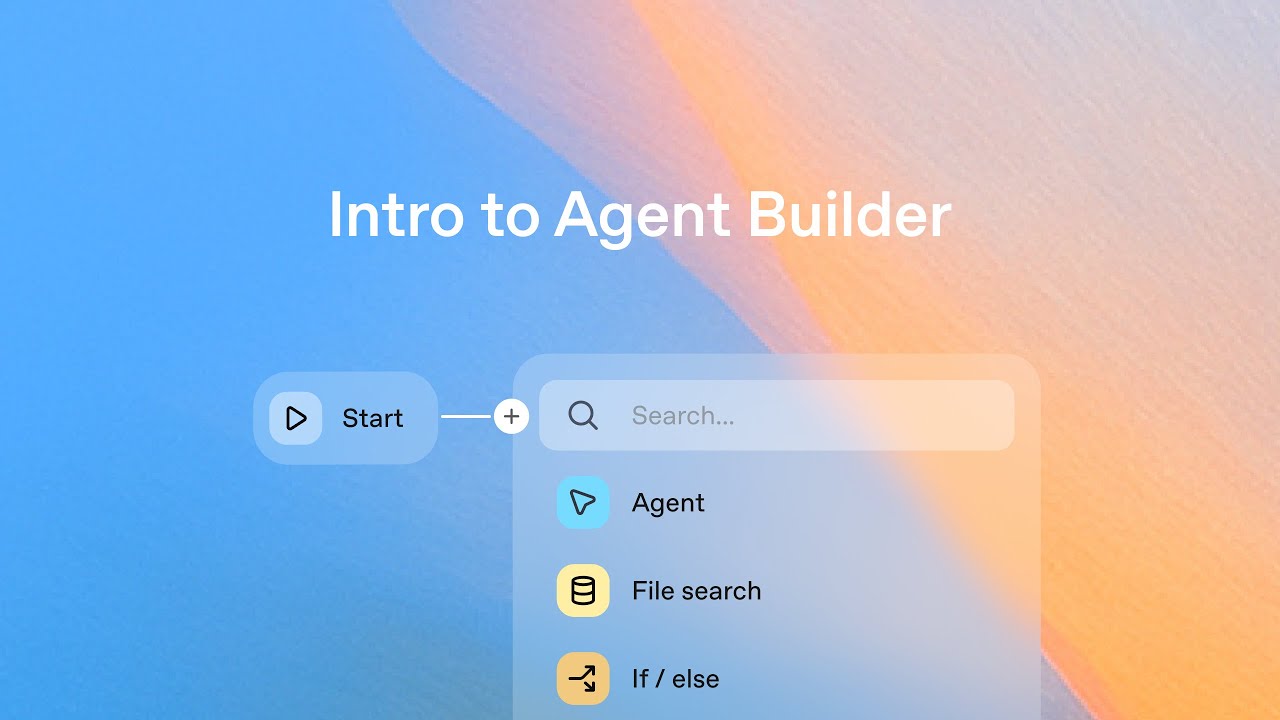
start date of this month, end date one year from now, volume five seats. But I don't know about you, but I definitely would not click this if I was shown it uh in any app. And uh so we might want to make this a lot better and a lot more trustworthy uh for our users. So we're going to actually spend some time updating this with OpenAI's agent kit widget builder. So I was working on this over lunchtime a little bit and this is uh kind of the summary we have. Definitely looks a lot better. Maybe let's make a slight tweak over here to say what is it for instead of vendor since that'll be really clear. And you can see it update on the right hand side live. And we've personally found this to be really useful when we're working with our design team and we want to iterate on the right UX. You can just go into widget builder and update something really quickly. And the most magical thing is that you can click download right over here. And I'll go to my downloads file. And then we can go back into agent builder. Close the preview. And we'll click this node. And you saw the JSON getting uh updated or sent before. So we're going to change this to a widget and then add in the widget that we just exported. And yeah, that looks exactly what like what we had before. So now that we've kind of designed the widget to be a lot more trustworthy and look a lot better, uh maybe let's go off and deploy it. So we can actually click the code button over here and I can copy this workflow ID and put this in my backend code. or if I don't have any uh backend setup, I can uh click the agents SDK tab over here and copy the generated TypeScript or Python. This is really useful when we're working on new prototypes and having all the scaffolding included here uh is really easy and uh you can see it's uh quite extensive. So I've already been setting this up on my local dev environment and I've copied over the workflow ID. So let's just jump into the ramp dashboard now. So this is the ramp dashboard. This is what users see when they go into ramp. And if I click this AI assistant tab over here, this experience on the right hand side is completely powered by chatkit. And I've even had it match RMP's brand colors with custom theming. So let's add the same prompt from before. So I need five more chat GPT business seats. And I have an invoice here as well that I can drag in. So you can see the agent start to reason. It's fetching business vendors, searching the web for chat GPT business. It's checking this request against our expense policy. I don't know about you, but I don't know where company's expense policy even is. So I'm glad it's approved. And just like that, we have the card that we're working on, and we can go off and submit it. Awesome. That was way less painful than before. So this specific trace worked really well and it was a success. But if we deployed this to production, uh we'd want to monitor how this agent was doing. So we can actually do that really easily just by clicking this logs tab over here. And I can look at this one by one, but at ramp scale, if we had thousands of these, I definitely don't have the time to be looking at that every single day. So we can actually create a grader that can assess whether the agent is following the instructions that we have. So um I've already pasted in RAMP's product copy guideline. So we want to make sure that the agent is brief uh and if errors do happen that they're clearly explained, not just saying error, something went wrong, which I'm sure everyone has noticed before with some agents. And so we can click run and it'll start grading our trace. One of the most useful things about this for our team is just focusing on what we care about, which is the prompt and the context engineering part of this. Not managing any crazy TL pipelines, making sure that the data is in the right place and all our environments are set up properly. And looks like this passed. So that's great. And uh yeah, looks like our job is done here. We have a complete agent. So to quickly recap, we use agent builder to create our buyer agent workflow, deployed it to chatkit, and optimized it with trace grading. The result, purchasing that used to take a couple days or weeks, now takes less than a couple minutes, and our teams can spend a lot more time on things that they actually care about, not managing procurement requests. Our mission at RAMP is to save companies time and money, and we're excited about all the off uh opportunities Agent Kit offers to accelerate that. Thank you so much, That was awesome. Viral. Before we move on from that topic, I want to remind you of four new things you can do with agent kit. First, you don't have to start your workflows from scratch. With agent builder, we give you out of the box templates. Here is one

Segment 9 (40:00 - 45:00)

simple example here, which is a template to help you build customer support um agents. It's complete with logic and guardrails, so you know, pretty good to get started. Second, Chatkit supports visual widgets to bring your conversations to life. So you can create widgets to display charts, send emails, and make purchases in chat. And all of that matches the look and feel of your brand. Third, you can now automatically improve your prompts in our eval product. So we did a massive update to our Evals product. You just take a completed EVA run. You let the tool suggest a new prompt and then you run the eval again to measure the difference. And many of our customers have been getting real big value out of the eval product. Take for example Carile. So Caroline for you for those of you who are not aware is a global investment firm. They use eval to increase accuracy by 30% of their due diligence agent. Um another example which I love is Ripling HR software company which is building sales agents and cut development time by 40% with evals. So yeah do not sleep on evals. And finally the fourth thing you can do is a reinforcement fine-tuning RF specifically for agents. Today we are extending the RFT to tool calls so models can call the right tools at the right times which is of course critical for agents. And we are also shipping custom graders so you can measure performance on what matters the most to you. And many top startups have been finding real value with one example is ambience. So ambience is a healthcare startup and they saw a 15% improvement on their intern levels with RF. Second example is Cognition, the maker of DevI, and found that GP5 could now solve hard coding problems 50% faster with RF because of less reasoning tokens. Finally, let's deep dive into how you can build apps for chat GPT. So, as Sam mentioned earlier, the apps SDK is available in preview starting today. So you can start building and testing fully interactive applications inside JDP and users will be able to chat with your apps. So you know they can also respond to natural language. It's built on top of MCP which is a backbone that syncs your app server the model and the UI. So everything just works together. You are free to run your backend on node, Python or any other language which is supported by MCP. And you can also bring your own code um to the front end through React or any other framework. And that means and it was really important for us is that you have full control over the entire chat experience for your users. You've heard a lot of things about this already and so we thought it would be fun to take a look at the developer experience. So let me invite Katya on stage. — Hi everyone. I'm Katya and I'm on the developer experience team. Great. So, let's see how we can start from an existing MCB server to surface a custom app in Chad GBT. So, let me close this and pull up my laptop. So, I heard we have an MCP server to connect to the lights in this venue. Right. This morning at the keynote, Roman showed how we can use MCP tools and the real-time API to change the lighting in this very room through voice. So now, let me show you something really cool and new, which is controlling these lights from Chad GBT. Imagine being able to control any system, access any tools directly from the Chat GPT interface. So let me show you how we can do that. So here I'm adding this MCP server as a connector to Chad GBT. The server is running locally but I'm using Enrog to expose it to the internet so that Chad GBT can see it. Very convenient for local development and this is available when you have developer mode enabled and it's a great way to test integrations with Chad GBT. Great. So we have our MCB server here connected uh to our tools and these tools. So for example, we have one tools to uh list the tracks that are available in the lighting system. So the lighting cues. We also have one tool to actually play the track. And as Olivia mentioned, the app SDK allows extending the MCP protocol to return UI components or widgets along with the source. Great. So now that we've added uh the connector to our app, I'm actually going to start a new conversation here and enable it. And I'm going to ask um which lighting tracks are available.

Segment 10 (45:00 - 50:00)

And so Chbdt is fetching the tools from my MCP server and it's going to find the one corresponding to the one thing that I asked. So list tracks. And since my MCP server returns widget data along with my tools, Chad GPT will be able to render the UI directly in the interface. Perfect. So now I actually want to try and see if this works. I hope so. So let's play a track. Great, it works. Uh, but that's not all. I can also uh say in the conversation that I want to play uh this um moving colors like track. So let's do that. Let's play the moving colors track. And so again, TAGPT will call my MCP server this time with the play uh track tool. So let's see what it's doing. It's calling the tool and you can really transition seamlessly from apps to conversations. But another cool thing you get with the apps SDK is the concept of widget state. So let's see a concrete example. I have this step sequencer component here that lets you compose a new sequence with lighting tracks that connect to the same lighting system. It's just a React component. So, I'm completely free to build this the way I'm used to. So, the good news is if you're a web developer, technically you're already an apps SDK developer. There's no new language or new framework to learn. And I also have this tool here in my MCB server called create sequence that takes parameters that represent the state of the different tracks the sequence and we're also passing in our UI components here. So we've extended the MCP protocol with a series of meta fields that contain all the information needed on our app and how to connect the tool to the static assets. And this is not something OpenAI specific, right? The idea is that all MCP developers adopt this new standard so that compatible clients like chat GBT for example can render UI components along with MCP tool calls. Okay. So let's go back to our uh conversation. Actually I'm going to create a new one and uh I am going to say I want to create a new sequence. Help me make it upbeat. surprise me. Great. And I wanted to have this whole ambiencece, you know, so I also added the ability to add soundtracks. So the model is now calling our tool thinking about what the right initial state for that component should be. So we have an initial state in our sequence that will uh work great with what I asked. So I asked for an upbeat situation. So let's see what it comes up with. So this will take a few seconds. So, this is the beat that came up with. So, let's actually play this. Let's hear it. Okay. It's good. I feel like it could be a little bit better. So, you know what? I'm actually going to open this in full screen and just uh play around with it. So, I'm going to add this clap uh track here and just add a little bit more beats. Okay, I'm just going to preview the audio here. I don't want to blind you. Okay, that sounds cool. That sounds cool, but I feel like it's still missing something. So, what I'm going to do is I'm going to save the state of um the sequence here. And then I'm going to say, "Please add a uh thumb track to make it even more a beat. " Let me remove the thinking here so it's faster. Please add a thumb track. A beat. And let's go. We can see it with the lights, too. Okay, great. Wait, I'm going to refresh this because it's it's taking a while. Okay, so our toms are here and if we want to see the full result, let's hear it. Okay, I feel like this one's really cool. So, it's a two-way communication channel and you can really build visual rich experiences that are actually part of the conversation. So this was just one example uh showing how you can build for chatbt users with this new service. But since the app SDK is based on MCP and supports any web components with a

Segment 11 (50:00 - 53:00)

simple API to keep data in sync with the conversation technically sky is the limit. So let's take a look at a couple other examples. So what I think is really interesting about using apps inside chat GPT is that it knows you right? So it has context about what you like and what you usually do in the app. So it can tell uh it can you know call these apps and bring that additional context in. So I can ask about uh the best pizza places in town and get customized results. So we can surface to recommendations to potential users just when they need it. For example, you know, here it knows that I love a classic margarita. So, it will just do suggestions that are uh tailored to my situation. And you can also uh have the apps adapt to what users want to see. So, for example, uh I can ask which ones are the closest. And I get a nice map with a carousel. again classic margarita and also if you think about how chat GPT can help you learn you can have those visual immersive experiences just uh for learning so for example I can ask about earth can you tell me about earth and the solar system so this one might bring back some memories from last year's dev day if you saw the real time session and here we go so we're focusing on And let's wait for it. Great. So I'm going to open this in full page. And it's amazing. I have this whole new way of learning visually directly inside chat GBT. Again, sky is the limit. It's the sky here. But yeah, thank you. Okay, so we've seen a few examples of what you can do with apps in Chat GBT. You can control lighting, you can create music, you can get personalized recommendations, and you can learn with beautiful visuals. So, I hope these gave you some ideas, but I'm sure you can come up with a lot more so you can start building with it today. And later this year when we open up app submissions, you'll be able to bring your apps to the hundreds of millions of chat GBT users. Thank you and back to Olivia. — Thank you Ka. So as Katcha mentioned, we are just at the first stage of the vision here. The goal is to get this in your hands early and hear your feedback so we can iterate. So later this year, you will be able to submit your applications for review and publication. We also plan to release a directory that users can browse in order to discover new applications and we'll have more to share on monetization soon. This is just the beginning. So much of what we build is influenced by developers. It's been an incredible day. Thank you so much for being here and for everything you're building.

Другие видео автора — OpenAI

Ctrl+V

Экстракт Знаний в Telegram

Экстракты и дистилляты из лучших YouTube-каналов — сразу после публикации.

Подписаться

Дайджест Экстрактов

Лучшие методички за неделю — каждый понедельник