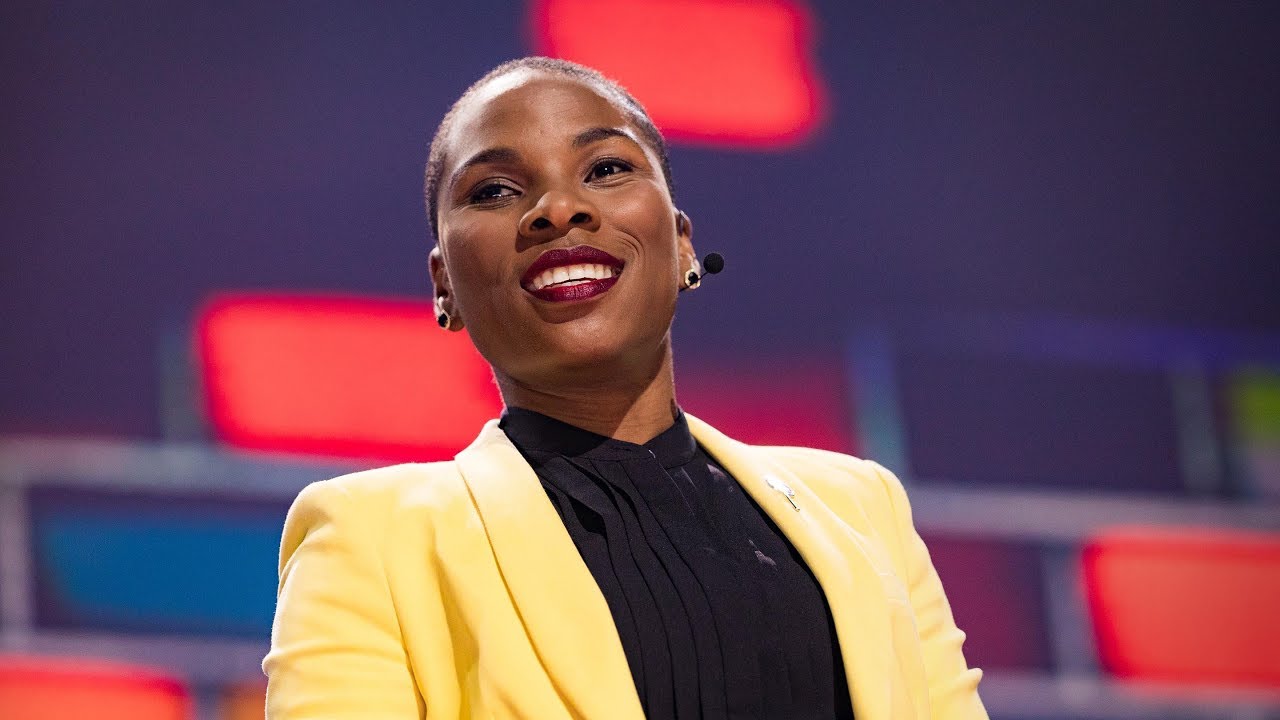
Everyone, please give it up for Dr. Cathy Shafu. Kelly. Oh, I'm so excited. We are here in Nigeria and everyone is ready for these talks. The audience is going to be really loud. Okay, we'll turn the headphones down. Dr. Cathy is beloved here. I mean, listen to that audience that like she hasn't even said a word yet. — Mhm. Before man could speak, we moved. — Listen to that. They're in conversation. You're getting the snaps and the claps. First line. What? So, let's play a game together. What you think I am saying? — It is important to note that the power of communication is what helps us evolve. two and a half decades ago. It's full hardy to tell your parents that you want to be a dancer. In my own house is — these local words in local languages are really making an impact. — I don't think they take away at all from our English only understanding of the talk either. They add to it completely. I am a testament to the fact that the art of movement serves multiple industries. Dance speaks for fashion, movies, health and wellness. And the biggest one there right now for those Tik Tockers in the house, dance is one of the greatest powerhouse when it comes to advertising. — Afro beat will not get to the world without dance being the vehicle. So it is important to note that as I speak for dance, I speak for you because you all dance — every day. The tailor, the photographer, the hairdresser, the mama biligate that is flying that acara with so much precision and rhythm and flow. She and you and I are worthy of investment because movement is the currency of divinity. So I stand here today with an idea, an idea that I have embodied that you should not deprive yourself with the limitation of the metric system and the world telling you that you need to be somebody by design of a box designed by a system that is still trying to figure itself out. So rise up right now everybody stand up on your feet. I predict things are about to get crazy — cuz you are going to commit today not just to you but to the world that you are unstoppable because you move. — So repeat after me. You — and I — must move — to grow — to grow. — I beg — I beg. — Ask swag now. You — to grow — to grow. I beg — I beg. — Let's try with the drums. Are you ready? — Oh my gosh, I'm so ready for this. — And I must move — to grow. I beg. So let's add rhythm. You and I must move to grow. I beg. One more time. So ladies and gentlemen, — my idea is your idea. — Hands on your chest. — I move. — I move — because there are no boundaries within me. me. — THANK YOU. OH, LOOK AT THAT. COME ON. She wrapped it up and just few seconds over. Well done. Look, they're bowing. I mean, this is definitely a strong idea, but I guess how is it going to stack up against the others in terms of the global impact it could make? And if you were to strip away the audience energy in the room, would that idea be strong enough to stand alone? And I — think that's important to consider. — Yeah. Lots of words. Um I am in a place right now that I don't know how to capture my emotions and name it. But I would say that audience, the energy, the aura, the way they received the message, I felt that I did it. Yeah, I did it. — Wow, that is going to be a tough act to follow. Good luck to whoever's next. — Mhm. — Please join me in welcoming Sadia Adu. — The words that she has put to this story are gorgeous. Yesterday, um I don't think she had practiced yet actually clicking through the slides while she delivered the talk. So, she really had a lot to overcome last night. Like I hope she rehearsed like crazy because I want to see her nail this today. — If she can nail the delivery, this one would be incredible. — Before Lagos became the fashion capital of Nigeria, before African designs walked the runways of Paris and Milan, there was FA, a small historic community in Ko state, Northern Nigeria. But centuries ago, people didn't just stop there. They stayed, they traded, they created, and they built something timeless. The sound of sewing machine has always been part of my home. A rhythm of survival and skill. But that sound didn't just shape my family. It helped shape Nigeria's fashion identity. She's messed up on some slides. Oh — yeah. — Our people train others from Ghana, Niger, and Cameroon who later moved to Lagos seeking bigger markets and exposure. That's how FA's creativity spread. Our people are people. Oh no, it's getting harder and harder. I think she's getting stressed out because she sees what's happening here. When you hear forget today, you rarely think of fashion or creativity. You think of drug abuse, street thugy, poverty, and illiteracy. It hurts to watch a community that once helped clothe the nation now struggle to clothe itself with dignity. If we empower the marginalized communities, we build peace, stability, and peace and innovations for the world. So imagine walking through fate 10 years from now. This the harm of sewing machine powered by solar energy young men and women designing clothes that walk the runways of Paris and Milan. Then imagine the ripple effects when one community rises others will follow because what Fagen needs isn't charity. It's a connection. It's a recognition. It's a chance to scale what already exists. A chance to prove that the next global story of fashion, of science, of innovation, and more can rise from the home of a small community. — Now that's the Sadilla I want to see the whole time. I know. — Come on. — Maybe the next global fashion inspiration won't come from Paris, Milan, New York, but from the home of the sewing machine in Fei. Hopefully. Thank you. She did bring it back and I'm so glad she let everyone meet her and see who she really is. And I'm just really I'm heartbroken that the slides threw her so much. — I wish the whole 6 minutes for like the last 30 seconds of that talk. — I really didn't think I'll be able to do that because it was like my heart was beating fast. It was pounding. I was I don't know how I did it. I would say it's grace. I didn't know how I did actually. Seriously. — Next up, we have Vincent who is talking about tapping into human skills to solve big problems. — Mhm. — I can tell this guy's a competitive one. So, — I know he probably worked real hard last night to get this down. When I was an architecture student, every night at 1000 p. m. our campus generator shuts down. — Listen to the audience react to that. I think it's something, as I understand, they're familiar with. — For 5 years, I studied and drew by candle light. I can still smell the wax dripping and feel the smoke sting my eyes as I struggle to complete my drawings in the dark. In fact, if you walk past our studio, then you might have thought that we're performing a spiritual ritual. Those candles taught me resilience. But they also revealed how fragile our systems are when one switch controls millions of dreams. Today over 85 million Nigerians live without electricity. That's about the entire population of Germany. Across Africa, hundreds of millions more live this same story. Yet we say our solution is oil or gas or megawatt or solar panels. But the truth is the biggest bottleneck in the energy transition is not technology, it is skills. Who will install the solar miniig grids? Who will maintain the batteries? — He is bringing the passion today. Like I wonder almost if he was holding back yesterday like this. — I love this Vincent — in Kaduna. I met a lady Haja Amina a tomato seller who used to watch her tomatoes rot in two days but when she got a solar dryer and the training to use it she became the supplier of our whole town making more money as a result. So here's my idea. Treat skills as infrastructure. — Good clear setup on that idea. So now we know why we're listening from here on out. — Mhm. But if every project reserve just 10% of its budget for training youth and women, we'll be building two power plants at once. One of steel and panels and one of people. Now this is not just Nigeria's story. It's a global one. From Legosier to Lima, from Delhi to Detroit, communities are racing to embrace renewables. But without the people to install and manage them, the clean energy revolution could stall. — People in Vancouver need to hear this. They really do. — Think of it. The world is fighting to extract lithium, fighting over cobalt, fighting for rare earth when the most valuable resource is sitting on top and that is human potential. The most renewable resource on earth is not the sun or the wind or even the minerals in our soil. It is people. And when we invest in their skills, the lights won't just come on. They will stay on. Thank you. — And look at that. 5 and a half minutes. — Mhm. I love how at the end he tied it back to the story he said in the beginning as well. I mean the narration of his talk was so flawless to me. He set it up perfectly. I wasn't confused ever where he was going or confused where he was at — and he got a standing ovation. He pulled it out of the bag. — I think it went very well. I think that people were um people resonated with it and it's something that most people in the room understood. They felt it. It's probably a gun base without electricity. So, it's something that they know and um it's something that is relatable. — Okay. Next up, we have Paul who is talking to us really about bringing African history to Africa, to the countries in Africa. He's from Ghana. It's big. It has the potential to make really massive impact. And for me, he's a front runner. I can't wait to see what he does today. I'm excited for this one. Queen Elizabeth is here. Speak English. That was a description in my primary school. I remember on one Tuesday I spoke my local dialect tree. I was severely beaten and warned not to speak tree in the school again. — Kind of a shame this talks in English. You know — pictures like this was not in my textbook or my English books. My books and reading books and textbooks were pictures and stories of other people not like me. In many institutions today and many of our education system, our model has an invisible form of colonial history. We were well schooled but never educated. — That's a good line. That's a really good line. That void and that emptiness led me to study in US with the hope of furthering my education. My first history class was history of America to my disappointment. Whilst in school I started collecting photo books, books stories that will transform and make it accessible to the people of Ghana and Africa. Today I lead a team of 45 people. We have the biggest photo library and history books in Africa. It didn't end there. We realized that our history, our context as much as it's on the other side is in our basement that is not accessible for us and for the people in our various country. in the past one year we have 50 million archives of Africa that we — is so passionate about this and I'm like glad I think we're getting to see that — in him now — it's my hope that African centered education a true model that can transform our continent that can provide the agency the tools the knowledge and the value system which is inherent in us before colonization that truly transformed us it's my hope that all Ghanaians, all Nigerians, all Africans to be able to get to know each other, know our history, know our context, and transform the continent. Thank you. — I don't think this was his best delivery, but I'm really glad to see that the audience resonated with it. Yesterday, when we heard this, because he had variation in his tone and his cadence throughout the talk, it made me feel really emotional. And today when he delivered the talk, it was all at a pretty high level of intensity which kind of stripped the feeling out of it. The delivery piece just wasn't there today. — It went great uh as the only Ghanaian um in Nigeria. Yes, that's fine. — After the remaining talks are complete, the audience leave their seats, giving them a chance to digest the afternoon's ideas. This is my first T event and I think it was such a brilliant lineup of speakers. I like the authenticity. I like the originality of thoughts. I found them to be truly intriguing and interesting and um I would say refreshing as well. Dr. Carp, she said something about movements like creates emotion and all of that. So that resonated with me. So yeah, I found that session in Princeton. I'm actually very interested in clean energy, right? So, I was looking forward to Vincent's speech and it was really exceptional. — Vincent's talk really did stand out to me and um was very compelling. Fad, the lady that talk about fashion, Faji, I think it's very interesting to know that I most of us didn't even have an idea that a city in Nigeria exists. I don't know. They were just all good. I mean, if we judge by the applause, we're going to take Cafe, but then everybody was just boo. It was just authentic. It was just too unique. So, yeah. May the best win. — I think it's going to be very close, but we never know who's going to win. — The audience may have their favorites, but it's now down to the panel to decide who will secure a spot on the TED main stage.