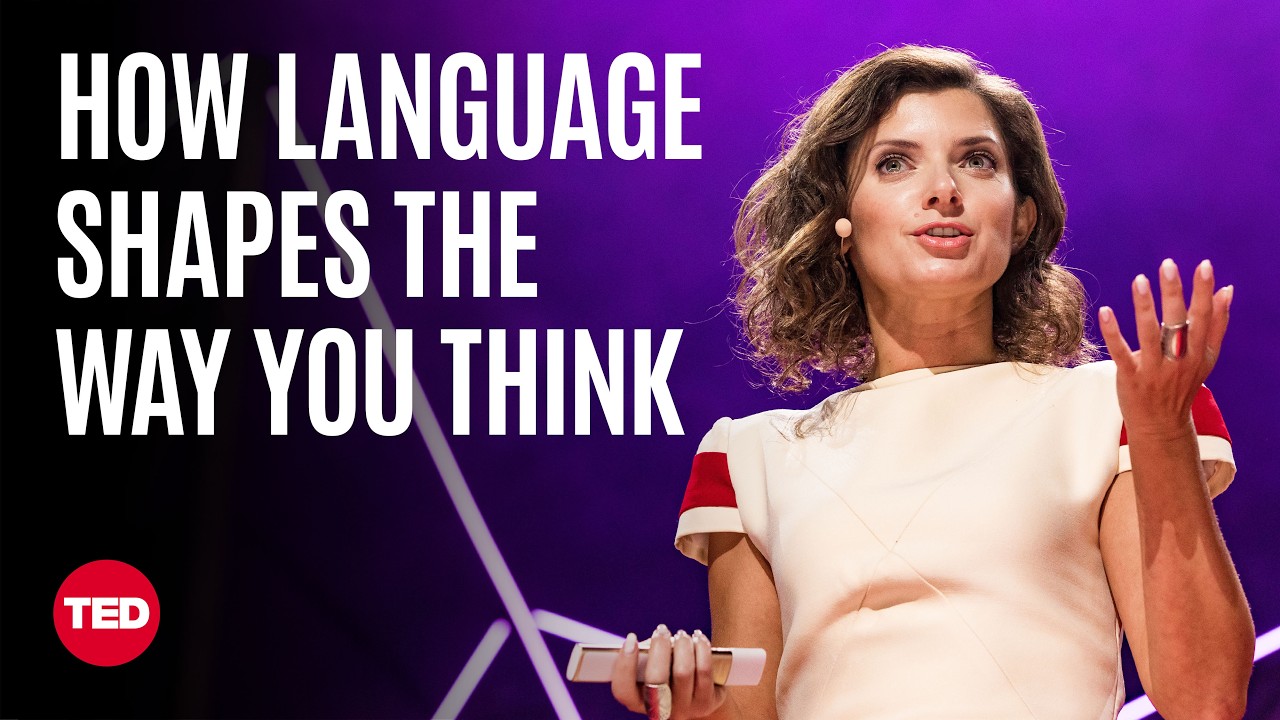
How to See the Future Coming — and Prepare for It | Jane McGonigal | TED
5:42

How to See the Future Coming — and Prepare for It | Jane McGonigal | TED

TED 03.04.2025 66 200 просмотров 1 487 лайков обн. 18.02.2026
Поделиться Telegram VK Бот
Транскрипт Скачать .md
Анализ с AI
Описание видео
As a futurist who helps people prepare for all different kinds of possibilities, Jane McGonigal thinks we overuse words like "unthinkable" and "unimaginable." She introduces three hypothetical scenarios, showing how you can foster the ability to think creatively, anticipate new risks and feel ready for whatever the future may hold. (Created in collaboration with ‪@ignite ; recorded at TEDNext 2024 on October 22, 2024) If you love watching TED Talks like this one, become a TED Member to support our mission of spreading ideas: https://ted.com/membership Follow TED! X: https://twitter.com/TEDTalks Instagram: https://www.instagram.com/ted Facebook: https://facebook.com/TED LinkedIn: https://www.linkedin.com/company/ted-conferences TikTok: https://www.tiktok.com/@tedtoks The TED Talks channel features talks, performances and original series from the world's leading thinkers and doers. Subscribe to our channel for videos on Technology, Entertainment and Design — plus science, business, global issues, the arts and more. Visit https://TED.com to get our entire library of TED Talks, transcripts, translations, personalized talk recommendations and more. Watch more: https://go.ted.com/janemcgonigal https://youtu.be/C4QMPhiF_as TED's videos may be used for non-commercial purposes under a Creative Commons License, Attribution–Non Commercial–No Derivatives (or the CC BY – NC – ND 4.0 International) and in accordance with our TED Talks Usage Policy: https://www.ted.com/about/our-organization/our-policies-terms/ted-talks-usage-policy. For more information on using TED for commercial purposes (e.g. employee learning, in a film or online course), please submit a Media Request at https://media-requests.ted.com #TED #TEDTalks #PersonalGrowth
Оглавление (2 сегментов)

  1. 0:00 Segment 1 (00:00 - 05:00) 698 сл.
  2. 5:00 Segment 2 (05:00 - 05:00) 74 сл.
0:00

Segment 1 (00:00 - 05:00)

As a futurist, I think the two most dangerous words in the English language are “unimaginable” and “unthinkable.” So I want to invite you to think creatively and courageously about some hard-to-imagine possibilities. Let’s play a game of “What if?” I'll describe three hypothetical future scenarios. You try to imagine how you would feel and what you would do if you woke up in these strange new worlds. Future number one. It's 2033. Extreme heat, wildfire and droughts have been worse than even the most dire climate predictions. So now geoengineering is up for a global vote. 9 billion people are eligible to vote yes or no on a 10-year plan of aggressive solar radiation management, injecting sulfate particles into the atmosphere to block some of the Sun’s rays. The election is called Sun Exit. They’re saying a yes on Sun Exit could bring about a 10-year winter, but it could also solve some of our biggest climate challenges. Is it worth the risks, the unintended consequences? How would you vote? How would you educate yourself to be ready to vote? Scenario update, Sun Exit passed, we're doing it, solar radiation management starts in 10 days. Now how do you feel? What do you do in the next 10 days to get ready? OK, it's one year later. The geoengineering is working, yes! But paradoxically, trust in science is now at an all-time low. People are saying there are mental and physical side effects. Is it just misinformation? What do you do to stay healthy? New future. OK, it's 2029 now and your federal government has gone full-blown zero-waste authoritarian style. It is now illegal to throw anything away. They literally took everyone's garbage cans. Now composting's still allowed, recycling never worked. And garbage, you can't make any of it. Nothing. But there's some good news. Psychologists have invented a new word to capture the positive emotion that defines life in a zero-waste age. Zerophoria. It's a combination of joy, pride and resourcefulness. A lightness of being that comes from wasting nothing and leaving no trace behind. How do you react to these changes? Do you learn new habits, help others adapt? Or do you rise up and join the pro-trash resistance? Or become a reformer, propose ways to make zero-waste society better? OK, let's imagine one final future. It's 2031. Climate migration is on the rise. Countries with low fertility rates are competing with each other for immigrants. Governments are building climate-resilient welcome cities and paying people to move there. It's part of a new geopolitical movement called the Welcome Party. Up to one billion people are expected to climate-relocate with assistance over the next decade. You have been asked to take a personal survey of climate risk and intention to migrate. The Welcome Party is collecting data to simulate and plan a safe and equitable mass climate migration. You have to name three climate-resilient cities you would be willing to move to, given social and economic support. Which three cities do you name? How prepared do you feel to consider this question? Why am I posing these hypotheticals? Well, take a look at this data. These two charts show how often we use the words “unimaginable” and “unthinkable” in our journalism. Look how common they've become. We are so often shocked and blindsided by how the future unfolds. But it doesn't have to be that way. At the nonprofit Institute for the Future in Palo Alto, California, I help people build imagination leadership skills by simulating hard-to-imagine futures like you've thought about today. Our goal is to improve everyone's scores on three measures of future imagination, like mental flexibility. On a scale of one to 10, how plausible or realistic is this future scenario? In other words, is it thinkable to you? Also, realistic hope. On a scale of one to 10, how worried or excited would you be to wake up in this future? We want you to anticipate new risks, but also opportunities for positive transformation. And finally, future power. On a scale of one to 10, how ready do you feel to help yourself and others if this future were really to happen?
5:00

Segment 2 (05:00 - 05:00)

This is the number we see go up the most after people imagine themselves taking action in a hypothetical world. So the next time you have an instinct to describe a possibility as “unthinkable” or “unimaginable,” wait. Play with that possibility instead. Help us become a community, a society that can confidently say we can face and we can solve previously unimaginable challenges together. For us, there are no unthinkable futures. Thank you. (Applause)

Ещё от TED

Ctrl+V

Экстракт Знаний в Telegram

Транскрипты, идеи, методички — всё самое полезное из лучших YouTube-каналов.

Подписаться