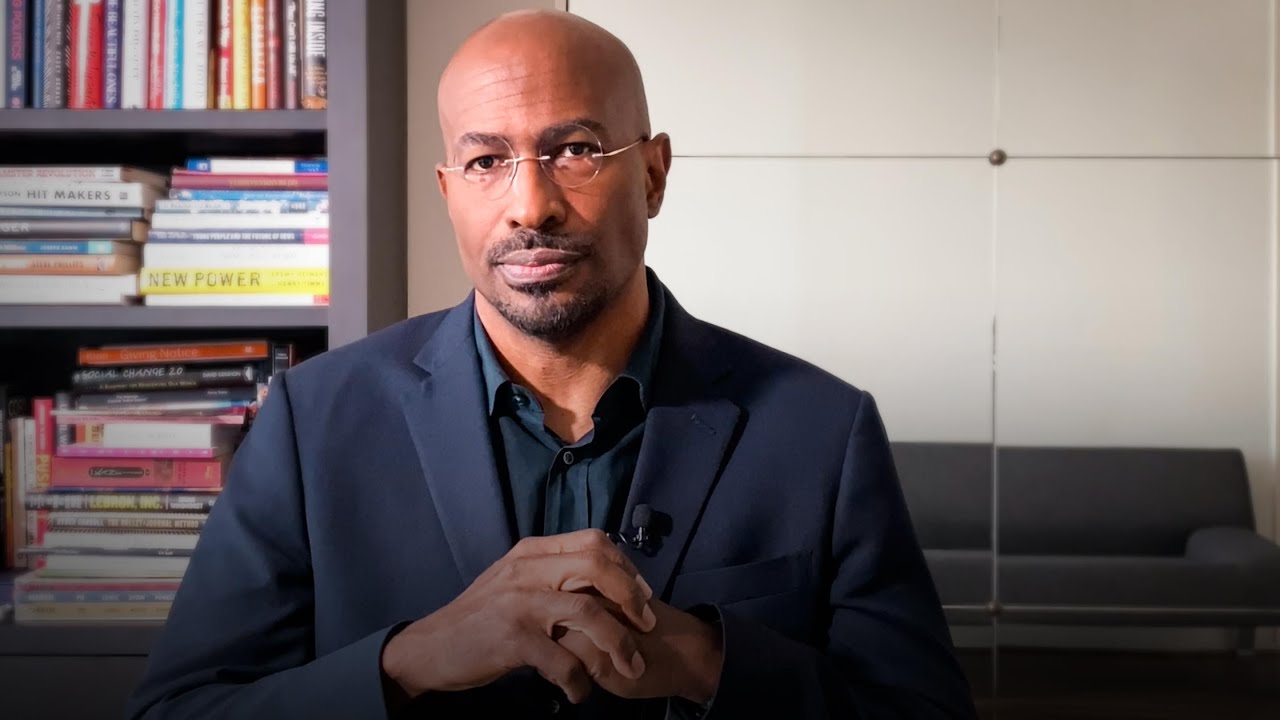
My Big Idea (Ep. 2): Can a Boxing Gym Transform a Community? | Percy Tussamba
19:42

My Big Idea (Ep. 2): Can a Boxing Gym Transform a Community? | Percy Tussamba

TED 26.03.2025 23 537 просмотров 468 лайков обн. 18.02.2026
Поделиться Telegram VK Бот
Транскрипт Скачать .md
Анализ с AI
Описание видео
Percy Tussamba was born in Angola, but after a very turbulent time for his family, was forced to leave his home and ended up in the UK. Faced with the challenge of starting a new life in an unfamiliar place, he found a sport that changed his life. Now he wants to share his experience and help build community for other refugees, helping them establish themselves and thrive. Follow along as he prepares and delivers his big idea in a moving TED Talk, bringing him one step closer to making his dream a reality. “My Big Idea” is a new series from TED that documents the process of imagining and then creating a TED Talk, featuring first-time speakers and ideas new to the TED stage. Watch episode 1: https://youtu.be/VjegFh1zhY4 Watch episode 2: https://youtu.be/4lxyPcI7kn0 Watch episode 3: https://youtu.be/q3_AS6GM2Cs Learn how “My Big Idea” was made: https://youtu.be/lZTBIO3OtYc Watch the series: https://www.youtube.com/playlist?list=PLOGi5-fAu8bFjqT-tnLKLsMbXpSq_vc0E Learn more about the TED Idea Search process and where it's headed next: https://www.ted.com/about/conferences/speaking-at-ted/global-idea-search Follow TED! X: https://www.twitter.com/TEDTalks Instagram: https://www.instagram.com/ted Facebook: https://facebook.com/TED LinkedIn: https://www.linkedin.com/company/ted-conferences TikTok: https://www.tiktok.com/@tedtoks The TED Talks channel features talks, performances and original series from the world's leading thinkers and doers. Subscribe to our channel for videos on Technology, Entertainment and Design — plus science, business, global issues, the arts and more. Visit https://TED.com to get our entire library of TED Talks, transcripts, translations, personalized talk recommendations and more. https://youtu.be/4lxyPcI7kn0 TED's videos may be used for non-commercial purposes under a Creative Commons License, Attribution–Non Commercial–No Derivatives (or the CC BY – NC – ND 4.0 International) and in accordance with our TED Talks Usage Policy: https://www.ted.com/about/our-organization/our-policies-terms/ted-talks-usage-policy. For more information on using TED for commercial purposes (e.g. employee learning, in a film or online course), please submit a Media Request at https://media-requests.ted.com #TED #TEDTalks #MyBigIdea
Оглавление (4 сегментов)

  1. 0:00 Segment 1 (00:00 - 05:00) 550 сл.
  2. 5:00 Segment 2 (05:00 - 10:00) 584 сл.
  3. 10:00 Segment 3 (10:00 - 15:00) 591 сл.
  4. 15:00 Segment 4 (15:00 - 19:00) 588 сл.
0:00

Segment 1 (00:00 - 05:00)

You can fight for many things. You can fight for your own rights. You can fight for your own life. But for me, I think fighting is showing up. The feeling of being lonely or isolated can definitely affect your mental health. People from refugee backgrounds go through many situations where they feel down and depressed. There's not enough support. I'm hoping to bring my idea to a solid foundation with the hopes that it will become a reality. Host: Welcome to the stage, Percival Tussamba. (Cheers and applause) Chris Anderson: Hello, I'm Chris Anderson, head of TED. We believe that ideas change everything. And that anyone in the world, including you, can have an amazing idea. Which is why we've embarked on a search to uncover the best ideas you've never heard of. Now an idea by itself won’t achieve anything. But what if it was presented on a stage, and, secretly, in the audience, there were experts and mentors and investors? Then all bets are off. From TED, this is My Big Idea. [My Big Idea] PT: Hi, I'm Percy Tussamba, and this is my big idea. [London, UK] Most of the time, in 2018, I used to spend at home. I had way too much time on my hands to spare. So a friend invited me to a boxing club, which was something really different from what I'm used to. I went there, and I just fell in love with the sport from the start. I felt welcomed because it was a place where I didn't feel like I was left out or discriminated or anything like that. You just feel like you were welcome. I never was really good at any sport, to be honest. I tried football, didn't work. I tried basketball, didn't work. But from the start I was consistent and dedicated myself to keep showing up. And my coaches motivated me to keep showing up. Boxing kind of gave me three amazing skills: persistence, perseverance and patience. Basically, through discipline, dedication, consistency, regardless of your obstacles and adversity that you might face in your life, boxing allows you to change that. Once you have that fuel, that thing that makes you wake up every day and fight for it, it changes your perspective, and you really just want to give your all. It's important to share ideas because by sharing ideas, you're able to find people that will help you to bring your idea to life. So by not sharing it, basically, you know, you're just laying the idea in a box and not allowing it to grow. The idea started from my own life experience as a refugee in the UK. I was born in Angola. Most of my childhood I spent in Luanda, but I used to travel back and forth to Cabinda, where my parents are from. I pretty much had an enjoyable childhood in the sense that I was able to have fun with my friends and family members. The reason why I left my country, despite loving the country so much, is the fact that my dad was affiliated with liberation of the enclave of Cabinda, which, basically, Cabinda is now considered a province of Angola. A small part in the north. But the people that reside there
5:00

Segment 2 (05:00 - 10:00)

they don't see themselves aligned with the government of Angola, and they'd might rather be separated or be independent. That affiliation led to persecution of my own family and... losing my dad along the way because of that. It was a normal, typical day, coming from school and finding my house burning. And what happened before? I don't know. And what happened after? I don't know. But yeah, it was... Yeah. Not a good place to be anymore. Pretty much where the story started of being a refugee. Fahira Mulamehic: Becoming a refugee is not a matter of choice. It's a matter of force. Asylum seekers have been through appalling experiences, witnessed their homes being destroyed, witnessed their relatives, families being killed. People are fearing for their life and seeking safety. PT: I was 15 turning 16. It took about a year or so to get to safety. I was definitely scared. I was unsure of what was going to happen next. You know, what was left of my life. FM: It's a horrendous journey. It's running away from the danger into uncertainty. PT: It was basically leaving Angola and arriving elsewhere. And kept... And being kept in a basement for a while and then moving again. A very confusing process. Don't know exactly where I was. And then I arrived to the UK. FM: But that's when the next chapter of struggle starts. It's going through the asylum system, it's facing all the challenges again in the country of asylum. There is a huge isolation. Many don’t speak English language at all, and it takes time to find their ways in the new system. They took me away to a place where many other young people reside, and the first couple of weeks was pretty much spending time by myself. Every other young person there already was in school and speaking the language, and it took a while to adapt. There are those people that don't want to see you in the country. FM: There is a stigma of being a refugee, partly thanks to how media portrays people as benefit scroungers, people who come to take British jobs, people who are not interested in work, which couldn't be further from the truth. PT: Those stigmas and discrimination can definitely affect you in developing and, you know, progressing in the country. FM: It's a very lonely world. You don't have family, you don't have friends, you don't know your neighbors, you have no connections. It's easy to become prey of people who are looking for vulnerable young people to be exploited as criminal gangs and so on. PT: There's not enough guidance and mentoring to help young refugees. FM: Refugees have much more obstacles to these opportunities. But once given the opportunities, they thrive. PT: I'm currently undertaking biomedical engineering at Queen Mary. I’m on my third year now, and the experience has been great. Being able to learn so many things and met great people along the way. Usually it takes about five years, as a migrant, to go to uni. There was some obstacles along the way. Learning the language per se, that was one factor, but for me it took me about three years and a half to get to uni. I definitely can say that boxing helped me to get to university in the first place. By having that discipline definitely allowed me to calm down and just dedicate to my own goal, and working towards that bigger picture.
10:00

Segment 3 (10:00 - 15:00)

Applying for the TED Idea [Search] was kind of like, oh, I feel like I have something here that is worthwhile sharing with many people, with the hopes that it will become a reality and help many young refugees. I'm excited about it. Scared as well, because this is a bit huge, you know. I don't know how many people bought the tickets. You know, I don't know how many people will be in the room watching. I dared myself to apply. I'm already here, so, yeah. Looking forward to it. Another late night. Just going over my script again. The day is coming soon. Every pen has a story to tell. 12:56. I'm really tired. Yeah, I don't even know how to describe right now the feeling that I'm having. Scared. So I have the upcoming TED Talk on the 12th of December. The objective is to get on the stage, give the idea. And the idea is there. What comes after? It just will depend on how people perceive it. [Two weeks later] [Brighton] My hope for tonight is that the audience can leave with a message, and they can help those young people that really need their support. You can make a change with a simple thought. And if you don’t speak aloud, no one can hear it. You got this idea, and it’s based on your life experience. And just share that idea. Just be present, be yourself, and speak your idea aloud. Host: Welcome to the stage, Percival Tussamba. (Cheers and applause) PT: I believe in boxing's power to transform anyone's life, especially young refugees that deserve the support to thrive. Because that transformation happened in my life. Because without boxing, I don't believe I would be here, standing in the Brighton Dome, talking to you guys. And also not just because of boxing, but the people that I met along the way. Boxing allowed me to rebuild my strength, to give me my confidence and find a purpose in life. And I think it's about time. The time to give back and send ladder back down. So just imagine with me. Imagine a place where young people from refugee backgrounds can feel a sense of belonging. Can rewrite their own stories. And can learn how to box. And can feel like they are present and they belong in that place. Just imagine that place. Imagine if we call it PT Squared Fitness. PT as in personal training, PT also reflecting my name, Percy Tussamba. And the squared symbolizes exponential growth and transformation. I believe that place will help young people, and we will break barriers so they don't fall into harmful cycles of lack of opportunities and feeling isolated and feeling like they don't belong to a place. And PT Squared Fitness will allow them to rebuild their strength, to boost their confidence and also be able to give back to the community that they belong. As time progresses, I would like to see those exact same young people giving back to their community, running the organization to a wider community. And if I dare to dream big, I would like to see this place as a home for the Refugee Olympic team. So we build that bridge between the next generation and inspire next generation as well. I believe that PT Squared Fitness cannot just be a place but also a movement -- a movement and a tool. A space that can allow young refugees to rewrite their stories. Thank you. (Applause and cheers)
15:00

Segment 4 (15:00 - 19:00)

I can't believe that actually happened, man. Because after all this, like, preparing myself and... I'm sorry, man. For me, it's like, whatever happens afterwards, I've done my best. And obviously I will continue to make this happen. So it will be something that will be realized and will come to life, solidifies. I'm not crying anymore, so that's good. I'm back to normal, cool. [Four weeks later] [London] (Phone ringing) CA: Percy, it's great to see you again. PT: Nice to see you. CA: We have some more exciting news for you. We have found an amazing business advisor who is excited by your idea. He's not just any business advisor. He's an immigrant. He's deeply enmeshed in the sports world. He has worked for Disney Sports, he's done a project for the Super Bowl and for the Olympics. And I would like you to meet Neelay Bhatt. Neelay Bhatt: Bom dia Percy, how are you? PT: Bom dia, I'm good, thank you. (Laughs) Starting with Portuguese straight away. NB: I saw the talk, I saw the making of it, all of that. And I wanted to go out and start boxing myself, my friend. You inspired me so much. You have a great “why,” you have a great mission. What we need to now figure out is the "what" and the "how." PT: Right, right. And that's really where I'm happy to help you as I can to develop your business plan. Spend a little time every month, so that your idea, through the TED stage that the world can hear, can now also be something that the world can be a part of. PT: Uh, thank you so much. I mean, as you said, having that mentorship and someone that has already done, you know, having experience is definitely essential. Thank you so much for your time, I appreciate it. [The following day] (Phone ringing) CA: You know, you said in your talk that it would be a dream to have some kind of connection with the Olympic Refugee team. There's a champion boxer from Bolton, a woman, who won the first medal for the Refugee Olympic team. PT: Cindy Ngamba. CA: So, I'd like you to meet Cindy. She's on the call. PT: No way Cindy is on the call, wow! How are you? I can't believe that I'm actually talking to you right now. Cindy Ngamba: You've been a refugee yourself. For you to come out with an amazing idea to benefit as many refugees all around the world and give them the platform and the opportunity so that they can grab it with both hands and strive just like I was able to. Anyhow I can help you, brother, I'm there. PT: A couple of weeks ago, I received, in the post, gloves signed by you. Someone gave me as a gift. So having you now on the chat, talking to you directly, just like, that's insane. This is incredible. Thank you so much for giving your time. CA: It is so beautiful to see the two of you interacting and connecting and knowing this is how things happen. You know, ideas happen one step at a time, one relationship at a time. And then what seemed impossible can suddenly start to seem possible. PT: Just having that support right now, I'm really, really happy just to see that the idea now can become a reality. [Percy and Neelay are underway developing Percy's business plan] [He hopes to train with Cindy soon...]

Ещё от TED

Ctrl+V

Экстракт Знаний в Telegram

Транскрипты, идеи, методички — всё самое полезное из лучших YouTube-каналов.

Подписаться