🔥 Join Maker School & get customer #1 guaranteed: https://skool.com/makerschool/about
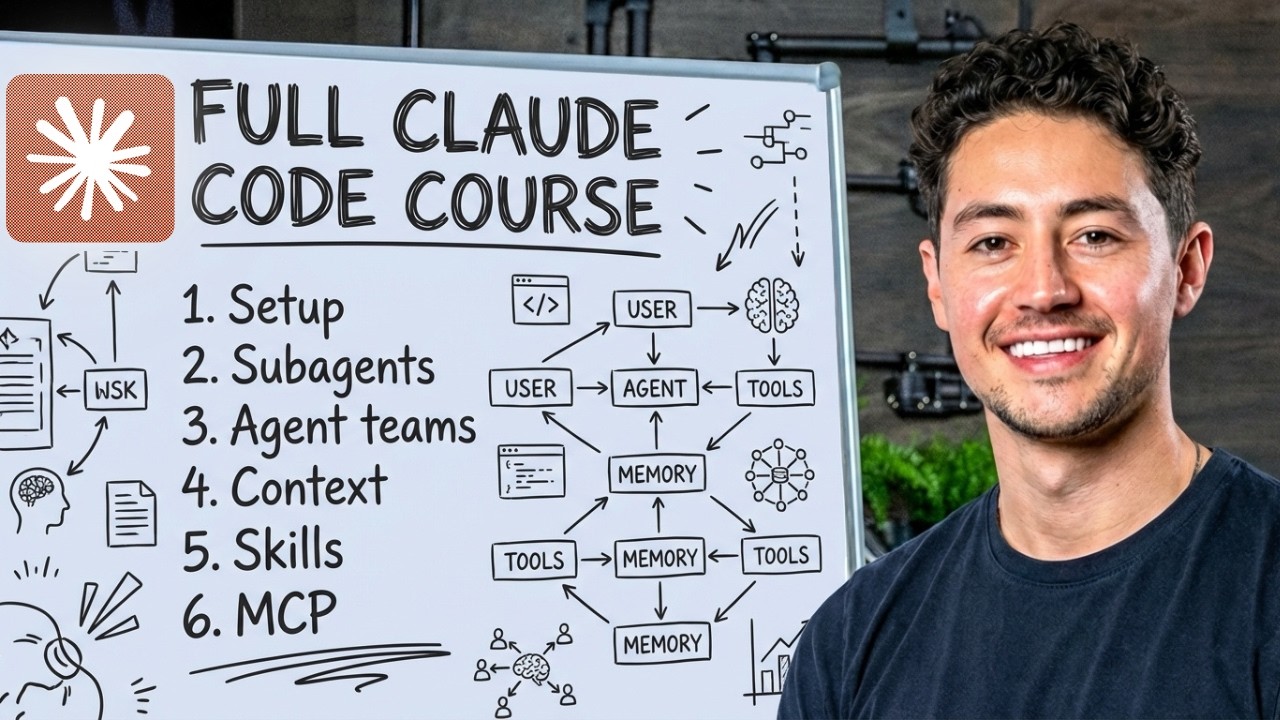
📚 Watch my NEW 2026 Claude Code course: https://www.youtube.com/watch?v=QoQBzR1NIqI
🎙️ Listen to my silly podcast: www.youtube.com/@stackedpod
📚 Free multi-hour courses
→ Claude Code (4hr full course): https://www.youtube.com/watch?v=QoQBzR1NIqI
→ Vibe Coding w/ Antigravity (6hr full course): https://www.youtube.com/watch?v=gcuR_-rzlDw
→ Agentic Workflows (6hr full course): https://www.youtube.com/watch?v=MxyRjL7NG18
→ N8N (6hr full course, 890K+ views): https://www.youtube.com/watch?v=2GZ2SNXWK-c
Summary ⤵️
Stop selling workflows like a builder and start positioning yourself as a strategist who delivers outcomes, not tasks. By shifting focus to business results, optimizing client experience, and offering guarantees, you can charge 10x more for the same work.
My software, tools, & deals (some give me kickbacks—thank you!)
🚀 Instantly: https://link.nicksaraev.com/instantly-short
📧 Anymailfinder: https://link.nicksaraev.com/amf-short
🤖 Apify: https://console.apify.com/sign-up (30% off with code 30NICKSARAEV)
🧑🏽💻 n8n: https://n8n.partnerlinks.io/h372ujv8cw80
📈 Rize: https://link.nicksaraev.com/rize-short (25% off with promo code NICK)
Follow me on other platforms 😈
📸 Instagram: https://www.instagram.com/nick_saraev
🕊️ Twitter/X: https://twitter.com/nicksaraev
🤙 Blog: https://nicksaraev.com
Why watch?
If this is your first view—hi, I’m Nick! TLDR: I spent six years building automated businesses with Make.com (most notably 1SecondCopy, a content company that hit 7 figures). Today a lot of people talk about automation, but I’ve noticed that very few have practical, real world success making money with it. So this channel is me chiming in and showing you what *real* systems that make *real* revenue look like.
Hopefully I can help you improve your business, and in doing so, the rest of your life 🙏
Like, subscribe, and leave me a comment if you have a specific request! Thanks.
Chapters
00:00 Introduction
00:31 Positioning - never frame as builder
05:06 Experience - optimize the human experience
08:51 Risk - outcome selling enables guarantees
11:07 Actionable tips
13:41 Outro
Оглавление (6 сегментов)
Introduction
If I told you that you could get paid five to 10 times more for delivering the exact same product with maybe 10% more work, would you do it? Probably. And that's what we're going to talk about in this video. So, I run an a consulting agency called Leftclick. We've worked with everything from small local businesses to multi-billion dollar portfolio companies. In this video, I'm going to show you a set of positioning and framing strategies that you can use to make much more money with only a marginal amount of added effort. Certainly not onetoone. So, there are three ways to do this. The first is positioning, then experience, and finally risk. So let's start with positioning. Never frame yourself as a
Positioning - never frame as builder
builder. When you sell workflows, which I think unfortunately a lot of people here do, you are inherently framing yourself as basically being a technician. Meaning you are somebody that is working inside of the business almost as an employee. And because you are viewed as an employee, there are employee level expectations surrounding your compensation. Generally speaking, when you do this, somebody's handing you spec. Uh you're building the thing, you know, and then you're delivering like a JSON file or make. com blueprint. If you contrast this with selling AI outcomes, then you are now positioning yourself as a partner. The idea is if you transition to being a partner, you are the person that a business owner will turn to when they want to improve conversion rates, reduce operational costs, scale their team, basically higher level problems that demand higher level pay. The technical implementation when you do this is actually now just a part of a bigger pie. Essentially, a component of a strategic relationship. Obviously, you're probably wondering how the hell do I do this? Let me show you. So, first hypothetical example, we have a guy called Dave the developer. He's super technical. He knows every make. com module, every node, every API endpoint, and so on and so forth. When Dave talks to clients, he's leading with his technical capabilities. So, you know, I think a lot of you guys are probably in Dave's shoes. When you guys get somebody that might be interested in a service, you'll say something like, "Hey, I can build you an AI lead qualification system. It'll use custom web hooks and multi- branch conditional logic that will automatically score your prospects based on a set of predefined criteria. " And that's well and good, and I've done the same thing. But let's contrast this approach with someone that I'm going to call Serena the strategist. Now Serena doesn't actually come from a technical background. She does not know every technical detail. What she understands is business outcomes. When Serena talks to that exact same client, okay, she's saying, "Hey, I help companies double their topline revenue by doubling the number of qualified leads that come in on the front end. And I do this using AI lead qualification. " So what Dave is doing is selling a thing and Serena is selling an outcome that just happens to be mediated or delivered by the thing. When Dave charges, he gets paid for the complexity of the build. Which means in order to get paid more money, Dave has to try to make his build as complex as possible. When you contrast that with Serena, what she gets paid for is what she delivers. It doesn't matter how complex the solution is, which actually means counterintuitively Serena gets by with building very simple solutions. She gets to save a ton of time in the implementation. And then also because she's outcome driven, she gets to justify a lot more money to the client. Cuz I mean, how much money would you be willing to spend to double your revenue? If you make $20,000 a month and Serena is saying, "Hey, I'll make you another $20,000 a month. " You'd obviously be willing to pay a fraction of that price, right? So when I started LeftC, I made this mistake a lot cuz I had just learned so much AI, so much automation, you know, and I was very enthusiastic about the technology I really wanted to share with the world. So I would get on a call, you know, somebody would say, "Hey, we suffer from X thing. " And I would immediately start talking about all the technical ways you could solve X. Well, you know, we could integrate your CRM with your email marketing platform using make. com. Uh we could set up advanced segmentation based off user behavior. We could connect X, Y, and Z APIs and so on and so forth. And every time that I would do this, I would understandably not make that much money selling the thing. Our ticket price in the front end was probably like 1,500 bucks on average or something. And that was because the client, to be honest, didn't give a about how I would do the thing. What the client cares about is the what and the why. Right? If I'm selling the how, I am inherently positioning myself as somebody that doesn't get the game. Now, it took me a long time to figure this out, but eventually I did. And now when somebody says, "Hey, we suffer from X. " I don't say, "Okay, well, we can build you an NAND workflow that does X, Y, and Z. " I say, "Wow, that must be costing you a lot of money. Tell me more about that. " This is a consultant first principle. When you are asking about outcomes, you're no longer a builder. you are essentially a strategic consultant who happens just to have the ability uh to use systems and use AI, right? As opposed to being a builder by trade, you're a consultant who happens to have building skills, which makes you much more dangerous from the client's perspective because, you know, you're not just capable of implementing stuff, you're capable of bringing in strategic insights to improve their business, just like a fellow business partner would. When you position yourself like that, you also significantly improve your upsell percentage because once a client trusts you as a strategic partner, they will inevitably start bringing other problems to you, too. They'll say, you know, while you're here, what do you think about our customer retention? Uh, do you have any thoughts on like how to generate more leads and so on and so forth? And then you're not just the automation person or AI person. You are their strategy person, which is worth a lot more money to them over the long term. Uh, very easy to go on things like revenue shares. You can position yourself for equity deals and so on and so forth. And all this is because you position from selling the thing itself to selling the outcomes of the thing. So, I'll get into some specific ways that you guys could tweak this on your end. But for now, just ask yourself not what is the system I'm delivering, it's what is the outcome of the system I'm delivering. What is the system that I'm delivering impacting in the person's
Experience - optimize the human experience
business? Okay. So, my second point is you need to optimize for the human experience. Now, it's going to sound counterintuitive, but the biggest point of leverage in AI is actually keeping things human. The important bit is you need to keep the right things human. So, what are the right things? And basically, it's anything that gives you facetime with a customer. So, for example, you can go to H& M and you can buy a shirt for $25. You know, I'm wearing a shirt that is probably like 30 or 40 bucks right now, but you can also take more or less that exact same shirt. Then you can wrap it up in the prestige of a higher cost brand, something like Burberry, and then you can charge $500 for the same materials. The only difference between Burberry and then that H& M shirt is the experience factor. Okay, if you guys have never been to Burberry before or any one of those really high-end clothing stores, here's how they work from a bird's eye perspective. When you walk up to the store, you will most likely see a lineup. That lineup will limit the number of people that can come into the store. The reason they say is so they can provide a personalized unique experience to every shopper. What it's really doing is it's adding a ton of perceived demand. Then when you actually get in, uh, you know, they might offer you a drink or something like that, a cup of warm tea or maybe some brandy. They will then assign you a personal style specialist. And that style specialist will ask you, "Where are you from, where do you live, what kind of clothing do you like to wear? " Uh they'll ask if you want them to measure you without actually charging anything because it's complimentary, right? The store is going to smell amazing. Probably going to be very beautiful people working at the counter. Basically, the idea is they're greasing your wheels the whole time. Their value proposition is not in the clothes. It's actually everything around the clothes. And of course, they'll do whatever they can to convince you that their clothes are better, but the main value prop is how good they make you feel in their store, not necessarily the thing that they're delivering. The main value prop is how privileged can we make our customers feel. So regardless of your opinions on this, in my case, I grew up poor. So when I see stuff like this sold all the time, I'm like, "This is Why the hell would I ever buy from that? If I could just go down to Walgreens or Wyinners, but regardless about how you feel about this, it makes money and it makes a lot of it. The good news is you can do the exact same thing with AI consulting. So early on in Leftclick, I who had just learned how to, you know, automate a bunch of stuff was obsessed with automating everything. So client onboarding, I tried to automate it. Uh project updates, You know, invoicing, I tried to automate it. And in my head, I thought I was being really efficient. I thought efficiency was key. What I found was my clients felt like they were dealing with a machine, not a person when they had questions or concerns or ideas. You know, in my pursuit of efficiency, I would route them to some sort of automated system to do it with it. And you know, they would walk away with more or less a pretty poor taste in their mouth. When's the last time you called some sort of automated help desk, right? You don't feel great about it. So, as a result of that, I had very, very poor retention, very few upsells. I made something like three or four times less per customer. My LTV was quite Now we provide a white glove managed service. The whole idea is you get strategic touch points, meaning you get customized videos from me. You get updates Monday, Wednesday, Friday. You get personalized kickoff calls, right? Rather than I just send you a form to set things up, it's like no, I actually guide you along that process. And when we deliver stuff, we record lots of videos because they provide us the illusion of FaceTime without the sunk cost of synchronous communication. And obviously we still automate the hell out of stuff behind the scenes. But we don't automate anything that the client personally experiences and as a result we give them the perception of that white glove service and we give them peace of mind that we are taking care of everything and ultimately that we are willing to do it for the right pay. So knowing what it takes to fulfill your service is obviously important. You obviously need to know how to do the thing. But doing the thing is not the thing that dramatically increases the value of the thing. As a rule of thumb, you guys should probably spend more time figuring out your sales process, the aesthetic quality of your deliverables, uh you know, your onboarding sequence and so on and so forth and the actual technical implementation details themselves. Cuz frankly, in the service industry, if you just know how to do the thing, you're actually already ahead of 90% of service providers. And that's enough. You can now take the additional time and energy you have and focus on the packaging, presentation, and delivery of the thing. Okay, so point
Risk - outcome selling enables guarantees
three is risk. And I put this last because in order for us to have gotten to this point, you will have needed to understand the previous two points, positioning and then the human experience. So when you sell outcomes instead of workflows and when you understand the experience of the customer is paramount, you gain massive leverage from a sales perspective and you're able to charge a lot more. And I think more importantly, you're also opening yourself up to the possibility of using an advanced sales technique which is the guarantee, also called risk mitigation. So if you guys sell workflows, you can't do this because workflows are features of a system. You can't guarantee features and have that make any sense. You can't guarantee 15 nodes in your N8 flow. It's like why the hell does that matter? Customer doesn't give a about nodes. What you can guarantee are outcomes. So if you sell outcomes, this is now an option. You can now say I guarantee this will improve conversion rates by 5% in the next 30 days. If it doesn't, I'll continue working for free until I make it happen. Now guarantees are honestly a hell of a sales hack. I recommend them to everybody and their mom because in general, they will increase your top offunnel conversion. that is the number of people at the front of your offer that say yes by several hundred percentage points and then all you have to pay in exchange is a small cost at the bottom of the funnel for the people that don't actually hit the guarantee. What I mean by this is you will increase your top of funnel by 300% for maybe a reduction in your bottom line of 10% or so. If you do the math, it is like 300% minus 10% of 300 is 30% meaning 270% total. If I sat here and I offered you 2. 7 times the money, what the hell would you say? Obviously, you'd say yes. Also, what's really important that not a lot of people talk about is that guarantees also in line incentives between you and your customer. They are a pre-commitment mechanism essentially that obligates you to actually deliver the outcome that you're promising. If you had two universes and in one universe you had a guarantee and the other universe you didn't have a guarantee, like let's just be real. In which universe are you more likely to fulfill the thing? It's obviously the one where you have to in order to get paid, right? So in that way it improves the probability of delivery. It is literally about as free money as you can get. An advanced version of this is revenue shares and equity partnerships. So when you are guaranteeing outcomes, clients are a lot more amendable to performance-based compensation. You know, if you take 10% of the revenue increase you generate for the first year, you're no longer just a vendor. You are a partner with skin in the game. You are like their business partner. Anyway, I promised you guys some actionable points that you can use
Actionable tips
to start immediately doing this. Uh first off, you want to shift all your systems to outcomes. This means you map the technical capabilities to the results that you actually provide. So my recommendation here is don't start from scratch. Actually go through all the systems you've built or generated for clients in the last year or two. Make a giant Google sheet. You can also write it on a freaking piece of paper if you have to. And then for every one just ask yourself what was the outcome that this system delivered. Not the workflow but the actual result on the business. Um, in general, this is going to be stuff like, you know, lift to conversion rate, number of leads generated, ideally number of dollars generated, amount of profit generated, improvement to margins, and so on and so forth. And you may not have access to all this information immediately up front, but you can get it. You know, if you have clients who you still have relationships with, or if you delivered a project that didn't absolutely suck, you can absolutely ask a client, hey, I'm curious, how was the system that I delivered holding up? What did this end up doing for you in terms of your reply rates or your CTR or whatever? So once you're done with this, you will then have a list of outcomes that you can use to sell any sort of future client, whether it's a case study, a portfolio piece, that sort of thing in the language that they actually care about. Second, start working on upgrading the client experience, specifically the human aspect of your client experience. Uh spend a weekend, you know, think through the deliverables and the aesthetic features of the assets that you're giving people. What I mean by this is like maybe right now you're sending a Google doc with some documentation. Well, you can upgrade that, right? You could take your Google doc and you could just assign some client logo to the top right hand corner of that doc and then you could just template it out so that as part of your SOP when you land a new client you just add their logo to the top right hand corner. Little things like this actually make a very big difference to perceive value. Likewise, client updates. One of the lowest hanging fruit in any sort of service-based business is just like updating the client on how things are going. If you just get in the habit of sending clients some sort of update Mondays, Wednesdays, Fridays, whether it's actionable, whether it's not, whether it's two or three bullet points, or whether it's a big long essay, your probability of being able to sell them on a future deal goes up by hundreds of percentage points. Third, once you have the outcomes and a better client experience, come up with a guarantee. Okay? You can start with a simple 30-day guarantee if you guys don't know what else to do. Uh, we guarantee satisfaction. Although it's kind of about as poor a guarantee as you can make, it's still technically better than nothing. And if you guys have outcome based sales and now a good customer experience, the probability of you actually having to like deliver some sort of refund or whatever does go down a lot. But anyway, better is guarantees like, you know, I guarantee you at least a 5% lift to your conversion rate within 30 days or you don't pay. I guarantee you 20 booked sales appointments in the next 60 days or I'll continue working for free until I hit that. And that's that. All right. And if you guys like
Outro
what you're hearing and you want to consult with us on your own AI automation or consulting needs, book a call with my team. We'd love to see if we're a good fit. And if you guys want help implementing any of this stuff in your own business, so positioning yourself as a strategic consultant or building some sort of guarantee structure, optimizing your client experience, that sort of thing, that's exactly what my community Maker School is for. There's a link down below in the description. We guarantee you your first paying customer in 90 days or you get all of the money you spent on my program back. Whatever the case, can't wait to see you guys there. Thank you very much. Hopefully you guys got some value to this video and I'll catch you on the next one.