❤️ Check out Lambda here and sign up for their GPU Cloud: https://lambda.ai/papers
Guide:
Rent one of their GPU's with over 16GB of VRAM
Open a terminal
Just get Ollama with this command - https://ollama.com/download/linux
Then run ollama run gpt-oss:120b - https://ollama.com/library/gpt-oss:120b
📝 The paper is available here:
https://www.sdiolatz.info/publications/00ImageGS.html
Genetic algorithm for the Mona Lisa:
https://users.cg.tuwien.ac.at/zsolnai/gfx/mona_lisa_parallel_genetic_algorithm/
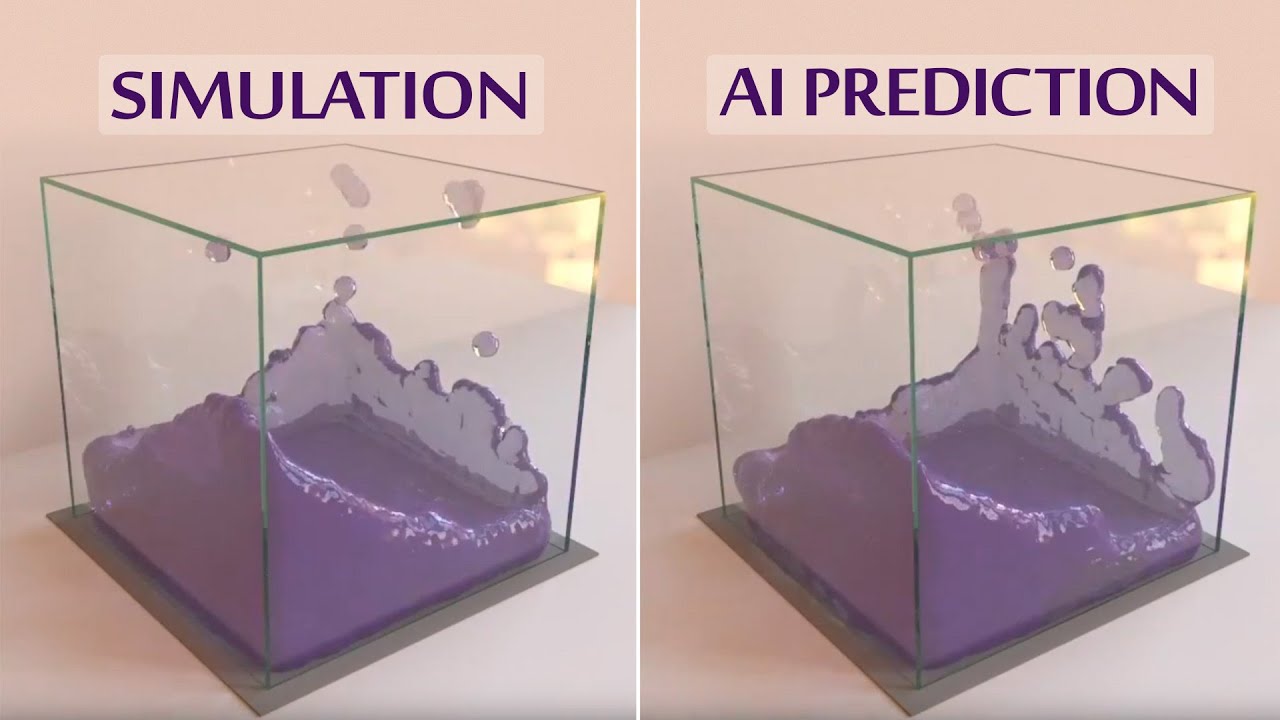
📝 My paper on simulations that look almost like reality is available for free here:
https://rdcu.be/cWPfD
Or this is the orig. Nature Physics link with clickable citations:
https://www.nature.com/articles/s41567-022-01788-5
🙏 We would like to thank our generous Patreon supporters who make Two Minute Papers possible:
Benji Rabhan, B Shang, Christian Ahlin, Gordon Child, John Le, Juan Benet, Kyle Davis, Loyal Alchemist, Lukas Biewald, Michael Tedder, Owen Skarpness, Richard Sundvall, Steef, Sven Pfiffner, Taras Bobrovytsky, Thomas Krcmar, Tybie Fitzhugh, Ueli Gallizzi
If you wish to appear here or pick up other perks, click here: https://www.patreon.com/TwoMinutePapers
My research: https://cg.tuwien.ac.at/~zsolnai/
X/Twitter: https://twitter.com/twominutepapers
Thumbnail design: Felícia Zsolnai-Fehér - http://felicia.hu
Оглавление (2 сегментов)
Segment 1 (00:00 - 05:00)
Okay, this is insanity. An absolute miracle research work. What I will say at first will seem to make no sense, and at the end, you’ll finally be… oh, I get it now, this is fantastic. I hope. I’ll try my best. So, these little dots might be the future of computer graphics, movies and video games altogether. Why, and what are these? These are Gaussian Splats, these can get you a virtual copy of the real world even with difficult thin structures in high resolution and yes, real time. Much, much faster than real time. My goodness, it is so good and it is taking the world by storm. So…how? Well, Gaussian splatting represents objects as countless tiny blobs, like shining a flashlight through a cloud of dust. Then it projects those blobs onto the screen, focusing only where objects actually are, skipping empty space. Absolute magic. Plus, it is fast. And it is fast because it compresses so well, we can create a good-looking scene, by not just storing a bunch of detailed geometry, but instead just storing a few of these Gaussians. This smaller, smooth representation makes rendering very efficient. But it gets better. We can use it to create a scene, but scientists at Intel, AMD and New York University say, hold my paper for a moment. Why not try this on not a scene, but on images instead? This does not sound like it makes a lot of sense, but bear with me for a moment. Earlier I wrote a funny little algorithm that takes a bunch of triangles, and slowly adjusts their positions and colors to rebuild the Mona Lisa itself. So, in this project, they take an input image of the curiosity rover on Mars, compute the edges of this image, computer graphics researchers learn this in kindergarten, and then, initialize a few of these Gaussian blobs based on that. Is this good? Well, not quite. But, remember the triangles from here. Okay, so now comes the magic. Look! Oh my, that was beautiful. But what happened? They added some new blobs, and started massaging them - moving them, stretching them, and even repainting them - until they nearly perfectly matched the Curiosity rover image. It’s like a swarm of tiny paint fairies all fixing these bad spots until the picture is perfect. Absolutely beautiful. We still don’t know what this is good for, but goodness, it is beautiful. And it is fast. Now hold on to your Papers Fellow Scholars because here is how it trains over 15 seconds and…wait a second. I hear you asking, Károly, you accidentally put the reference image here for the new technique. It is not training at all. The previous technique from this year, now that one is training. However, this is not the case. The new one is training too! It is just so fast, I have to slow it down greatly to be able to show you the process of the massaging. An incredible leap forward from a technique that is also from this year. Wow. Now, wait wait. So, we started out from an image, and now, we get an image. We just got back what we started with. How does this make any sense? What is all this good for? Dear Fellow Scholars, this is Two Minute Papers with Dr. Károly Zsolnai-Fehér. Dr. Carroll. Well, check this out. Oh my, yes! You get back almost the same image, but in a file that is 25 times smaller. In some other cases, 40 times smaller. That is absolutely incredible compression. But wait, we are wise scholars here, so we know that many previous techniques exist to do that, in fact, JPEG compression has existed for more than 30 years and is basically impossible to beat. So now comes the moment of truth! Let’s see the file sizes, 159 kilobytes for JPEG, 160 for the new technique. Well, it’s not smaller than a JPEG is it? But, wait a second…oh my goodness! It is not smaller, it is roughly the same size, however, the quality of the new technique is way, way better for the same size. This is so much cleaner. And it just takes a couple seconds to pull off. It is so fast I had to slow it down for you to actually see what is happening. Absolute magic. And it’s not only a good algorithm, it’s also a beautiful algorithm. I’m getting goosebumps.
Segment 2 (05:00 - 06:00)
This means razor-sharp, artifact-free images at tiny file sizes, opening the door to instant, beautiful graphics everywhere - what a time to be alive! Of course, this is a good paper so it contains a bunch of other comparisons too. Check them out in the video description and of course, I’ll throw in my genetic algorithm for the Mona Lisa for free for all of you. And bad news, from what I’ve seen, absolutely nobody is talking about this paper. It seems to me that you cannot hear about it anywhere else. I feel like I am trying to save some endangered species by talking about these papers and if you would like to help this video, leave a kind comment and subscribe, that would help us greatly, and it would help the algorithm show more of these to you too. I’d like to congratulate the authors and send out a big shoutout to them. One of them is Anton Kaplanyan, who is a dear friend and one of my favorite people. Ridiculously talented.