❤️ Check out DeepInfra and run DeepSeek or many other AI projects: https://deepinfra.com/papers
📝 The paper "PARC: Physics-based Augmentation with Reinforcement Learning for Character Controllers" is available here:
https://michaelx.io/parc/index.html
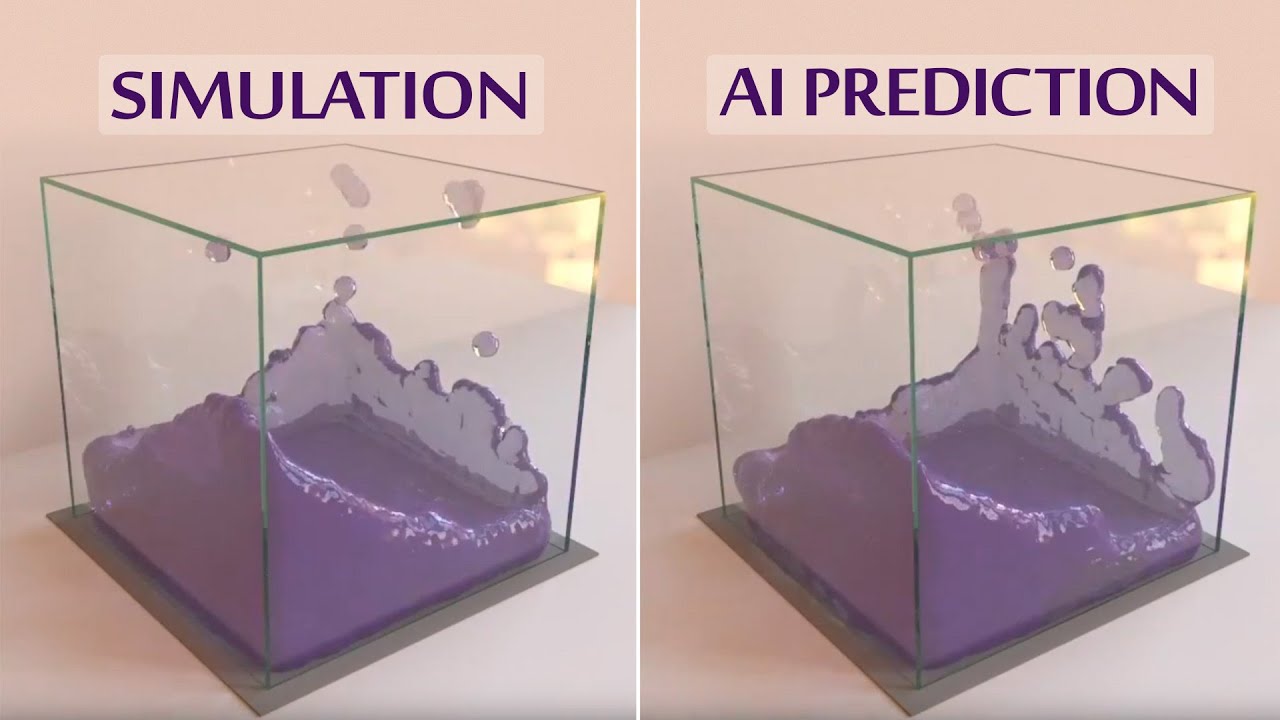
📝 My paper on simulations that look almost like reality is available for free here:
https://rdcu.be/cWPfD
Or this is the orig. Nature Physics link with clickable citations:
https://www.nature.com/articles/s41567-022-01788-5
🙏 We would like to thank our generous Patreon supporters who make Two Minute Papers possible:
Benji Rabhan, B Shang, Christian Ahlin, Gordon Child, John Le, Juan Benet, Kyle Davis, Loyal Alchemist, Lukas Biewald, Michael Tedder, Owen Skarpness, Richard Sundvall, Steef, Sven Pfiffner, Taras Bobrovytsky, Thomas Krcmar, Tybie Fitzhugh, Ueli Gallizzi
If you wish to appear here or pick up other perks, click here: https://www.patreon.com/TwoMinutePapers
My research: https://cg.tuwien.ac.at/~zsolnai/
X/Twitter: https://twitter.com/twominutepapers
Thumbnail design: Felícia Zsolnai-Fehér - http://felicia.hu
#nvidia
Оглавление (2 сегментов)
Segment 1 (00:00 - 05:00)
This is an AI player trying to survive in a challenging game environment, ouch…and it ended up a bit like a parkour simulator. It is also cheating like crazy, but don’t worry, we won’t let it do that. You see, to teach it, we start from motion capture data. You know, motions copied from real humans. It’s a start…but it’s not much. Only 14 minutes of data, you can’t really do anything meaningful with that. Except if…well, here is an incredible idea from scientists at NVIDIA and Simon Fraser University in three steps. One. Let’s use this data that we have. This is the character that you see here. Now look at these characters. What is going on here? Well, two, they create new, randomly generated levels, and three. They use a physics-based engine to create new motions from the new levels and the data we have. So why are two characters here? Why not just one? And what is all this useful for? Well, you’ll see that the result will be absolute magic. Dear Fellow Scholars, this is Two Minute Papers with Dr. Károly Zsolnai-Fehér. You see, new, purely kinematic motions here are dreamed up by the AI, but these can have floating, foot sliding, and other kinds of cheating, so they have to be corrected by a physics engine to create physically plausible motion. Then, we add these new movements to our initially small dataset and grow it. Then, the cycle starts again. We’ll see in a moment what this is good for, but wait a second. We generated new levels, but how do the motions actually happen? What do we, the character do on these levels? Well, they generate paths within these levels, and the character is supposed to follow them, which can involve, climbing, jumping and more. So now the moment of truth! How did it do? Well, after the first cycle of enriching the dataset? Not too great. So, keep going, one more round of enriching the dataset, and then. Hey! Come on man, this is cheating. What just happened? Well, note that the green characters from earlier go through a path, but not necessarily in a physically correct manner. We need to correct their motion. And after doing that, let’s see…now we’re talking. 3 iterations of enriching the small starting dataset with physics-based correction, and now we are in business! And with this, the most incredible thing happened. So what did it learn? Did it just learn to do stuff that it had already seen before? Nope. Not in the slightest. Check this out. One, it learned to combine multiple motions together. Like jumping, holding on to…well, not the papers, but the cliff edge, and climbing up. And now, hold on to your papers Fellow Scholars, and look. Did it survive? Oh yes, and it has crazy skills now…and to think that it learned this by itself. Wow. And now comes my favorite. Testing whether this is really intelligent, how do we do that? Well, we test it on new environments it hasn’t seen yet. And at this point, we understand that the green character is just a dream, and the blue is the one that with its physics corrected. And it seems like these two jolly chaps can finish any level we can make them. So cool! Of course, our choice is the blue one. So, they can do lots of jumping and climbing, I’ll be honest, at this point, I am not too surprised by that. But now, give me something truly different from the previous levels. Climbing a monument, okay, I love that. And there is one point that I was really impressed with. Don’t blink, because it is really easy to miss. Did you see that? Look. After doing the first jump, like most video game characters, it did not stop to execute a second jump, but instead it hopped forward on one leg. It didn’t even stop, and it looked really natural. Loving it! But what we want now is more levels! During the climbing of the spiral, I am liking this, but all this running around made our AI friend a little…. constipated. It’s alright little AI, I won’t tell anyone about it. And we are Scholars here, we love to look into the research works, and two things really took my breath away when reading the paper. One, every clip in the original, small motion capture dataset was converted into 50 different terrain variations. That is incredible. So a single recording suddenly became a rich playground of environments. And two,
Segment 2 (05:00 - 06:00)
it does not require a huge cluster of GPUs to train. Just one graphics card, although an A6000, so an expensive one, and it takes a while too, up to a month to train. Still, the possibility of doing it on one card is incredible. Now, limitations. Not even this technique is perfect. The motion generation itself is a bit slow. It can take about 25 seconds to create 1 second of character movement on a GPU. That's like waiting 4 minutes to see 10 seconds of parkour! But just imagine what we will be capable of two more papers down the line. So, teaching an AI to survive in the dire world of the spire, even when constipated, is now possible. How cool is that? Hopefully coming to games and virtual worlds near you soon. What a time to be alive! It is absolutely crazy that no one that I know is talking about this amazing work. Only on Two Minute Papers.