Join Maker School & get automation customer #1 + all my templates ⤵️
https://www.skool.com/makerschool/about?ref=e525fc95e7c346999dcec8e0e870e55d
Want to work with my team, automate your business, & scale? ⤵️
https://cal.com/team/leftclick/discovery?source=youtube
Watch me build my $300K/mo business live with daily videos + strategy ⤵️
https://www.youtube.com/@nicksaraevdaily
Excalidraw I used in the video ⤵️
https://excalidraw.com/#json=vUZA2DuqAVT-W0YQE9pCD,p4W0rVdQc4EfuKaKyAv7Kg
Summary ⤵️
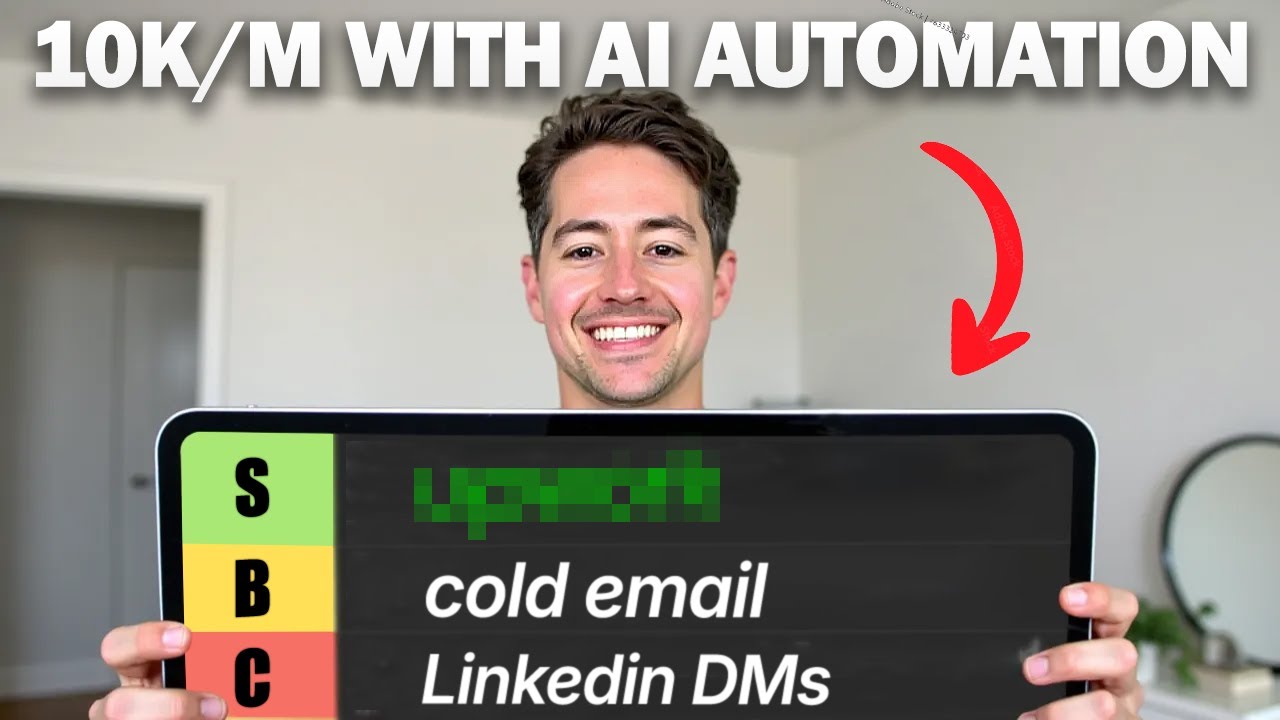
I broke down and ranked the most effective client acquisition methods for AI agencies in 2025—from Upwork to LinkedIn to cold emails and more.
My software, tools, & deals (some give me kickbacks—thank you!)
🚀 Instantly: https://link.nicksaraev.com/instantly-short
📧 Anymailfinder: https://link.nicksaraev.com/amf-short
🤖 Apify: https://console.apify.com/sign-up (30% off with code NICK30)
🧑🏽💻 n8n: https://n8n.partnerlinks.io/h372ujv8cw80
📈 Rize: https://link.nicksaraev.com/rize-short (25% off with promo code NICK)
Follow me on other platforms 😈
📸 Instagram: https://www.instagram.com/nick_saraev
🕊️ Twitter/X: https://twitter.com/nicksaraev
🤙 Blog: https://nicksaraev.com
Why watch?
If this is your first view—hi, I’m Nick! TLDR: I spent six years building automated businesses with Make.com (most notably 1SecondCopy, a content company that hit 7 figures). Today a lot of people talk about automation, but I’ve noticed that very few have practical, real world success making money with it. So this channel is me chiming in and showing you what *real* systems that make *real* revenue look like.
Hopefully I can help you improve your business, and in doing so, the rest of your life 🙏
Like, subscribe, and leave me a comment if you have a specific request! Thanks.
Chapters
00:00 Introduction
00:40 Cold Email
05:41 LinkedIn DMs
09:29 Cold Email & Loom
13:40 Ads
16:58 Communities
23:58 Shortform Content
28:45 Longform Content
31:17 Upwork
37:11 Partnerships
41:52 Dream 100 Outreach
46:16 X & LinkedIn Content
48:45 Outro
Оглавление (13 сегментов)
Introduction
I'm about to rank every client acquisition method currently available for AI and automation agencies. These are the same acquisition methods that I use to scale my agency to 72K a month and they're the ones that are currently being used by thousands of people across my communities maker school and make money with make. Here is a tier list. This is how I'm going to be ranking it. I have a bunch of different options down below. So, I'm just going to drag them onto the applicable place when it comes time to do so. And I'm also going to run you through not only what the opportunity is, but some of the drawbacks, some of the pros, and then even how to actually get up and running with this today because I want this to be an actionable video. Okay? All right, let's get into it. The very first and probably most important client acquisition method that I'm sticking at the very front of the video because I want everybody here to hear it is cold
Cold Email
email. So, I would rate cold email right off the bat as S tier. Now, cold email is fantastic. Why? Well, there are a couple of benefits. The first is that you have very consistent and predictable return on investment compared to content methods, which I'm going to talk about in a moment. A lot of people dive right into content without actually building any sort of outbound lead flow, which I think in AI and automation is a big mistake. You also get direct access to decision makers at scale. These are people that honestly the vast majority of us would never be able to talk to if it not were having a straight line directly into their hearts and their minds, aka email inbox. It's sort of like the one thing that's shared between everybody on planet Earth. Whether your salary is $5 a day or $5 million a day. Simple numbers game with clear metrics. When you get good enough at this stuff, you literally will have some sort of inbound amount of money. It'll flow through your cold email system and then you will have some sort of multiple on that money that you spent. So, you know, we got $1 sign here, $3 signs. When you scale up cold email enough and you know what you're doing and you're good enough, you will literally put a dollar in and you'll make like $5 or $20 back. and you will be able to do that reliably and consistently. You have very low cost per meetings compared to paid ads. Currently, I say we have a 3x to 4x multiple on some of the other methods I'm going to talk about here. And then ultimately, you get to implement this very rapidly and get quick results. Okay. Now, in terms of some tips, let me give you some casual conversational copy will outperform formal approaches. What I mean by this is if you use acronyms, if you use slang, if you actually intentionally lowercase specific parts of your email, people are more likely to respond to that because they treat you as a real human and not a, you know, robot or templated sequence or whatever. So, even if you're using robots or templated sequences, you can actually imply that it was human written by you, if you're smart about it, and then lead to significantly higher response rates and reply rates. The second major tip is if you respond quickly, it will dramatically affect your conversion rates. If you respond within 60 seconds, which I know is kind of crazy and a lot of people are like, "Respond to an email in 60 seconds? What the hell's wrong with you? " You will have something like, we think we've all heard this metric at this point, a 396% improvement in downstream conversion rate. So, this means literally you could 4x the amount of money you're making today with a cold email campaign if you just get back to people within a minute or something of that nature. The exact statistics vary depending on the client acquisition method, but just across the board, you respond to people fast, you're going to get results fast. So, set some sort of notification. pass through Slack thing or have your phone make a ching noise every time you get a cold email. Whatever it takes for you to get back to it and respond ASAP. Last but not least, strong guarantees significantly improve response rates. I highly recommend having a guarantee in your cold email. It's the number one way of standing out. If you don't have guarantees in your cold emails, I want to say that you can't really compete in this space. That's sort of like the thing that everything else hinges on. So you guys are going to have access to this sixcala draw, but we have a bunch of gotachas on the lefth hand side and a bunch of positives that sort of outweigh those gotchas. I'll let you guys look at all of this in your own time. Let's now get started with the mechanism. So how do you actually go about and do this? Right now the best way to get a cold email campaign up and running and this works as the time of this recording by the way, but lead genen methods change, audience building methods change. So this may not work exactly pound-for-pound, you know, by the time you're watching it, maybe in a couple of months or so, but essentially you start with two services. One's called Apollo and the other's called Appify. Apollo is a database of leads. Apy is a scraper that lets you scrape those leads for a lot less money. And then you use these two tools to basically scrape a list of leads, maybe like a thousand leads in a specific niche with filters. You'll say, you know, I want you to be within 1 to 10 people company size. I want you to be located in San Francisco. I want you to have a keyword of automation somewhere in your business name. I want to focus mostly on people that are they have the term owner or founder or partner or CTO or CEO or CIO or CEO somewhere in their you know like bio or something on social media. Um you can actually build that list. You get a thousand of those people right off the bat. Then you can actually send a bunch of emails to them using infrastructure. What infrastructure? I focus on a platform called instantly. You can also do another platform that has been picking up over the course of the last few months although I personally think it's at least a little bit better called smart lead. I'm actually affiliated with both in so far that I have like affiliate codes. So, if you guys do end up signing up for any of those, I have a description in my bio. Just note that you are also going to be giving money to me. And I don't know how many of you guys hate me, so be wary of that. Um, once you launch the campaign on instantly with your fantastic copyrightiting, you then just monitor replies. It's sort of like a three-step sequence here. If there's a positive reply, you respond within 5 minutes, aim to book a discovery call, and close the deal. If you get no reply, they automatically pump into a follow-up sequence, and you basically just repeat this over and over again. Then, if you get a negative reply, you just categorize the objection. This is really important. Not a lot of people do this and I haven't talked about it too much, but you have to categorize why the person said no to you. Did they say no to you because they want you to unsubscribe? Well, that's actually a different category than them just saying, "Hey, I'm really sorry, but it's not the right time right now. " Why? Because people that ask to unsubscribe from your email are actually different from people that say they're not interested right now. You could actually reactivate the people that say they're not interested right now if you're smart about it. And you could recoup some of those costs. So, you have to categorize the objection. Then from there, you will know what your problem was. And then you can kind of start and go all the way back up here and cycllically and consistently improve your flow. So that's cold email. The next up is
LinkedIn DMs
LinkedIn DMs. So I would rate LinkedIn DMs as of the time of this recording. Let's go back to our lovely ranking chart here as a tier. Okay, LinkedIn DMs are great. They're not incredible. They're not as scalable as cold email, but they're still pretty damn good. You have to basically do cold email with LinkedIn under the constraints of a platform. And that has pros and that has cons. What's a big pro? Well, the pro is you get to use your network and the subsidiary like content around your profile as supporting material for your pitch. Think about it. When you send an email, what do people actually see? They see your first name. They see your last profile pick. And then basically everything else is just like you trying to convince them that you have access, you know, that you're this big super cool person that can deliver on the promises. With LinkedIn, instead of just telling people stuff, you could actually show them stuff. So, it's pretty powerful in that way. You also obviously get direct access to business decision makers in a context that they are on for business purposes. You could do a connection first strategy which outperforms cold message requests. You can drop voice messages which is really cool. There's a couple of tools out there that'll actually allow you to like pre-record voice messages and nowadays even use AI to swap out a person's name. Hey Bren, hey Peter, hey Sean, and then deliver something that sounds customized. And then you can do a bunch of other things essentially to maximize the probability of your LinkedIn message or connection request being seen. But the main downside here is this. It's the 20 to 30 daily connection requests. The way that it works is as of the time of this recording, you basically have to stay somewhere between 100 to 150 per week. Sometimes I think it's 100, other times I think it's 150. What that means is, you know, let's think about it like five business days times uh 20 messages is 100, right? So you're basically constrained to this. Contrast that with cold email where you could send a ton more outreach and sure maybe a little bit lower quality, but you can send like 500 times the outreach if you have the infrastructure for it with basically no downside. If you wanted to do that LinkedIn, you'd have to start getting into, you know, kind of some black hat methods like buying accounts and stuff like that, which while doable, I don't really recommend just for scalability reasons. Okay, so we got a bunch of cons on the lefth hand side, mostly related to the daily number of connections, and we got a pros on the right hand side that are mostly related to just the positives. You get to use your LinkedIn posts as like supporting infrastructure for the point you're making. And basically, you get to show people how valuable you are. How do you actually get up and running with LinkedIn outreach? It's pretty easy. Step one, you know, build yourself a list. Same energy as before, Apollo, right? You can use a to a tool called LinkedIn sales nav which allows you to put together things based off parameters like I was talking about before. Okay. You can also engage with content. You can do this in manual or automated means. Engaging with content means liking posts leaving comments down below posting funny memes related to the person's post or something. And then from there what you basically do is on LinkedIn you will send a connection request in that connection request. Okay. There will be a little spot where you could write your own message. And then that message here could include I don't think you can do this on the first connection request. I was thinking it would do this through voice, I believe, unless LinkedIn changed something. That message can include a bunch of text and then after they accept, you might drop like a VM or something. Lots of cool tools currently available to help you do this. You could do this through Phantom Buster, and that's one. You could do outreach through Expandandy. That's another one. You do outreach through a variety of these sort of like automation tools. I think there are three or four other ones, but I'll leave it at there because I don't want to overwhelm you guys. Once the connection's accepted, then obviously you could proceed down the rung, right? Send a value first message. Share some relevant thing to them that increases value. Ask a thoughtful question. Share a case study and suggest a discovery call. Then if they're interested, you can book a meeting. Go sell them. If not, though, think about it. If not, you still gained a LinkedIn network person. You still gain somebody in your network. That's great. This is the easiest way to do follow-ups with people. Way better than cold email because now you're not just saying, "Hey, you still here? " Now you're actually just showing them how valuable you are. Because if you build a cool LinkedIn network, now every time that you post, it's like a follow-up. It pings them. reminds them who you are. And then you can also get tons of likes on your post, engagement on your post, stuff like that to basically say, "Hey, look how cool I am and how many of these other people find me serious. Why don't you send me a DM or follow up that way? " I think that's just way better. It's just, you know, a general follow-up mechanism than cold email. So, it's great. Um, the one downside is obviously the volume. All right, let's do number three. Cold email and Loom. So
Cold Email & Loom
hopefully you guys know, I've talked a lot about this, especially recently. The cold email and Loom approach is actually fundamentally different to the cold email approach because what you're doing is instead of just sending somebody a cold email with like an icebreaker and then pumping them into a templated sequence. What you're doing with a cold email on a loom is you're actually like going on somebody's LinkedIn profile or Instagram profile or website or funnel and you're recording a video of you breaking that down and then offering some piece of value to fix it or make it better. You're literally going on my Instagram and you're recording a video being like, "Yo, Nick, I love your stuff. I've been following you for a while. I wanted to make you $5,000. It's going to take you less than 30 seconds. Let me show you uh a quick hack that I would do in your shoes. You could take it. You don't have to work with me. You could farm it up to somebody if need be. Um that you could literally make a couple of tweaks here and then significantly improve your bottom line. Then you point out some minor fauxaw or problem that they're making or something like that and then give it to them and then try and reach out to them over cold email. And you can also combine this with other social media based outreach methods. But essentially what you're doing is you are offering a ton of value up front. then you're associating it with yourself, with your character. Um, and this gives some of the warmest responses. Obviously, the main issue here, right, is the scalability of it. So, yeah, we're combining cold email with personalized screen recordings. It's a great balance between personalization and scale if you're smart about it. Um, the way you kind of hack this together is you have some sort of thumbnail in the email that you send over, okay? Because the email will actually show the first few frames of the recording with the prospect's assets. where you know the prospects Instagram page and you zooming in on something to make a change to it or something or maybe some big spreadsheet that you developed with a bunch of data um that you're just giving them or maybe a big list of YouTube titles or something that you're going through in the video. You can actually do this for free. What's crazy is Loom offers, as of the time of this recording, 5 minutes for free, which means if you keep your pitches to under 5 minutes, you could literally get this up and running, get your Gmail inbox and just start sending. It's not a big deal as long as you have access to leads somehow. And as you've seen, those leads can be pretty cheap. The Apollo app scraper I talked about earlier, I think there's like a $120 or $150 per thousand leads as of right now. You could literally get all this stuff up and running for $0 in the outreach side, maybe like three or four bucks in the lead sourcing side. It's easy. Now, if you combine this with a multi- channelannel approach, so if instead of just sending an email, you also get a LinkedIn profile or some other thing, Instagram, DMX, uh whatnot, um you'll significantly improve the likelihood of somebody seeing that video. And if you think about it logically, you just spend a bunch of time recording that video and trying to fix a problem for somebody and doing research. So this is how you recoup the sunk cost of you investing into that asset that you just made. If you want to do 15 outreaches, that might take you maybe an hour or so. I'm sort of spitballing here, but usually you'll get good enough that you'll be able to record your video in 2 or 3 minutes, and then it'll take you a couple other minutes to like set the person's asset up and get all that stuff out. But uh yeah, this the way that I see this nowadays, honestly, is this is like the modern cold call. It's actually better than cold calls because people see it as being more respectful of their time. And then it's also async. So the person doesn't need to be available on the other end of the line right now in order to read your thing. And that's increasingly important in a globalized society where you're talking to somebody in a 16-hour time differential. Okay. Much higher response rates than standard cold email. So how do you actually do it? Well, you got to scrape the targeted leads like I talked about, visit some sort of asset, prospect's website, LinkedIn, social media, record your video, personalize the first few lines of your outreach. You can do this using AI as well like I talked about before. and then send via email and LinkedIn. If you don't get a response, pump them into a follow-up sequence because you want to maximize the probability they're going to see this because you invested all that time. But if they do get a response, follow up immediately within a minute. Book a disco call and close the deal. And the deals here, guys, because they're warm, they can be a lot more money than any other deal. When you offer a tremendous amount of value right off the bat like this for free, people that are making money like you and want to have you on the team. How do I know? Because this is exactly how I hire. If I want to work with somebody, basically everybody on my team at some point sent me some customized asset, customized piece of value before I even started a formal working relationship. And most of the time they do it for free because that blows my freaking socks off. And it's not just me that's like this. It's basically everybody else that's at like a high level, at least in my space right now, which I'm categorizing as info. All right, let's move on to the next one
Ads
which is ads. Ads can be really, really good if you know what you're doing. The issue is not a lot of people know what they're doing. So, I'm going to grab ads. And I am personally going to rate them as C-tier, much lower than most other people are probably going to think. Well, I've tried running ads a number of times for my own ad automation agency. I've also heard and seen dozens of stories now of people trying them in my maker school and make money with make communities to no avail. For whatever reason, we have just been all collectively unable to make ads work in any sort of scale. There are a couple reasons for that. The biggest one is probably the testing budget. Okay, in order to make ads work, you have to spend a lot of money. money so that the algorithms, a meta or Google's PPC or whatever ad platform you're using, can basically get enough data to optimize the people that they're showing it to, the times and then the ways that they're showing it to. The issue is in order to get to the point where you know it, you typically have to spend a few thousand. Now, AI and automation agencies, one of the main benefits is how low the barrier to entry is. You don't actually need a ton of money to start the business model. So, what do you naturally have as a byproduct of that? a ton of beginners, a ton of people without much disposable income. between, you know, zero and $1,000 of capital they can invest. You don't really have the time, energy, and money to spend on ads to validate and get them to a point where you can actually produce a return on investment. That capital expenditure just it doesn't really exist for a niche. Okay. If you do end up going this way, here are some tips that I've taken from a few people in my communities that have made this work at least like a one to twox rorowass, which is not good at all. Our rorowass stands for return on ad spend. So if you have a 2x, you spend $50 and you make $100. Well, that means that your advertising budget was 50%, which means this is, you know, 50% margin right off the bat, which is not very good, but whatever. Um, Google search outperforms Meta for B2B automation services. Having a multi-step funnel outperforms direct to call approaches. Industry specific campaigns are going to deliver much, much better results because everybody is of the mind that their industry is special and super magical. Hint, they aren't. Um, if you want to start at the low end, I'd say you need between $500 to $1,500. Although I've also seen this run people ragged like they get to like 5k 10k spends before they see any sort of like Google ads or meta result which is really unfortunate. And then a big thing that really works well or the thing that is going to make this work as well as it could be is having some sort of case study. Okay, you need to have case studies where you've shown a person very similar to the customer actually make money using these systems or using these flows. Creative refresh every 2 to 3 weeks to prevent ad fatigue. I think you can go longer than that personally but yeah. Okay, so here are some pros and some cons. How you do this? Focus on industry specific campaigns. Okay, you basically whip up a landing page. Then you create a lead magnet of some kind. The lead magnet is going to live on the landing page. You're going to host it there. And then in exchange for the person downloading the lead magnet, you're going to ask for their email address or some sort of opt-in with their phone number and whatnot. Then you have some nurture sequences where after the person comes in, gives you their email addresses, you kind of cycle them, right? And just uh build up value, give them more free stuff, get them to the point where they're ready to call, and usually have some sort of pitch in that nurture sequence. And then yeah, you launch the testing. If it's not profitable, which it won't be, you're going to adjust the targeting creative, and you're just going to do this loop over and over again. If it is, you'll just scale the budget, reimplement retargeting, do some continuous creative testing, and then optimize a conversion path before expanding to new audiences later on. And what is profitable? I don't know. You need like a few multiples in the row for sure. Depends on the rest of your business, but as you can see, I'm not a big fan of ads. I don't really find that they work super well, so they're not usually my recommendation. Just wanted to be upfront with that. All right, let's move on to communities.
Communities
Facebook, school, Discord, Slack. How exactly would I rate them? Well, communities are a free outreach method for the most part that as of the time of this recording, I would rate as a tier. Okay? So, they're nowhere near as good. By the way, don't treat this as like, you know, this is like uh 0 1 2 3 4. Okay? Treat this like 0 5 10 uh 100 and then a thousand just in terms of strength. This is basically I think this is a logarithmic scale. Okay, so um S tier is an order of magnitude better I think than A tier, which is an order of magnitude better than B tier, C tier, and so on and so forth. So communities, for people that aren't aware, we currently live in kind of an unprecedented era where this business model has come up called communities, which I'm making a lot of money in. I think I'm the fourth or fifth person by revenue on school platform right now, which is pretty big considering I knew nothing about communities a little while ago. But uh they're basically a combination of a bunch of things. Okay, you know how before you would have let's say online courses and then you would also have groups slashforums like Reddit coaching then you would also have like other services like templates and stuff. Well, you know what's really cool is communities are basically a modern solution to all of these that combine them all. They give people templates, online courses, groups and forums for them to connect with people, coaching and nowadays people even doing meetups, okay? and they kind of combine them all into one product like u my community make moneywithmake. com or maker school which are currently hosted on the school platform which is one of many community platforms that's why I put the school logo there okay so what do communities give you really right off the bat they give you direct access to pre-qualified audiences that are interested in your solutions why cuz if you're selling to videography people videographers wedding photographers whatever and you join a videography or a wedding photography community everybody in there is going to be exactly the sort of person that you want to talk to they're going to the people that are interested in growing or expanding their business. Obviously, very beneficial from a B2B perspective if we're selling A and automation solutions. And they're willing to go out and get a digital footprint to do it and then share their problems and and brainstorm solutions with other people in their niche. They're literally about as qualified an audience as you can get to be honest. Okay. So the key though is and what a lot of people get wrong with communities is in order to make them work you need to build a reputation and usually the way you do so is one consistency you need to show up often just be a presence then two you need some sort of free value creation okay you need to be giving people stuff answering questions doing Q& As's recording videos helping and so on and so forth now because a lot of the time these are gated you get much higher conversion rates than public platforms and because you have access to people directly in your niche a lot of them with a lot of money and you get those high conversion rates and a reputation and authority, these relationships can be super strong if you play your cards right. My recommendation is usually the people that see the most success with the stuff will go above and beyond. They will make posts maybe on a weekly basis inside a specific set of communities offering value to solve problems. And then everybody that likes, reacts, or ask questions to that post will then get a DM from that person being like, "Hey, just saw that you asked a question about the post. Just wanted to give you some more data, some more information in DMs cuz I didn't want to clog up the feed. Here's a bunch of more value. uh let me know if you have any questions. Okay, this approach works really well. Another thing is in communities you don't just get people that are willing to buy your services but you also obviously get a big network of people. Okay, um that may or may not want to work with you right now. The best way to go about scaling community based outreach is once you've assembled this big network, what you do is you just send a message to the 50 people that are frequently liking and commenting on your posts. Then you ask for referrals. You don't actually ask them directly. You just say something like, "Hey, how's it going? " So, you know, as you probably kind of figured out while I've been talking with you, I do AI automation work specifically for the wedding videography niche. As I alluded to in my last post, um I was just wondering if you knew anybody that might be able to benefit from my service. The reason why this is valuable is because instead of you saying, "Hey, can we work together? " Which potentially burns the network later on. You're saying, "Hey, do you know anybody that might be interested in my service? " And if they are interested in your service, well, they're going to want to work with you. And then if they aren't, they're going to look through their network and try and recommend somebody else to work with you. And then if they really, really aren't, then you're just going to get a no, I'm really sorry. Sorry, I don't have anybody in my network. But you're still going to have them in your network. You know what I mean? You're going to get to benefit from their social proof. them liking your post, bumping them up to the top of the community algo. It's just non-stop wins. Now, I tried to find averages throughout my communities to figure out exactly, you know, what the ratio is between posts and then clients, but I'll be honest, it really depends. The biggest variable here is the quality of the community. So, Maker School, for instance, I've come to realize is a very unique community in terms of the amount of engagement. Um, so obviously, you know, I'm a little bit biased here. Uh, the more engaged the community is, the more real people talking about real problems, obviously, the more you're going to be able to connect with people. And what I found is there are a lot of communities, specifically on Facebook and older platforms that are not really communities at all. They're just like sales pitches for a dude's specific product that he set up a Facebook group for, you know, 5 years ago, and he just never responds to anything. So, those are dead. You want to stay away from those. If you find a valuable community, something like Maker School that you can join and either pay a small monthly fee for, $10, $15, $20, or get in totally for free on the ground floor, if you make 20 quality posts, downstream, you might generate one to three clients if you follow everything else that I'm talking about here. How long does it take to make 20 quality posts? I don't know. Might take you a week. What does this mean? You could theoretically have a funnel that generates you maybe a client a week or so using communities if you take it seriously and if you're willing to put the effort in. Now, one to three clients may not seem like much, but just keep in mind that the quality tends to be really high, especially if it's a gatekept, closed, and paid community, which costs you money, but then you get to benefit on the upside. Okay, so I think these can be pretty awesome. Um, the way that you do them is you basically get a bunch of niches, whatever niche you want to join, and then do some research to list out all of the relevant communities in those niches. Go top to bottom in the community and just read what are people asking, what are the problems people are having in my community, what are, you know, the main points. You could literally like use the search bar and just type in a question mark. You'll find a list of all the titles where people have put in question marks looking for the answer to problems. You can also use other tools like I think gummy search is one. And then there are a couple of other ones that I just source information from Reddit and then other communities to find problems that customers are suffering from. Once you know the problems, let's say like the top three problems and a lot of them are related to lead genen if I'm honest across most of the niches I've seen. You create a bunch of valuedriven posts. Then you engage with other members posts. Okay? You got to warm up your account and stuff. And then the more engagement you receive, then you follow up with the DMs, offer additional help. If they're interested, you move to a call and then close them. Okay? If they're not, you still get to benefit because you get to ask for referrals like I talked about, maintain the relationship, and then you get to create more posts that then get to benefit from their engagement. So either way, you're going to be skyrocketed at the top of this thing. It's a very positive flywheel. If not, then adjust your content strategy and then start again. Some of you guys will probably be kicked out of groups that you try this stuff in because your messaging is not very good, your positioning is not very good. You don't really know how to float the radar and not look like you're pitching or selling services. But that's okay. This is just like any other lead genen method. The only thing is it usually doesn't cost a ton of money up front. What it is costing you is it's costing you your time. So obviously a lot of beginners have more time than they have money, which is why I thought I would bring this up. Let's move on to the next
Shortform Content
one, which is short form content. short form content is Tik Tok, it's Instagram, it's YouTube shorts, it's the variety of these platforms out there where you can post reels and clips that are maybe, I don't know, 0 to 30 seconds and then you can have them rank really high on these algos. So, where would I put short form content on this tier list? I would rank this as C. And I know a lot of people are probably wondering, Nick, why the hell would you rank this as C, man? Can I change the color of this because I want this to be visible. There we go. Why would you rank this as C? Well, as you will find, I rank the vast majority of inbound methods very low for AI automation agencies. Why? Because it takes a longass time to make something work. And that's a longass time that you're not getting demonstrable return on investment as somebody that probably doesn't have much of a runway in this business anyway. So, instead of making content and blasting it out with a megaphone like services like Instagram and stuff like that allow you to do, if this is your megaphone, oo, I'm actually getting pretty good at this. That actually kind of looks like a megaphone. Don't do that. Okay. What you want, oh man, uh, my Canadian is showing. I don't even know how to draw a gun. What you want is you want a Call of Duty sniper rifle. Okay. Oh my god. Is that what that looks like? That just kind of looks like uh a man's private parts. Anyway, what you want is you want a sniper rifle that shoots the the specific target audience that you want instead of a megaphone which just blasts things out to a ton of people which may or may not actually include your target audience. Okay? Because this is all about scale and it can work really well for scale. As you guys are probably seeing right now with my own channel, a bunch of other short form creators channels. This stuff works really well for scale but it takes a long time to get up and running. this, okay, just works really well at the cost of scale, which is why I always recommend outbound first before you do anything else. So, um, there are some benefits. Obviously, there's a lower barrier to entry than YouTube, which I'll touch on earlier. And there's also the potential for some rapid exposure through recent algorithmic updates like, um, Tik Tok and a couple other short form platforms are now reserving a set number of positions in the feed for people that have low follower counts. So, you know, they basically just want to level the playing field a little bit and then give newer creators the opportunity to rise the top. But the reality is it requires a really high volume of content and every one of these videos usually requires some sort of editing or some sort of overengineering. Um you also struggle with the lead quality. You get a lot of tower kickers on short form content man because these people have the attention spans of freaking goldfish. Okay. Now you do get more engagement with personal branding but it's nowhere near as much as you know another acquisition method. Um algorithms lean towards entertainment content as opposed to actual value content which is a real shame and it's difficult to predict to rely on for consistent client acquisition. I see a lot of people that have YouTube channels with maybe a thousand subs or something like that and their lead acquisition goes, you know, kind of like this. You know, if they were able to take off, like sure, eventually they go like this, right? But most of them aren't. If you contrast this with something like a cold email, for instance, it's usually much steadier and they're smaller variations. Okay? And I think you can scale it up as well. It's just the slope of that line is a little bit lower than a lot of the other ones. All right. So, what is a mechanism to do this? Um, you know, I'm just going to keep it simple. You create a lot of short form content. Talk about whatever the hell you want. Post consistently one to two times a day for a very long time. You know, when I did my long form YouTube, which I'll talk about in a second, I posted every day for 30 days without stopping. And every one of my videos was half an hour. To be honest, it's kind of like what I've been doing recently. And you know what's happening right now? It's in my growth. I'm skyrocketing. So, if you want to make this work, you have to set aside a lot of time in order to do this right. And the time is the cost of the future scalability. That's what you have to treat it like. Now, if you don't gain traction, you have to adjust the content strategy here. This loop, this might take like 3 months. You might literally have made0 for 90 days or more using this. If you contrast that with something simple and repeatable like cold looms or uh LinkedIn outreach or email outreach, I think you'll see that this is a lot less surefire of a path. If you do build a following, direct the traffic to a lead magnet, nurture leads via email and DM, convert to discovery calls, and close clients. For those of you guys that don't know, I currently run an Instagram channel where I'm doing exactly this. We're just about to hit 100,000 followers, which is pretty sick. And we were able to grow primarily by the virality of a couple of reels. A new free AI video generator here at 200k. This one hit 730K. Uh, a couple of these hit a mill, I think. So, um, the only reason why, you know, we're able to do so is because some of these just have like disproportionately higher performing growth than other ones. But, you know, as I'm sure you can imagine, this might work well for me, somebody that has a lot of money that I could rely on and kind of fall back on if the strategy didn't work. I'm just doing research and development expense right now. But if you're new and you really only have a couple months worth of runway, probably not the best idea to be focusing on a method like this, which is scalable and it might work, but it's kind of like starting an Uber, right? Who the hell knows? If you make it, you'll make a billion quadrillion dollars, but in all likelihood, you're probably not going to make it. All
Longform Content
right, let's contrast that with long form content right now. So, if short form content was a C, long form content, like YouTube, is a B. Long form content is what you guys are watching right now. Now, notice how it's still not an A or an S. And the reason why is because it requires a very high time investment. You have very low initial ROI. So all of the same things that I just told you about for short form apply to long form. It's just usually it takes even more time investment in order to grow. The trade-off is okay. It's more effective after building expertise and you get a little bit more sticky clients if that makes sense because people just tend to like listening to you a little bit more if they're the sort of people that are subscribing to your channel. Contrast that with like short form where a lot of the audience that you get are going to be like new people that don't really know you too well that just saw you because of algorithmic boosts. Yeah. Success always follows a hockey stick curve. What's a hockey stick curve? Well, us Canadians say basically this. Okay. It's kind of what a hockey stick looks like. Notice how my hockey stick drawing is a lot better than my sniper rifle drawing is what it is. Played a lot of NHL, not COD, clearly. Uh so, you know, you're basically going to be making zero dollars for the vast majority of your time. And then some inflection point will hit and you'll start getting a little bit of traction. And this might be like 3 or 6 months or something. Then you'll start doing some sort of growth. But again, that's a very long time period before you make a dollar, right? Focus on the faster and easier stuff. Anyway, um the big thing I'll mention is that just without social proof or proven results, standing out is really difficult. If you wonder why I start all of my videos with social proof, like, hey, I scale my agency 72K a month. Hey, I had thousands of people in my community. Hey, I made 170 grand last month. It's because if you don't have social proof or proven results doing the exact same sorts of things that you're telling people, you will just fade into obscurity. The reason why is cuz you see that megaphone example that I gave you earlier? Well, you're not the only one with a megaphone. There's actually a million other people out here with megaphones. Okay? And in any sort of content, you are trying to stand out, but it's very difficult to do so unless you have some sort of proven experience doing the stuff that other people care about. All right? In terms of mechanism, how do you do this? Well, create YouTube content like I did. Build a small audience to start. Once you have that small audience, validate and ask them questions. So, if it works, you gain traction. Obviously, sorry, if it doesn't work, you're going to continue creating content, asking them questions, uh, you know, and trying to figure out an angle that does. If it does work, you'll grow your subbase. You'll ask them tons more questions, which will help you create more YouTube content up here. Convert a bunch of viewers to leads with a sales process and a funnel that converts them into clients, which allow you to scale your content ops. All right, so not rocket science. I'm sure you guys could tell kind of what I was going for here with YouTube, but yeah, basically when you start, always go outbound over inbound. All right, that takes me to Upwork. How do I feel about
Upwork
Upwork? Anybody want to pause the video and maybe take a guess? If you guys have watched my previous videos, you guys should probably know. Where am I going to put this thing? H up here. We make that S tier. Why S tier, man, this stuff works like crazy. Okay, Upwork is an incredible platform. Whereas other platforms require you or um other approaches require you to one define the problem that the customer is suffering from. Okay. Present a solution for the customer and then three justify or convince them that you are the best fit for that solution amongst the millions of other people. Upwork actually solves the first two for you. You're never talking to anybody that doesn't already have a problem you know how to solve. You're also never pitching something that is not a solution that you already understand and the customer already understands. The only thing you actually have to do is you just have to convince them is, hey, why am I the person to pick amongst the 500 other people that are applying for the job. And I know what you're thinking. You're thinking, well, Nick, that sounds really difficult. Well, you're going to have to deal with that problem anyway if you're to do all that other stuff. It's just now you don't have to deal with those two. And if you're a beginner, you don't know how to deal with those two. But dealing with this one's actually a lot easier. Okay. So, what do I mean by all this? Well, you now have direct access to clients that are actively looking to hire for automation services today. They literally put up a post and they said, "Urrent, I'm hiring somebody to build out an AI and automation solution. Okay, I will pay $500. " This is somebody with a problem and with a desired solution, with a ton of pain that wants this problem solved today. You are literally never going to find more volleyball, you know, more of like a volleyball spike just ready to be hit and ready to be scored than this. The cost is you have to pay a little bit of money, okay? But the benefit is you have these two problems solved for you. Now, you're going to have less competition than you might think just because there's a lot of stigma around the platform. Sure, it's low hanging fruit, but it also costs a little bit of money, which sort of is like a barrier to a lot of people and there's a stigma around Upwork where people think, well, you can't really build a real business on Upwork. It's those same people that I have now made hundreds of thousands of dollars more than because if I listen to them when I started my content agency several years ago, if I started my AN automation agency several years ago, basically any business thing that I do, I'll always try Upwork first to validate and see if it's good. I wouldn't have made anywhere near as much money. Okay, the trick is you need to do customized video proposals just like the Loom video approach that I talked about and you'll yield five to 10 times higher response rates. If you put time and effort into solving a customer problem on video, they're so much more likely to get back to you just because there is tons of trash on Upwork. And that's how you stand out, by the way. You record some sort of customized asset and you just give a ton of value. If you're a professional, you'll make it work. 100 monthly applications can yield three or more new clients. And the numbers can be a lot better than this, mind you. Um, way better than this, but I'm assuming that these clients are like chunky clients, you know, like maybe $1,000 to $2,500, not um, you know, like $500 clients and stuff. The way that Upwork works is you guys are going to get like a ton of like a hundred to $1,000 contracts. And a lot of people think, well, I don't want to just do a $100 contract. I want to do a $10,000 contract. That's why I'm doing AN automation. What they don't realize is the second that you've worked with somebody on one project and showed your expertise, well, now you have a client that you can reactivate and upsell later on. Much easier than a totally cold prospect. So, I've had so many gigs go from $100 to maybe $500, then scale all the way up to over $15 or $20,000 over the course of the next year as I repitch them, resold them, then ultimately got them under retainers. The way to crush it on Upwork is to optimize your profile. Just treat it like SEO. Okay, you are a website somewhere and you are ranking for the search term AI and automation. Use keywords, make yourself stand out, make the first few parts of your profile really valuable. It's like a website. It's like make your above the fold really clean and really nice. And then more importantly, get back to people quickly and you're going to do really well. Early applications to new jobs substantially increases chances because the way that Upwork works is basically if somebody's posted a job and then it's more than an hour since they posted, they probably received like 10 other applications. And if somebody's on Upwork looking to hire for a job anyway, odds are they're looking for a short-term solution or solution to a short-term problem. So, they're probably at their desk as the applications roll in. If you want to maximize the probability that you're going to make it, just constantly be browsing, I don't know, one, two, or three times a day. set a couple of calendar notice or reminders or whatever and then apply to the jobs that are posted within the last hour or two um preferentially. In terms of how to do it, um first step is well you need to make an Upwork profile and just optimize one. Sorry, I forgot that um up here. Um but after you make it, okay, is just search for relevant job postings. You know what I do? I literally just pump the search term automation into Upwork. I know it sounds silly, but like you just type Upwork. Then you go over here, you type automation. Okay? And then I literally have access to a bunch of automation jobs sorted by newest. From here, I can filter. Maybe I uh I want intermediate and expert jobs. Maybe I want I don't know. I'm not going to filter out the cost because a lot of people will put budget placeholders at 100 bucks. Maybe I want all of them except for ones that have 20 to 50 proposals. And maybe I just want, I don't know, maybe people in like the Americas or something like that, higher paying or whatnot. Then I just go top to bottom and I will literally just apply to every single one of these jobs. even if they're, you know, up to a few, I don't know, like four or five hours ago, realistically, with some sort of custom proposal or custom asset. Okay, I'll submit the application. If the client does not respond, I just move on. And the way that Upwork works is if they do respond, you now have a message window. And with a message window, you can now follow up with them, which is awesome. So, if they respond once, well, and they don't respond next, you just follow up with them. It's a cycle over and over again. Just add them to a stack. Do uh one follow-up every two days for a month, you know, for every person that doesn't get back to you. Easy to do. You could schedule 10 minutes in the morning the second you get on your upper profile. Just follow up with all your clients first and then make applications. Anyway, after they respond, you schedule a disco call. You submit a detailed proposal usually through the platform. Then you get hired, deliver work, and then request a review and referrals and more work. And then just cycle. It's just this all day, non-stop. Check my upper profile. I made almost $500,000 on the platform. I think $494,000 or something like that now. So, that's pretty badass. All right, let's move on to another lead generation method or client acquisition method that
Partnerships
not a lot of people talk about and that is partnerships. What do I mean by partnerships? I mean basically you create relationships with complimentary service providers, people that are in other niches that need AI and automation services regularly or they have some sort of adjacent requirement where the client is more likely to ask, hey, I know you do websites or marketing. Um, do you know anything about this AI automation stuff? And then you position yourself as a person that can fulfill that work for them. So they say, "Well, I'm not capable of doing that myself right now, but I do know somebody. He's part of my team and he's really, really good that I can connect you with. " Does that make sense? Okay, great. And then usually that company will get a slight referral or affiliate percentage for that. Now, I'd rate partnerships, we go top to bottom here across all the other lead generation mechanisms as a B. Um, because this is a lot less straight line of a path than these three up here. So, cold email/Loom and then Upwork and then much less straight line path than I think communities and LinkedIn DMs, but it's still something that I recommend that we all set up given enough time. Okay, the issue with this is how most other people get leads if I'm honest. Most other people do not have a defined lead generation mechanism where they like can, you know, go out and then send a thousand emails and then get three clients or something. So, they sort of have to rely on referrals. They have to build their networks and partnerships and stuff. And generally, this also just puts you in a much more vulnerable position if you do want to scale because you have to be very nice to these providers. You kind of have to, you know what I mean? It's just a little bit much. Um I much prefer the abundance approach, but um yeah, I would be remiss if I did not at least mention this. So, you create lead exchange relationships with complimentary service providers. Okay. A good list of partners, web design, marketing, SEO, consulting firms. A couple of other ones might be like B2B agency. I mean, really any sort of B2B agency, right? I mean, so that kind of falls under web design, marketing, SEO, but um you know, like PPC, any sort of PPC, B2B agency, any sort of SEO, any sort of CRO, some e-commerce companies can be good for this. Basically, they have to work B2B. That's kind of like the requirement, right? But um what you do is you set up either a formal revenue share arrangement where it's like they um white label your work, as in they say, "Oh, yes, I can do this. Um you know, we have a team member of ours that's really good at it. " And then they pretend like it's their company that's fulfilling the work. or they just do a pure affiliate or referral partnership like I was telling you about before where it's like clear that this is a different company. Oh yes, I know somebody that could do the work and then they send it out. Both of these are fine, but um you know I much prefer doing the referral because it's like a oneanddone deal and I don't have any, I guess, obligations to represent the client's company in this specific way. I can represent my company however the hell I want. Um usually make a little bit less money that way, but it is what it is. You get pre-established trust, shorten sales cycles as a result. My recommendation is after you're done doing the S and A tier lead generation methods, set up some sort of partnership by reaching out to 10 or 15 potential partners, look in your network first. After you're done looking in your network, look in like the community network that you've established. Better if you even work with B2B agencies, to be honest. Then afterwards, maybe you could do some cold calling or cold outreach or just get a list of all the top web design firms or SEO firms that you want to work with and then send them cold emails. You need to regularly check in and give and receive clear documentation to get good results. But yeah, you can generate 30 to 40% of your revenue. If you're like a big agency and you have established partnerships that you've been able to build over the course of the last year, you can make a fair amount of money. Don't say no to partnerships. And in fact, some companies actually run their entire business through partnerships. They make way more than that. It's not, you know, 30 to 40%. It's like 100% of their money. And that's okay. I just wanted to point out to you that I much prefer like the scalable consistent approach even if it's not necessarily the biggest um right off the bat because I just prefer not having my income tied to somebody else. also prefer to like just tying it to myself. Anyway, how do you actually do it? You identify a big list of complimentary service providers. You build some relationship with them before pitching. You provide value first and then you propose a formal partnership. You say something like, "Hey, I know that I get a lot of people asking me for web design consults and stuff like that. Would love to send them your way. I know that you also get a lot of people ask for AI automation or systems. Do you want to formalize a relationship? You can send me a percentage and we can make something like this happen. We can both mutually benefit because we both trust and like each other's services. " Answer to that is yes. You make a simple partnership agreement, develop whatever client materials that we need, email templates, email assets, whatever. Hey, just looping in Nick, who's our guy at insert company. Um, and then have some sort of regular strategy meeting. I mean, you can just do this once a month or whatever, but you know, a lot of people will miss this and when they don't have any sort of regular contact with the referral or affiliate partnership, usually those fall off the map. So, what I personally recommend is just do this, you know, once every one to two months or hell, maybe even do this once every quarter, basically like quarterly partnership meetings. Still, um, I think one to two months is probably better. Anyway, do some sort of regular strategy meeting with these people so they don't like fade into obscurity. And then uh yeah, you know, even if somebody doesn't accept the partnership, just try a different approach later. I'm sure they eventually will so long as you're continuously giving value. Okay. All right. We got a couple left, just two. The first is Dream 100 Outreach. And the last one is X and LinkedIn content. So, what is
Dream 100 Outreach
Dream 100 Outreach? Dream 100 Outreach, to make a long story short, is basically where you guys will find creators and people that you really like and have wanted to work with for a long time, people you really respect. So maybe in your case it' be somebody like me or I don't know somebody like Dan Martell or Alex Herozi and you make like a big list of like the top 100 people that you want to reach out to and contact and whether or not you want to work with them or do business with them. Maybe you just want to have some candid email back and forth with them or something. The idea is you make a list of 100 people and then you actually just like aggressively try and have some sort of contact with them. Okay? And this takes way more time than cold email outreach. This is essentially cold email but it's like hyperspecified cold email. takes way more time than cold email, but you typically get to build much better relationships and results uh because of that. Okay, so where would I rate uh Dream 100 Outreach? I would rate Dream 100 Outreach as B. I treat similar to partnerships, but because you're usually working with much bigger people that are a lot more established and they might not necessarily need your services, you're probably not going to deliver like direct revenue from this. Okay, it's great to have and you can build like a really good network that will make you millions of dollars in the long run, but I don't actually recommend starting with Dream 100 Outreach like some other people do cuz a lot of people have been talking about this recently. So, I'm going to touch on I don't actually recommend Dream 100 Outreach as like your first go. Um, I'd much prefer talking to people kind of like, you know, if this is a big hierarchy top to bottom and this is me, I'd much prefer talking to people that are over here as opposed to over here if that makes sense because I'm sort of fighting an uphill battle here and they're just a lot less likely to get back to you. And I think feedback loops are really important. Okay, so yeah, um this combines social engagement with personalized email. Um one thing that I've seen work really, really well that actually just happened to me a little while ago was basically somebody that wanted to work with me on LinkedIn um actually did a super deep dive breakdown of my entire client acquisition funnel. Then he posted it on his own LinkedIn as a piece of content and a roast. It was incredible. Then he sent it to me over email and I thought that it was just a banger piece of content. He got like 50 people liking it and then that made me think more highly of him because I'm like, "Okay, now he has an established network. " Um, and then he also just uh had a bunch of people being like, "Dude, you got to reach out to Nick. Dude, Nick's really cool. Hey, I've actually heard of Nick. No way. I might be able to connect you and stuff like that. " So, um, I think that's a much better way of doing the Dream 100 outreach than a lot of other people are doing. And, you know, I think that's probably a good way that you could combine both social media and like built-in social proof with personalized outreach. I got to get back to that guy. Actually, I'm thinking about it. I don't think I responded to him yet. Um, custom video audits dramatically increase response rates. Like I was talking about a moment ago, we got much higher time investment, but substantially better conversion. Works really well for high ticket automation services. So very, very high ticket stuff. You know, Alex Rosie was looking for an automations just a couple of months ago. If you pitched him with that at the right time, I imagine you probably could have made something happen. I did not, alas, but what are we going to do? The issue is it requires genuine value creation. You can't just template solutions and you definitely can't spam these people. If any of these people get a whiff that you are spamming them, they are not going to want to work with you. Aka that you are pumping them into a sequence. They're never going to want to talk to you again. That's just how it is. I don't know why we deal with templated and AI automation solutions with the work that we do quite a bit. So, it's sad for me to say it, but that's the truth. You have to make all of your outreach manual and extraordinarily genuine, or at least you have to be so good at building these things out that somebody like me who's worked with the stuff still wouldn't be able to notice. Okay. Then, yeah, just like the uh Loom video outreach, multiple touch points across different channels massively increases the effectiveness. How do you do it? You basically just make a Google sheet list called your dream 100. And you start with just their names. And then what you do is you just have a bunch of other columns like their Facebook, their Instagram, their X, their LinkedIn. You just go, you know, a column for everything. Ideally, then you have one for email. Then you set aside some time and then you find all of these profiles. Then you research the prospect deeply. You might have like a 5minute thing every morning where you just like read through, add as many of them in social media as you can, add them to your feed, and then just interact with all their posts and just comment. And maybe, who knows, maybe there's a chance that they'll actually start recognizing your face. Like I recognize the face of people that comment and engage with my content quite a bit. If I see them come up three or four or five times, I'm like, "Oh, hey, there's Peter. Oh, hey there's Sally. Oh, hey, there's John. " If I then get an email from Peter, Sally, or John, obviously, I'm a lot more likely to get back to them, right? This stops. I'm sure this is going to stop working for me at some point when it hits like a million or 10 million or whatever, but it works for now. And then after that, you build a value bank. Create custom audits and recommendations that are hyper tuned to that particular person. Then send the personalized outreach. If they respond, book a disco call, present the full solution, and close the deal. Or just ask to be in their network. And if they don't, multi- channelannel follow-up, continue your engagement, and then just start the loop over and over again. All right. Okay. Let us now talk about the last bit of outreach, which if I could find it was all the way over here, top righthand corner, which was X
X & LinkedIn Content
and LinkedIn content. Okay. So, this is actually creating content on these platforms um that are not vid that's not video content. Okay. Where would I rate this? As of the time of this recording, I would rate this as a C. Why? Well, as I'm sure you can imagine, many of the same issues with short form content, but they're sort of um expounded upon because video short form and long form is actually better than this. The reason why it's expanding upon this is because X and LinkedIn content, for the most part, you can do videos and stuff. Don't let me um convince you otherwise. For the most part, when people think X and LinkedIn content, they think text content. Um text content is quickly becoming very saturated because large language models now afford anyone the ability to create thousands of reasonably high quality text posts on any subject they could ever possibly want in like 5 seconds. You still can't really do that with video. So there's more of an opportunity for you to stand out in video. Remember those megaphones I showed you earlier? Yeah, just imagine a 100 times that many megaphones. Anyway, you get direct access to business decision makers, which is cool. And I've talked to a lot of millionaires on X before I was a millionaire. And that was nice, right? You can actually just bridge the gap kind of like an email inbox. It's like an email inbox for the world. And we also have higher intent audience than entertainment platforms like IG, YouTube, and stuff that are typically more infotainment. Definitely Tik Tok. Engagement with others content allows you to drive a lot of your results. And then you can also build in public with real case studies. I'm not saying that you can't win with this stuff. I'm just giving you my own tier list on what I would do if I were at the start line of my automation agency. Would I focus on this? No, I would not. I'd rate that as Ctier. Consistent posting obviously wins. You get to relationship build, although it does take a fair amount of time. And then if you are very specific about how you position, if you position yourself as the AI automation guy for X, Y, and Z or B2B growth systems girl for ABC, you know, if that's your niche, you're going to do a lot better than if you're just like the AI automation person. So, the cool thing is that's an approach a lot of people take on X and LinkedIn. become the blank dude, the blank chick. They just niche down super hard, become the thing synonymous with the thing they're talking about, and that really helps the growth. So, there are a lot of people that are doing the same formulas, but I think I'll leave it at that, and you guys can check that out in your own time. Basically, how you do it, you create value content, engage with your target audience, build relationships through comments, become a thought leader in your field if possible, and then finally receive some sort of inbound inquiries. Also, you can follow up with DMs, right? Ideally, you want to combine the two. Hey, I saw that you like my post on XYZ. What's going on, man? Love your content. move conversations to DM, schedule a disco, and convert to client. You notice that literally every one of these involves scheduling a disco call. There's a reason for that. It's because that's how you do things in an automation. That's how the business model works. You schedule disco calls. So, if you guys aren't already scheduling disco calls, if you're trying to build some other new method or something like that to close clients, I'd highly recommend you at least just revisit the disco call stuff. And I mean, if it's working, keep doing the thing that's working, right? And a lot of people are obviously doing the disco call structure. Awesome.
Outro
Hopefully, you guys appreciated that video. had a lot of fun ranking every client acquisition method for AI and automation agencies. If you guys want to learn more about these specific AI automation agency acquisition methods, definitely check out Maker School, which is my 0ero to1 community. We're just coming up on 2,000 members as of the time of this recording. We've grown bigger, better, and faster than I ever could have imagined. Now we're actually, I think, somewhere in the top five on the school games leaderboards, which is blowing my mind. Um, but I increased the price every 100 members just to represent the added value. So if you guys are on the fence and you wanted to join, I think it's over 100 bucks a month. Now, keeping in mind we started at uh low 40s. Um, aside from that, if you already have an established business, you want to make it grow more, definitely check out Make Money with Make, where I take a working business and then I help you scale it up. AI automation agencies obviously fall under that umbrella, but we also help a lot of other business models as well. As long as you found some sort of product market fit, delivering or developing services, you are free to come in and join. I just increased the cap to 500. Um, Concomit with a big price increase as well, just for my own sanity. Otherwise, please like, subscribe, do all that fun YouTube stuff. I'll catch you guys in the next video. Really appreciate all your comments and anybody that's made it to the end, you're a real one.