❤️ Check out Lambda here and sign up for their GPU Cloud: https://lambdalabs.com/papers
Guide for using DeepSeek on Lambda:
https://docs.lambdalabs.com/education/large-language-models/deepseek-r1-ollama/?utm_source=two-minute-papers&utm_campaign=relevant-videos&utm_medium=video
📝 The paper "World and Human Action Models towards gameplay ideation" is available here:
https://www.microsoft.com/en-us/research/blog/introducing-muse-our-first-generative-ai-model-designed-for-gameplay-ideation/
https://www.nature.com/articles/s41586-025-08600-3
Sources (snake game and more):
https://x.com/emollick/status/1894480971648377198
https://x.com/emollick/status/1894441728175677837
https://x.com/levelsio/status/1894468597205856413
https://x.com/deedydas/status/1894110678027571412
https://x.com/ozgrozer/status/1894125497379926101
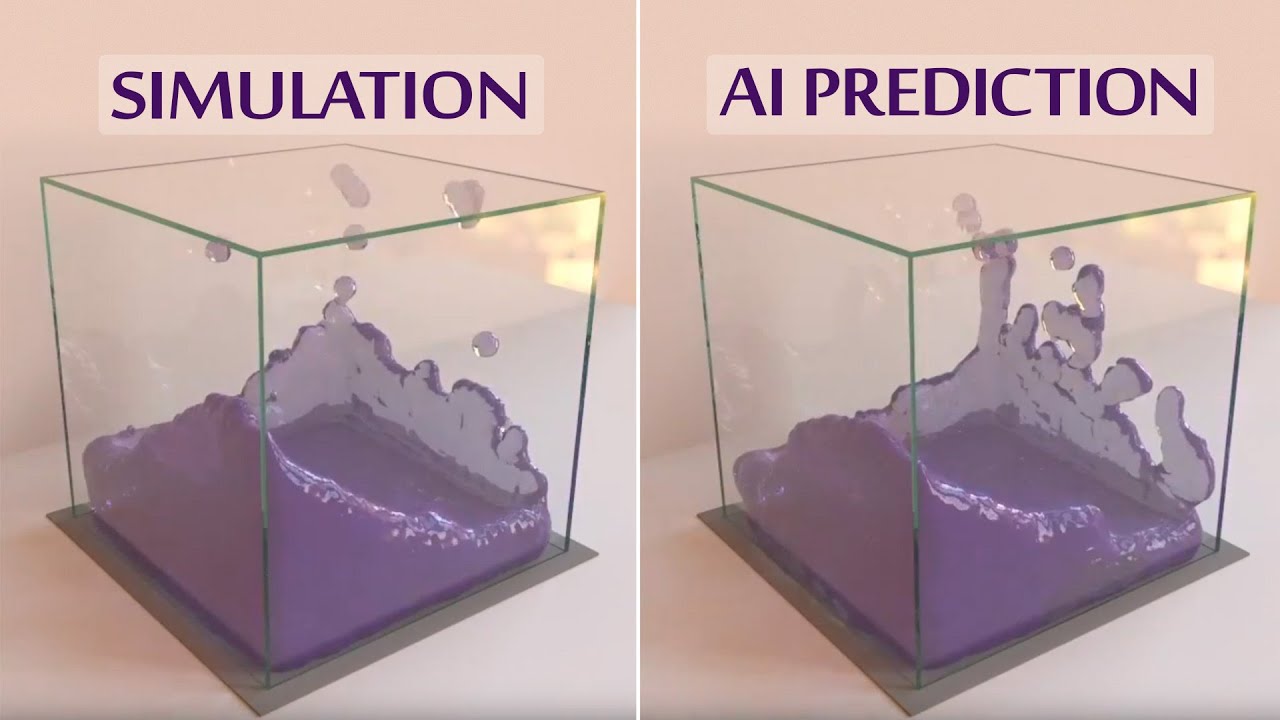
📝 My paper on simulations that look almost like reality is available for free here:
https://rdcu.be/cWPfD
Or this is the orig. Nature Physics link with clickable citations:
https://www.nature.com/articles/s41567-022-01788-5
🙏 We would like to thank our generous Patreon supporters who make Two Minute Papers possible:
Benji Rabhan, B Shang, Christian Ahlin, Gordon Child, John Le, Juan Benet, Kyle Davis, Loyal Alchemist, Lukas Biewald, Michael Tedder, Owen Skarpness, Richard Sundvall, Steef, Taras Bobrovytsky, Thomas Krcmar, Tybie Fitzhugh, Ueli GallizziIf you wish to appear here or pick up other perks, click here: https://www.patreon.com/TwoMinutePapers
My research: https://cg.tuwien.ac.at/~zsolnai/
X/Twitter: https://twitter.com/twominutepapers
Thumbnail design: Felícia Zsolnai-Fehér - http://felicia.hu
Оглавление (2 сегментов)
Segment 1 (00:00 - 05:00)
Scientists at Microsoft just found the holy grail: and that is, of course, finding a way to play video games at work and even get paid for it. So, what is going on here? Well, they have a new AI system that looks at footage of people playing video games, and then, when we give it a new situation, it tries to predict what is about to happen next. You could call it creating games, sort of. More on that later. Now, this is not easy at all, even for these lower resolution videos. Initially, when you start training, you get something like this. Note that the resolution of these videos is pretty low, but, it is enough so that we can already see the bad news: the footage quickly strays away into something completely different. Now, let’s train it for a bit longer. Look, now this is a lot better, we are in the same game, the same zone, jumping is working. We are getting there. And, if we train for even longer, wow, look, we just notice now that the previous one was quite wrong because this should have been not jumping, but flying. Also, interaction with objects like this power cell works correctly too. Okay, great, now our question is, what’s the point? What can we use this for? Dear Fellow Scholars, this is Two Minute Papers with Dr. Károly Zsolnai-Fehér. Well, for instance, you can kind of play with it. You get put into a virtual world, and when you use your controller to choose different directions, it generates the rest of the level and interactions for you. They call it modeling a wide range of human behaviors, I call it going into three possible directions. Although it is really good progress towards AI-based game making, I just want to make sure not to oversell this idea as it stands now. And now comes perhaps the most interesting part: we can not only play with these games, once again, sort of, but we can also change them. For instance, we can put another new object here, and the AI will make sure that it stays there, and that it is interactable. We can also add a new character to the mix, and if we specify it, it will also do something. Now that is really cool. Just imagine just having one promo image for a game, and this can make it come alive. That is fantastic. But as this is at the moment, would I play with it? Likely not. I’ll fire up Civilization or No Man’s Sky instead, thank you very much. However, there are two things this might already be really good for. First, rapid prototyping. You can imagine what your game would look like, but ultimately you have to put in a lot of work to make it happen. But with this, not so much, you can very quickly get a feel of the game and then decide whether you wish to work on it or not. Two, if you already have a game, you always want to tinker with something. You have your what if questions. What if we add a barrier here? How would the game change? Did we break something? Can we still finish the game at all? These questions can now be explored super quickly and perhaps automatically. Loving it. Now, two more questions remain: one, this is not the only way of using an AI to create a game. There is something that you can do right now. You can ask a chatbot like the new Claude 3. 7 to write the code for you for a snake game that is self aware and even does unexpected things. Like escaping the matrix, and more. And it gets better, you know, the Two Minute Papers special, cloth simulation, not a problem. I’ve never seen anything like this done by an AI from scratch. What a beauty! And, Grok 3 can write a simple flying simulator with multiplayer support. It gets a bit choppy, you know, network code optimization is not trivial if you have hundreds of players flying around in real time, but it is kind of possible. That is mind blowing! So, this is two opposing schools for AI game making: bottom up, starting from zero and writing the code. Or, top down, learning from video and generating new ones. Which one is the way to go? Well, both are in their early days, but The First Law of Papers teaches us not to underestimate the pace of progress in AI research. You see, just a couple years ago, this was the state of AI video generation, and today, this. Whoa. And I expect that we are going to look at this pixelated game footage with a smile, and reminisce about the good old times when we couldn’t do it in full HD or even higher resolution. Except that I think it will happen not two years from now. Possibly in less than a year. Now, second question: can this create fundamentally new games, something that
Segment 2 (05:00 - 06:00)
goes beyond the kinds of games it was trained on? I would like to take a guess. Based on what AI can do in other areas, for instance, it can solve new, previously unseen problems in the mathematical olympiad. With that in mind, I would say, fundamentally new games is a question mark for the next few years, but interesting new variants of already existing concepts? That will surely be possible two more papers down the line. This is the power of the papers. I am really looking forward to a future where we can all make our own games like Civilization or No Man’s Sky, right at home, just by talking, and all this in real time. What a time to be alive! This is an incredible paper in the prestigious Nature journal, open access, free for everyone, thank you and huge congratulations. Once again, very few people are talking about this paper, so I really wanted to show it to you. Subscribe and hit the bell if you wish to see more, and as always, let me know in the comments below what you Fellow Scholars think.