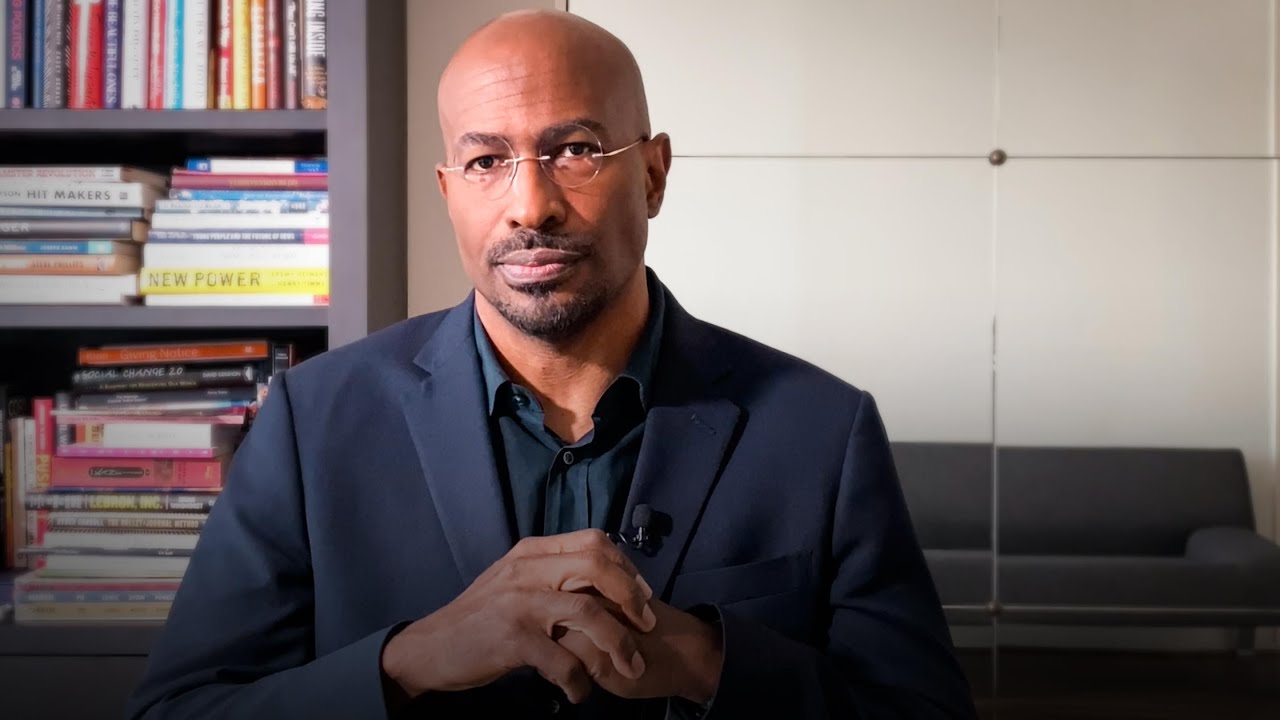
Break the Bad News Bubble (Part 2) | Angus Hervey | TED
8:21

Break the Bad News Bubble (Part 2) | Angus Hervey | TED

TED 21.12.2024 28 907 просмотров 451 лайков обн. 18.02.2026
Поделиться Telegram VK Бот
Транскрипт Скачать .md
Анализ с AI
Описание видео
It's time for our periodic update of good news from Angus Hervey, founder of Fix the News, an independent publication that reports stories of global progress. In a quick talk, he shares three major updates of recent human progress on eradicating ancient diseases, establishing massive new ocean sanctuaries and transforming children's rights. (This conversation was recorded on December 2, 2024.) If you love watching TED Talks like this one, become a TED Member to support our mission of spreading ideas: https://ted.com/membership Follow TED! X: https://twitter.com/TEDTalks Instagram: https://www.instagram.com/ted Facebook: https://facebook.com/TED LinkedIn: https://www.linkedin.com/company/ted-conferences TikTok: https://www.tiktok.com/@tedtoks The TED Talks channel features talks, performances and original series from the world's leading thinkers and doers. Subscribe to our channel for videos on Technology, Entertainment and Design — plus science, business, global issues, the arts and more. Visit https://TED.com to get our entire library of TED Talks, transcripts, translations, personalized talk recommendations and more. Watch more: https://go.ted.com/badnewsbubblept2 https://youtu.be/hKx4HGfNgCg TED's videos may be used for non-commercial purposes under a Creative Commons License, Attribution–Non Commercial–No Derivatives (or the CC BY – NC – ND 4.0 International) and in accordance with our TED Talks Usage Policy: https://www.ted.com/about/our-organization/our-policies-terms/ted-talks-usage-policy. For more information on using TED for commercial purposes (e.g. employee learning, in a film or online course), please submit a Media Request at https://media-requests.ted.com #TED #TEDTalks
Оглавление (9 сегментов)

  1. 0:00 Introduction 72 сл.
  2. 0:30 Egypt Eliminates Malaria 124 сл.
  3. 1:15 Jordan Eliminates Leprosy 196 сл.
  4. 2:37 The Azoro 131 сл.
  5. 3:26 The Chumash 143 сл.
  6. 4:18 McDonald Islands 139 сл.
  7. 5:09 Violence Against Children 142 сл.
  8. 6:00 Corporal Punishment 214 сл.
  9. 7:21 Conclusion 154 сл.
0:00

Introduction

I'm Angus Hervey, and I'd like to tell you about three big stories of progress that have just happened and that you probably didn't hear about. In the last three months, several countries have eradicated diseases that have haunted humanity since ancient times, massive new ocean sanctuaries have been created in some of the most biodiverse places on Earth. And millions of children’s lives have been transformed forever. Let's start with Egypt.
0:30

Egypt Eliminates Malaria

In October, the World Health Organization confirmed that they've eliminated malaria. This is not a claim that's made lightly. A country has to prove it's had zero local cases for at least three years. And Egypt has done just that, becoming the 44th country in history to receive this certification. What makes this extraordinary is the historical significance of what they've overcome. Malaria in Egypt has been found as far back as 4,000 BC, with genetic traces evident in Tutankhamun and other ancient mummies. Every pharaoh, every dynasty, every era of Egyptian history has had to contend with it. Malaria has survived the building of pyramids, the fall of empires, the rise of modernity, but now, after 6,000 years along the Nile, it's gone.
1:15

Jordan Eliminates Leprosy

It gets better. In September, Jordan did something no country has ever done before. They eliminated leprosy. Yep, that leprosy. The one mentioned in the Bible, in ancient scrolls, in sacred texts across the world. For thousands of years, people with this disease weren't just physically afflicted. They faced complete isolation from society. Parents were separated from children, communities were torn apart. That means Jordan didn't just defeat leprosy itself. They had to overcome centuries of stigma and build a health system that could catch any new cases before they spread. This is what hidden progress looks like: persistent, methodical, transformative. The result? A true modern-day miracle in the Middle East. And Egypt and Jordan aren't alone. In the last three months, India, Vietnam and Pakistan have conquered trachoma, the leading infectious cause of blindness in the world, and Brazil and Timor-Leste have defeated elephantiasis, a devastating disease that turns limbs into painful, swollen appendages. Each of these victories represents hundreds of thousands of lives transformed, families restored and communities healed. And as we witness the end of these ancient diseases, we're also seeing the beginnings of the largest wave of ocean protection in human history.
2:37

The Azoro

Picture yourself in the middle of the Atlantic, about 1,500 kilometers west of Portugal. Here sits a chain of nine volcanic islands called the Azores, where something remarkable just happened. In October, they officially created the largest marine protected area in the North Atlantic, equivalent in size to the entire US state of Arizona. It's not just the enormous size that matters, it's what they're actually protecting. The Azores sits at a crucial ocean crossroads, and deep beneath those waves lie coral reefs we're just beginning to understand, underwater mountain ranges teeming with life and a vital corridor that links marine species between the Americas, Europe and Africa. Half of this area will now be completely off limits to fishing, while the other half will only permit very selective, sustainable catches.
3:26

The Chumash

Equally exciting is what's happening on the other side of the world. For at least 13,000 years, the Chumash people have lived along California's coastline, maintaining a deep connection with the land and ocean. Now they've just won a historic victory, creating one of the largest marine sanctuaries in the United States and the first to be nominated by Indigenous peoples. This area is an important and vibrant ecological transition zone, home to a plethora of seabirds, marine mammals, invertebrates and fishes, as well as vast kelp forests that are like the rainforests of the sea. Each square kilometer stores as much carbon as 20 square kilometers of forests on land. This isn't just about conservation. It's about recognizing that Indigenous peoples have been the stewards of these waters for hundreds of generations, and now they'll officially guide their preservation for many more.
4:18

McDonald Islands

And then, down in Antarctica, in October, Australia made history by announcing it will quadruple the size of its Heard and McDonald Islands Marine Reserve, located in the southernmost reaches of the Indian Ocean. It's among the last truly wild places on our planet, home to crucial feeding grounds for penguins, seals and whales and multiple endangered species. This means Australia will now protect 52 percent of its ocean territory, more than any other major nation on Earth, and way beyond the global target of 30 percent by 2030. While environmentalists say there remains critical habitats that have been left out of this expansion, these new protected areas do represent a fundamental shift in how we think about our oceans, not just as resources to be used but as ecosystems that we need to preserve for our own survival.
5:09

Violence Against Children

But perhaps the most profound transformation we've seen in the past three months isn't in our oceans or in how we treat diseases. It's in how we treat our children. In early November, while the eyes of the world were on the US election, an event took place in Bogota, Colombia, that quietly signaled what may eventually prove to be a far more fundamental shift for humanity. At the first ever UN Ministerial Conference on ending violence against children, five countries: Burundi, Czechia, Kyrgyzstan, Sri Lanka and Uganda pledged to end corporal punishment in all settings, building off the back of another 12 countries, which include Bangladesh and Nigeria, who recently accepted recommendations to do the same. In total, an unprecedented 100 countries made some kind of commitment to ending violence against children at this conference. The significance of this is profound.
6:00

Corporal Punishment

Right now, a billion children, that is one out of every two kids on Earth, experience corporal punishment. In some places, it's so common that almost every child reports being hit or beaten at home or at school. You might be wondering, is that really such a big deal? Well, 50 years of research shows it doesn't just cause physical harm. It rewires developing brains, leading to increased aggression, lower educational achievement and higher teen suicide rates. The World Bank estimates that school violence alone costs the world 11 trillion dollars in lost lifetime earnings. But here is the hopeful part. When countries ban corporal punishment, things change dramatically. Take Germany. A generation ago, 30 percent of young people reported being beaten to the point of bruising. By 2002, two years after the government passed legislation banning that practice, that number had plummeted to three percent. So these 17 countries that have just made commitments or adopted recommendations are home to hundreds of millions of children who will now have a chance at a less violent future. And momentum is growing, too. There is now a global commitment to end all violence against children by 2030, and 67 nations have already done so. These new pledges represent a crucial step towards achieving that goal.
7:21

Conclusion

So in just the past three months, we've witnessed some genuinely good news: ancient diseases vanishing, vast ocean areas being protected and children's rights being transformed. Each victory seemed impossible not that long ago. Each one required years, sometimes decades, of patient, persistent work. And each victory shows us something crucial about human progress. It often happens quietly, away from the headlines, but its impact ripples across generations. Will Egypt's triumph over malaria create a road map for other nations? How will these new marine sanctuaries reshape our relationship with the oceans? And as more countries reconsider how they treat their children, how will that change the face of human society? We'll keep tracking these stories here in the months ahead, because the victories we've discussed today aren't endpoints, they're beginnings. Whether they make headlines or not, they're gradually building a different kind of future. And that future is closer than you might think.

Ещё от TED

Ctrl+V

Экстракт Знаний в Telegram

Транскрипты, идеи, методички — всё самое полезное из лучших YouTube-каналов.

Подписаться