❤️ Check out Lambda here and sign up for their GPU Cloud: https://lambdalabs.com/papers
Guide for using DeepSeek on Lambda:
https://docs.lambdalabs.com/education/large-language-models/deepseek-r1-ollama/?utm_source=two-minute-papers&utm_campaign=relevant-videos&utm_medium=video
📝 The paper "Agent Laboratory: Using LLM Agents as Research Assistants" and "Can LLMs Generate Novel Research Ideas? A Large-Scale Human Study with 100+ NLP Researchers" are available here:
https://agentlaboratory.github.io/
https://arxiv.org/abs/2409.04109
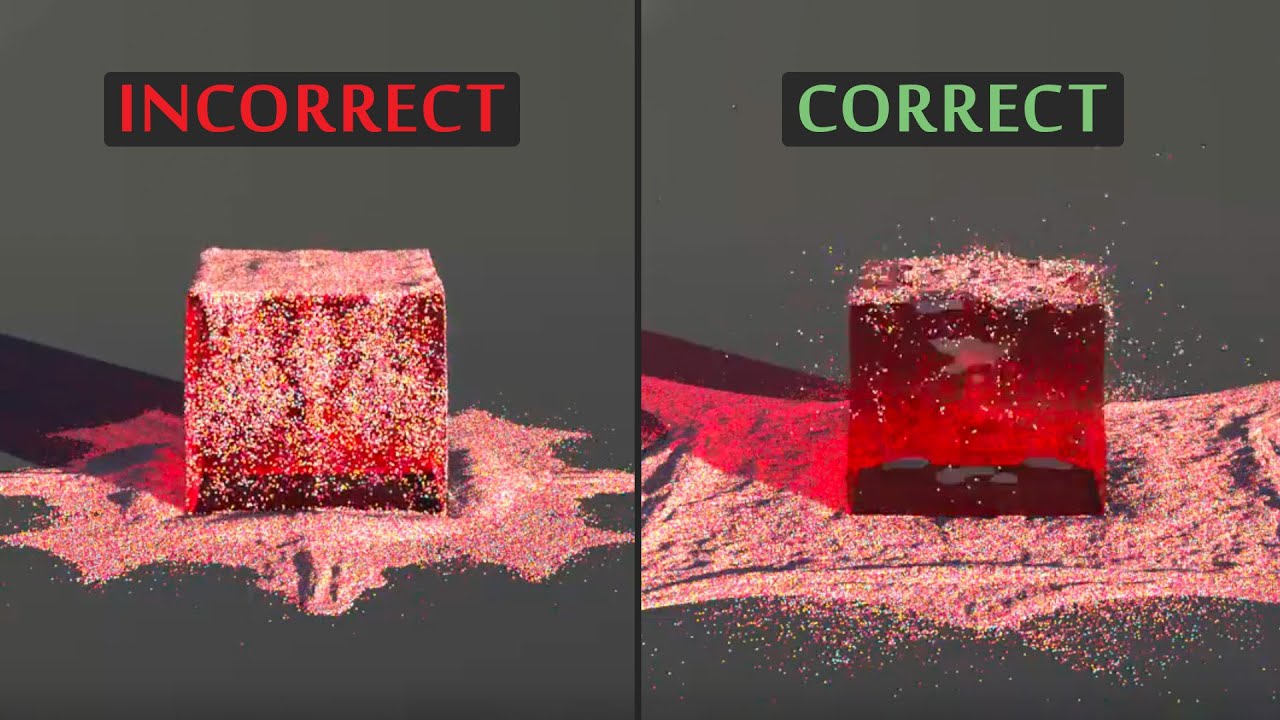
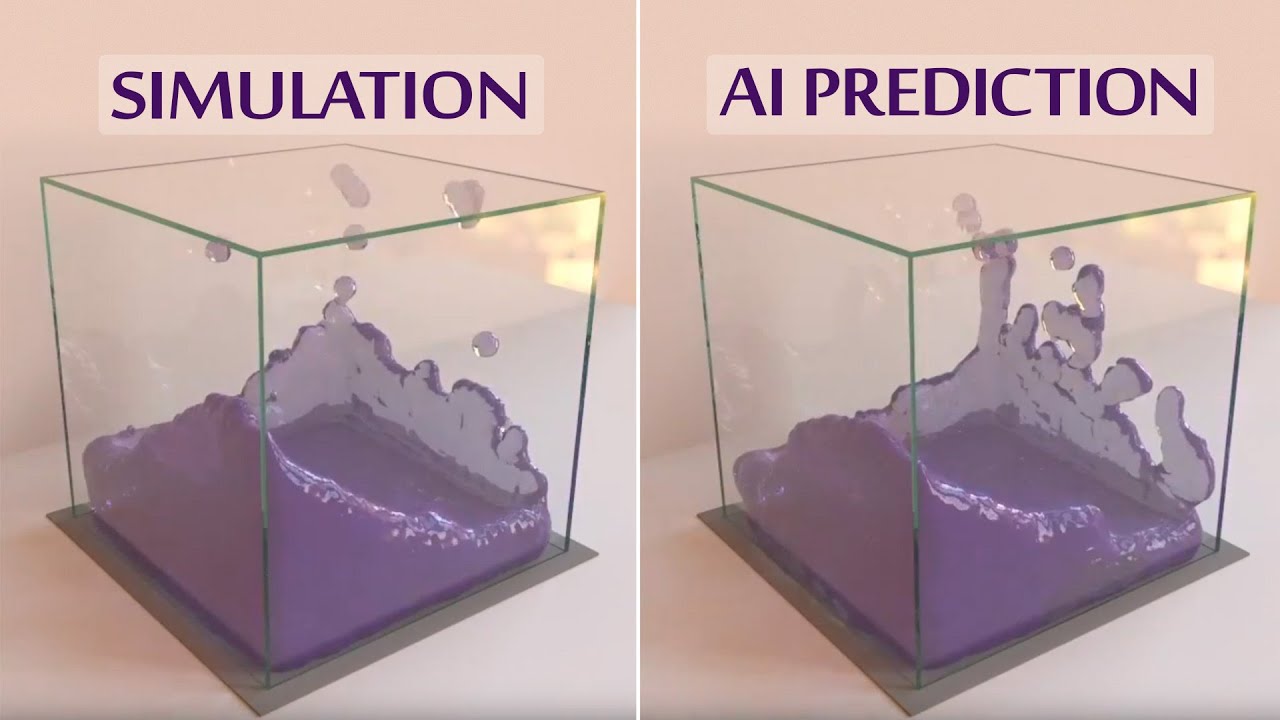
📝 My paper on simulations that look almost like reality is available for free here:
https://rdcu.be/cWPfD
Or this is the orig. Nature Physics link with clickable citations:
https://www.nature.com/articles/s41567-022-01788-5
🙏 We would like to thank our generous Patreon supporters who make Two Minute Papers possible:
Benji Rabhan, B Shang, Christian Ahlin, Gordon Child, John Le, Juan Benet, Kyle Davis, Loyal Alchemist, Lukas Biewald, Michael Tedder, Owen Skarpness, Richard Sundvall, Steef, Taras Bobrovytsky, Thomas Krcmar, Tybie Fitzhugh, Ueli GallizziIf you wish to appear here or pick up other perks, click here: https://www.patreon.com/TwoMinutePapers
My research: https://cg.tuwien.ac.at/~zsolnai/
X/Twitter: https://twitter.com/twominutepapers
Thumbnail design: Felícia Zsolnai-Fehér - http://felicia.hu
Оглавление (2 сегментов)
Segment 1 (00:00 - 05:00)
Here is a crazy idea: Let’s slice up a brain into small pieces. Okay, let’s rewind a little. First, let’s not just use ChatGPT, but use it to create a full research lab. Now, wait a second. That is of course, impossible. A research lab requires the work of several people. How would we do that with just ChatGPT? Well, here is an even crazier idea: let’s create several copies of ChatGPT, and ask them to pretend to be the professor, a PhD student, a software engineer, and more. Is that possible? Well, have a look at this. Previously, it worked with video game characters. They made 25 ChatGPT agents, gave them motivations and memory, and put them in a simulated town. They wake up, start their morning routine, some of them like reading papers, I approve that. And they held elections too. Wow, what happened there? Well, Tom, one of the characters said: “To be honest, I don’t like Sam Moore. I think he’s out of touch with the community and doesn’t have our best interests at heart. ” Oh my…I wish the average voter sounded like that too. So, I show you this because they can have relationships with each other, and even help each other. So, in this new work, they made a research lab to work on tough research questions. And it did not go as I expected it. Not at all. Dear Fellow Scholars, this is Two Minute Papers with Dr. Károly Zsolnai-Fehér. So it has its own research staff, yes, but that’s not where we start. Look. We start with a human putting in an idea. Very important detail. It starts with you. This idea can be, for instance, do biases affect the performance of language models on benchmarks? Now, a PhD student, which is played by ChatGPT, is asked look up if the idea has already been solved before, then a more experienced postdoc researcher, another ChatGPT is involved with making a plan, and finally, two more little AIs are asked to code the whole thing up. Note that there are plenty of moving parts here to make sure we get a quality work. So, then, what happened? Well, absolute magic happened. The concept wins medals left and right. It outperforms previous techniques on a variety of tasks, just make sure to not ask about anything that is in russian for some reason. Now…about that brain. I think this is absolutely incredible. It is like taking a huge brain and instead of using just that, we slice it up into smaller little brains, and that somehow does better. This is insanity. What a time to be alive! Yes, this is Two Minute Papers, the corner of the internet where we slice brains up and we are even happy about it. So how much does the slicing cost? How much do we need to pay our little AI researchers? And now, hold on to your papers Fellow Scholars, because this new technique can do all this, for the grand sum of…2 dollars and 33 cents. And it is done in 20 minutes. And if you wish to plug in these fancy new thinking AIs, they do the literature review a bit better, I love seeing that nice gradient downwards here. This takes a bit longer and costs a bit more, but even if you wish to feel like a king and go all out, you pay about $13, and in this case, it takes 1. 5 hours. For proper research work with an implementation, experiments and more. Crazy. And whenever I don’t have the resources to do that, I just rent a GPU on Lambda and do it myself. By the way, the full code and paper is available for free for everyone, so this is open science, loving it. And there is a more detailed user study in the paper, the link is in the description. And this, Fellow Scholars, is how I see the future of AI. And that is, empowering human thought. This is meant to help you with time-intensive repetitive tasks, but ultimately, you are in charge. Now one super important question remains. Can these AIs really invent something fundamentally new? Let’s see…well, their ideas tend to be more novel than ideas of humans, that is good, more exciting even. Super good. But here come the bad news for the AIs: their ideas were evaluated to be less feasible at the same time. I mean, it is easy to come up with super exciting things, teleportation, time machines, anything you want. But ultimately the ideas have to be practical too! So I would give this one to humans. And that is why the idea has to start with you. For instance, the Nobel-prize winning AlphaFold was not just about throwing an AI at protein folding by far.
Segment 2 (05:00 - 05:00)
No-no-no. It required the ingenuity of tons of brilliant research scientists, and the interplay of many many moving parts. So the AI does not invent fundamentally new things unless it meets human brilliance. So what do Fellow Scholars think? Let me know in the comments below.