❤️ Check out Lambda here and sign up for their GPU Cloud: https://lambdalabs.com/papers
📝 The paper "Ecoclimates: Climate-Response Modeling of Vegetation" is available here:https://storage.googleapis.com/pirk.io/projects/ecoclimates/index.html
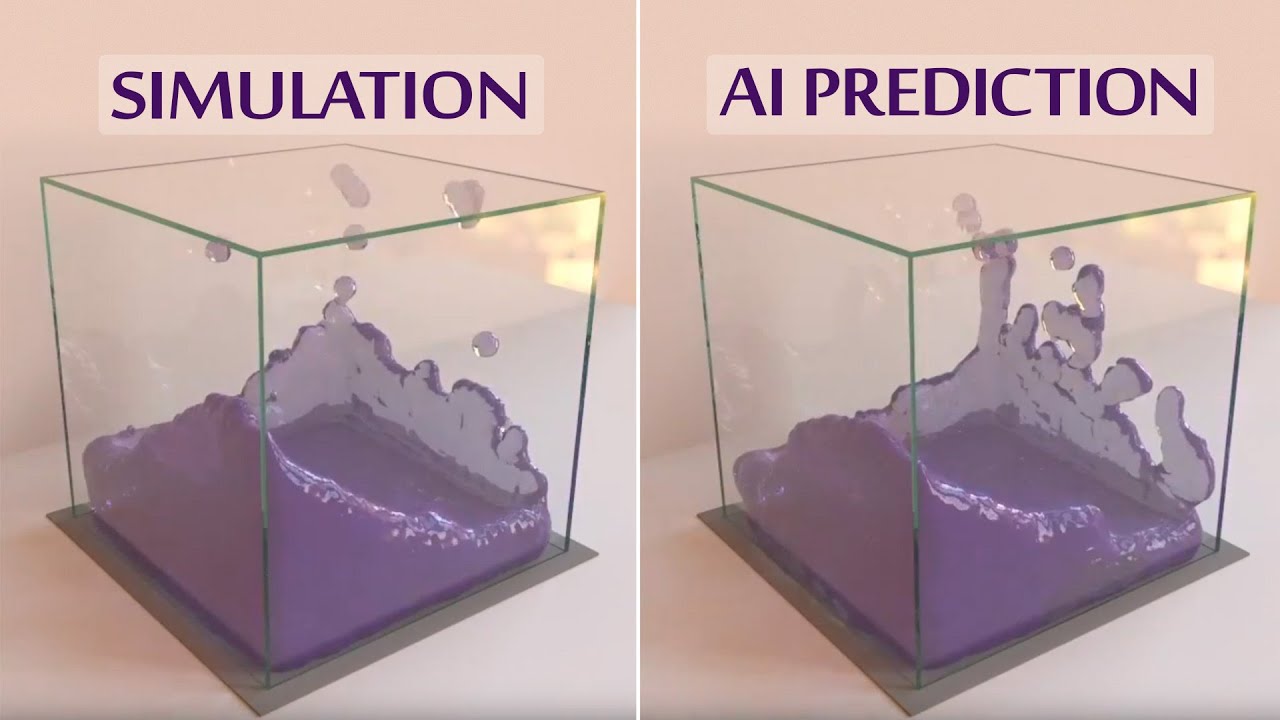
📝 My latest paper on simulations that look almost like reality is available for free here:
https://rdcu.be/cWPfD
Or this is the orig. Nature Physics link with clickable citations:
https://www.nature.com/articles/s41567-022-01788-5
🙏 We would like to thank our generous Patreon supporters who make Two Minute Papers possible:
Alex Balfanz, Alex Haro, B Shang, Benji Rabhan, Bret Brizzee, Gaston Ingaramo, Gordon Child, Jace O'Brien, John Le, Kyle Davis, Lukas Biewald, Martin, Michael Albrecht, Michael Tedder, Owen Skarpness, Richard Putra Iskandar, Richard Sundvall, Taras Bobrovytsky, Ted Johnson, Thomas Krcmar, Tybie Fitzhugh, Ueli Gallizzi.
If you wish to appear here or pick up other perks, click here: https://www.patreon.com/TwoMinutePapers
Thumbnail background design: Felícia Zsolnai-Fehér - http://felicia.hu
Károly Zsolnai-Fehér's research works: https://cg.tuwien.ac.at/~zsolnai/
Twitter: https://twitter.com/twominutepapers
Оглавление (2 сегментов)
Segment 1 (00:00 - 05:00)
This work is able to simulate an ecosystem with up to 500,000 plants for 500 years. Buckle up Fellow Scholars, because we are going to see simulations with tipping points, deforestation, Yosemite valley, and the story of shrubs and pines. Yes we are in for a ride with this paper. This simulation goes down to the level of individual branches. Awesome. And this can simulate cloud formations too. And it gets better, it also simulates how the ecosystem responds to it. Dear Fellow Scholars, this is Two Minute Papers with Dr. Károly Zsolnai-Fehér. Now, we know that a good simulation paper has to be able to give us interesting insights about the world around us. Does this do that? Well, look. First, we see clouds everywhere above the rainforest. Now, unfortunately, here comes a little deforestation, this is just a simulation, no real trees were harmed at all, and look, the clouds disappeared! And, when the forest slowly grows back, see? The clouds come back too. Why is that? Because of transpiration. This means that rainforests release water vapor into the atmosphere. The trees sweat, if you will. Now, this vapor rises, cools, and condenses into clouds. As we have deforested this region, we have disrupted this beautiful dance, and thus, no more clouds. And this paper can simulate all of these phenomena. Love it. Now, let’s have a more drastic experiment. Here you see how this virtual ecosystem reacts to decreasing precipitation. In other words, what would happen if there would be less and less rain. Things are going as we expect them to go - new, different kinds of species arise that can thrive in this kind of climate…and wait what? Uh oh… what is happening? Well, Fellow Scholars, this is the effect of the tipping point, this means that the effect of some changes is predictable up until a point, and after that, unpredictable, and often catastrophic changes happen. And these are often irreversible. Now a slow drought commences, and look at the patterns in which this shrub land slowly recedes. Why slowly? Because they are really good at adapting to the new conditions…until a point, of course. However, when we do the same thing faster, rain is gone quicker, the patterns are suddenly clumpier. And if we do the slow drought simulation with pine trees, you remember from a previous episode how they grow their roots, now these are not so good at adapting to the new conditions, so even in the case of the slow drought, let’s see… yes, they disappear in clumps. Oof. Now I know what you are looking for, how can the pine trees deal with a fast drought. Unfortunately, they do even worse. And now, hold on to your papers Fellow Scholars, because now we are going to do both and see what happens. Add shrubs and pine trees at the same time. This is a simulation after all. We can do whatever we want here. And…look at that! The two species cooperate and compete at the same time, forming these beautiful striped patterns that would not appear otherwise. So, in such a simulation paper, we always ask, this sure looks nice, but is this all for show, or is this what would really happen in reality? Well, look at this. Here are the patterns that emerge in theoretical results in these cases, and here is the simulation. Wow. Feast your eyes upon this incredible agreement. And it gets even better. When leaving theory behind, and comparing to real photos in real-world places, wow. I am out of words. And we have two more experiments. First is simulating how microclimates emerge. This is a multi-species simulation where we get species taking place right at the center of the formation. These folks love a wet climate. But not everyone does. These species like a dryer weather. Let’s remove both of them. This corridor then regrows these species,
Segment 2 (05:00 - 07:00)
showcasing the famous forest edge effect where different species carve out their niches, responding to the subtle changes in light and moisture. And now, if you allow me to, I could not resist this one. In the shadow of Yosemite's majestic Half Dome, a thick forest of pines whispers of nature's intricate dance. As we toy with the vapor in the air, mimicking the breath of a changing climate, the trees form curious ribbon-like patterns across the terrain. But suspense hangs in the air; this lush tableau is on borrowed time as the forest withers, leaving behind a haunting, arid landscape with only the hardiest of trees clinging to life. This is a beautiful, utterly fantastic paper with lots of gorgeous results. Make sure to have a look at the paper in the video description, and if you do, you are not only fulfilling your Holy Duty as a good Fellow Scholar, but you’ll get to know more about how to simulate the classic water cycle, how transpiration takes place, how trees sweat if you will, vegetation modeling, soil modeling, weather modeling, you name it. And now, you know what’s coming. This is coming. This is a magical paper, and only about 400 Fellow Scholars seem to have read it before this video. And this is why Two Minute Papers exists, to give a voice to these researchers and show to the world how amazing these papers are. That is my quest. And thank you so much for coming with me. I absolutely love my job doing this. If you enjoy this too, consider subscribing and hitting the bell icon.