❤️ Check out Cohere and sign up for free today: https://cohere.ai/papers
📝 The paper "MuZero with Self-competition for Rate Control in VP9 Video Compression" is available here:
https://deepmind.com/blog/article/MuZeros-first-step-from-research-into-the-real-world
https://storage.googleapis.com/deepmind-media/MuZero/MuZero%20with%20self-competition.pdf deepmind
https://arxiv.org/abs/2202.06626
❤️ Watch these videos in early access on our Patreon page or join us here on YouTube:
- https://www.patreon.com/TwoMinutePapers
- https://www.youtube.com/channel/UCbfYPyITQ-7l4upoX8nvctg/join
🙏 We would like to thank our generous Patreon supporters who make Two Minute Papers possible:
Aleksandr Mashrabov, Alex Balfanz, Alex Haro, Andrew Melnychuk, Angelos Evripiotis, Benji Rabhan, Bryan Learn, B Shang, Christian Ahlin, Eric Martel, Gordon Child, Ivo Galic, Jace O'Brien, Jack Lukic, Javier Bustamante, John Le, Jonas, Jonathan, Kenneth Davis, Klaus Busse, Lorin Atzberger, Lukas Biewald, Matthew Allen Fisher, Michael Albrecht, Michael Tedder, Nevin Spoljaric, Nikhil Velpanur, Owen Campbell-Moore, Owen Skarpness, Rajarshi Nigam, Ramsey Elbasheer, Steef, Taras Bobrovytsky, Ted Johnson, Thomas Krcmar, Timothy Sum Hon Mun, Torsten Reil, Tybie Fitzhugh, Ueli Gallizzi.
If you wish to appear here or pick up other perks, click here: https://www.patreon.com/TwoMinutePapers
Thumbnail background design: Felícia Zsolnai-Fehér - http://felicia.hu
Károly Zsolnai-Fehér's links:
Instagram: https://www.instagram.com/twominutepapers/
Twitter: https://twitter.com/twominutepapers
Web: https://cg.tuwien.ac.at/~zsolnai/
#DeepMind #MuZero
Оглавление (2 сегментов)
Segment 1 (00:00 - 05:00)
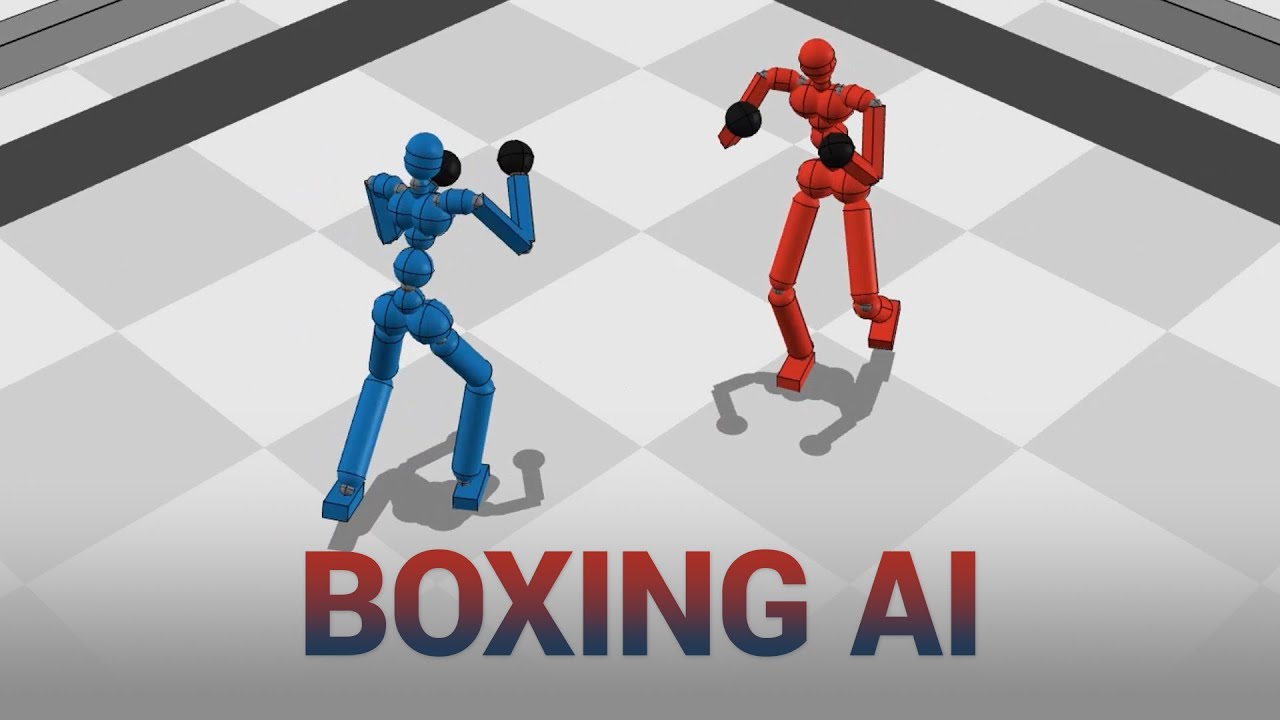
Dear Fellow Scholars, this is Two Minute Papers with Dr. Károly Zsolnai-Fehér. Finally, today, DeepMind’s amazing AI, MuZero that plays Chess and other games has now finally entered the real world and has learned to solve important real-world problems. This is a reinforcement learning technique that works really well on games. Why? Well, in Chess, Go and Starcraft, the controls are clear, we use the mouse to move our units around or choose where to move our pieces. And the score is also quite clear: we get rewarded if we win the game. That is going to be our score. To say that these worked really well would be an understatement: DeepMind’s MuZero is one of the best in the world in Chess, Go, and Stacraft 2 as well. But one important question still remains. Of course, they did not create this AI to play video games. They created it to be able to become a general-purpose AI that can solve not just games, but many problems. The games are just used as an excellent testbed for this AI. So, what else can it do? Well, finally here it is! Hold on to your papers, because scientists at DeepMind decided to start using their MuZero AI to create a real solution to a very important problem. Video compression. And here comes the twist - they said, let’s imagine that video compression is a video game. Okay, that’s crazy, but let’s accept it for now. But then, two questions: what are the controls, and what is the score? How do we know if we won video compression? Well, the video game controller in our hand will be is choosing the parameters of the video encoder for each frame. Okay, but there needs to be a score. So what is the score here? How do we win? Well, we win if we are able to choose the parameters such that the quality of the output video is as good as with the previous compression algorithms, but, the size of the video is smaller. The smaller the output video, the better. That is going to be our score. And, it also uses self-competition, which is now a popular concept in video game AIs. This means that the AI plays against previous versions of itself, and we measure its improvement by it being able to defeat these previous versions. If it can reliably do that, we can conclude that the AI is indeed improving. This concept works on boxing, playing catch, Starcraft and I wonder how this would work for video compression? Well, let’s see. Let’s immediately drop it into deep waters. Yes, we are going to test this against a mature, state of art video compression algorithm that you are likely already using at this very moment as you are watching this on Youtube. Well, good luck little AI, but I’ll be honest, there is not much hope here. These traditional video compression algorithms are a culmination of decades of ingenious human research. Can a newcomer AI beat it? I am not sure. And now, hold on to your papers, and let’s see together. How did it go? So, a 4% difference. So, a learning-based algorithm that is just 4% worse than decades of human innovation? That is great! But…wait a second, it's actually not worse. Can it be that…yes! It is not 4% worse. It is even 4% better. Holy mother of papers, that is absolutely incredible. Yes, this is the corner of the internet where we get super excited by a 4% better solution, and understand why that matters a great deal. Welcome to Two Minute Papers! But wait, we are experienced Fellow Scholars over here, we know that it is very easy to be better by 4% in size at the cost of decreased quality. But having the same quality and save 4% is insanely difficult. So, which one is it? Let’s look together. I am flicking between the state
Segment 2 (05:00 - 08:00)
of the art and the new technique, and, yes, my goodness, the results really speak for themselves. So, let’s look a bit under the hood and see some more about the decisions the AI is making. Whoa. That is really cool. So what is this? Here, we see the scores for the previous technique and the new AI, and here, they appear to be making similar decisions on this cover song video, but the AI makes somewhat better decisions overall. That is very cool. But, look at that! In the second half of this gaming video, MuZero makes vastly different, and, vastly better decisions. I love it. And to have a first crack at such a mature problem, and manage to improve it immediately, that is almost completely unheard of. Yet, they have done it with protein folding, and now, they seem to have done it for video compression too. Bravo, DeepMind! And note the meaning in the magnitude of the difference here. For instance, OpenAI’s Dall-E 2 was this much better than Dall-E 1. That’s not 4% better, if that was a percentage, this would be several hundred percent better. So, why get so excited about 4%? Well, the key is that 3-4% more compression is incredible given how well polished these state of the art techniques are. VP9 compressors are not some first crack at the problem, no-no. This is a mature field with decades of experience, where every percent of improvement requires blood, papers and tears, and of course, lots of compute and memory. And this is just the first crack at the problem for DeepMind, and we get not 1%, but 4% essentially for free. That is absolutely amazing. My mind is blown by this result. Wow. And, I also wanted to thank you for watching this video. I truly love talking about these amazing research papers, and I am really honored to have so many of you Fellow Scholars who are here every episode, enjoying these incredible works with me. It really means a lot. Every now and then I have to pinch myself to make sure that I really get to do this every day. Absolutely amazing. Thank you so much! So, what do you think? What else could this be useful for? What do you expect to happen a couple more papers down the line? Please let me know in the comments below. I’d love to hear your thoughts. Thanks for watching and for your generous support, and I'll see you next time!