❤️ Check out Fully Connected by Weights & Biases: https://wandb.me/papers
📝 The paper "FrictionalMonolith: A Monolithic Optimization-based Approach for Granular Flow with Contact-Aware Rigid-Body " is available here:
https://tetsuya-takahashi.github.io/FrictionalMonolith/
❤️ Watch these videos in early access on our Patreon page or join us here on YouTube:
- https://www.patreon.com/TwoMinutePapers
- https://www.youtube.com/channel/UCbfYPyITQ-7l4upoX8nvctg/join
🙏 We would like to thank our generous Patreon supporters who make Two Minute Papers possible:
Aleksandr Mashrabov, Alex Balfanz, Alex Haro, Andrew Melnychuk, Angelos Evripiotis, Benji Rabhan, Bryan Learn, Christian Ahlin, Eric Martel, Gordon Child, Ivo Galic, Jace O'Brien, Javier Bustamante, John Le, Jonas, Jonathan, Kenneth Davis, Klaus Busse, Lorin Atzberger, Lukas Biewald, Matthew Allen Fisher, Mark Oates, Michael Albrecht, Michael Tedder, Nikhil Velpanur, Owen Campbell-Moore, Owen Skarpness, Peter Edwards, Rajarshi Nigam, Ramsey Elbasheer, Steef, Taras Bobrovytsky, Thomas Krcmar, Timothy Sum Hon Mun, Torsten Reil, Tybie Fitzhugh, Ueli Gallizzi.
If you wish to appear here or pick up other perks, click here: https://www.patreon.com/TwoMinutePapers
Thumbnail background design: Felícia Zsolnai-Fehér - http://felicia.hu
Wish to watch these videos in early access? Join us here: https://www.youtube.com/channel/UCbfYPyITQ-7l4upoX8nvctg/join
Meet and discuss your ideas with other Fellow Scholars on the Two Minute Papers Discord: https://discordapp.com/invite/hbcTJu2
Károly Zsolnai-Fehér's links:
Instagram: https://www.instagram.com/twominutepapers/
Twitter: https://twitter.com/twominutepapers
Web: https://cg.tuwien.ac.at/~zsolnai/
Оглавление (2 сегментов)
Segment 1 (00:00 - 05:00)
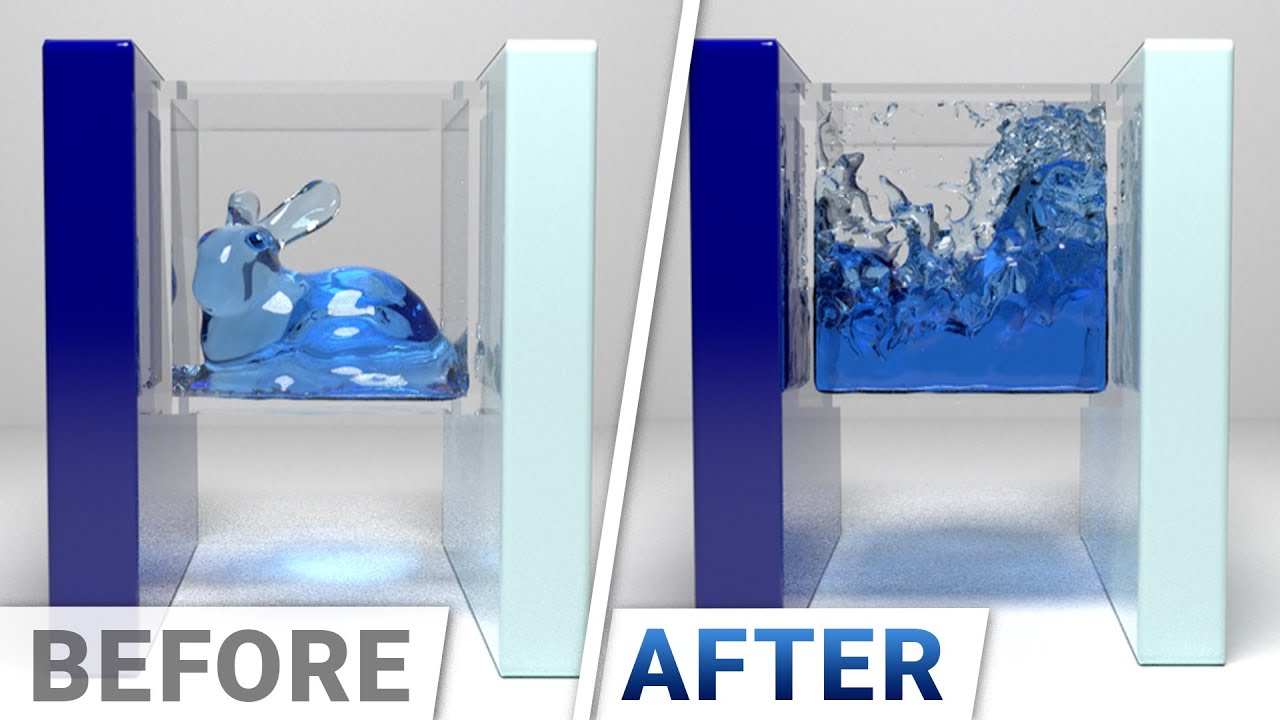
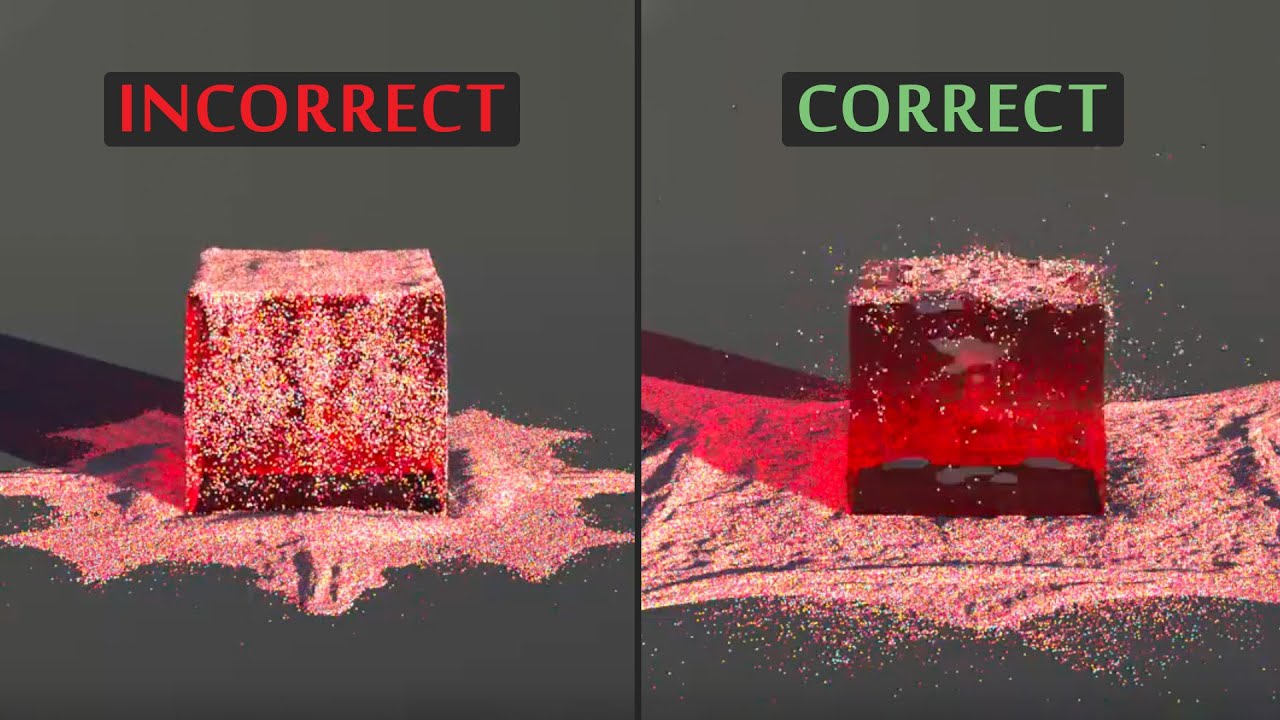
Dear Fellow Scholars, this is Two Minute Papers with Dr. Károly Zsolnai-Fehér. Today is going to be all about simulating virtual bunnies. What kinds of bunnies? Bunnies in an hourglass with granular material, bunnies in a mixing drum, bunnies that disappear, we’ll try to fix this one too. So, what was all this footage? Well, this is a followup work to the amazing Monolith paper. What is Monolith? It is a technique that helps fixing commonly occurring two-way coupling issues in physics simulations. Okay, that sounds great, but what does two-way coupling mean? It means that here, the boxes are allowed to move the smoke, and the added two-way coupling part means that now, the smoke is also allowed to blow away the boxes. This previous work makes can simulate these phenomena properly. It also makes sure that when thrown at the wall, things stick correctly, and a ton of other goodies too. So, this previous method shows a lot of strength. Now, I hear you asking, Károly, can this get even better? And the answer is yes, yes it can! That’s exactly why we are here today. This new paper improves this technique to work better in cases where we have a lot of friction. For instance, it can simulate how some of these tiny bunnies get squeezed through the hourglass, and get showered by this sand-like granular material. It can also simulate how some of them remain stuck up there because of the frictional contact. Good. Now, have a look at this, with this one, with an earlier technique, we start with one bunny, and we end up with…. wait a minute. That volume is not one bunny amount of volume. This is what we call the volume dissipation problem. I wonder if we can get our bunny back with the new technique. What do you think? Well, let’s see…one bunny goes in, friction happens, and…yes! One bunny amount of volume comes out of the simulation. Then, we a bunch of them into a mixing drum in the next experiment where their tormenting shall continue. This is also a very challenging scene because we have over 70 thousand particles, rubbing against each other. And, just look at that. The new technique is so robust that there are no issues whatsoever. Loving it! So, what is all this simulation math good for? Well, for instance, it helps us set up a scene where we get a great deal of artistic freedom. For instance, we can put this glass container with the water between two walls, and, look carefully! Yes, we apply a little leftward force to this wall. And, since this technique can simulate what is going to happen, we can create an imaginary world where only our creativity is the limit. For instance, we can make a world in which there is just a tiny bit of friction to slow down the fall. Or, we can create a world with a ton more friction, and now, we have so much friction going on that the weight of the liquid cannot overcome anymore, and thus, the cube is quickly brought to rest between the walls. Luckily, since our bunny still exists, we can proceed onto the next experiment, where we will drop it onto a pile of granular material. This previous method did not do too well in this case, as the bunny sinks down. And if you think that cannot possibly get any worse, well, I have some news for you. It can. How? Look! With a different previous technique, it doesn’t even get to sink in, because it crashes when it would need to perform these calculations. Now, let’s see if the new method can save the day, and…yes! Great! It indeed can help our little bunny remain on top of things. So, let’s pop the Scholarly question - how much do we wait for such a simulation? The hourglass experiment takes about 5 minutes per frame, while the rotating drum experiment takes about half of that, 2. 5 minutes. So, it takes a while. Why? Of course, because many of these scenes contain tens of thousands of particles, and almost all of them are in constant frictional interaction with almost all the others at the same time, and the algorithm mustn’t miss any of these interactions. All of them have to be simulated. And the fact that through the power of computer graphics research we can
Segment 2 (05:00 - 06:00)
simulate all of these in reasonable amount of time is an absolute miracle. What a time to be alive! And as always, you know what’s coming. Yes, please do not forget to invoke the First Law of Papers, which says that research is a process. Do not look at where we are, will be two more papers down the line. Granular materials, and frictional contact in a matter of seconds perhaps? Well, sign me up for this one! Thanks for watching and for your generous support, and I'll see you next time!