New AI: Photos Go In, Reality Comes Out! 🌁
5:26

New AI: Photos Go In, Reality Comes Out! 🌁

Two Minute Papers 16.11.2021 159 568 просмотров 9 290 лайков

Machine-readable: Markdown · JSON API · Site index

Поделиться Telegram VK Бот
Транскрипт Скачать .md
Анализ с AI
Описание видео
❤️ Check out Lambda here and sign up for their GPU Cloud: https://lambdalabs.com/papers 📝 The paper "ADOP: Approximate Differentiable One-Pixel Point Rendering" is available here: https://arxiv.org/abs/2110.06635 ❤️ Watch these videos in early access on our Patreon page or join us here on YouTube: - https://www.patreon.com/TwoMinutePapers - https://www.youtube.com/channel/UCbfYPyITQ-7l4upoX8nvctg/join 🙏 We would like to thank our generous Patreon supporters who make Two Minute Papers possible: Aleksandr Mashrabov, Alex Haro, Andrew Melnychuk, Angelos Evripiotis, Benji Rabhan, Bryan Learn, Christian Ahlin, Eric Martel, Gordon Child, Ivo Galic, Jace O'Brien, Javier Bustamante, John Le, Jonas, Kenneth Davis, Klaus Busse, Lorin Atzberger, Lukas Biewald, Matthew Allen Fisher, Mark Oates, Michael Albrecht, Michael Tedder, Nikhil Velpanur, Owen Campbell-Moore, Owen Skarpness, Rajarshi Nigam, Ramsey Elbasheer, Steef, Taras Bobrovytsky, Thomas Krcmar, Timothy Sum Hon Mun, Torsten Reil, Tybie Fitzhugh, Ueli Gallizzi. If you wish to appear here or pick up other perks, click here: https://www.patreon.com/TwoMinutePapers Thumbnail background design: Felícia Zsolnai-Fehér - http://felicia.hu Meet and discuss your ideas with other Fellow Scholars on the Two Minute Papers Discord: https://discordapp.com/invite/hbcTJu2 Károly Zsolnai-Fehér's links: Instagram: https://www.instagram.com/twominutepapers/ Twitter: https://twitter.com/twominutepapers Web: https://cg.tuwien.ac.at/~zsolnai/
Оглавление (8 сегментов)

Introduction

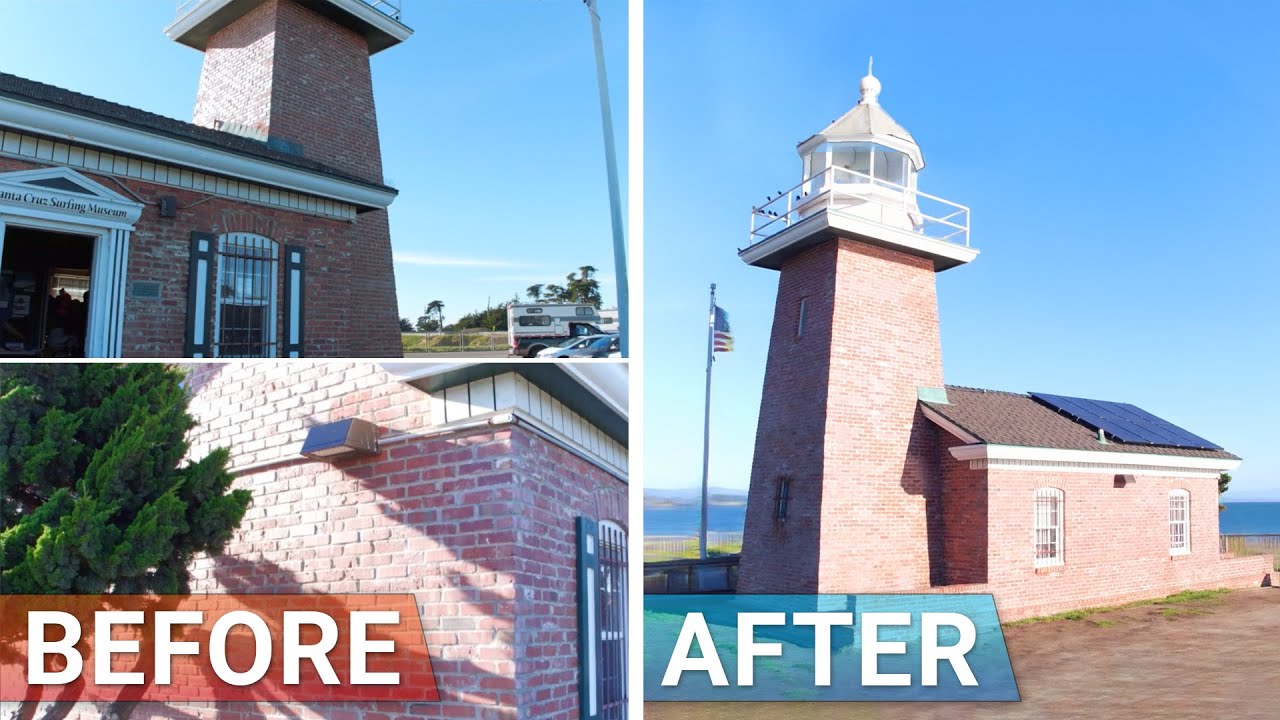
Dear Fellow Scholars, this is Two Minute  Papers with Dr. Károly Zsolnai-Fehér. Today we are going take a  collection of photos like these,   and magically, create a video where  we can fly through these photos. How is this even possible? Especially that  the input is only a handful of photos.    Well, we give it to a learning algorithm  and ask it to synthesize a photorealistic   video where we fly through the scene  as we please. That sounds impossible.    Especially that some information is given  about the scene, but this is really not much.

Synthesis

And everything in between these photos has  to be synthesized here. Let’s see how well   this new method can perform that,  but don’t expect too much…and…. wow. It took a handful of photos and filled in the  rest so well that we got a smooth and creamy video   out of it. So, the images certainly look good in  isolation. Now let’s compare it to the real world   images that we already have, but have hidden from  the algorithm, and hold on to your papers…wow,   this is breathtaking. It is not a great  deal different, is it? Does this mean…yes!    It means that it guesses what reality  should look like almost perfectly. Now note that this mainly applies for looking  at these images in isolation. As soon as we

artifacts

weave them together into a video and start flying  through the scene, we will see some flickering,   artifacts, but that is to be expected. The AI  has to create so much information from so little,   and the tiny inaccuracies that appear in each  image are different, and when played abruptly   after each other, this introduces these artifacts.   So, which regions should we look at to find these   flaws? Well, usually regions where we have  very little information in our set of photos,

challenges

and a lot of variation when we move our head.   For instance, visibility around thin structures   is still a challenge. But of course, you know the  joke - how do you spot a Two Minute Papers viewer?    They are always looking behind thin  fences. Shiny surfaces are a challenge   too as they reflect their environment and  change a lot as we move our head around. So how does it compare to previous methods?   Well, it creates images that are sharper and

comparisons

more true to the real images. Look! What you see  here is a very rare sight. Usually, when we see   a new technique like this emerge, it almost always  does better on some datasets, and worse on others.    The comparisons are almost always a wash. But  here? Not at all. Not in the slightest. Look,   here you see four previous techniques, four  scenes, and three different ways of measuring   the quality of the output images. And almost  none of it matters, because the new technique   reliably outperforms all of them, everywhere.   Except here, in this one case, depending on how   we measure how good a solution is. And even  then, it’s quite close. Absolutely amazing.

paper

Make sure to also have a look at the paper in  the video description to see that it can also   perform filmic tone mapping, change the  exposure of the output images, and more. So, how did they pull this off? What hardware  do we need to train such a neural network?

hardware

Do we need the server warehouses of  Google or OpenAI to make this happen?    No, not at all! And here comes the best part…if  you have been holding on to your papers so far,   now, squeeze that paper, because all it takes is  a consumer graphics card and 12 to 24 hours of   training. And after that, we can use the neural  network for as long as we wish. So, recreating

conclusion

reality from a handful of photos with a neural  network that some people today can train at home   themselves? The pace of progress in AI research  is absolutely amazing. What a time to be alive! Thanks for watching and for your generous  support, and I'll see you next time!

Другие видео автора — Two Minute Papers

Ctrl+V

Экстракт Знаний в Telegram

Экстракты и дистилляты из лучших YouTube-каналов — сразу после публикации.

Подписаться

Дайджест Экстрактов

Лучшие методички за неделю — каждый понедельник