Simulating 800,000 Metric Tons of Ice! 🤯
8:54

Simulating 800,000 Metric Tons of Ice! 🤯

Two Minute Papers 22.10.2021 113 080 просмотров 5 624 лайков

Machine-readable: Markdown · JSON API · Site index

Поделиться Telegram VK Бот
Транскрипт Скачать .md
Анализ с AI
Описание видео
❤️ Check out Perceptilabs and sign up for a free demo here: https://www.perceptilabs.com/papers 📝 The paper "A glacier–ocean interaction model for tsunami genesis due to iceberg calving" is available here: https://www.nature.com/articles/s43247-021-00179-7 🙏 We would like to thank our generous Patreon supporters who make Two Minute Papers possible: Aleksandr Mashrabov, Alex Haro, Andrew Melnychuk, Angelos Evripiotis, Benji Rabhan, Bryan Learn, Christian Ahlin, Eric Haddad, Eric Martel, Gordon Child, Ivo Galic, Jace O'Brien, Javier Bustamante, John Le, Jonas, Kenneth Davis, Klaus Busse, Lorin Atzberger, Lukas Biewald, Matthew Allen Fisher, Mark Oates, Michael Albrecht, Nikhil Velpanur, Owen Campbell-Moore, Owen Skarpness, Rajarshi Nigam, Ramsey Elbasheer, Steef, Taras Bobrovytsky, Thomas Krcmar, Timothy Sum Hon Mun, Torsten Reil, Tybie Fitzhugh, Ueli Gallizzi. If you wish to appear here or pick up other perks, click here: https://www.patreon.com/TwoMinutePapers Thumbnail background image credit: https://pixabay.com/images/id-566722/ Thumbnail background design: Felícia Zsolnai-Fehér - http://felicia.hu Meet and discuss your ideas with other Fellow Scholars on the Two Minute Papers Discord: https://discordapp.com/invite/hbcTJu2 Károly Zsolnai-Fehér's links: Instagram: https://www.instagram.com/twominutepapers/ Twitter: https://twitter.com/twominutepapers Web: https://cg.tuwien.ac.at/~zsolnai/
Оглавление (5 сегментов)

<Untitled Chapter 1>

Dear Fellow Scholars, this is Two Minute Papers with Dr. Károly Zsolnai-Fehér. Today we are going to see that some computer graphics simulation techniques are so accurate, they can come out to the real world, and even teach us something new. And it can do this too.

Simple Geometric Calving Test for Iceberg Length Validation

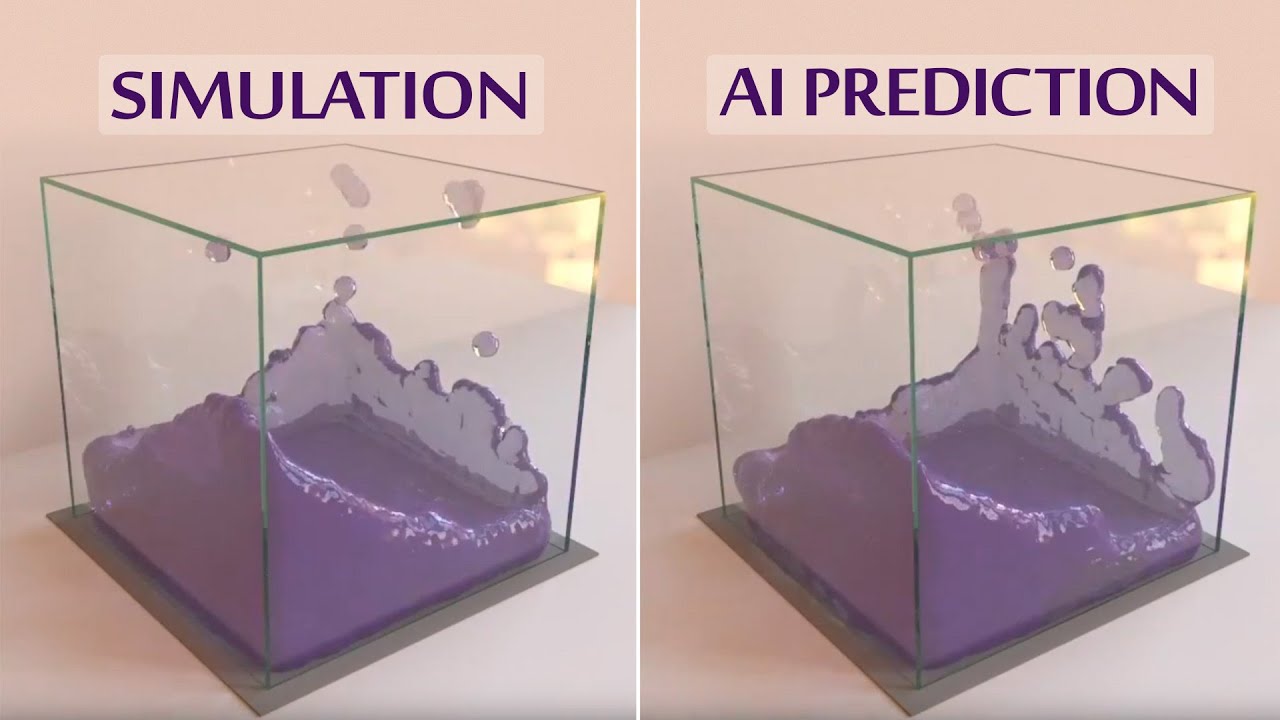
And, this too. Today, computer graphics research techniques are capable of conjuring up these beautiful virtual worlds where we can engage in the favorite pastime of the computer graphics researcher…which is destroying them in a spectacular manner. Here you see Joshuah Wolper’s paper, who is a returning guest in the series. He was a PhD student at the time and his first work we showcased was about breaking bread, and visualizing all the damage that takes place during this process. His later work was about enriching our simulations with anisotropic damage and elasticity. So what does that mean exactly? This means that it supports more extreme topological changes in these virtual objects. In the meantime, he has graduated. So, congratulations on all the amazing works Dr. Joshuah Wolper! And let’s see what he has been up to since he leveled up. Note that all these previous works are about simulating fracturing and damage. I wonder what else could all this knowledge be applied for? Hmm…how about simulating glacier fracture? Yes, really! But before we start, why would we do that? Because a technique like this could help assess and identify potential hazards ahead of time, and get this, maybe even mitigate them. Who knows, maybe we could even go full Hari Seldon and predict potential hazards before they happen. Let’s see how. To start out, we need three things. First, we need to simulate ice fracturing. Here is a related earlier work, however, this is on snow. Ice is different. That is going to be a challenge. Two, we need to simulate the ocean, and three, simulate how the two react to each other. Wow, that is going to be quite a challenge, because capturing all of these really accurately requires multiple different algorithms. You may remember from this previous work how difficult it is to marry two simulation algorithms. Believe it or not, this is not one, but two simulations, one inside the box, and one outside. To make all this happen, plenty of work had to be done in the transition zones, so this one for ice fractures might be even more challenging. And you may rest assured that we will not let this paper go until we also see my favorite thing in all simulation research, which is, of course, comparing the simulation results to real-world footage. For instance, the results would have to agree with this earlier lab experiment by Heller and colleagues that measures how the ocean reacts to a huge block of ice falling into it. Now, hold on for a second. We can’t just say that it “falls” into the ocean. There are multiple kinds of falling into the ocean. For instance, it can either happen due to gravity or to buoyancy, or capsizing. So we have two questions. Question number one: does this matter? Well, let’s have a look. Oh, yes, it does matter a great deal. The generated waves look quite different. Now, here comes the most exciting part, question number two: do Dr. Wolper’s simulations agree with this real lab experiment? To start out, we wish to see three experiments.

Iceberg Calving Mechanisms: 2D Simulations

One for gravity, the color coding goes from colder to warmer colors as the velocity of the waves increases. We also have one simulation for buoyancy, and one for capsizing. We could say they look excellent, but we can’t say that because we don’t yet know how this experiment relates to the lab experiment yet. Before we compare the two, let’s also add one more variable: theory. We expect that simulations match the theory nearly perfectly, and to more or less match the lab experiment. Why only more or less, why not perfectly? Because it is hard to reproduce the exact forces, geometries and materials that were used in the experiment. Now, let’s see…the solid lines follow the dashed line very well.

Tsunami Wave Validation

This means that the simulation follows the theory nearly perfectly. For the simulation, this plot is a little easier to read, and shows that the lab experiment is within the error limits of the simulation. Now, at this point, yes, it is justified to say - this, is an excellent work. Now, let’s ramp up the complexity of these simulations and hopefully give it a hard time. Look! Now we’re talking! Real icebergs, real calving. The paper also shows plots that compare this experiment to theoretical results, and found good agreement there too. Very good. Now if it can deal with this, hold on to your papers, and let’s bring forth the final

Eqip Sermia Tour Boat Footage

boss. Eqip Sermia. Well…what is that? This was a real glacier fracturing event in Greenland that involved 800 thousand metric tons of ice. And at this point I said, I am out. There are just too many variables, too many unknowns, too complex a situation to get meaningful results. 800 thousand metric tons? You can’t possibly reproduce this with a simulation. Well, hold on to your papers, and watch this. This is the reproduction, and even better, we have measured data about wave amplitudes, average wave speed, iceberg sizes involved in this event, and get this, this simulation is able to reproduce all of these accurately. Wow. And, we are still not done yet! It can also produce full 3D simulations, which requires the interplay of tens of millions of particles, and can create beautiful footage like this. This is not only beautiful, but useful too. Look! We can even assemble a scene that reenacts what would happen if we were sitting in a boat nearby. Spoiler alert: it’s not fun. So, there we go, some of these computer graphics simulations are so accurate, they can come out to the real world, and even teach us new things. Reading papers makes me very, very happy, and this was no exception - I had a fantastic time reading this paper. If you wish to have a great time too, make sure to check it out in the video description. Thanks for watching and for your generous support, and I'll see you next time!

Другие видео автора — Two Minute Papers

Ctrl+V

Экстракт Знаний в Telegram

Экстракты и дистилляты из лучших YouTube-каналов — сразу после публикации.

Подписаться

Дайджест Экстрактов

Лучшие методички за неделю — каждый понедельник