Deformable Simulations…Running In Real Time! 🐙
5:08

Deformable Simulations…Running In Real Time! 🐙

Two Minute Papers 10.03.2020 141 538 просмотров 6 058 лайков

Machine-readable: Markdown · JSON API · Site index

Поделиться Telegram VK Бот
Транскрипт Скачать .md
Анализ с AI
Описание видео
❤️ Check out Weights & Biases here and sign up for a free demo here: https://www.wandb.com/papers The shown blog post is available here: https://www.wandb.com/articles/visualize-lightgbm-performance-in-one-line-of-code 📝 The paper "A Scalable Galerkin Multigrid Method for Real-time Simulation of Deformable Objects" is available here: http://tiantianliu.cn/papers/xian2019multigrid/xian2019multigrid.html ❤️ Watch these videos in early access on our Patreon page or join us here on YouTube: - https://www.patreon.com/TwoMinutePapers - https://www.youtube.com/channel/UCbfYPyITQ-7l4upoX8nvctg/join 🙏 We would like to thank our generous Patreon supporters who make Two Minute Papers possible: Alex Haro, Alex Paden, Andrew Melnychuk, Angelos Evripiotis, Anthony Vdovitchenko, Benji Rabhan, Brian Gilman, Bryan Learn, Daniel Hasegan, Dan Kennedy, Dennis Abts, Eric Haddad, Eric Martel, Evan Breznyik, Geronimo Moralez, James Watt, Javier Bustamante, Kaiesh Vohra, Kasia Hayden, Kjartan Olason, Levente Szabo, Lorin Atzberger, Lukas Biewald, Marcin Dukaczewski, Marten Rauschenberg, Maurits van Mastrigt, Michael Albrecht, Michael Jensen, Nader Shakerin, Owen Campbell-Moore, Owen Skarpness, Raul Araújo da Silva, Rob Rowe, Robin Graham, Ryan Monsurate, Shawn Azman, Steef, Steve Messina, Sunil Kim, Taras Bobrovytsky, Thomas Krcmar, Torsten Reil, Tybie Fitzhugh. https://www.patreon.com/TwoMinutePapers Meet and discuss your ideas with other Fellow Scholars on the Two Minute Papers Discord: https://discordapp.com/invite/hbcTJu2 Károly Zsolnai-Fehér's links: Instagram: https://www.instagram.com/twominutepapers/ Twitter: https://twitter.com/karoly_zsolnai Web: https://cg.tuwien.ac.at/~zsolnai/

Оглавление (5 сегментов)

<Untitled Chapter 1>

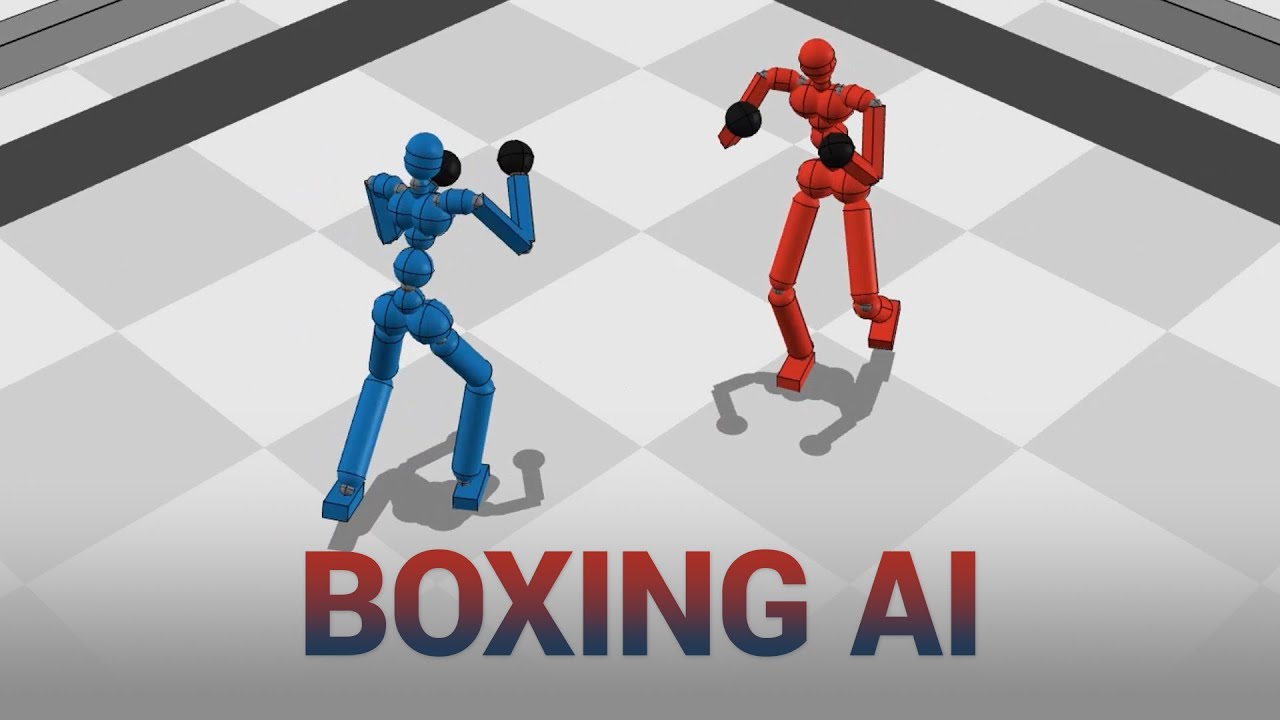
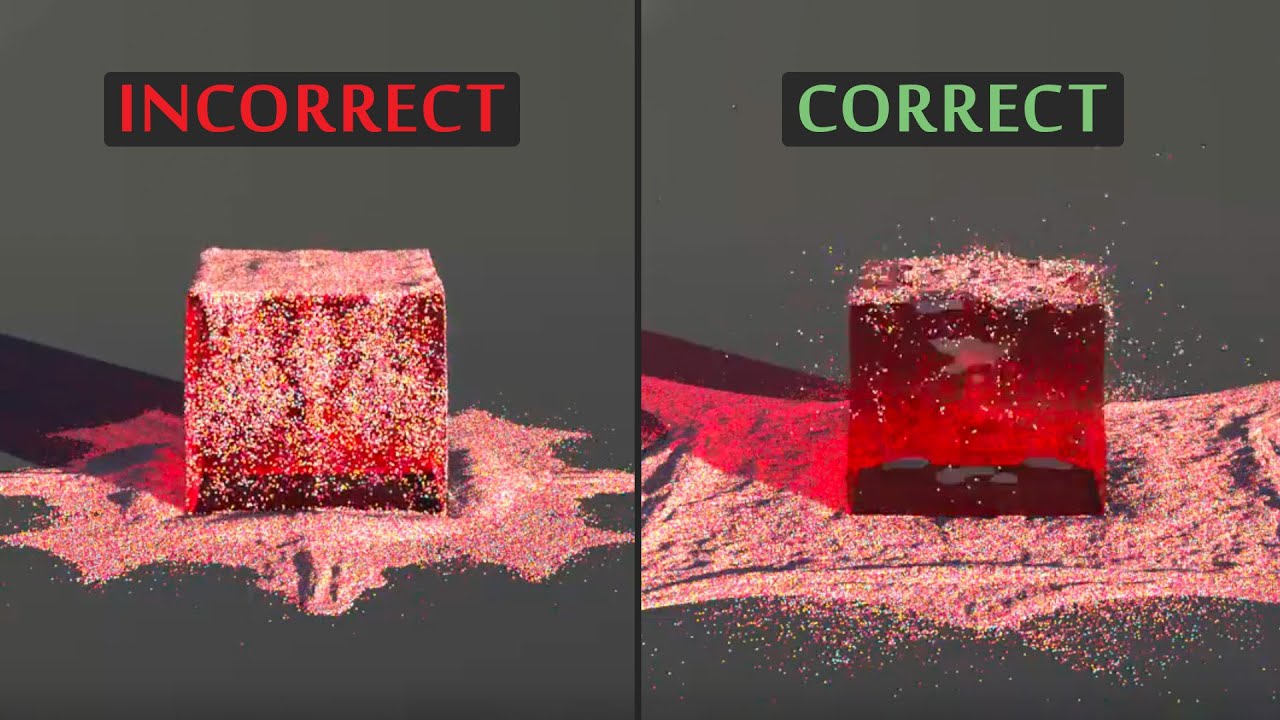
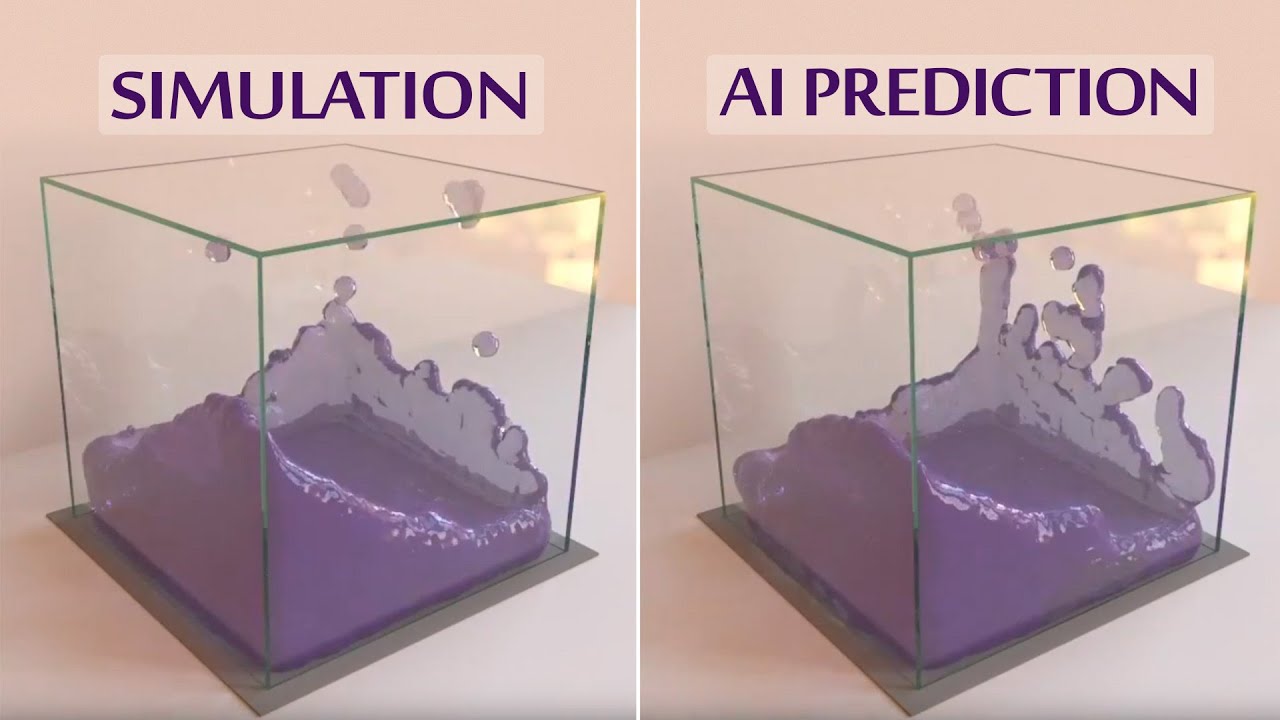
Dear Fellow Scholars, this is Two Minute Papers with Dr. Károly Zsolnai-Fehér. With the power of modern computer graphics and machine learning techniques, we are now able to teach virtual humanoids to walk, sit, manipulate objects, and we can even make up new creature types and teach them new tricks…if we are patient enough, that is. But, even with all this knowledge, we are not done yet, are we? Should we just shut down all the research facilities, because there is nothing else to do? Well, if you have spent any amount of time watching Two Minute Papers, you know that the answer is, of course not! There is so much to do I don’t even know where to start! For instance, let’s consider the case of deformable simulations. Not so long ago, we talked about Yuanming Hu’s amazing paper with which, we can engage in the favorite pastime of a computer graphics researcher, which is, of course, destroying virtual objects in a spectacular manner. It can also create remarkably accurate jello simulations, where we can even choose our physical parameters. Here you see how we can drop in blocks of different densities into the jello, and as a result, they sink in deeper and deeper. Amazing. However, note that this is not for real-time applications and computer games because the execution time is measured not in frames per second, but in seconds per frame. If we are looking for somewhat coarse results, but in real time, we have covered a paper

Applications: Multi-domain Simulation

approximately 300 episodes ago, which performed something that is called a Reduced Deformable Simulation. Leave a comment if you were already a Fellow Scholar back then! This technique could be trained on a number of different representative cases, which

Modal Construction

in computer graphics research, is often referred to as precomputation, which means that we have to do a ton of work before starting a task, but only once, and then, all our subsequent simulations can be sped up. Kind of like a student studying before an exam, so when the exam itself happens, the

Modal Cubature Construction

student, in the ideal case, will know exactly what to do. Imagine trying to learn the whole subject during the exam! Note that this training in this technique is not the same kind of training we are used to see with neural networks, and its generalization capabilities were limited, meaning that if we strayed too far from the training examples, the algorithm did not work so reliably.

Incremental Training Scheme

And now, hold on to your papers, because this new method contains a ton of optimizations, runs on your graphics card, and hence, can perform these deformable simulations at close to 40 frames per second. And in the following examples in a moment, you will see something even better. A killer advantage of this method is that this is also scalable. This means that the resolution of the object geometry can be changed around, here, the upper left is a coarse version of the object, where the lower right is the most refined version of it. Of course, the number of frames we can put out per second depends a great deal on the resolution of this geometry, and if you have a look, this looks very close to the one below it, but is still more than 3 to 6 times faster than real time. Wow. And whenever we are dealing with collisions, lots of amazing details appear. Just look at this! Let’s look at a little more formal measurement of the scalability of this method. Note that this is a log-log plot, since the number of tetrahedra used for the geometry and the execution time spans many orders of magnitude. In other words, we can see how it works from the coarsest piece of geometry to the most detailed models we can throw at it. If we look at something like this, we are hoping that the lines are not too steep, which is the case for both the memory and execution timings. So, finally, real-time deformable simulations, here we come! What a time to be alive! This episode has been supported by Weights & Biases. Here, they show you how to make it to the top of Kaggle leaderboards by using their tool to find the best model faster than everyone else. Weights & Biases provides tools to track your experiments in your deep learning projects. Their system is designed to save you a ton of time and money, and it is actively used in projects at prestigious labs, such as OpenAI, Toyota Research, GitHub, and more. And, the best part is that if you are an academic or have an open source project, you can use their tools for free. It really is as good as it gets. Make sure to visit them through wandb. com/papers or just click the link in the video description and you can get a free demo today. Our thanks to Weights & Biases for their long-standing support and for helping us make better videos for you. Thanks for watching and for your generous support, and I'll see you next time!

Другие видео автора — Two Minute Papers

Ctrl+V

Экстракт Знаний в Telegram

Экстракты и дистилляты из лучших YouTube-каналов — сразу после публикации.

Подписаться

Дайджест Экстрактов

Лучшие методички за неделю — каждый понедельник