AI Learns Video Frame Interpolation | Two Minute Papers #197
3:52

AI Learns Video Frame Interpolation | Two Minute Papers #197

Two Minute Papers 15.10.2017 40 528 просмотров 1 688 лайков

Machine-readable: Markdown · JSON API · Site index

Поделиться Telegram VK Бот
Транскрипт Скачать .md
Анализ с AI
Описание видео
The paper "Video Frame Interpolation via Adaptive Separable Convolution" and its source code is available here: https://arxiv.org/abs/1708.01692 https://github.com/sniklaus/pytorch-sepconv Two Minute Papers subreddit: https://www.reddit.com/r/twominutepapers/comments/76j145/ai_learns_video_frame_interpolation_two_minute/ Recommended for you: 1. Separable Subsurface Scattering (with convolutions) - https://www.youtube.com/watch?v=72_iAlYwl0c 2. https://users.cg.tuwien.ac.at/zsolnai/gfx/separable-subsurface-scattering-with-activision-blizzard/ 3. Rocking Out With Convolutions - https://www.youtube.com/watch?v=JKYQOAZRZu4 We would like to thank our generous Patreon supporters who make Two Minute Papers possible: Andrew Melnychuk, Brian Gilman, Dave Rushton-Smith, Dennis Abts, Eric Haddad, Esa Turkulainen, Evan Breznyik, Kaben Gabriel Nanlohy, Malek Cellier, Michael Albrecht, Michael Jensen, Michael Orenstein, Steef, Sunil Kim, Torsten Reil. https://www.patreon.com/TwoMinutePapers Two Minute Papers Merch: US: http://twominutepapers.com/ EU/Worldwide: https://shop.spreadshirt.net/TwoMinutePapers/ Music: Antarctica by Audionautix is licensed under a Creative Commons Attribution license (https://creativecommons.org/licenses/by/4.0/) Artist: http://audionautix.com/ Thumbnail background image credit: https://pixabay.com/photo-2842576/ Splash screen/thumbnail design: Felícia Fehér - http://felicia.hu Károly Zsolnai-Fehér's links: Facebook: https://www.facebook.com/TwoMinutePapers/ Twitter: https://twitter.com/karoly_zsolnai Web: https://cg.tuwien.ac.at/~zsolnai/
Оглавление (1 сегментов)

Segment 1 (00:00 - 03:00)

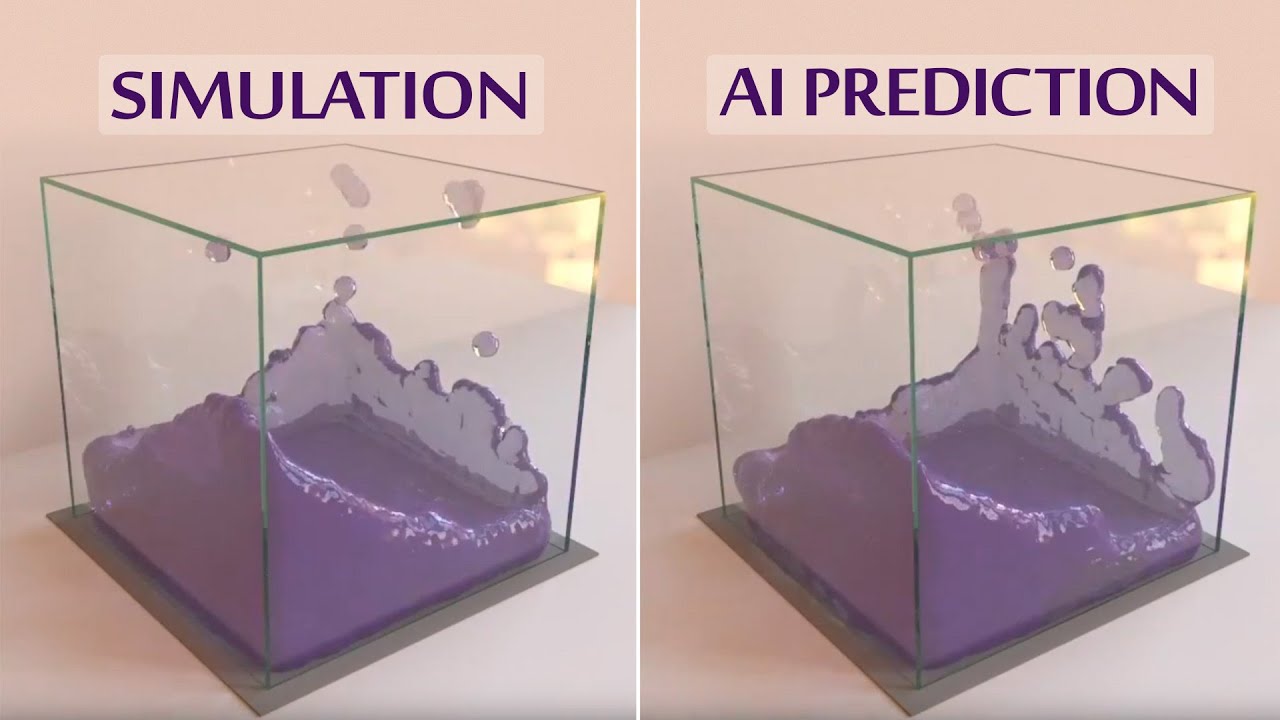
dear fellow scholars this is two minute papers with károly affair with today's graphics technology we can enjoy many really smooth videos that were created using 60 frames per second we'll have it too and we hope that you notice that our last hundred or maybe even more episodes have been available in 60 Hertz however it oftentimes happens that we are given videos that have anything from 20 to 30 frames per second this means that if we play them on a 60 FPS timeline half or even more of these frames will not provide any new information as we try to slow down the videos for some nice slow-motion action this ratio is even worse creating an extremely choppy output video fortunately there are techniques that are able to guess what happens in these intermediate frames and give them to us this is what we call frame interpolation we have had some previous experiments in this area where we tried to create an amazing slow-motion version of a video with some bubbles merging a simple and standard way of doing frame interpolation is called frame blending which is a simple averaging of the closest to known frames the more advanced techniques are optical flow based which is a method to determine what motions happened between these two frames and create new images based on that knowledge leading to higher quality results in most cases this technique uses a convolutional neural network to accomplish something similar but in the end it doesn't give us an image but a set of convolution kernels this is a transformation that is applied to the previous and the next frame to produce an intermediate image it is not the image itself but a recipe of how to produce it if you will we've had a ton of fun with convolutions earlier where we use them to create beautiful subsurface scattering effects for translucent materials in real time and are more loyal fellow scholars remember that at some point I also pulled out my guitar and showed what it would sound like inside a church using a convolution based reverberation technique the links are available in the video description make sure to check them out since we have a neural network over here it goes without saying that the training takes place on a large number of before afterimage pairs so that the network is able to produce these convolutional kernels of course to validate this algorithm we also need to have access to a ground truth reference to compare against we can accomplish this by withholding some information about a few intermediate frames so we have the true images which the algorithm would have to reproduce without seeing it kind of like giving a test to a student when we already know the answers you can see such a comparison here and now let's have a look at these results as you can see they are extremely smooth and the technique retains a lot of high-frequency details in these images the videos also seem temporally coherent which means that it's devoid of the annoying flickering effect where the reconstruction takes place in a way that's a bit different in each subsequent frame none of that happens here which is an excellent property of this technique the Python source code for this technique is available and is free for non-commercial uses I've put a link in the description if you have given it a try and have some results of your own make sure to post them in the comment section or our subreddit discussion the link is available in the description thanks for watching and for your generous support now see you next time

Другие видео автора — Two Minute Papers

Ctrl+V

Экстракт Знаний в Telegram

Экстракты и дистилляты из лучших YouTube-каналов — сразу после публикации.

Подписаться

Дайджест Экстрактов

Лучшие методички за неделю — каждый понедельник