Large-Scale Fluid Simulations On Your Graphics Card | Two Minute Papers #123
2:24

Large-Scale Fluid Simulations On Your Graphics Card | Two Minute Papers #123

Two Minute Papers 29.01.2017 30 159 просмотров 968 лайков

Machine-readable: Markdown · JSON API · Site index

Поделиться Telegram VK Бот
Транскрипт Скачать .md
Анализ с AI
Описание видео
The paper "A scalable Schur-complement fluids solver for heterogeneous compute platforms" is available here: http://graphics.cs.wisc.edu/Papers/2016/LMAS16/ WE WOULD LIKE TO THANK OUR GENEROUS PATREON SUPPORTERS WHO MAKE TWO MINUTE PAPERS POSSIBLE: Sunil Kim, Daniel John Benton, Dave Rushton-Smith, Benjamin Kang. https://www.patreon.com/TwoMinutePapers Subscribe if you would like to see more of these! - http://www.youtube.com/subscription_center?add_user=keeroyz Music: Dat Groove by Audionautix is licensed under a Creative Commons Attribution license (https://creativecommons.org/licenses/by/4.0/) Artist: http://audionautix.com/ Thumbnail background image credit: https://pixabay.com/photo-1913559/ Splash screen/thumbnail design: Felícia Fehér - http://felicia.hu Károly Zsolnai-Fehér's links: Facebook → https://www.facebook.com/TwoMinutePapers/ Twitter → https://twitter.com/karoly_zsolnai Web → https://cg.tuwien.ac.at/~zsolnai/
Оглавление (1 сегментов)

Segment 1 (00:00 - 02:00)

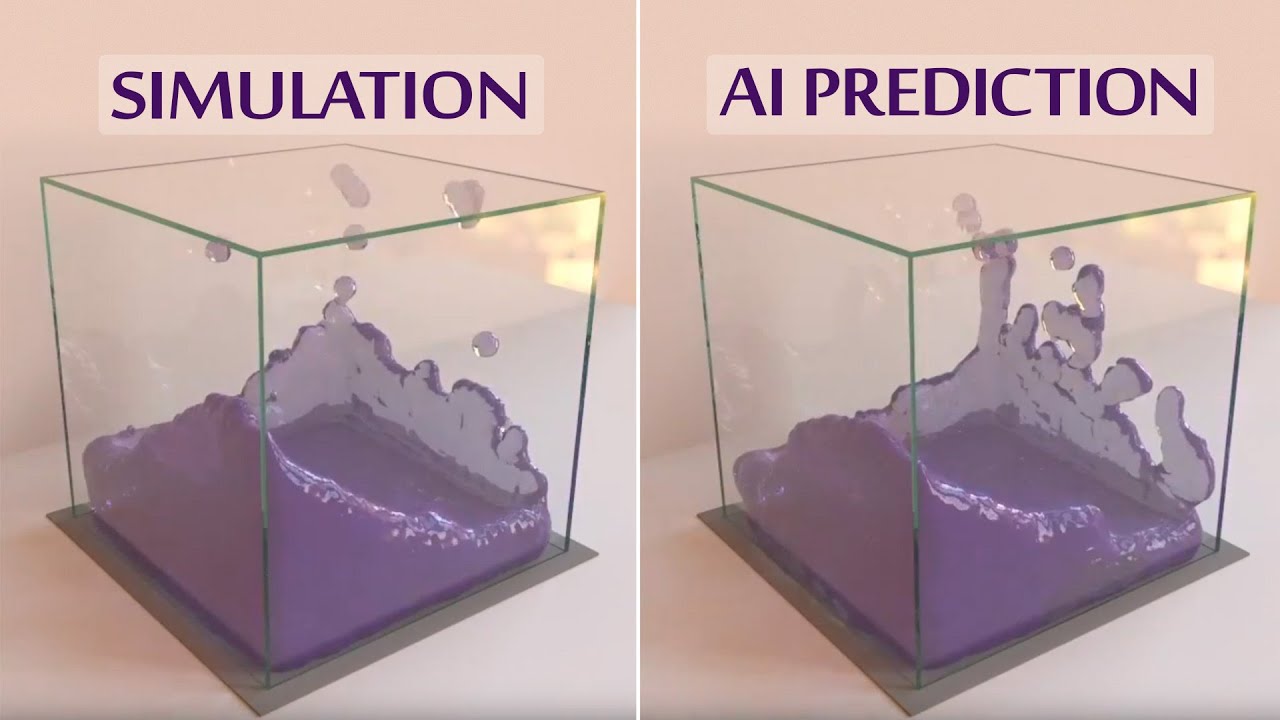
Dear Fellow Scholars, this is Two Minute Papers with Károly Zsolnai-Fehér. The better fluid simulation techniques out there typically run on our graphical cards, which, if we formulate the problem in a way that the many compute units within can do in parallel, if they row in unison, if you will, we'll be greeted by an incredible bump in the speed of the simulation. This leads to amazingly detailed simulations, many of which you'll see in this footage. It's going to be really good! However, sometimes we have a simulation domain that is so large, it simply cannot be loaded into the memory of our graphical card. What about those problems? Well, the solution could be subdividing the problem into independent subdomains and solving them separately on multiple devices. Slice the problem up into smaller, more manageable pieces. Divide and conquer. But wait, we would just be pretending that these subdomains are independent, because in reality, they are clearly not, because there is a large amount of fluid flowing between them, and it takes quite a bit of algebraic wizardry to make sure that the information exchange between these devices happens correctly, and on time. But if we do it correctly, we can see our reward on the screen. Let's marvel at it together! Oh, hohoho, yeah! I cannot get tired of this. Typically, the simulation in the individual subdomains are computed on one or more separate graphical cards, and the administration on the intersecting interface takes place on the processor. The challenge of such a solution is that one has to be able to show that the solution of this problem formulation is equivalent to solving the huge original problem. And, it also has to be significantly more efficient to be useful for projects in the industry. The paper is one of the finest pieces of craftsmanship I've seen lately, the link is available in the video description. Thanks for watching and for your generous support, and I'll see you next time!

Другие видео автора — Two Minute Papers

Ctrl+V

Экстракт Знаний в Telegram

Экстракты и дистилляты из лучших YouTube-каналов — сразу после публикации.

Подписаться

Дайджест Экстрактов

Лучшие методички за неделю — каждый понедельник