Narrow Band Liquid Simulations | Two Minute Papers #61
2:30

Narrow Band Liquid Simulations | Two Minute Papers #61

Two Minute Papers 28.04.2016 29 370 просмотров 680 лайков

Machine-readable: Markdown · JSON API · Site index

Поделиться Telegram VK Бот
Транскрипт Скачать .md
Анализ с AI
Описание видео
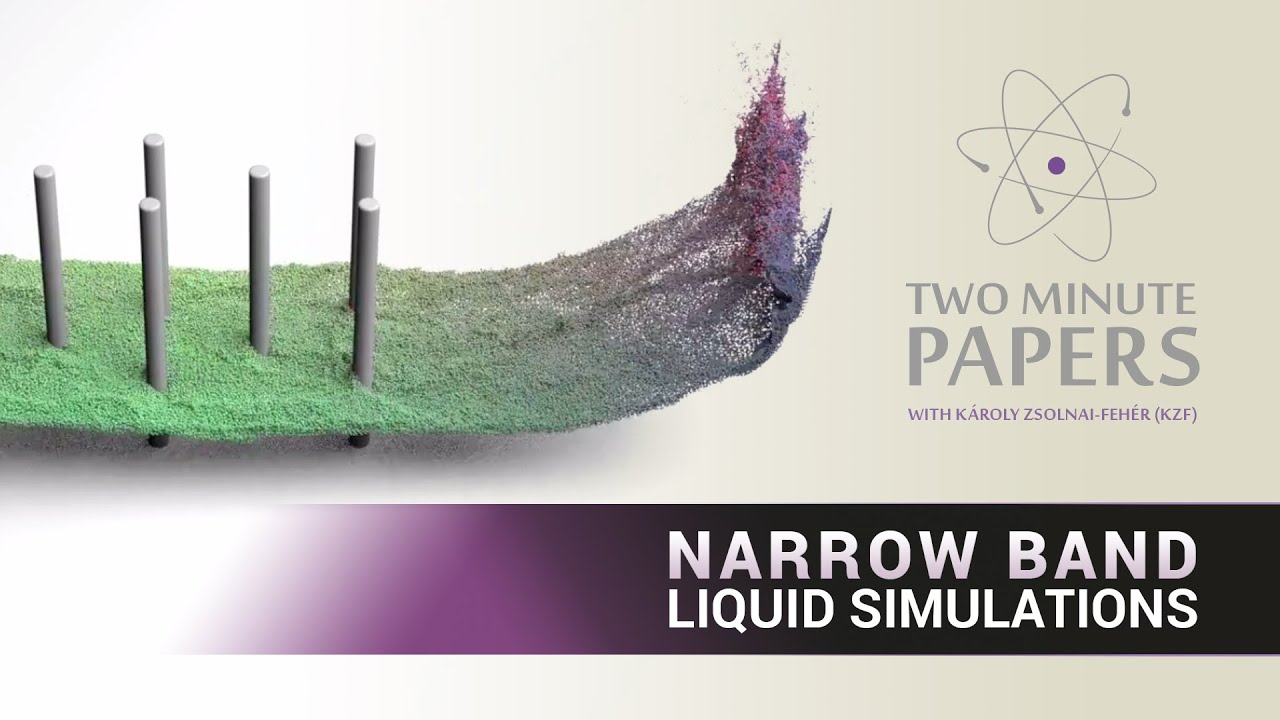
We continue our journey in the land of fluid simulations and discuss a really cool FLIP-based technique that uses both particles and grids to create very high quality footage at a much more reasonable cost than previous works. ____________________ The paper "Narrow Band FLIP for Liquid Simulations" is available here: https://wwwcg.in.tum.de/research/research/publications/2016/narrow-band-flip-for-liquid-simulations.html Yearning for more fluids? :) A Two Minute Papers playlist of fluid and cloth simulation-related topics is available here: https://www.youtube.com/playlist?list=PLujxSBD-JXgnnd16wIjedAcvfQcLw0IJI WE WOULD LIKE TO THANK OUR GENEROUS SUPPORTERS WHO MAKE TWO MINUTE PAPERS POSSIBLE: Sunil Kim, Vinay S. https://www.patreon.com/TwoMinutePapers Subscribe if you would like to see more of these! - http://www.youtube.com/subscription_center?add_user=keeroyz The thumbnail background image was taken from the corresponding paper. Splash screen/thumbnail design: Felícia Fehér - http://felicia.hu Károly Zsolnai-Fehér's links: Facebook → https://www.facebook.com/TwoMinutePapers/ Twitter → https://twitter.com/karoly_zsolnai Web → https://cg.tuwien.ac.at/~zsolnai/
Оглавление (1 сегментов)

Segment 1 (00:00 - 02:00)

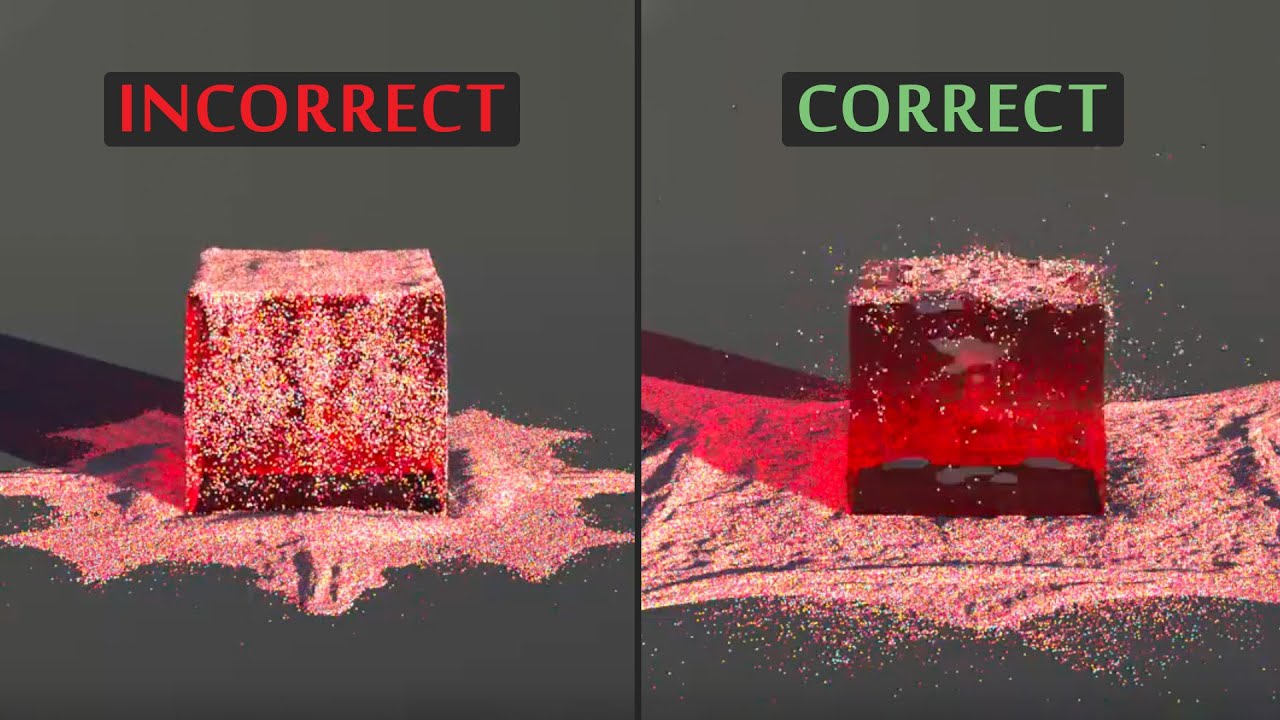
Dear fellow scholars, this is two minute papers with Kohaa Eher. Our endeavors in creating amazingly detailed fluid simulations is often hamstrung by the fact that we need to simulate the motion of tens of millions of particles. Needless to say, this means excruciatingly long computation times and large memory consumption. This piece of work tries to alleviate the problem by confining the usage of particles to a narrow band close to the liquid surface and thus decimating the number of particles used in the simulation. The rest of the simulation is computed on a very coarse grid where we compute quantities of the fluid like velocity and pressure in grid points and instead of computing them everywhere we try to guess what is happening between these grid points. The drawback of this is that we may miss a lot of details because of that. And the brilliant part of this new technique is that we only use a cheap sparse grid where there's not a lot of things happening and use the expensive particles only near the surface where there are a lot of details we can capture. Well, the flip term that you see in the video means fluid implicit particle. A popular way of simulating fluids that uses both grids and particles. In this scene, the old method uses 24 million particles, while the new technique uses only 1 million and creates closely matching results. You can see a lot of excess particles in the footage with the classical simulation technique, and the foamish looking version is the proposed new, more efficient algorithm. Creating such a technique is anything but trivial. Unless special measures are taken, the simulation may have robustness issues, which means that there are situations where it does not produce a sensible result. This is demonstrated in a few examples where with a naive version of the technique, a piece of fluid never ever comes to rest or it may exhibit behaviors that are clearly unstable. It also takes approximately half as much time to run the simulation and uses half as much memory, which is a huge relief for visual effects artists. I don't know about you fellow scholars, but I see a flood of amazing fluid papers coming in the near future, and I'm having quite a bit of trouble containing my excitement. Exciting times are ahead indeed. Thanks for watching and for your generous support, and I'll see you next time.

Другие видео автора — Two Minute Papers

Ctrl+V

Экстракт Знаний в Telegram

Экстракты и дистилляты из лучших YouTube-каналов — сразу после публикации.

Подписаться

Дайджест Экстрактов

Лучшие методички за неделю — каждый понедельник