9 Cool Deep Learning Applications | Two Minute Papers #35
4:43

9 Cool Deep Learning Applications | Two Minute Papers #35

Two Minute Papers 05.01.2016 152 215 просмотров 1 677 лайков

Machine-readable: Markdown · JSON API · Site index

Поделиться Telegram VK Бот
Транскрипт Скачать .md
Анализ с AI
Описание видео
Machine learning provides us an incredible set of tools. If you have a difficult problem at hand, you don't need to hand craft an algorithm for it. It finds out by itself what is important about the problem and tries to solve it on its own. In this video, you'll see a number of incredible applications of different machine learning techniques (neural networks, deep learning, convolutional neural networks and more). Note: the fluid simulation paper is using regression forests, which is a machine learning technique, but not strictly deep learning. There are variants of it that are though (e.g., Deep Neural Decision Forests). ________________________ The paper "Toxicity Prediction using Deep Learning" and "Prediction of human population responses to toxic compounds by a collaborative competition" are available here: http://arxiv.org/pdf/1503.01445.pdf http://www.nature.com/nbt/journal/v33/n9/full/nbt.3299.html The paper "A Comparison of Algorithms and Humans For Mitosis Detection" is available here: http://people.idsia.ch/~juergen/deeplearningwinsMICCAIgrandchallenge.html http://people.idsia.ch/~ciresan/data/isbi2014.pdf Kaggle-related things: http://kaggle.com https://www.kaggle.com/c/dato-native http://blog.kaggle.com/2015/12/03/dato-winners-interview-1st-place-mad-professors/ The paper "Deep AutoRegressive Networks" is available here: http://arxiv.org/pdf/1310.8499v2.pdf https://www.youtube.com/watch?v=-yX1SYeDHbg&feature=youtu.be&t=2976 The furniture completion paper, "Data-driven Structural Priors for Shape Completion" is available here: http://cs.stanford.edu/~mhsung/projects/structure-completion Data-driven fluid simulations using regression forests: https://graphics.ethz.ch/~sobarbar/papers/Lad15/DatadrivenFluids.mov https://www.inf.ethz.ch/personal/ladickyl/fluid_sigasia15.pdf Selfies and convolutional neural networks: http://karpathy.github.io/2015/10/25/selfie/ Multiagent Cooperation and Competition with Deep Reinforcement Learning: http://arxiv.org/abs/1511.08779 https://www.youtube.com/watch?v=Gb9DprIgdGw&index=2&list=PLfLv_F3r0TwyaZPe50OOUx8tRf0HwdR_u https://github.com/NeuroCSUT/DeepMind-Atari-Deep-Q-Learner-2Player Kaggle automatic essay scoring contest: https://www.kaggle.com/c/asap-aes http://www.vikparuchuri.com/blog/on-the-automated-scoring-of-essays/ Great talks on Kaggle: https://www.youtube.com/watch?v=9Zag7uhjdYo https://www.youtube.com/watch?v=OKOlO9nIHUE https://www.youtube.com/watch?v=R9QxucPzicQ The thumbnail image was created by Barn Images - https://flic.kr/p/xxBc94 Subscribe if you would like to see more of these! - http://www.youtube.com/subscription_center?add_user=keeroyz Splash screen/thumbnail design: Felícia Fehér - http://felicia.hu Károly Zsolnai-Fehér's links: Patreon → https://www.patreon.com/TwoMinutePapers Facebook → https://www.facebook.com/TwoMinutePapers/ Twitter → https://twitter.com/karoly_zsolnai Web → https://cg.tuwien.ac.at/~zsolnai/
Оглавление (10 сегментов)

<Untitled Chapter 1>

Dear Fellow Scholars, this is Two Minute Papers with Károly Zsolnai-Fehér. There are so many applications of deep learning, I was really excited to put together a short, but really cool list of some of the more recent results for you Fellow Scholars to enjoy. Machine learning provides us an incredible set of tools. If you have a difficult problem at hand, you don't need to hand craft an algorithm for it. It finds out by itself what is important about the problem and tries to solve it on its own. In many problem domains, they perform better than human experts. What's more, some of these algorithms find out things that could earn you a PhD with 10 years ago. Here goes the first stunning application: toxicity detection for different chemical

<Untitled Chapter 1>

Dear Fellow Scholars, this is Two Minute Papers with Károly Zsolnai-Fehér. There are so many applications of deep learning, I was really excited to put together a short, but really cool list of some of the more recent results for you Fellow Scholars to enjoy. Machine learning provides us an incredible set of tools. If you have a difficult problem at hand, you don't need to hand craft an algorithm for it. It finds out by itself what is important about the problem and tries to solve it on its own. In many problem domains, they perform better than human experts. What's more, some of these algorithms find out things that could earn you a PhD with 10 years ago. Here goes the first stunning application: toxicity detection for different chemical

Toxicity Detection for Different Chemical Structures

structures by means of deep learning. It is so efficient that it could find toxic properties that previously required decades of work by humans who are experts of their field.

Toxicity Detection for Different Chemical Structures

structures by means of deep learning. It is so efficient that it could find toxic properties that previously required decades of work by humans who are experts of their field.

Mitosis Detection from Large Images

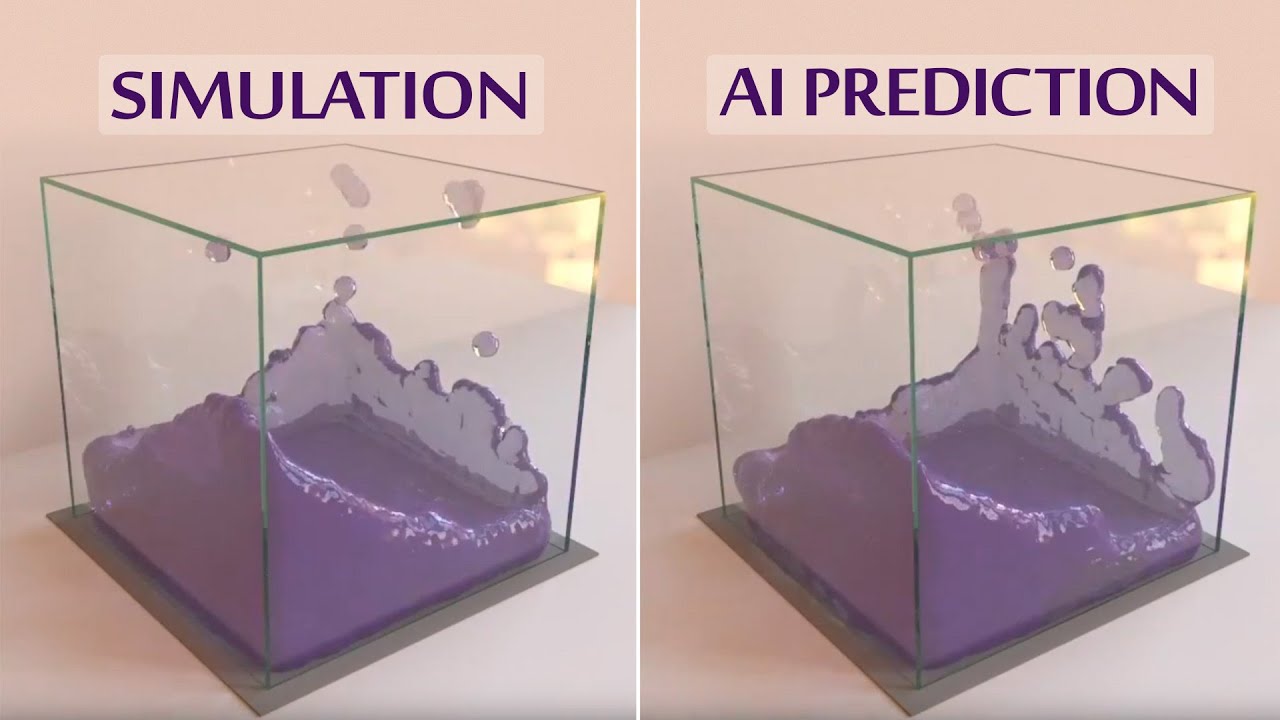
Next one. Mitosis detection from large images. Mitosis means that cell nuclei are undergoing different transformations that are quite harmful, and quite difficult to detect. The best techniques out there are using convolutional neural networks and are outperforming professional radiologists at their own task. Unbelievable. Kaggle is a company that is dedicated to connecting companies with large datasets and data scientists who write algorithms to extract insight from all this data. If you take only a brief look, you see an incredibly large swath of applications for learning algorithms. Almost all of these were believed to be only for humans, very smart humans. And learning algorithms, again, emerge triumphant on many of these. For example, they had a great competition where learning algorithms would read a website and find out whether paid content is disguised there as real content. Next up on the list: hallucination or sequence generation. It looks at different video games, tries to learn how they work, and generates new footage out of thin air by using a recurrent neural network. Because of the imperfection of 3D scanning procedures, many 3D scanned furnitures that are too noisy to be used as is. However, there are techniques to look at these really noisy models and try to figure out how they should look by learning the symmetries and other properties of real furnitures. These algorithms can also do an excellent job at predicting how different fluids behave in time, and are therefore expected to be super useful in physical simulation in the following years. On the list of highly sophisticated scientific topics, there is this application that can

Mitosis Detection from Large Images

Next one. Mitosis detection from large images. Mitosis means that cell nuclei are undergoing different transformations that are quite harmful, and quite difficult to detect. The best techniques out there are using convolutional neural networks and are outperforming professional radiologists at their own task. Unbelievable. Kaggle is a company that is dedicated to connecting companies with large datasets and data scientists who write algorithms to extract insight from all this data. If you take only a brief look, you see an incredibly large swath of applications for learning algorithms. Almost all of these were believed to be only for humans, very smart humans. And learning algorithms, again, emerge triumphant on many of these. For example, they had a great competition where learning algorithms would read a website and find out whether paid content is disguised there as real content. Next up on the list: hallucination or sequence generation. It looks at different video games, tries to learn how they work, and generates new footage out of thin air by using a recurrent neural network. Because of the imperfection of 3D scanning procedures, many 3D scanned furnitures that are too noisy to be used as is. However, there are techniques to look at these really noisy models and try to figure out how they should look by learning the symmetries and other properties of real furnitures. These algorithms can also do an excellent job at predicting how different fluids behave in time, and are therefore expected to be super useful in physical simulation in the following years. On the list of highly sophisticated scientific topics, there is this application that can

What Makes a Good Selfie

find out what makes a good selfie and how good your photos are. If you really want to know the truth. Here is another application where a computer algorithm that we call deep q learning, plays

What Makes a Good Selfie

find out what makes a good selfie and how good your photos are. If you really want to know the truth. Here is another application where a computer algorithm that we call deep q learning, plays

Deep Q-Learning

pong, against itself, and eventually achieves expertise. The machines are also grading student essays. At first, one would think that this cannot possibly be a good idea. As it turns out, their judgement is more consistent with the reference grades than any of the teachers who were tested. This could be an awesome tool for saving a lot of time and assisting the teachers to help their students learn. This kind of blows my mind. It would be great to take a look at an actual dataset if it is public and the issued grades, so if any of you Fellow Scholars have seen it somewhere, please let me know in the comments section! These results are only from the last few years, and it's really just scratching the surface. There are literally hundreds of more applications we haven't even talked about. We are living extremely exciting times indeed. I am eager to see, and perhaps, be a small part of this progress. There are tons of reading and viewing materials in the description box, check them out! Thanks for watching and for your generous support, and I'll see you next time!

Deep Q-Learning

pong, against itself, and eventually achieves expertise. The machines are also grading student essays. At first, one would think that this cannot possibly be a good idea. As it turns out, their judgement is more consistent with the reference grades than any of the teachers who were tested. This could be an awesome tool for saving a lot of time and assisting the teachers to help their students learn. This kind of blows my mind. It would be great to take a look at an actual dataset if it is public and the issued grades, so if any of you Fellow Scholars have seen it somewhere, please let me know in the comments section! These results are only from the last few years, and it's really just scratching the surface. There are literally hundreds of more applications we haven't even talked about. We are living extremely exciting times indeed. I am eager to see, and perhaps, be a small part of this progress. There are tons of reading and viewing materials in the description box, check them out! Thanks for watching and for your generous support, and I'll see you next time!

Другие видео автора — Two Minute Papers

Ctrl+V

Экстракт Знаний в Telegram

Экстракты и дистилляты из лучших YouTube-каналов — сразу после публикации.

Подписаться

Дайджест Экстрактов

Лучшие методички за неделю — каждый понедельник