Modeling Colliding and Merging Fluids | Two Minute Papers #18
2:39

Modeling Colliding and Merging Fluids | Two Minute Papers #18

Two Minute Papers 20.10.2015 12 152 просмотров 315 лайков

Machine-readable: Markdown · JSON API · Site index

Поделиться Telegram VK Бот
Транскрипт Скачать .md
Анализ с AI
Описание видео
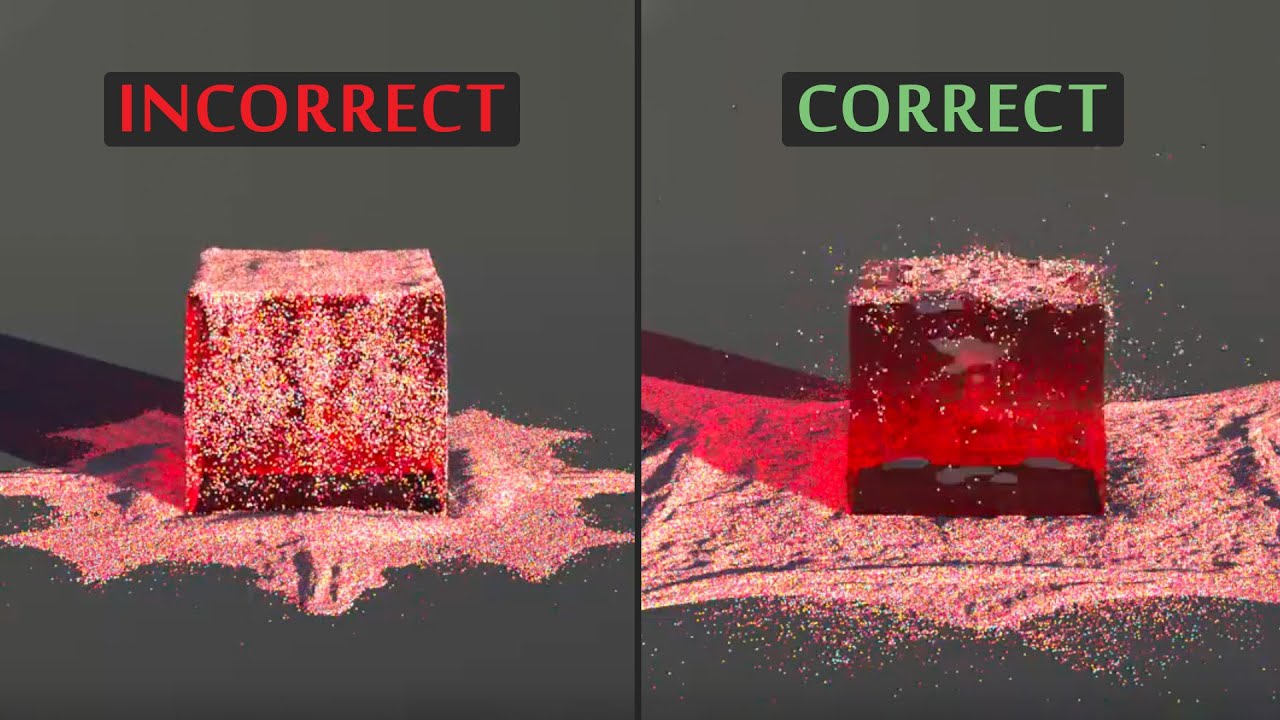
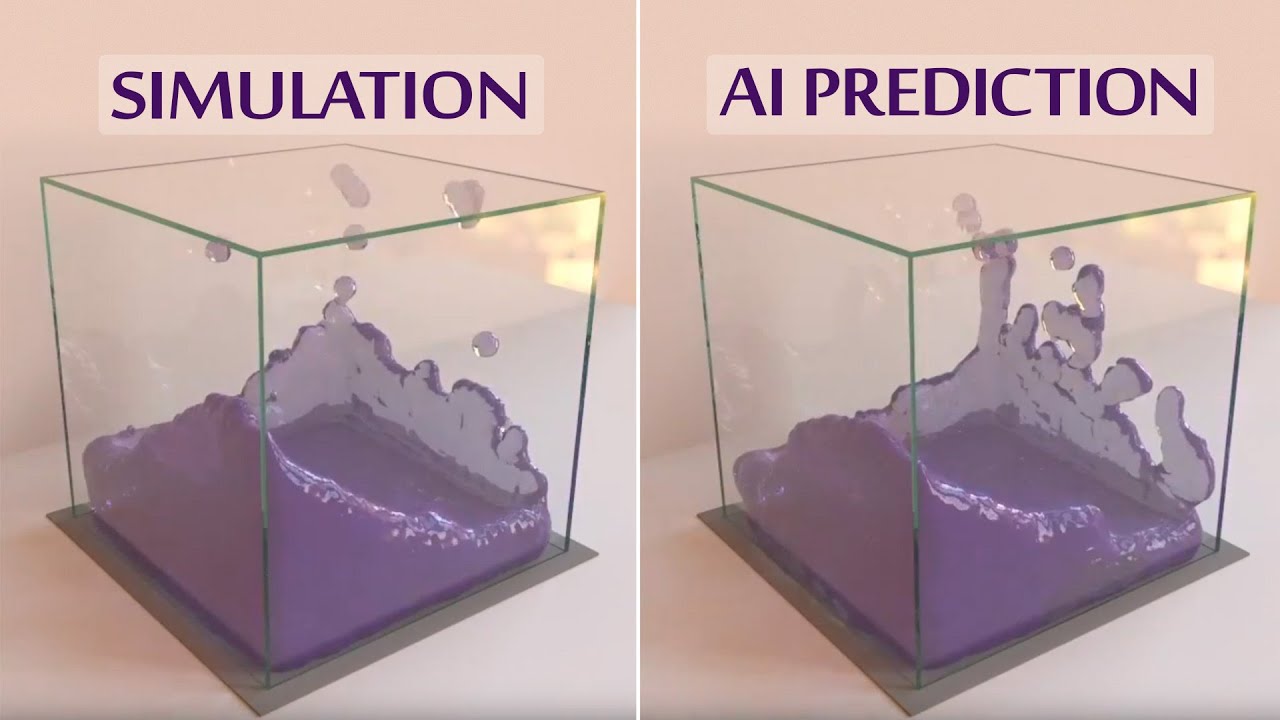
In Two Minute Papers, we have talked about different fluid simulation techniques. This time, we are going to talk about surface tracking. Surface tracking is required to account for topological changes when different fluid interfaces collide. This work also takes into consideration the possibility of colliding fluids that are made of different materials. The resulting surface tracking algorithm is very robust, which means that it can deal with a large number of materials and topological changes at the same time. _________________________________ The paper "Multimaterial Mesh-Based Surface Tracking" is available here: http://www.cs.columbia.edu/cg/multitracker/ Recommended for you: Adaptive Fluid Simulations - https://www.youtube.com/watch?v=dH1s49-lrBk&index=1&list=PLujxSBD-JXgnqDD1n-V30pKtp6Q886x7e Fluid Simulations with Blender and Wavelet Turbulence - https://www.youtube.com/watch?v=5xLSbj5SsSE&index=15&list=PLujxSBD-JXgnqDD1n-V30pKtp6Q886x7e Social media graph image: Marc Smith - https://flic.kr/p/836Ttv Attribution 2.0 Generic (CC BY 2.0) - https://creativecommons.org/licenses/by/2.0/ Music: "Dixie Outlandish" by John Deley and the 41 Players Subscribe if you would like to see more of these! - http://www.youtube.com/subscription_center?add_user=keeroyz The thumbnail background is taken from the mentioned paper. Splash screen/thumbnail design: Felícia Fehér - http://felicia.hu Károly Zsolnai-Fehér's links: Patreon → https://www.patreon.com/TwoMinutePapers Facebook → https://www.facebook.com/TwoMinutePapers/ Twitter → https://twitter.com/karoly_zsolnai Web → https://cg.tuwien.ac.at/~zsolnai/
Оглавление (1 сегментов)

Segment 1 (00:00 - 02:00)

Dear fellow scholars, this is two minute papers with Kohaa Eher. Simulating the behavior of water and other fluids is something we have been talking about in the series. However, we are now interested in modeling the interactions between two fluid interfaces that are potentially made of different materials. During these collisions, deformations and topology changes happen that are very far from trivial to simulate properly. The interesting part about this technique is that it uses graph theory to model these interface changes. Graph theory is a mathematical field that studies relations between well different things. Graphs are defined by vertices and edges where the vertices can represent people on your favorite social network and any pair of these people who know each other can be connected by edges. Graphs are mostly used to study and represent discrete structures. This means that you either know someone or you don't. There is nothing in between. For instance, the number of people that inhabit the earth is an integer. It is also a discrete quantity. However, the surface of different fluid interfaces is a continuum, it is not really meant to be described by discrete mathematical tools such as graphs. And well, that's exactly what happened here. Even though the surface of a fluid is a continuum, when dealing with topological changes, an important thing we'd like to know is the number of regions inside and around the fluid. The number of these regions can increase or decrease over time depending on whether multiple materials split or merge. And surprisingly, graph theory has proved to be very useful in describing this kind of behavior. The resulting algorithm is extremely robust, meaning that it can successfully deal with a large number of different materials. Examples include merging and wobbling droplets. piling plastic bunnies and swirling spheres of goo. Beautiful results. If you like this episode, please don't forget to subscribe and become a member of our growing club of fellow scholars. Please come along and join us on our journey and let's show the world how cool research really is. Thanks so much for watching and I'll see you next time.

Другие видео автора — Two Minute Papers

Ctrl+V

Экстракт Знаний в Telegram

Экстракты и дистилляты из лучших YouTube-каналов — сразу после публикации.

Подписаться

Дайджест Экстрактов

Лучшие методички за неделю — каждый понедельник