Simulating Breaking Glass | Two Minute Papers #4
2:21

Simulating Breaking Glass | Two Minute Papers #4

Two Minute Papers 22.08.2015 12 309 просмотров 489 лайков

Machine-readable: Markdown · JSON API · Site index

Поделиться Telegram VK Бот
Транскрипт Скачать .md
Анализ с AI
Описание видео
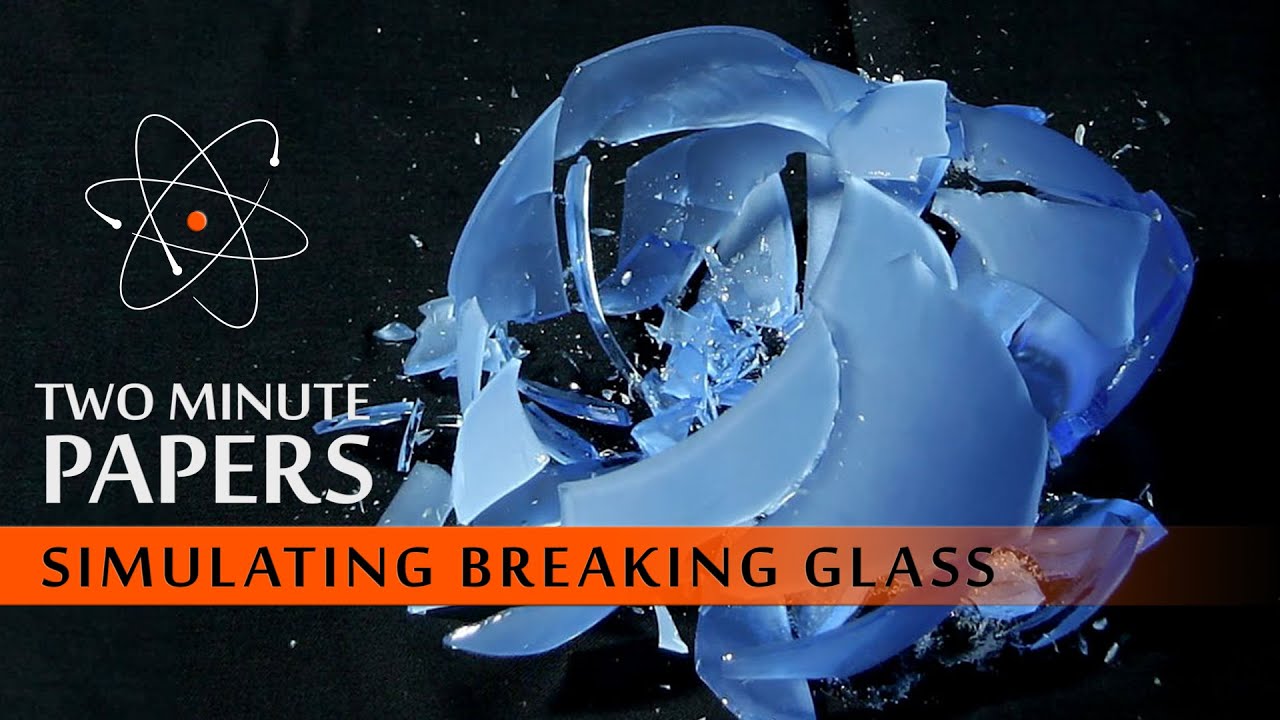
There is something inherently exciting about watching breaking glass and other objects. Researchers in computer graphics also like to have some fun and write simulation programs to smash together a variety of virtual objects in slow motion. However, despite being beautiful, they are physically not correct as many effects are neglected, such as simulating plasticity, bending stiffness, stretching energies and many others. Pfaff et al.'s paper "Adaptive Tearing and Cracking of Thin Sheets" addresses this issue by creating an adaptive simulator that uses more computational resources only around regions where cracks are likely to happen. This new technique enables the simulation of tearing for a variety of materials like cork, foils, metals, vinyl and it also yields physically correct results for glass. The algorithm also lets artists influence the outcome to be in line with their artistic visions. Pfaff et al.'s research paper "Adaptive Tearing and Cracking of Thin Sheets" is available here: http://graphics.berkeley.edu/papers/Pfaff-ATC-2014-07/ Disclaimer: I was not part of this research project, I am merely providing commentary on this work. In Two Minute Papers, I attempt to bring the most awesome research discoveries to everyone a couple minutes at a time. The shattered glass image from the thumbnail was created by Andrew Magill. Music: "Jolly Old St Nicholas" by E's Jammy Jams Subscribe if you would like to see more of these! - http://www.youtube.com/subscription_center?add_user=keeroyz Károly Zsolnai-Fehér's links: Patreon → https://www.patreon.com/TwoMinutePapers Facebook → https://www.facebook.com/TwoMinutePapers/ Web → https://cg.tuwien.ac.at/~zsolnai/ Twitter → https://twitter.com/karoly_zsolnai
Оглавление (1 сегментов)

Segment 1 (00:00 - 02:00)

Greetings to all of you Fellow Scholars out there this is Two Minute Papers where I explain awesome research works, a couple minutes at a time. You know, I wish someone explain to me in simple terms what's going on in genetics, biology and just about every field of scientific research. There are tons of wonderful works coming every day that we don't know about, and I'm trying my best here to bring it to you the simplest way I possibly can. So you know, researchers are people and physics research at the Hadron Collider basically means that people smash atoms together. Well, computer graphics people also like to have some fun and write simulation programs to smash together a variety of objects in slow motion. However, even though most of these simulations look pretty good they are physically not correct as many effects are neglected such as simulating plasticity, bending, stiffness, stretching, energies and many others. But unfortunately, these are too expensive to compute in high resolution, unless you have some tricks up the sleeve. Researchers at UC Berkeley have managed to crack this nut by creating an algorithm that uses more computational resources only around regions where cracks are likely to happen. This new technique enables the simulation of tearing for a variety of materials like cork, foils, metals, vinyl and it also yields physically correct results for glass. Here's an example of a beaten-up rubber sheet from their simulation program compared to a real-world photograph. It's really awesome that you can do something on your computer in a virtual world that has something to do with reality. It is impossible to get used to this feeling, it's so amazing. And what's even better since it is really difficult to know in advance how the cracks would exactly look like they have also enhanced the directability of the simulation, so artists could change things up a bit to achieve a desired artistic effect. In this example they have managed to avoid tearing a duck in two by weakening the paths around them. Bravo! Thanks for watching and if you liked this series just hit the like and subscribe buttons below the video to become a member of our growing club of scholars. Thanks, and I'll see you next time!

Другие видео автора — Two Minute Papers

Ctrl+V

Экстракт Знаний в Telegram

Экстракты и дистилляты из лучших YouTube-каналов — сразу после публикации.

Подписаться

Дайджест Экстрактов

Лучшие методички за неделю — каждый понедельник