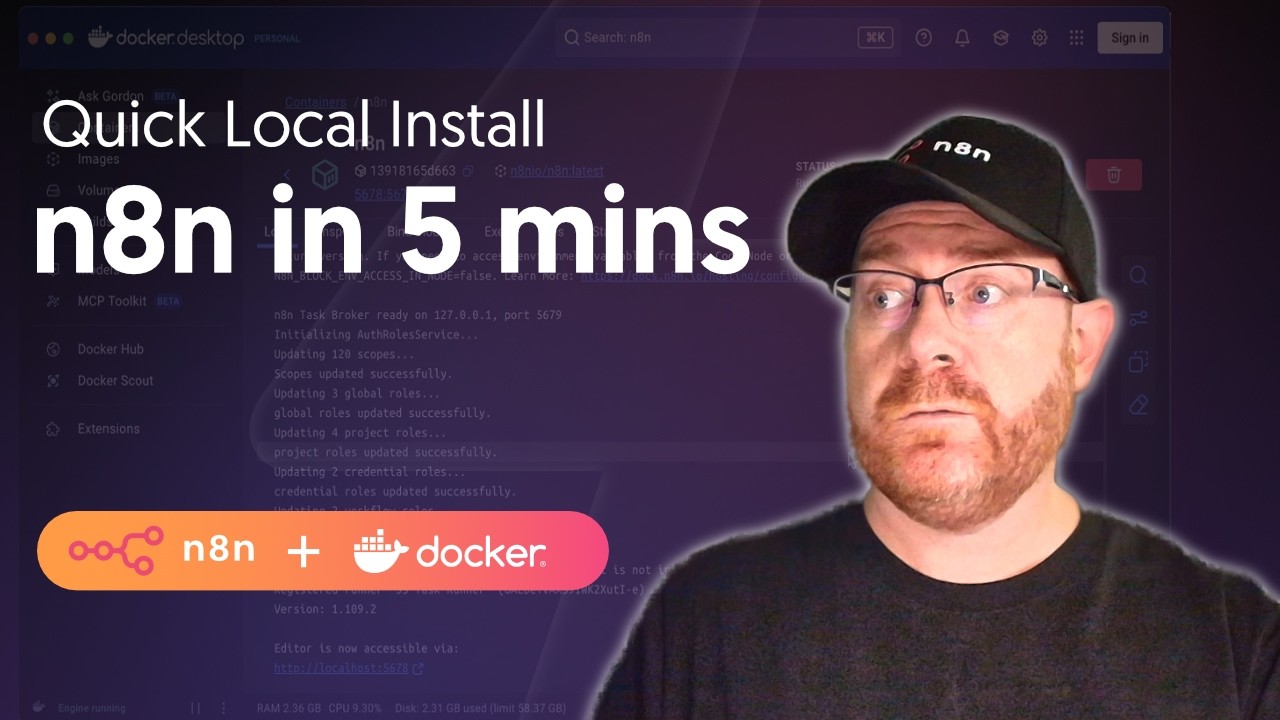
In this episode, the Sabrina Romanov shares how she skyrocketed from zero to 1.4 million followers in just 15 months, and built her Bootstrap Startup website from zero to 1.4 million visitors in only 10 months, all without a team, paid ads, editors, or virtual assistants.
00:00 Introduction: From Zero to 1.4M Followers
00:36 Building AI Tools & Automation Systems
01:10 Scaling Solo Without a Team
02:19 Selling AI Business for $10M
04:21 Lessons from 10 Years in AI
06:04 Building AI Customer Service Agent
07:55 Using MCP with N8N for Automation
09:17 Pre-Planning Your AI Systems
12:01 Content Creation Strategy: 3 Steps
13:55 AI-Powered Content Ideation
15:57 Creating Content Drafts with AI
19:05 Delivering Value & Authentic Connection
22:37 Meta Skills for Building a Brand
24:25 Batching Content: One Day Per Week
26:06 Publishing & Repurposing Content
28:41 Building Potato API & N8N Integration
32:35 Community Collaboration & Feedback
36:22 Avoiding Distractions as a Solo Founder
39:59 Mental Health & Avoiding Burnout
42:22 Advice for Starting Your Brand
44:09 Focus on Top of Funnel Marketing
#n8n #n8nMasterclassPodcast #podcast #masterclass
The n8n Masterclass Podcast
Оглавление (21 сегментов)
Introduction: From Zero to 1.4M Followers
I've gone from zero to 1. 4 million followers in the past 15 months. My Bootstrap Stark website has grown from zero to also 1. 4 million website visits in the past 10 months. And I think I've had over 500 million organic views on social media, which is absolutely insane. And this is all without a team, without paid ads, without video editors, without any VAS, all completely solo. My avatar always wears a hat. That way my community knows instantly visually and it's transparent. A lot of the fundamental problems have not changed. With AI, you can now analyze all the same sources but a thousand times scale.
Building AI Tools & Automation Systems
— What tools are you doing? What problems are you solving by integrating MCP with Nadin? — My AIBOT was like, "You really should fix this. It keeps coming up on a weekly basis every single week. I sleep a lot. I take naps in the afternoon. I go outside a lot. As long as it has fewer than four meetings, like I know I did a good job. " — It's not one or the other. It's not have AI replace you entirely. It's both. — When I started making content, my only goal was to post one piece of content for the next 5 years. — You've been able to build and sell your business for $10 million in the AI space and then to scale yourself to over a million followers in like less than 12 months. What's been able to make that
Scaling Solo Without a Team
happen? — Didn't mean to build an API. — There's going to be a lot of people listening to this that are going to want to get value out of this because their time is valuable. What can people expect by listening to this podcast? — Well, today I wanted to talk about how I use AI and automation to scale myself solo. And it's been pretty crazy in my journey. I've gone from zero to 1. 4 million followers in the past 15 months. My Bootstrap startup website has grown from zero to also 1. 4 million website visits in the past 10 months. And I think I've had over 500 million organic views on social media, which is absolutely insane. And this is all without a team, without paid ads, without video editors, without any VAS, all completely solo. And I just try to apply AI in like multiple steps of my process. And I'm happy to dive into that today. Incredible. What we're going to be doing that is I want to look at your systems, right? What are the systems you have in place and then what are skills behind that to support those systems? Because I think it's a combination of both, you know, personal skills for creating content and then automation skills to be able to scale yourself without burnout. And so, let's look at it from the first things. You built and sold a business in AI for $10 million in 2014. Can you talk to me a little bit about that process? Yeah. So
Selling AI Business for $10M
I graduated UC Berkeley in computer science and physics in late 2013 and then immediately started a company with my husband now although we were just dating at the time at Berkeley and we did real-time speech recognition and natural language processing for live conversations. So imagine a customer support call our AI we also built an in-house telefan infrastructure. would join that conversation, figure out what people are saying in real time and then figure out objections, questions, confusion and frustration from the customer and then search a knowledge base to help you figure out what to say next. So providing real-time guidance to sales and support reps in highstakes conversations such as sales and support calls that was incredibly hard to build. Um like no joke, it's been insane seeing the AI space evolve in the past 10 years. The things you can do with chat GP today are mindblowing. So NLP tasks like sentiment analysis, classifying objections, classifying questions. We'd have to train like separate machine learning models for each of those tasks. And now with chat GBD today, you can just go to it and be like just summarize all of this and extract all the objections and extract all this and also write a blog post. Um, and the quality you get is incredible. Um, but yeah, that was the company we started. We built a lot of that technology in-house and then we sold that company to a really big player in the robotic process automation space or RPA space called Pega Systems. They do over a billion in revenue and then we incorporated our product into their customer service portfolio. So it's now called Pega Voice AI and it's being used by thousands of support agents around the world. — Wow. So funny. only in the AI space can you say it was back in the days like a decade ago for you to be able to do this and absolutely fundamentally change the game. What lessons have you seen or taken because you've been in early and so we see patterns of cycles and activities. What lessons have you taken from the 2014 space and being in AI that you've been able to apply in this 2025 space to help you scale your brand and anything else you're seeing on with AI?
Lessons from 10 Years in AI
— Well, I think it's really interesting. A lot of the fundamental problems have not changed. Um like the problem we were solving back then with customer support was just like how do I scale customer support in a way that is consistent with my knowledge base compliant with my brand guidelines and how we interact with our customers. And I look at what I'm doing today with Blot where one of my favorite NN AI agents is my support agent. It's on my self-hosted NAND. It's doing 200 support tickets per day. It's using sub agents to route to the appropriate agent. Sub agents have MCP tool calls. They have a shared knowledge base where they're getting that information. But the problem it's solving is like the same one from 10 years ago, which is how do you provide high quality customer service. Um, so that's something I think about a lot. like a lot of the problems haven't necessarily changed that much, but it's how can we use technology now to scale higher quality solutions uh in a way that you know saves time and gives you massive leverage. That's what I think a lot about especially as a soloreneur. Um my goal isn't to raise like a bunch of VC funding and like try to grow as fast as possible. It's really to build a really awesome sustainable business completely solo um and do it on my own terms. And so — that makes a ton of sense. So what I'm hearing from this side is you took this the lessons there's a painful problem you always have the same problem the problem is customer service and how do you respond to them and then you said okay I built this really complicated really expensive thing back in the day how do I do it a lot easier and better with naden and ultimately cheaper you said before you had another system in place for this customer service thing that was costing x you switched to naden that's now it's costing you why talk to me about that transformation and the benefits of using nadn for this type of problem solving
Building AI Customer Service Agent
— yeah sure So when I started building AI for customer service for Blot, I started with intercom Finn AI because I was already using Intercom as my support messenger and I still do that today. Their AI agent Finn I think is one of the fastest growing AI agents on track to hit 100 million in annual recurring revenue early next year. And it was really easy to get started, right? You just plug in my help docs and then the AI agent without much configuration was able to start answering questions. And that was great when I just started and my needs were simpler like the knowledge base itself was simpler, the product itself was simpler, but as my product grew in complexity and also the volume of tickets grew in complexity, it ended up costing like 1,300 per month at the time I replaced it um and I completely replaced it with a self-hosted NAD support agent that is quite frankly way more powerful and way more flexible. So things like MCP tool integrations, being able to route the ticket to different sub aents depending on what it's about. Uh for example, like a Stripe sub agent that just handles billing, an N8 sub agent just to help troubleshoot workflows, uh like other sub aents for other types of tasks. That kind of like flexibility and power, plus it costs near zero, right? I'm really only paying for calls to chat GPT, which I could also replace with an open source model. Um that's been incredibly transformative. Uh, and so that's just one example where, you know, I started with an AI agent. It was easy to get up and running, but again, I hit a lot of uh, blockers in terms of customizability and flexibility. — What do you primarily use the MCP for? Because I know MCP plus in is absolutely incredible. I've I did it uh for a client on WordPress and it was just a gamecher of being able to have it interact with different applications. But in the customer service space, what are you calling? What tools are you doing? What problems are you solving by integrating MCP with Naden?
Using MCP with N8N for Automation
— Yeah, so one example is Stripe MCP. So I have a sub agent that handles all billing related queries. And by hooking it up to Stripe MCP, I don't have to like hardcode all of these separate API calls. So things like recreating a new subscription, starting somebody's trial, cancelling somebody's account, issuing a refund, issuing multiple refunds, adding AI credits because my platform has AI credits. um all of these things that would h would would normally require like separate API calls to do each one. And then for each customer situation, it can be unique. Like sometimes you should cancel someone's account and refund. Sometimes you should just recreate their trial because they accidentally clicked a button and didn't mean to upgrade. Um, and then so there are all sorts of nuances that it's incredibly helpful to have an AI agent create a plan first and then it decides which tool calls the Stripe API it should execute in order to handle the customer's billing requests successfully. — So when you build a system like that, I mean you know probably historically with knowledge what problems to solve, what to escalate, when to do a human in the loop and when AI can solve the task. If someone wanted to integrate this type of system in their own business, what is the pre-planning? What is the due diligence that they need to do beforehand to install this in? We know in self-hosting, all that jazz. What do you do beforehand?
Pre-Planning Your AI Systems
— Yeah, I think having a really good sense, for example, for this customer service example, like what are the conversations that are happening and having like categories for what they are because you'll probably want one agent as a general router and then sub agents depending on the category. So there could be one that's general kind of product issues, one that's more technical and it's trained with more technical examples. For example, my product has an API. It also has an official NADN node. Sometimes people open the support chat, take a screenshot of their NAND and drop it into the support chat and like what is the agent supposed to do with it? So, I actually have a sub agent that's like if you get a screenshot of NADN, look for things in red, look for errors, look for like uh variable names that didn't populate correctly, right? Um like look for these very specific things and then another sub agent for billing. But having a good sense of like what those flows currently are and you can use AI to help you analyze that. So like let's export a bunch of support tickets you already have in your existing system and then use AI to help you roughly classify like maybe 30% of tickets are related to billing. pretty beginner level kind of onboarding type questions like frequently what where do I go to get my API key? Like that's pretty basic type of question that should be 100% offloaded to AI. Um, but yeah, that in terms of pre pre-planning, especially building this kind of conversational agent, having a really good sense of what those categories are and what success looks like. So again, for a very simple onboarding question, you should direct directly to the page they need to go to or directly to a tutorial that answers their question. U, for a billing type of request, you want to make sure that you summarize exactly what actions you took on their account because people get really frustrated when you like cancel their account, but they didn't want you to cancel their account. So like just again just having a really good sense of what those major scenarios are and edge cases. — That totally makes sense in terms of you just got to we got to map it out, see what people are doing and then kind of build for all those edge cases cuz the 80%'s easy. The last 20% of the mile is very difficult with AI. It just takes a bit more TLC and experience. So I want to segue here from creating this customer service agent and what you built for this to um your overall strategy because I mean you came out of nowhere well more or less nowhere and to build a following of 1. 4 4 million in the last was it 12 months, 14 months, something like that? — I think 15. Yeah, — 15 months. Okay, great. I want to know in terms of how did you do that in terms of strategy? So, you probably had a pre-planning phase where okay, this is probably what I'm going to do and then you started executing and then you integrated automation into this to be able to do this. What was that from the from the strategy all the way to the execution?
Content Creation Strategy: 3 Steps
— Yeah. So, I break down content creation into three distinct steps. And I don't think this has changed as a process, but you can use AI and automation at each of these steps to save time and give you a ton of leverage. And like those three steps are coming up with ideas, creating the content, the drafts, polishing it, and then actually publishing your content everywhere. And that include recycling the content, repurposing the content into different formats. And like there's an old way of doing each of these steps and then kind of a new supercharged way of doing each of these steps with AI. But fundamentally the process hasn't changed that much. So ideiation, drafts and then publishing. So just to give you an example when it comes to ideas, the old way of doing it might be like browsing social media like stopping when you see a post you like and then you bookmark it, save it in your notion or air table so that when you go sit down to make content, you're like you have a list of inspiration. Maybe you also look at Reddit, news articles in your industry. Maybe you also look at things you did every day like Gmail uh tickets that could inspire different pieces of content. Uh meetings like this With AI, you can now analyze all the same sources but a thousand times scale. So it can look at a thousand times more sources. everything in your Gmail, all of the meeting notes that your AI meeting notetakers took, right? It can analyze all of this stuff, sift through it, and say, based on your past high-erforming content, here are the top 10 pieces I think you should cover that would do really well with your audience. So, you get like massive scale in terms of the pure volume of content that it's analyzing. And then you tailor it to your specific audience, your business, your product, your focus, your niche. So, that's just one example of kind of like the old way of doing things. And then the new way with AI, but like again conceptually, fundamentally it hasn't changed. It's just using AI and automation to like truly turbocharge and scale yourself.
AI-Powered Content Ideation
— And what I love with that is one of the issues that we come across right now is that we in kind of a war for attention. Everybody wants their eyeballs. Everybody wants our time. And there's all these notifications going off that are just driving you crazy. And what I think is great about this is that there's kind of I kind of look at the social media as a forest. like back in the day caveman forest kind of things. And in there there's bounty and there's rewards and there's food and there's resources. There's also monsters that are going to eat you. And I think the monsters are going to eat you are this distractions and these side quests that don't serve you and you go, "Oh, I'm going to be productive on social media. " 14 hours later, you realize there are some giggles and that's about it. You didn't really do anything. So, I could totally see not only you doing this on your own or anybody that's savvy enough to do this on their own to be able to build the system, but I could even see a service or a company that goes, "Hey, man, let's get you off of social media. Let's automate the process of bringing inbound content to you that it only serves you to be a producer of content and not a consumer of content. " And so, did is this something that you built for yourself? Do you know if anybody does this? But I do see that this is kind of like taking the best elements of social media and removing all of these just attention demons that are just coming in to try to steal our eyeballs, you know? — Yeah. So, I kind of just built a custom thing with Naden and Air Table, but I could definitely see a product like this because a lot of people are drowning like you're saying and just all of this content. It's hard to figure out what you should be listening to and just figure out the signal among all of the noise. At the same time, you don't want to miss anything important, right? So, it's that balance of like how do you stay informed but also, you know, pay attention to the things that are going to add the most educational value to you and not distract you all the time. You know, healthy amount of distraction fine, but you know, — separate the signal from the noise, right? How do we do that? And part of that is, you know, being intentional ahead of time and putting things in place for it. So, we just covered this whole pre-content section, right? So, you said there's three legs, right? Or three buckets. The first one, pre-content. Let's move on to the second one. So the second one is actually
Creating Content Drafts with AI
creating the content, creating the drafts. And the biggest problem here with the old way is the blank page syndrome. So it's like you have this amazing idea. So we got that from the previous step and now you sit down to let's say you're going to write a LinkedIn post with a carousel. So a set of images uh and then people just stare at a blank page. They're like I don't know what to write. Like this feels unnatural. For a lot of people writing is not their strong suit. But if you give them the same exact prompt in a meeting, they'll talk about it for 30 minutes. But for some reason when they have to write about it, it's like blank page, blank wall, really hard. And then think about what it takes to make a carousel, like normally you'd open a tool like Canva, Canva or Adobe, and then like choose a template you like and then change all the text manually, maybe drag and drop some stuff around so it matches your brand, right? Like very manual, the old way of doing things. In the new way of doing things, you can take that idea and then go to your favorite AI tool and say, you know everything about me personally, my brand voice, my product, my company, my customers. Give me three variations of this post. Maybe one is a listical, maybe the second one is a contrarian idea, and maybe the third one is like incorporating a personal anecdote or customer testimonial, and you'll get three variations, and then you can choose one. Like you don't have to start from a blank page. And that I think is such a lifesaver and game changer for people who kind of really struggle with like copyrightiting. Um and then once you make choose like that post and finalize that post, you can now plug it into AI tools to create the visual carousel itself. Um this is actually a feature I implemented in my own app recently that takes a source like let's say a post and then just spits out a nicely formatted carousel based on viral templates so that you don't have to like sit there and change each slide manually. And so that's how AI can help with drafting. Uh but again it like I also like to emphasize like the human element in the creative process. Like it's still up to you to decide what message you want to convey, what to include, what to not include, what ideas like are worth amplifying in your opinion to your audience. So even though I'm talking about using AI for all these steps, there's still like a very human creative process that's fundamentally driving it. — Yeah. And that's where we have we want the AI to be an amazing system. We don't want it to be the driver. We don't want to AI clone our entire selves. We need to have the AI do the things it's not good at but still have this human connection because in this evolving ecosystem of AI and AI generated slop is when we can put our personalities out there because when I see your content minus your AI clone self that is occasionally pops up on TikTok. Besides that, I always feel you and I always feel like you're always trying to focus on delivering value to the person at the end of the day. and yours are very tight bundles of value both on Tik Tok and on YouTube. Part of the process when you start thinking about this, you know, you get this pre-content coming in, you come up with ideas. What is when you're talking about the drafting mode, what is your thought process about delivering value to the end user and you're talking about this human connection and are there any things that you do that you try to focus on to make sure that you're creating this authentic connection while you're getting this whole AI insights? I view myself as an
Delivering Value & Authentic Connection
educator which means that taking something complex and trying to distill it to something that anybody can digest. So for me that's always the toughest problem because topics are very nuanced. Um like we could talk about whether AI agents really work and that would be an hourong conversation but somehow I have to condense it into 30 seconds what I mean. Um, so a lot of my process is just like reducing complexity to something simple that mostly captures like the essence of what I believe even though I know mentally there's a lot of like nuances and edge cases that are important to think about. Um, so that's number one just is it easy to digest at the end of the day. Number two it's like yes I do like to give it my personality. I think in the beginning I wasn't sure about that like how strongly should I say I like this kind of stuff versus I don't for example now I say I really do believe like AI generated content should be watermarked or indicated as such which is why when I always say like my avatar always wears a hat so if you ever see me if it's a hat it's my AI avatar that way my community knows instantly visually and it's transparent right so there are things I've kind of developed an opinion on over time that I feel strongly about and I want to make sure I am conveying that where I think it's important. So issues around deep fakes, uh, watermarking, things like that. Those I think are really important. Um, because like for me, there's so many scam accounts of me on TikTok for example. They deep fake my video. They people have sent me deep fake voice that sounds literally like me, but it's saying, you know, send me crypto and I'll help you make 5,000% return. And that's crazy. And I feel really bad for people who are falling for that and there are lots of people falling for that. Um and so yeah I mean yeah I guess just to answer your question yeah just making sure I distill something into a simple form that somebody can absorb and that's actionable so you can like try it afterwards. And number two if I do have a strong opinion about something then just sharing that and be more authentic about that. I think in the beginning I was like not sharing like strong opinions about certain things because I still felt uncertain about like who I should be and like is it okay to share stronger opinions on social media. Um but now I'm like okay I do feel strongly about certain things like vi vibe coding replacing all software developers. I strongly don't believe that. So like just to give you another example. So — yeah we can go down the whole path if you want to. I also have opinions about everything as well when it comes to vibe codings and at what point does the AI completely take over and you don't do anything versus highly expertise talent and I think there's this two pieces that I want to talk about with this is one there's this combination of being smart with AI and automation and where to repurpose it and then there's also being able to develop these other core skills about focus about delivering value about putting effort into content creation to maximize the effort and then using the AI to take off your plate the things that aren't needed. I want to just quickly touch on what are the other either meta skills or nonAI automation skills that you think people needed to develop in order to develop a powerful brand on the internet to be able to actually become a thought leader in a space whether it's AI or any other space. What are these other things that they may not see besides get really good at in workflows? Yeah, I would start if
Meta Skills for Building a Brand
we're talking about the very beginning, I would say most people fail at building the personal brand simply because they don't stick to it. Um, that's why when you mentioned like focus and along those lines, discipline, when I started making content, my only goal was to post one piece of content for the next 5 years. Um, coming from my first startup, which took seven years, that's just how I think. I think in terms of years long timelines to achieve something. So when someone is like jumping to the next shiny object, every 3 weeks they tried building a personal brand over here. Maybe they tried another totally separate niche over here and like 3 weeks later they give up. Um I I I'm honestly like sad when I see that because I can see somebody who wants it and would probably be successful if they just stuck to it for long enough. Um, so I would say like just remove all the stuff about AI and it goes back to kind of like fundamental skill sets around choosing something to focus on and then sticking to it consistently for a very long time. — Let's talk about the practical application of that because it's really easy when someone's super motivated out the gate. I'm going to post 10 times a day for 10 years and then like month three they're struggle busing. So, what systems, environmental habits or tricks or external triggers, what do you put in place to reinforce the fact that you should post daily, especially when you don't want to? — This may sound counterintuitive, but I don't track outputs. Like, I know a lot of people who have spreadsheets of like, here's how many Instagram views I got last week, here's how many Tik Tok uh views I got last week. I don't track any of that. I just track my inputs. Did I make 20 Tik Tok videos this week? Did I make one YouTube video this week? Those are my only sources of original content. Everything else is repurposed from those sources. — Are you doing 20 Tik Toks a week and one YouTube a
Batching Content: One Day Per Week
— Oh, so I only create content one day a week. So it's typically Saturday and I'll do my YouTube savage. — Yeah. So I'll make I'll literally build and edit an automation real quick, film a tutorial about it, repurpose it into a newsletter, take a lunch break. Usually I'll grill some steak or something and then sit down and make 20 Tik Tok videos and that's it for the week and that's I just do that every week. But my point here is just like I just focus on my inputs that I do the inputs. I don't really sweat the outputs. Like some weeks are down, some weeks really suck, some weeks are up. I personally don't focus on that. Especially because like I truly view myself as an educator. If three people watched my video and walked away with something new or felt inspired to try something like that makes me happy. Like it doesn't have to be 30,000 people every time. Like if three people walk away and they feel something, they're inspired to take action or they learn something new. Like that's a win, right? Like that's why I'm doing this. So — beautiful point. And that's it kind of blows my mind that you can do it all in one day. It actually sets the standard of what's possible for me because I've been posting on TikTok almost every day for a couple of months now. And I' I've had waves where I made it like six months one time every day and I kind of took a break and coming back at it. And being able to batch it like that and just say this is my day. I'm dedicated to content and being able to set up your systems and environment for success I think is absolutely a critical move because it's just condensed productivity. Taking that concept, taking what you're doing there, let's move to this third bucket which is post publications which I think where your blot um application comes in place as well. talk to me about that process both on the skill side of things and on the automation and systems.
Publishing & Repurposing Content
— Yeah, so the current way of doing it or the old way is like having a content calendar and maybe you'll set up your Facebook, Tik Tok and Instagram posts and schedule everything out through the content calendar. By the way, if you're not even using a content calendar, highly recommend using one to stay organized and it's nice you can eyeball it and the density of it is like, okay, we got a lot of posts going out. This is great. But the new way of doing things is like using automation to repurpose your content not only as is like the original content itself, but you can repurpose it into different formats. For example, I have an automation that takes my Tik Tok video and it can repurpose it to an Instagram carousel. into a long form text for LinkedIn. Twitter thread for Twitter threads and Blue Sky, the platforms that are short form communication. Um, and in addition to that, it can also just repost the video as is to YouTube shorts or Instagram reels or Facebook. Um, and that automation runs whenever I post a Tik Tok video. It has a human in the loop because sometimes I don't want all of that to be sent to LinkedIn, for example. So, I'll get an email to approve or reject it. Um, but this is a way to literally multiply your output without increasing your effort. So out of one Tik Tok video, you can get like six different pieces of content all done automatically. And it's already in your voice because the original piece of content was in your voice. And so why I like this model is because it allows you to focus on making the highest quality original content on one or two platforms and then you just use AI and automation to repurpose it everywhere else. Um, so for me those platforms are YouTube like I mentioned earlier and Tik Tok and then everything just gets repurposed from those sources. — What I like about this is that you have the you're getting double self- leverage or high leverage, right? So the stack leverage one leverage is you're using automations to get things done. Uh the other one is you're using content to have a wider impact not only on highv value content on two channels but then you're using the automation to then spread your brand even farther across which is multiple leverages uh stacked together which I think is having a quantitative in uh impact on you. What I want to know here is talk to me about a bit of building flot right you're scratching your own itch but building that integrating that as a node putting that on in naden putting that inside the template gallery and how has that been for you talk to me about that process the growth the takeaways and any advice that you might have for people that might have some itch that they want to scratch on their side and to use that same modeled path
Building Potato API & N8N Integration
— yeah it's pretty crazy because I didn't mean to build an API. Um, I ended up building it cuz I was building some NAN tutorials and I was like, "Oh, it's really painful to publish to Tik Tok. I have to like apply for a developer account and then you normally are rejected. Like you don't even hear back from Tik Tok. " Um, and like that's been a recurring problem. Like how do you publish to these social media platforms especially if you need access to like special parameters like if you want to generate something uh indicate that something is AI generated or synthetic media that's a specific parameter you want to pass in. If you want to post an Instagram story instead of a real, that's another specific parameter that you have to pass in. Um, if you want to automatically add music to Tik Tok slideshows, again, another specific parameter that is uh particular to Tik Tok. And so I kind of just built the Blotato API to solve my own problem in making these content automation templates and tutorials. And then it kind of just exploded, I think, because a lot of other people had the same problem. Um, so I ended up building an NAN community node for Blotato. I think it was released in August right before we met up at the NATE event and now it has thousands and thousands of installs um for Blot alone. I have thousands of active paying clients for it and it's been a wild ride honestly. Um the NAN community has been really awesome and it's super cool to see what people are building and sharing. Like I think that's the part that just like makes me smile every time when someone like builds a template and it has a — I got a question for you. talking about this one talking about this kind of this and I think it's part of the viral nature of Tik Tok. I mean LinkedIn and other people they look at this Tik Tokification of things but unless you're a Tik Tok native and I would consider myself to be one of those because this is where I primarily grew my main channel is there's this collaborationness to Tik Tok where you can see something and you can stitch it and you can add to mix it and remix it and then all a sudden there's becomes this crafty art of collaboration on top of things that these other platforms haven't quite adopted yet. They're trying to figure it out like YouTube's trying to adopt this and sort of some other platforms, but I think Tik Tok nailed it and everyone else is slowly catching up. There's the same type of thing happening in this ecosystem of ina developers, workflow builders, you solving a painful problem and then somebody else on top of that tagging that and say, "Ooh, I see what she did, but here's some innovation. " Can you talk to me about some of the innovation that some of these other people have made so that we can find out how this has been able to iterate and add more value to the whole ecosystem? I think this is one of the most fun parts of being in the NAND ecosystem. Like I will literally be scrolling Tik Tok just to like, you know, relax and de-stress and I will see someone's NAN automation on Tik Tok and I can see my node. Like it's a little pink manatee loan. I'm like, wait, are you and I'll DM them like, "Wait, are you using potato? " Like they don't even mention it in the video. They're just using it. Like they didn't even tag me or anything. So like the just the collaboration and uh oh my gosh that's it's really one of the most fun parts about being in the NAND community and a builder. Um and like my very initial NAD templates using Plot just showed the most basic use case of just publishing to social media and like so many other creators have like ran with that and built on top of it. So instead of just publishing content you've already made, let's plug it into a video generation API and create a bunch of ads or slideshows faceless videos that look super cool and then publish to Blotato. Um I recently released a new uh like module or action with a node that allows you to create videos and carousels within Naden. So you just choose a template like oh this tweet card carousel is based on a viral template. You can just select that, fill in the parameters and it automatically generates a social an Instagram ready carousel that you can publish in the next step and so people are now doing tutorials on that and it's like it's exploding and like it's I just love being part of the ecosystem. — Awesome. Uh question for you. Do you have like a school community that where private people that have blow can join and then like learn with each other or are they all just kind of like in the wild just figuring out things on their
Community Collaboration & Feedback
own? So, I personally don't have a school community for AI automations, but I definitely collaborate with many people who do. Um, and so, yeah, I'm definitely in some of them and like people will tag me if they face a bug or like have product recommendations or things like that. — Well, I've seen a really interesting kind of combination with a lot of uh people that make say some sort of tool. They go inside a school and then they have the tool available. Now, you have a community wrapped around the tool and then what you can do is you have a feedback cycle where people are in there helping each other. You can see what's going on. You get more insights and you kind of iterate and grow. You might already get that because of your presence on Tik Tok and YouTube already. So people already commenting, you're scouring it. You're probably doing some sort of automations around that, but is there any way that you're take how do you get the feedback and iterative cycle when you're getting feedback from your tool to be able to then improve it? Like where are you getting the data from? How do you upgrade it? What does that look like for you to kind of enhance the value of your tool in the community? — So I'm pretty data driven. So I do have office hours though every Monday and that's like my direct touch point. Uh usually we have over 50 attendees. Sometimes it's over a hundred if I'm giving away like AI credits. Somehow like everybody flocks to office hours. Um but yeah, so that that's a way for me to like understand what questions people are asking, where they're getting hung up on stuff. Um also my support chat. So I have like a innate and recurring task that to analyze my support tickets for the past week and then surface things like things that should be fixed because like for example like I didn't have the ability to update an email until like last week. So people would have to like tell me their and it's like it's just ridiculous. It just wasn't very high priority, right? Um but like you know my AI bot was like you really should fix this. It keeps coming up on a weekly basis every single week. X number of people ask for this. And then my AI bot will also analyze like feature requests, things people are struggling with, they're not having success with and I just get like a weekly report basically of like based on just support tickets. So as a source of information and then in I use a tool called post hog for product analytics and that has AI kind of embedded in it to surface pe what they call like rage sessions where people are like just frantically not understanding what to do and I'll just sit there and watch those sessions reach out to those people and like just try to get a better understanding of why they were confused what they were trying to do what they thought Blot did. oftentimes there's a mismatch expectation of what's said on the website. Like I think it means one thing but someone else reading it maybe from a different niche or a different marketing background reads it and they assume something else. And so I do get like a lot of feedback I guess through these different channels even though I don't have a school community per se. — Got it. So you're still connected with the community. You still have that real-time communication and you do both. And I think it's really important that people take away this. It's not one or the other. It's not have AI replace you entirely. It's both. It's do I want qualitative in people talking to me, yelling at me, venting at me, communicating to me. How do I make things better? And how do I have this qualitative or quantitative vast number of AI support tickets that are being rendered and then surfaced to me so I can review it as well? But both ways, you're getting that data fed back into you, which is helpful to be able to refine this to make this a better product and tool. And one thing that I absolutely love from a product designer because I come from a historically I'm a designer. I a humanentric designer. I analyze. I understand. I deconstruct. I like it. If I could just sit there and eat Milano cookies and watch humans do things all day long, I think it would be absolutely entertaining. I'm a huge fan of this. But one of my favorite things is that Google had a feature when something wasn't working. I got so mad I started shaking the phone. It's like, do you want to give feedback? One of the best like when you're pissed at AI, an app, you shake it. You shake it like you're trying to shake someone. And they're like, this is the moment in which you should give feedback because that is when it's real and it's true. And I think getting those rage tickets surfaced to you is incredible and invaluable.
Avoiding Distractions as a Solo Founder
One of the other things I want to look at here as we're talking about this, right, as you're bringing these product feedback in, you're kind of iterating on this process and you're kind of scaling yourself inside of here. If I'm a solo founder, right, there's a lot of things I got to say no to. There's a lot of distractions, right? There's a lot of things that will that are, I would say, false beliefs that are I would say a procrastination masqueraded as productivity. What are some of those things that if I'm a solo founder, if I'm trying to get into the space, I want to grow a brand. What are these things that come up that block me and what are the things that I should focus on? How do I parse the hype from the helpful in order for me to progress along this path of actually growing my brand online? — I think you just have to be clear about what your goal is. What I often see happen is like people will get a little bit of traction on social media and then immediately it's like, well, how do I monetize this? And then it's they'll usually start with like brands or partnerships and things like that and they'll realize it's it can be a slippery slope like you have to be careful whose money you actually take. Does it stand does it like resonate with your audience? Do you feel good about it? And like honestly a lot of that time could have just been spent on continuing to make high quality education and growing your brand. — Do you do time audits by the way? So, I look at my calendar every week and as long as it has fewer than four meetings, like I know I did a good job like in including my office hours. — Do you pre do you pre-block out your time ahead of time? Like do you like say it's Sunday or whatever? Like you go in. — It's literally just empty. Like I just don't accept meetings. Yeah. So, obviously you guys are awesome, but you know, I really just don't I just don't. Yeah. Um, I am speaking at the Tony Robbins thing like later this week and that that's a big one that I said yes to because yeah, I mean they're expecting half a million attendees. So, if I can kind of impart share some wisdom for free to half a million people like that would be awesome. But you just have to be pretty ruthless about what your goal is and whether something is aligned towards your goal. I would say a like another thing I see is like beginning content creators once they get a little bit of traction they say yes to everything not realizing like the opportunities will still be there actually in six months as long as you continue to grow your brand and in fact more opportunities and higher quality opportunities will continue to be there as long as you're focused on giving as much value as possible to your audience. Um, so I don't think it's necessarily a bad thing to like play with it a little bit in the beginning, but I kind of see some creators just get a tiny bit of traction, get super distracted by all this stuff instead of just continuing to grow their brand organically. — One of my favorite things that uh my CEO of the company, Ayan, said to me, and he cuz we're obviously growing like crazy, just it's on fire. And so, you know, while we're excited and grateful, there's a lot of like this is a lot and somewhat overwhelming. And he's like, "Hey man, as we grow, I just want to let you know the experience I've had is as we grow quickly, and I'm sure you can say this, that balls will be dropped. And if you need to drop a couple extra balls, and it's okay. Like, you're not going to die. Things won't happen. You're going to be fine. And if you need to drop a couple extra balls for health, for family, to be able to just live your life in the best way, to be able to enjoy this time, then do that. because it's more important to be able to say, uh, I'm going to focus on what's important. I'm going to drop some of these extra balls. I'm going to take care of myself. my mindset. family. I'm going to be the best I can be. And it's okay that I don't say yes to everything. Especially as we scale, everything now becomes amazingly urgent and important. Is there anything that you do around mental health, health care, not burnout, things like that to be able to continue to push as much as
Mental Health & Avoiding Burnout
you do? I sleep a lot. I take naps in the afternoon. Uh I go outside a lot. So I have a hamstring tear right now, which is why I'm not hiking as much. My sports therapist said stop working out for 3 weeks. Um but yeah, I really just try to enjoy life and you know, in support tickets like I'm a little bit slow this week cuz I'm traveling and I'll just I just hop on and I'm like, "Sorry guys, I'm traveling this week. Just please be patient with me. " Um that used to stress me out so much in the beginning. Like my first startup, I always felt like I had to be perfect and like always be on top. This one, I just try to be myself and like just communicate like, "Hey, I'm having some issues. " For example, publishing to YouTube. This was an issue last week. I'm working with a YouTube team. I'm sorry about that. Like, let me give you some credits. Really sorry about that. Just thank you for being patient with me, you know? So, I've completely just changed how I interact with customers. Instead of trying to like pretend it's not a problem, be like, "Everything's fine. like I'm totally going to take care of it in the next 10 minutes, which is just not true. Like I just I really just try to be honest and transparent about also where I am, you know, like this week is going to be slow because I'm traveling. Like thank you for your patience. Be honest about the product. Like you know, this might not be a good fit for you. I think based on your use case, this other product would be better. Like I think just being truly like yourself and a lot of that kind of stress around and imposttor syndrome and like pressure to be perfect or be a certain way kind of dissipates. — Yeah. And not avoiding the difficult conversations and embracing it and also meeting it with like kindness, understanding and being willing to kind of give away more than they would expect and say, "Hey, — I'm not perfect. The technology is not perfect. this is what happened and I'm sorry and I care about you and let me show you that I care by acknowledging you and possibly giving you something for free. I think it's a good move. Uh, one last question before we start to wrap up here is what advice, right, if I'm just starting out and I want to grow a brand and it could be in the AI space, it could not be it could be in the I don't know healthcare space or whatever it might be. If you were starting right now and you're like this is my sign. I've listened to this podcast and I'm going to move forward get 1. 4 million followers the next 15 months too. What would be your advice to that person?
Advice for Starting Your Brand
Number one is to post at least once a day for the next three years. Honestly, like if you can stick to that, you'll win. Um I don't like I don't need to be prescriptive because honestly as long as you stick to it and put your good faith e effort into the minimum one post per day, you'll eventually figure something out and also get lucky. Um, but my second piece of advice, which is generally true for any niche, is to look at what the top performing folks in your space are doing, and figure out ways to basically like take the same content, but put your own spin on it. Um, I especially tell beginners to just copy the first 5 to 10 seconds of a video, which is the hook. It's really the hardest part to get right and it feels very awkward when you're brand new to content creation. Which is why I tell people like literally just cop like if you were in the AI space, I'd say choose some of my videos, copy exactly what I say and do in the first 10 seconds, say whatever you want for the rest of the video. Um, and I like to teach that just because it really helps you get better at hooks, helps you feel like less awkward about them, and you'll see a really big difference between videos that have a really strong hook and videos that do not have a strong hook. Um, I don't even know if I have a third piece of advice besides basically what I do, track your inputs, not your outputs, right? Like I don't beat myself up if a lot of videos flop. And like especially when I'm traveling, like it goes up and down. Like it like I was on a roll for 3 weeks and I traveled and I kind of like fell back out. Like it's not quite grooving the same way it used to three weeks ago. But that's okay. That's like a natural part of the journey. And I don't track it. I just track whether I did my videos for the week. It's the only thing I care about and just trust the process. — Beautiful. Sabrina, it's awesome having you on the show. Is there anything else you'd like to let people know about before you tell them how to get a hold of you?
Focus on Top of Funnel Marketing
— Yeah, I was just thinking about what you said about, you know, dropping balls and like letting it be okay. So, for me, what that looks like is I have a funnel. Let's say, let's just say for my potato website, 1. 4 million website visits coming in top of funnel. Everything about that website is completely unoptimized. I have never even updated the website since I launched it. Like I don't even do AB testing. The onboarding process totally unoptimized. Like there's the pricing is unoptimized. I just made up a number and it's stuck there forever. Um but what I want to convey there is like I spend most of my time on the top of funnel which is marketing just getting people to the website and then the bottom of the funnel which is actually improving the product. Everything else in the middle I know is just completely unoptimized chaos. Um which is good cuz like now in the future maybe next year I'll actually like try and optimize those things. But my point here is like you don't have to perfect everything. The reason why I focus on the top of the funnel is because you can 10x those numbers. Whereas if I do AB testing on the website, no amount of AB testing is going to 10x the number of people who come to your website. But marketing can social media can 10x the number of people who see your product. Which is why I focus on the top of funnel. And then obviously reducing churn. like you want people to stay if you have a SAS app uh or product like so bottom ofunnel product top ofunnel marketing trying to 10x those numbers and everything else is just an absolute disaster like a traditional marketer looking at the middle of my funnel would be like why haven't you done this and haven't done this and you haven't AB tested this and you don't have this set up — beautiful and if people want to find you how do they do that — yes so I'm all over social media my favorite place is my newsletter wwwsabrinadev Great, Sabrina. Honor and pleasure, my friend. Much love, much appreciation, and I'll see you on the other side. Cool. —
![How I Hit 1.4M Followers Solo With AI & Automation [#09 Sabrina Ramonov]](https://i.ytimg.com/vi/5zQCCgv1YSk/maxresdefault.jpg)
![n8n Quick Start Tutorial: Build Your First Workflow [2025]](/thumbnail/4cQWJViybAQ.jpg)
![One Click Connect n8n to AI Tools [Instance Level MCP]](/thumbnail/JihC9nR_DqQ.jpg)
![Building AI Agents: Chat Trigger, Memory, and System/User Messages Explained [Part 1]](/thumbnail/yzvLfHb0nqE.jpg)