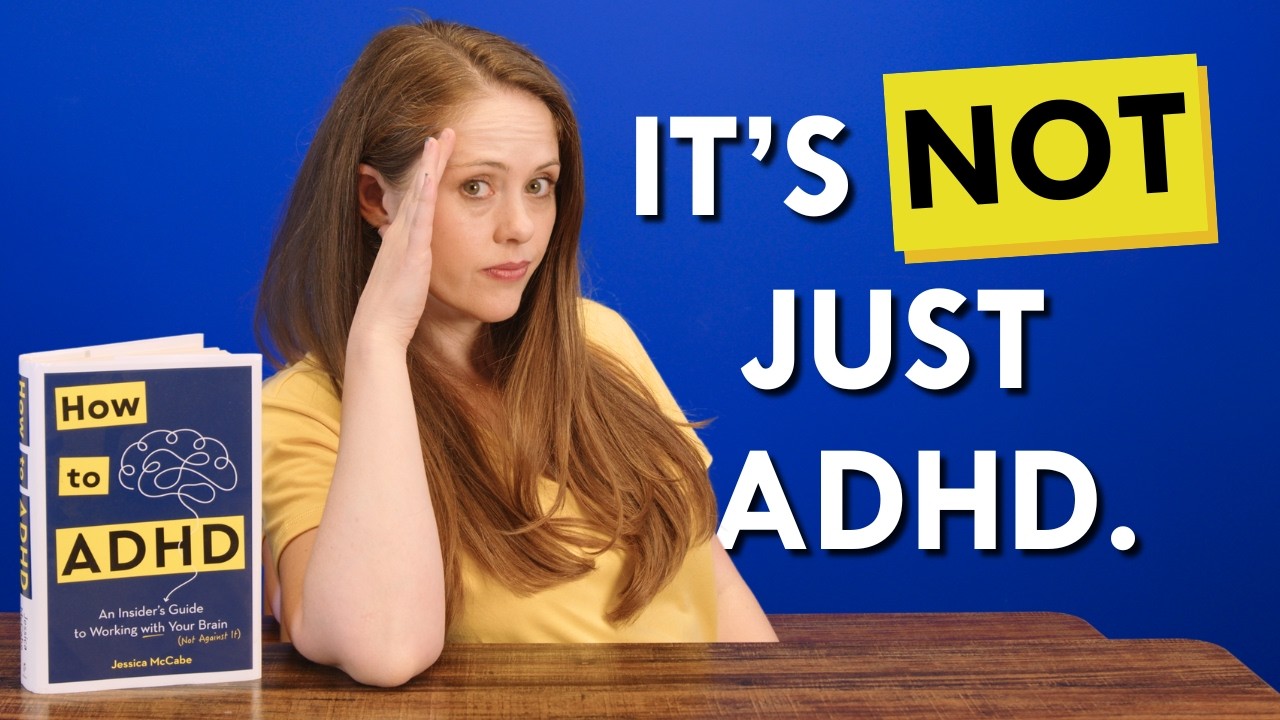
Is Internalized Ableism Holding You Back?
10:11

Is Internalized Ableism Holding You Back?

How to ADHD 12.08.2025 79 443 просмотров 8 521 лайков

Machine-readable: Markdown · JSON API · Site index

Поделиться Telegram VK Бот
Транскрипт Скачать .md
Анализ с AI
Описание видео
For many of us with ADHD (or other conditions) it's hard feeling proud of things we've done. Why is that? In this video I talk about internalized ableism and how it can get in the way. Want to give Dani's antiplanner a try? Awesome! You can buy it here!: https://bit.ly/danis-antiplanner-htadhd 🔗 OUR OTHER LINKS & SOCIALS Support us on Patreon: https://patreon.com/howtoadhd Buy my book!!: https://howtoadhdbook.com Get my weekly newsletter: https://how-to-adhd.kit.com/ Check out our website: https://howtoadhd.com Checkout our merch: http://shop.howtoadhd.com Twitter: http://twitter.com/howtoadhd TikTok: https://www.tiktok.com/@howtoadhd Instagram: https://www.instagram.com/howtoadhd/ Facebook: http://facebook.com/howtoadhd 📚CHAPTERS 00:00 Intro 00:21 What is Internalized Ableism? 00:55 What does it look like? 03:45 What else does it get in the way of? 04:47 The Cost of Internalized Ableism 06:34 What can we do about it? 07:45 Let's start a conversation! 08:16 Outro 09:00 Did you know the Anti-Planner has a Feeling Discouraged section? Check it out! ⁉️ WAIT IS JESSICA A LICENSED PROFESSIONAL? Jessica McCabe is not a licensed mental health provider, but information presented on How to ADHD is reviewed by researchers and approved by licensed clinical psychologist Patrick LaCount, PhD (https://practicalpsychservices.com). While information presented on How to ADHD has historically been built in consultation with researchers and licensed providers, videos posted prior to April 2023 were not subjected to the same formal approval process required by the YouTube Health program. For more information on the YouTube Health program and verification of health-related content, please visit: https://support.google.com/youtube/answer/9795167 Need translation? Learn how to turn on auto-translated captions here: https://docs.google.com/document/d/15iLAHI7FPdum964u3n8_RsUb0QTEXc66p-RhTmvjpb8/edit?usp=sharing The video delves into how **internalised ableism** can significantly affect individuals with ADHD, leading to feelings of **shame** and hindering their ability to fully embrace their differences. Jessica shares personal insights on **language to look out for**, and encourages a **mindset shift** towards **self acceptance**, and greater self-compassion. This is **how to adhd**
Оглавление (9 сегментов)

Intro

Hello brains. Today I just want to talk about a topic that has come up a lot for me recently reading through comments talking to people with my own experiences as well which is how much internalized abbleism can get in the way of people with ADHD and other disabilities feeling proud of themselves. So let's talk about it.

What is Internalized Ableism?

There's a lot of different definitions you can find on the internet, but basically what I'm talking about when I talk about internalized abbleism in the context of our community, internalized abbleism is the belief that typically abled people are superior and we should be like them. It's an oversimplification, but that's basically what it is. At its core, it's discrimination against ourselves. Abbleism is discrimination against people with disabilities. With internalized abbleism, we are essentially discriminating against ourselves. We believe that we should be like neurotypical people and that we should function like they do and we are bad or wrong or broken or less than if we don't. It shows up in things like I

What does it look like?

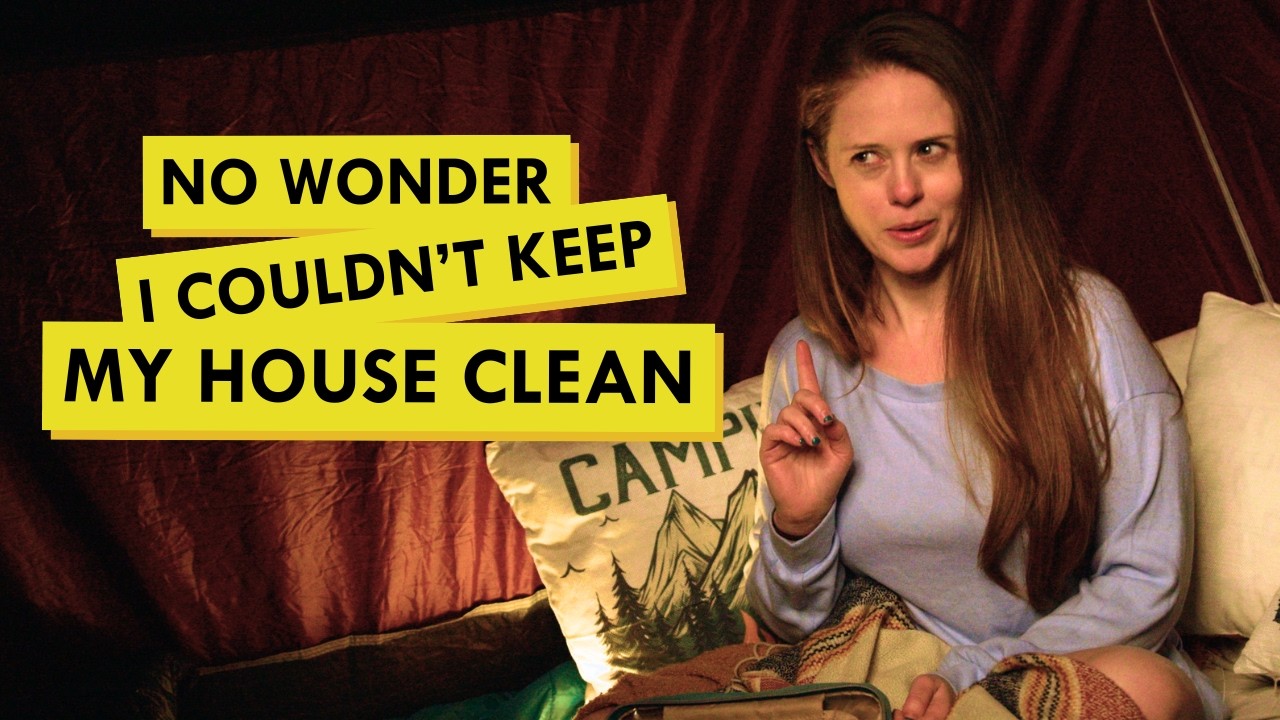
should be able to do this. I shouldn't need this support. I should know better. I should have done this by now. I should know how to do this by now. Right? I'm an adult. I should be able to keep my house clean. I should be able to show up on time. And it completely disregards the fact that we struggle with these things. It's not weird time management. If we have ADHD, it would be weird if we didn't. These things are a part of our condition. And so, it's this idea that we are wrong and should be different or that we shouldn't need supports. Something I've noticed again and again in this community is that we have a hard time feeling proud of ourselves for our accomplishments. And I think that's often because of internalized abbleism. We are comparing ourselves to people who are neurotypical or who don't have a disability and saying, "Well, I was able to accomplish this thing, but I needed this support that I shouldn't need or I was able to accomplish this thing, but it doesn't count because like it's not enough. It's not as good as, it's not as fast soon as this other person, right? We compare ourselves to other people. It's kind of human nature to compare ourselves to other people. And when we do that, and most people are neurotypical, it's really easy to judge ourselves. Like, we aren't as good as this other person. I'm not as good of a friend because they remembered my birthday and I didn't remember theirs. I'm not a good employee because I struggle with being to work on time. And so, even if we accomplish really amazing things, even if when we show up to the meeting, we come up with really great ideas, it's really hard to feel proud of ourselves for those ideas. is it's really hard for us to feel proud of our accomplishments because there's this caveat of yeah, but I was late. Yeah, but I didn't turn it in on time, you know? Yeah, okay. Like, I made dinner, but I had to use a recipe. I wrote a New York Times bestseller, but I needed the support of a writing buddy. I didn't do it by myself, so does it really count, right? And then if we manage to be able to do something that we would normally be proud of, and there's no caveats, right? like we accomplished this amazing thing and we did it ourselves on time. Then there's the well that's not enough, right? It's not enough that I was able to accomplish this because look how messy my car is. It wasn't enough that I did this thing because it wasn't enough to make up for the areas in which I struggle. It's not enough that I got an A in this class because I got a C in this other class where I struggle. So, we either feel like we're not accomplishing what we should be accomplishing. We feel like we are accomplishing it, but it doesn't count because of the supports that we needed to get there. or we're like, "Yeah, okay. I did it myself. I did accomplish that thing, but that's not enough because look at all the areas in which I struggle. I did throw my friend an amazing party, but that's not enough because then I forgot to text her last night. " Right? So, this internalized abbleism gets in the way of us being able to feel proud of things that we have genuinely accomplished. But maybe

What else does it get in the way of?

even more insidious, it also gets in the way of us actually accomplishing things. Because if we believe that we are somehow bad or wrong or broken, if we admit that we struggle with a thing, we might not the thing. We might not seek the support that we need to not struggle with the thing. We might be in denial even to ourselves. I went to community college intending to go to a 4-year university and I ended up dropping out. I was a gifted student and I should have been able to do it myself. I shouldn't have needed the accommodations. So, I didn't go to disability services. I didn't ask for accommodations because I didn't think I should need them. I thought I should be able to do this myself and so I didn't. I dropped out of college and I still regret that. I would have loved to have a college degree. That was very important to me. And I think so often there are things that are very important to us to accomplish to ourselves, for our families that we don't because we can't admit to ourselves or to other people that we struggle. That's internalized ableism too. And there's a real cost to this.

The Cost of Internalized Ableism

Not just in terms of the pride we don't get to feel. Not just in terms of the things that we don't get to accomplish, but also in terms of all of the cost to ourselves, to our relationships, to our physical well-being when we refuse the supports that we need. And we try to accomplish things without those supports in place. And to our emotional health, to our relationships with other people because we overpromise and underdel. We can sometimes end up being workaholics because we are pouring so much of ourselves into our work because we don't feel like it's ever enough. We can end up with anxiety and panic attacks and burnout and depression, self-deprecation. The negative thoughts, the negative judgments we levy against ourselves on a regular basis have a real cost to ourselves. We end up choosing people who agree with us that we are garbage because we think that about ourselves. We think we are not enough. And so we might choose partners who agree with that. There is a really high cost here. And the cost is not just to ourselves. The cost is also to the world because the things that we could offer the world if we weren't so discouraged because nothing we do is ever enough. Or if we were able to say, "Hey, I do struggle with this. These are the supports that I need. " The things that we could contribute to the world. Those things are lost if internalized ableism is getting in the way. If we are so discouraged by our failures that we can't appreciate our successes and we quit or if we don't achieve these successes at all because we don't have the support that we need to achieve them, the world loses too. So the cost is high. The cost is high for us as individuals. our families. This is something that gets passed on from generation to generation. If our children hear us saying these things about ourselves, what are they going to think when they struggle with the same things that we do? There is such a high cost to this that I just wanted to talk about it. I wanted us to

What can we do about it?

start to become aware of it. And it's not like, oh, you become aware of the fact that internalized ableism is a thing and suddenly poof, it's gone. It's a process. But one of the things that can really help is rather than compare yourselves to other people, compare yourself to you. Is this good for you? And that was one of the first things that I started saying to combat my own internalized abbleism. When somebody said something that kind of reinforced that belief that like what I'm doing isn't enough. I started saying things like this is good for me. This is an improvement personal growth for me. This is an area in which I struggle and this amount that I did is something that I can be proud of because for me it's an improvement. Like this is good for me. This was hard for me. And letting go of the shoulds. Just watching anytime you hear a should. Oh, I should know better. I should do this. I should be able to have. I shouldn't need. That's often a cue. Like there's some internalized abbleism there. And so just challenging that. I should be able to keep my house clean by myself. Have I ever been able in my entire life to be able to keep my house clean by myself? Have I ever not needed help with that? No. Okay, then that should is a lie. Like, it's just not true. This is an area where I struggle. It's an area where I'm going to need help, and that's

Let's start a conversation!

okay. All right. I'm going to get off my soap box. I really want to hear from you. start a conversation about this. Is this something that resonates with you? you have experienced that you are experiencing? And is there maybe something that you have done that was difficult for you that you should be proud of that you are feeling like you can't be proud of because of internalized abbleism? In which case, feel free to brag about it in the comments below. Feel free to say, "Hey, this is something that I accomplished or this is something I want to accomplish and maybe I need some more support. " Let me know in the comments below. Thank you

Outro

to my brain advocates and all my Patreon brains for supporting the work that we do on this channel so we can tackle really difficult, important topics like this. And thank you to every ADHD advocate out there who is helping to dismantle this internalized abbleism. I can't think of anybody who exemplifies this more than Danny Donovan, who is also a good friend of mine and the indie creator of the anti-planner. Her content has always been very good at helping to dismantle ableism and busting the idea that we should be different than we are. And her anti-planner is designed for ADHD brains who have been told they shouldn't struggle. It gives you tools that work with your brain instead of shaming you for how it works. This is not sponsored, by the way. I just had to share because there are a lot of really great exercises in the anti-planner that I've personally used to help me with my own internalized abbleism. The discouraged section is full of ways to

Did you know the Anti-Planner has a Feeling Discouraged section? Check it out!

challenge internalized abbleism and actually be kinder to yourself while still making progress. Some of my personal faves from this section are stop shuing all over yourself. If you notice yourself saying, "Should, I should do this. I should do that. " Stop on yourself. Danny's got an exercise where you can actually do that. I love shutting up scumbag brain. Basically, externalize your inner critic. Figure out who planted those ideas in the first place and kick them out of your head. And the small wins trophy shelf. Keep a visual record of little victories you'd normally dismiss so you can build pride and proof of your progress. One of the things that I really love about her planner is that you can flip to the page that fits how you're currently feeling. There's no page one pressure. you just flip around to wherever you happen to need at the time. By the way, there are a lot of really bad quality counterfeits of this floating around. Um, so use the link in the description to get the real one. Help a fellow creator out. Like, subscribe, click all the things, and I will see you next video. Bye, Re. And I'm going to try my best not to feel like I should have made a better video.

Другие видео автора — How to ADHD

Ctrl+V

Экстракт Знаний в Telegram

Экстракты и дистилляты из лучших YouTube-каналов — сразу после публикации.

Подписаться

Дайджест Экстрактов

Лучшие методички за неделю — каждый понедельник